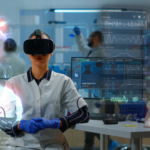
The integration of wearables in clinical trials marks a shift from traditional site-based studies to decentralized trials (DCTs). Decentralized Clinical Trials (DCTs) are a modern approach to clinical research where data collection, patient monitoring, and even interventions take place remotely, away from traditional clinical sites. Instead of requiring patients to visit research centers for every follow-up, DCTs leverage digital technologies, enabling participants to engage with the trial from their own homes.
In DCTs, wearables capture longitudinal data from participants in their natural environment, offering granular insights into how treatments evolve. For example, CGMs provide continuous glucose readings every 5 minutes, generating over 288 data points per day, while smartwatches track heart rate variability, sleep, and activity, producing millions of data points over time. This 24/7 monitoring enhances the accuracy and comprehensiveness of clinical data compared to traditional methods.
However, managing the large volume of data from wearables presents challenges. A study using Empatica E4 wristbands to monitor stress collected over 1.2 million data points per participant. The challenge is not just collecting data but integrating it across platforms while ensuring it meets regulatory standards, like FDA 21 CFR Part 11.
Data Science in Managing Wearable Data Streams
Wearables in clinical trials are the digital backbone of decentralized clinical trials (DCTs), providing continuous data on heart rate, blood pressure, oxygen saturation, and glucose levels. These devices enable real-time data analysis, helping researchers make quicker, data-driven decisions and adapt trial protocols based on changes in patient health.
However, the large volume of data generated by wearables presents challenges. For instance, a CGM like the Dexcom G6 can produce 28,800 glucose readings per month, requiring robust cloud-based platforms to process and analyze the data in real-time. Data consistency is also crucial—issues like inconsistent heart rate readings from a smartwatch can compromise data integrity, making automated validation checks essential to ensure accuracy and regulatory compliance.
A key advantage of wearables in DCTs is predictive modeling. With AI algorithms, real-time data from CGMs can be used to assess treatment efficacy and adjust protocols dynamically. Similarly, activity trackers provide insights into exercise interventions in cardiovascular trials, offering real-world data that traditional site-based methods can’t match.
Wearables in clinical trials are transforming the landscape of clinical trials by enabling continuous, real-time data collection from patients outside of traditional clinical settings. These devices are worn by participants to monitor a wide range of physiological and behavioral data in their everyday environment. Below are five wearable devices that are increasingly being used in clinical research:
Continuous Glucose Monitors (CGMs)
Data Collection:
CGMs, like the Abbott FreeStyle Libre and Dexcom G7, continuously collect glucose readings throughout the day and night. These devices use small sensors that track interstitial fluid glucose levels, providing real-time data every few minutes. For example, the Dexcom G6 can generate 28,800 glucose data points per month. This real-time data is transmitted wirelessly to a smartphone or wearable device, offering a complete picture of glucose fluctuations.
Data Usage:
This continuous data allows researchers to observe glucose trends over time, making it possible to understand how patients respond to diabetes medications or lifestyle interventions in real-world settings. The data provides insights into glycemic variability, which is a crucial factor in evaluating treatment efficacy. It also enables researchers to adjust treatment protocols in real time based on patients’ daily glucose fluctuations, improving treatment outcomes and patient safety.
Impact:
By enabling continuous monitoring, CGMs reduce the need for frequent clinic visits, making trials more patient-friendly. This real-time data improves the accuracy and granularity of the information collected, offering richer insights into the effectiveness of treatments and patient responses over longer periods of time. In the PROGRESS study, 73% of participants provided usable data, showing the feasibility and effectiveness of remote monitoring in decentralized trials.

Medical-Grade Vital Sign Patches
Data Collection:
Medical-grade biosensors like the BioIntelliSense BioSticker and VitalConnect VitalPatch collect data on vital signs such as heart rate, respiratory rate, skin temperature, and movement. These devices are typically worn on the chest or upper arm, offering long-term data collection — from days to weeks — without the need for site visits. The data is automatically transmitted to cloud-based systems where it can be analyzed by research teams.
Data Usage:
The continuous stream of data collected from these patches allows researchers to track physiological changes in real time. For instance, in post-surgical trials, these devices can identify early signs of complications like respiratory distress or abnormal heart rate fluctuations, enabling researchers to intervene before more serious problems arise. The continuous, remote monitoring makes it possible to track patients’ health without frequent clinic visits, significantly improving patient comfort and adherence.
Impact:
This data collection is especially valuable in clinical areas where continuous monitoring is essential but mobility is limited, such as in cardiac monitoring, oncology, and chronic disease management. A study using the Leenen et al. (2023) feasibility study demonstrated that biosensor patches could capture 99% of the required vital-sign measurements remotely, showing their effectiveness in capturing hospital-grade data without requiring patients to visit clinical sites.
Research-Grade Smartwatches and Wristbands
Data Collection:
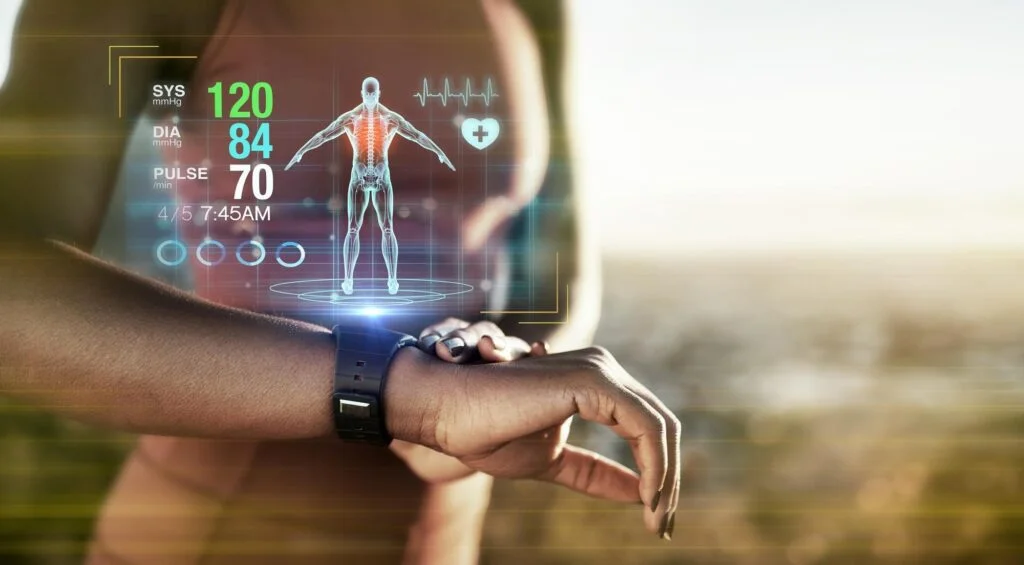
Research-grade smartwatches like the Verily Study Watch and Empatica E4 collect a variety of data, including ECG readings, heart rate variability (HRV), electrodermal activity (EDA), sleep patterns, and physical activity. These devices use built-in sensors to continuously monitor and record physiological responses in real time. The Empatica E4, for example, tracks EDA (a measure of stress), motion, and skin temperature.
Data Usage:
Researchers use this data to track subtle physiological changes that could indicate the onset of disease or the impact of a treatment. For example, HRV and EDA are key indicators of stress or autonomic nervous system function, making them useful in studies of neurological conditions or mental health. Sleep tracking can help researchers monitor how treatments affect rest cycles and overall well-being, while activity data can provide insights into physical health and exercise interventions.
Impact:
These devices provide continuous, high-resolution data that enables early symptom detection and predictive insights. The data can be used to track the effectiveness of medications or therapies in real time. In a study led by Empatica, the E4 wristband detected over 90% of seizure-related events, proving that wearables can achieve clinical-grade accuracy in real-world conditions.

Actigraphy Devices
Data Collection:
Actigraphy devices like the Actiwatch and GENEActiv continuously track sleep-wake cycles and physical activity. These wrist-worn devices use motion sensors to measure activity levels and rest periods, providing valuable data on sleep quality, circadian rhythms, and fatigue. The GENEActiv can track raw motion data for long durations, making it ideal for longitudinal studies.
Data Usage:
This data is particularly useful in studies that monitor sleep disorders, neurological conditions, or behavioral health. For instance, it helps researchers understand fatigue patterns and sleep disturbances in patients with Parkinson’s disease, insomnia, or chronic fatigue syndrome. By monitoring activity and rest periods, actigraphy data also provides insights into how lifestyle interventions or medications affect circadian rhythms and overall well-being.
Impact:
By providing objective, continuous data on sleep and activity, actigraphy devices help researchers detect early signs of disease progression or treatment efficacy. In a 2021 multicenter study on Parkinson’s disease, actigraphy data helped identify early disruptions in movement and sleep, showcasing its ability to uncover meaningful biomarkers that traditional methods might miss.
Smart Clothing and Textiles
Data Collection:
Smart textiles, like the Hexoskin Smart Shirt and Chronolife Smart Vest, integrate sensors directly into fabrics to measure vital signs such as heart rate, respiration, and muscle activity. These garments continuously collect physiological data without restricting comfort or mobility, making them ideal for long-term monitoring in rehabilitation, sports medicine, and chronic disease trials.
Data Usage:
Researchers use data from smart textiles to monitor respiratory patterns, heart rate during exercise, and muscle activity during rehabilitation. For example, the Hexoskin Smart Shirt tracks breathing patterns during physical activity, allowing researchers to assess the effectiveness of cardiac treatments or respiratory therapies. Similarly, the Chronolife Smart Vest captures ECG data, helping researchers monitor heart health in cardiovascular studies.
Impact:
Smart textiles enable seamless, continuous monitoring in natural, real-world settings. This makes them especially valuable for trials that require long-term, real-time data without interrupting daily life. Studies like the 2024 MDPI Sensors review have shown how smart textiles are moving from concept to clinical validation, proving their ability to integrate comfort with clinical accuracy.
Conclusion:
The integration of wearables in clinical trials has unlocked vast amounts of real-time, continuous data, providing researchers with unprecedented insights into patient health. However, managing this data is no small task. The sheer volume of information, from glucose readings to heart rate variability, requires robust cloud-based platforms and advanced data management tools to ensure seamless processing, analysis, and storage. While challenges like data consistency and regulatory compliance remain, the ability to leverage predictive modeling and AI-driven insights offers powerful solutions. As wearables continue to shape the future of clinical trials, effective data management will be key to maximizing the potential of these technologies, driving faster decisions, and improving patient outcomes.
The Advanced Diploma in Clinical Research at CliniLaunch, equips you with the knowledge to navigate wearables and decentralized trials, giving you a fresh perspective on data-driven research and how technology is transforming clinical studies.