Healthcare hiring trends are evolving rapidly as digital health, artificial intelligence, and data-driven systems transform the industry. These healthcare trends in 2026 are reshaping workforce demand across clinical research, healthcare analytics, bioinformatics, and digital health roles. As healthcare becomes more technology-driven, interdisciplinary skills and specialized training are becoming essential for building future-ready healthcare careers.
The healthcare sector has always played a critical role in society, but today the healthcare workforce is evolving rapidly as hospitals, research organizations, and digital health companies adapt to rising patient and technology demands.
In recent years, healthcare employment trends have shifted significantly as organizations invest more in digital health systems, healthcare analytics, AI-driven operations, and interdisciplinary talent. From the impact of the COVID-19 pandemic to the rapid rise of artificial intelligence, the recruitment landscape looks very different today. These changes are reshaping the future healthcare workforce and creating new opportunities across clinical, research, and healthcare technology careers.
India’s healthcare sector is expanding rapidly as clinical research, digital health systems, and healthcare services continue to grow. The workforce has already crossed 6 million professionals, making healthcare one of the largest employment sectors in the country. However, demand for specialized and interdisciplinary skills continues to rise.
The future of healthcare industry careers is increasingly driven by artificial intelligence, digital health systems, healthcare analytics, and precision medicine. As organizations adopt technology-enabled healthcare models, demand is growing for professionals who can work across clinical care, healthcare data, research, and digital health environments. These changes highlight key trends in healthcare industry, in 2026, particularly in how organizations hire and build future-ready teams. The future of healthcare industry careers is increasingly driven by artificial intelligence, digital health systems, healthcare analytics, and precision medicine.
For those looking to align with these shifts, gaining practical exposure through programs like the Advanced Diploma in Clinical Research and exploring training opportunities at CliniLaunch Research Institute can help build relevant, job-ready skills.
This blog explores the major hiring trends shaping the healthcare industry and how they are influencing career opportunities in the coming years.
Key Factors Driving Healthcare Industry Trends in 2026
Several structural, technological, and workforce-related changes are reshaping healthcare hiring globally. These healthcare industry trends in 2026 are driven by healthcare digital transformation, AI-powered systems, evolving patient care models, and rising demand for interdisciplinary professionals.
As healthcare organizations adopt digital healthcare systems and value-based care approaches, workforce requirements are shifting toward professionals with clinical, analytical, regulatory, and technology-oriented skills.
Key factors include:
- Adoption of Digital Health Technologies: Healthcare organizations are rapidly adopting digital technologies such as artificial intelligence, Internet of Things (IoT), big data analytics, and cloud-based systems to support clinical operations and managerial processes. Research on digital transformation in healthcare highlights that these technologies are significantly reshaping healthcare management systems and increasing the need for professionals with advanced digital and data skills.
- Growth of Healthcare Data: Healthcare systems are increasingly generating large volumes of structured and unstructured data from sources such as clinical trials, patient records, medical devices, and biomedical research. The growing use of big data analytics in healthcare is enabling hospitals and medical facilities to make more data-driven decisions across clinical, administrative, and operational processes, which is increasing demand for professionals who can analyze, interpret, and manage complex healthcare datasets.
- Expansion of Global Drug Development: Pharmaceutical and biotechnology companies are conducting clinical trials and regulatory submissions across multiple countries. This has increased hiring in areas such as clinical research, pharmacovigilance, and regulatory affairs.
- Aging Populations and Rising Healthcare Demand: As populations age and healthcare needs grow, healthcare systems are expanding services and infrastructure, which increases demand for skilled healthcare professionals across multiple disciplines.
- Increasing Regulatory and Compliance Requirements: Healthcare organizations must comply with strict regulatory standards and safety guidelines on drugs, driving demand for professionals who understand regulatory frameworks, clinical documentation, and compliance processes.
Together, these factors are shaping hiring priorities across healthcare organizations and creating demand for a more interdisciplinary healthcare workforce.
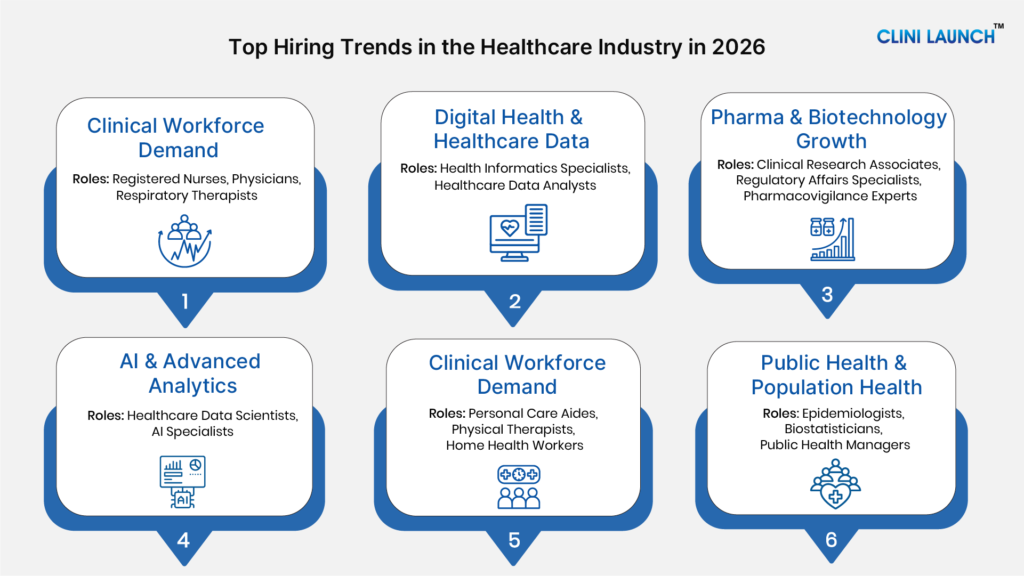
1. Growing Demand for Clinical and Allied Healthcare Professionals
One of the most consistent global healthcare hiring trends is the rising demand for frontline clinical professionals. Hospitals and healthcare systems across many countries continue to face shortages of registered nurses, particularly intensive care units, emergency departments, and specialized areas such as oncology and surgical nursing.
Clinicians are in high demand across many healthcare settings, particularly in underserved and rural regions where access to care remains limited. According to the World Health Organization, the global healthcare system could face a shortage of around 10–11 million health workers by 2030, highlighting the sifgnificant health system disruptions and the availability of trained professionals. Healthcare systems are responding by expanding medical education programs, increasing international recruitment, investing in workforce training, and integrating technology to support clinical staff. These healthcare staffing trends reflect the growing need for scalable workforce strategies and skilled healthcare professionals across multiple care settings.
As healthcare systems expand services and patient volumes increase, organizations are also hiring allied health professionals such as respiratory therapists, surgical technologists, patient care technicians, and rehabilitation specialists to strengthen clinical care delivery. This rising demand is also creating significant growth in allied healthcare careers across hospitals, rehabilitation centers, and community healthcare settings.
2. Expansion of Digital Health, Healthcare Analytics, and Data Roles
Healthcare organizations are rapidly expanding their digital and data capabilities. The growing use of electronic health records, digital patient management systems, and telemedicine platforms has significantly increased demand for professionals in health informatics, healthcare analytics, and digital health operations. The rise of digital platforms reflects the latest trends in healthcare, particularly in data-driven roles.
For example, recent healthcare surveys show that about 95% of office-based physicians in the United States had adopted electronic health record (EHR) systems by 2024, highlighting how digital systems have become central to modern healthcare operations. As healthcare becomes increasingly data-driven, professionals who can combine healthcare data analytics and AI skills with clinical understanding are becoming indispensable.
Platforms such as Epic and Cerner are widely used across hospital systems worldwide, increasing demand for professionals who can manage health information systems, maintain data quality, and integrate clinical data across digital healthcare platforms.
The expansion of digital health systems has created new roles that combine healthcare expertise with data and technology skills. Key roles include:
- Health Informatics Specialist – Manages electronic health records and improves clinical data systems.
- Healthcare Data Analyst – Analyzes patient and healthcare data to support evidence-based decisions.
- Clinical Data Manager – Ensures the quality, accuracy, and compliance of clinical trial data.
- Digital Health Product Manager – Oversees the development of telemedicine and digital health solutions.
- Healthcare AI Specialist – Develops AI models for diagnostics, predictive analytics, and clinical decision support.
- EHR Implementation Specialist – Supports hospitals in deploying and optimizing systems such as Epic or Cerner.
3. Pharmaceutical and Biotechnology Hiring Trends in 2026
The pharmaceutical and biotechnology sectors continue to drive hiring across research and drug development roles. Global drug development programs, particularly in areas such as oncology, rare diseases, and advanced therapies, have increased demand for clinical research professionals, including clinical research associates and clinical trial managers.
The rapid expansion of mRNA vaccine development and targeted cancer therapies has significantly increased the number of global clinical trials. Recent analyses of global registries have identified more than 550 clinical trials investigating mRNA-based therapeutics, many of them focusing on oncology and infectious diseases. This surge in advanced immunotherapies is driving demand for specialized professionals who can manage complex research programs across multiple regions.
Regulatory affairs specialists and pharmacovigilance professionals are also seeing strong hiring demand as pharmaceutical companies navigate complex global regulatory approvals and post-marketing safety monitoring requirements. Regulatory experts play a critical role in preparing drug approval submissions, coordinating with regulatory authorities, and ensuring compliance with international safety standards.
Large-scale genomic projects such as population genome sequencing initiatives are generating vast biological datasets, increasing the need for experts who can analyze and interpret genomic information for clinical and research applications. These developments highlight key healthcare industry trends influencing hiring across pharmaceutical and biotech sectors.
4. Rising Demand for AI and Data Science Roles in Healthcare
Artificial intelligence and advanced analytics are increasingly reshaping many areas of healthcare operations. These developments are key indicators of healthcare trends in 2026, where AI-driven roles are becoming central. AI-driven tools are now widely used in medical imaging analysis, predictive healthcare analytics, and drug discovery.
For example, the U.S. Food and Drug Administration reported that it had authorized over 500 AI-enabled medical devices by 2024, many of them designed for radiology and diagnostic imaging.
As these technologies expand, organizations are actively recruiting professionals who can work at the intersection of healthcare and advanced analytics. Roles such as healthcare data scientists, machine learning engineers, clinical AI specialists, and AI-driven research analysts are becoming more common within healthcare organizations.
For instance, AI systems are now being used to assist radiologists in detecting early-stage cancers in imaging scans, improving diagnostic accuracy while reducing the time required to analyze complex medical images.
5. Growing Demand in Long-Term and Community Care
Another significant hiring trend is the rapid expansion of long-term and community-based healthcare services. As populations age and chronic disease management become more complex, healthcare systems are expanding their workforce in rehabilitation services, senior care facilities, and home healthcare support.
Roles such as certified nursing assistants, personal care aides, occupational therapists, and physical therapists are increasingly in demand to support patients who require long-term care outside hospital settings. Population ageing is a major driver of this demand. Global demographic projections indicate that by 2080, people aged 65 and older are expected to outnumber children under 18, increasing the need for long-term care services, rehabilitation support, and community-based healthcare programs.
6. Expansion of Public Health and Population Health Roles
Public health systems have also seen renewed hiring in recent years. Governments and healthcare organizations are strengthening their workforce by recruiting epidemiologists, biostatisticians, and public health program managers to support disease surveillance and population health planning. Global demand for such professionals is rising as health systems expand their workforce capacity, especially with projections showing a shortage of around 11 million health workers worldwide by 2030. This expansion is also aligned with the latest trends in healthcare focusing on population health. These developments are part of larger global healthcare trends focused on strengthening healthcare systems. Patient-centered care prioritizes individual needs and long-term wellness, shaping modern healthcare delivery.
- Population health analytics uses data to identify health trends and improve public health initiatives.
- Population health management focuses on prevention and early intervention to improve community health outcomes.
At the community level, home healthcare services are also expanding rapidly. Roles such as home health aides, community health workers, and care navigators are becoming increasingly important as healthcare systems shift toward patient-centered and home-based care models. Employment of home health and personal care aides is projected to grow about 17% from 2024 to 2034, reflecting rising demand for community-based healthcare services.
Following global public health emergencies in recent years, many countries have expanded investments in epidemiology and disease surveillance programs to strengthen preparedness for future health crises.
To meet these evolving healthcare workforce demands, many professionals are pursuing specialized training in clinical research, healthcare analytics, and digital health technologies.
Clinical Research
Build industry-ready skills aligned with the fastest-growing hiring trends in the healthcare industry. This program prepares learners to work across clinical research, healthcare data systems, and digital health environments by combining scientific knowledge with practical exposure to healthcare analytics, regulatory processes, and modern research workflows.

Emerging Healthcare Roles Shaping the Future Workforce
Healthcare employment is evolving rapidly as emerging technologies such as artificial intelligence, Internet of Things (IoT)–enabled wearable sensors, and blockchain become increasingly integrated into healthcare management systems. These technologies are transforming healthcare delivery by enabling more personalized, data-driven healthcare services and continuous patient monitoring.
As healthcare systems adopt connected devices, digital health platforms, and advanced data systems, organizations are increasingly seeking professionals who can work across healthcare, data management, and digital technology environments. This shift is creating new roles focused on managing digital health systems, analyzing health data, and supporting technology-enabled healthcare services. Several emerging healthcare roles are being created as technologies such as AI, genomics, and digital therapeutics become integrated into healthcare systems. These roles are defining the future of the healthcare industry driven by technology and innovation.
AI-Driven Healthcare Roles
Artificial intelligence in modern healthcare is increasingly being used in diagnostics, medical imaging, and predictive healthcare analytics. This shift is creating roles such as AI Clinical Liaisons, who help integrate AI tools into clinical workflows, and Clinical AI Ethics Officers, who ensure that AI applications remain transparent, unbiased, and compliant with healthcare regulations. In imaging-focused specialties, radiomics specialists use AI-based analysis to improve disease detection and diagnostic accuracy.
Genomics and Precision Medicine Roles
Advances in genomic sequencing are accelerating the adoption of personalized medicine. Genetic counselors help patients understand genetic testing results, while pharmacogenomics specialists tailor drug therapies based on individual genetic profiles. Genomic data curators support these efforts by managing large genomic datasets and maintaining data quality and regulatory compliance.
Digital Therapeutics and Connected Health Roles
The growth of digital therapeutics and remote patient monitoring is creating new roles that support technology-enabled care. Digital therapeutics clinical advocates help integrate software-based treatments into care pathways, while RPM program managers oversee remote monitoring systems that track patient health through connected devices. In parallel, health data coaches assist patients in interpreting wearable health data and translating it into lifestyle improvements.
Healthcare Operations and Sustainability Roles
Operational transformation and Sustainability in healthcare is also generating new roles. Revenue cycle AI analysts use advanced analytics to optimize billing systems and reduce claim denials, while healthcare sustainability officers focus on improving environmental efficiency in hospital operations and supply chains.
As healthcare technologies continue to evolve, many future roles will require interdisciplinary skills that combine clinical knowledge, digital literacy, and data-driven decision making. By 2030, many healthcare job roles are expected to evolve as technology reshapes how healthcare services are delivered.
Artificial Intelligence (AI)
AI Clinical Liaison
Helps integrate AI tools into clinical workflows and supports healthcare teams in using AI systems effectively.
Medical Imaging AI
Radiomics Specialist
Uses AI-based imaging analysis to improve disease detection and diagnostic accuracy.
Genomics & Precision Medicine
Pharmacogenomics Specialist
Tailors drug therapies based on a patient’s genetic profile.
Genomic Data Systems
Genomic Data Curator
Manages genomic datasets while ensuring data quality and regulatory compliance.
Digital Therapeutics
Digital Therapeutics Clinical Advocate
Supports the integration of software-based treatments into patient care pathways.
Remote Patient Monitoring (RPM)
RPM Program Manager
Oversees connected health systems that track patient health remotely.
Wearable Health Technology
Health Data Coach
Helps patients interpret wearable health data and improve lifestyle habits.
Healthcare Automation & Analytics
Revenue Cycle AI Analyst
Uses analytics and AI tools to optimize billing systems and reduce claim denials.
Sustainable Healthcare Operations
Healthcare Sustainability Officer
Focuses on environmental efficiency and sustainability in healthcare systems and supply chains.
Healthcare Workforce Challenges in 2026
Despite strong hiring demand, healthcare employers continue to face several workforce challenges.
Persistent talent shortages: Many healthcare organizations struggle to recruit qualified professionals, particularly in critical clinical roles such as nursing and in specialized fields like clinical research, regulatory affairs, and healthcare analytics.
Skills gaps: Rapid digital transformation has widened the gap between academic training and industry needs. Employers increasingly seek professionals who combine healthcare knowledge with skills in data analysis, digital systems, and regulatory processes.
Retention and Workforce Burnout: High workloads and demanding clinical environments contribute to burnout, making employee retention difficult. As a result, organizations are focusing more on workforce development, continuous training, and supportive work environments to retain skilled professionals.
Upskilling and Career Readiness for the Future Healthcare Workforce
As healthcare technologies continue to evolve, digital transformation is increasingly reshaping healthcare operations through innovations such as information technology systems, telemedicine platforms, wearable devices, and Internet of Things (IoT) applications, creating a growing need for professionals who can adapt to technology-driven healthcare environments and emerging digital health systems. Upskilling plays a crucial role in preparing professionals for the future of the healthcare industry.
Upskilling and Reskilling in Healthcare are becoming increasingly important as healthcare organizations adopt data-driven and technology-enabled systems. Upskilling helps professionals already working in healthcare to strengthen capabilities in areas such as healthcare analytics, digital health platforms, clinical research systems, and regulatory compliance. At the same time, reskilling enables individuals from related scientific or technical backgrounds to transition into healthcare roles experiencing growing demand, including clinical research, healthcare informatics, bioinformatics, and healthcare data analysis.
As healthcare systems expand to improve service coverage and ensure equitable access to healthcare, the need for a well-trained and capable health workforce continues to grow. Global health organizations emphasize that the healthcare workforce development requires investment in training, workforce development, and effective recruitment strategies to address shortages and uneven distribution of health workers across regions. Practical exposure through industry-focused training, certifications, internships, and skill-development programs plays an important role in preparing professionals to contribute effectively to evolving healthcare systems and workforce needs.
India is emerging as a major global healthcare and pharmaceutical hub, accounting for about 20% of the world’s generic medicines by volume (IBEF), while major healthcare markets such as the United States, Europe, and Singapore continue expanding biotechnology, digital health, and clinical research ecosystems.
As healthcare roles evolve across research, technology, and clinical systems, professionals must develop a combination of scientific and technical competencies.
Skills, Training, and Professional Development for Future Healthcare Careers
The future healthcare workforce will increasingly rely on professionals who possess both scientific expertise and technology-oriented competencies, supported by continuous training, industry certifications, and professional networking. These skill requirements are directly aligned with current healthcare industry trends.
- Key skills shaping modern healthcare careers
Data Analytics: Ability to interpret clinical and research data to support evidence-based healthcare decisions.
Artificial Intelligence and Machine Learning: Understanding AI-driven tools used in diagnostics, predictive analytics, and drug discovery.
Regulatory Knowledge: Familiarity with healthcare regulations, compliance systems, and global approval frameworks.
Clinical Research Processes: Knowledge of clinical trial design, study documentation, and patient safety monitoring.
Scientific Communication: Capability to present scientific findings clearly through reports, publications, and regulatory documentation.
Healthcare Informatics: Understanding digital health systems such as electronic health records and healthcare data platforms.
- Professional Training Programs
Structured training programs help professionals develop practical skills in areas such as clinical research, healthcare data analysis, bioinformatics, and digital health technologies.
- Industry Certifications
Certifications demonstrate specialized expertise in areas such as clinical research, regulatory affairs, bioinformatics tools, and healthcare data analysis, helping professionals strengthen their credibility in the job market.
- Professional Networking and Collaboration
Networking through scientific conferences, research communities, and professional associations helps professionals stay updated with industry trends and connect with potential employers or research collaborators.
AI & ML in Healthcare
Build future-ready skills at the intersection of healthcare, artificial intelligence, and data science. This program prepares learners to apply AI and machine learning techniques to healthcare data, supporting innovations in medical diagnostics, predictive analytics, clinical decision support, and healthcare research. By combining foundational AI concepts with healthcare applications, the course equips professionals to work in emerging roles within digital health and medical technology environments.
Forces Shaping the Future of Healthcare Careers
The future of healthcare employment is influenced not only by technological innovation but also by demographic changes, evolving healthcare delivery models, and expanding global research ecosystems. These broader structural forces are shaping workforce demand and creating new career pathways across healthcare, life sciences, and health technology sectors. These structural changes are key indicators of global healthcare trends influencing workforce demand.
1. Aging Population and Chronic Disease Burden
Global demographic shifts are increasing demand for healthcare services. According to the World Health Organization, the global population aged 60 years and older is expected to nearly double by 2050, increasing the need for healthcare professionals across clinical care, rehabilitation services, and long-term care systems. As chronic diseases become more prevalent, healthcare systems require a larger and more specialized workforce.
2. Expansion of Global Clinical Research
The growth of international clinical trials and drug development programs is increasing demand for professionals in clinical research, data management, regulatory affairs, and pharmacovigilance. Pharmaceutical companies and clinical research organizations are expanding research activities across multiple countries to accelerate drug development and regulatory approvals.
3. Shift Toward Preventive and Community-Based Healthcare
Healthcare systems are increasingly strengthening primary health care approaches that bring services closer to communities and focus on health promotion and disease prevention. This people-centered model supports integrated care throughout a person’s life and helps improve access to essential health services.
Primary health care is also recognized as a key pathway for achieving universal health coverage and strengthening health system resilience, which expands opportunities in public health, community health programs, and preventive healthcare services.
4. Healthcare Workforce Shortages and Talent Gaps
Many countries are facing shortages of trained healthcare professionals. Global health organizations estimate that the world could face a shortage of millions of healthcare workers by 2020-2030, highlighting the urgent need for workforce development, training programs, and interdisciplinary healthcare professionals.
Together, these structural changes indicate that the future healthcare workforce will require professionals who can combine healthcare knowledge with research skills, digital literacy, and interdisciplinary collaboration.
As we move forward, healthcare trends in 2026 will continue to influence hiring, skills, and career opportunities globally. Understanding the latest trends in healthcare helps professionals stay competitive in a changing job market.
Conclusion
The healthcare industry is undergoing a profound transformation of digital technologies, advanced research models, and data-driven healthcare systems to reshape how care is delivered and managed. Understanding these trends in the healthcare industry is essential for professionals aiming to build long-term, future-ready careers. As this transformation accelerates, career opportunities are expanding beyond traditional clinical roles into interdisciplinary domains that combine life sciences, data analytics, digital health technologies, and regulatory expertise. The future of the healthcare industry will depend on professionals who can adapt to technology-driven environments.
This shift highlights the growing importance of specialized skills, practical training, and industry-oriented programs that prepare professionals for careers in clinical research, healthcare data systems, and biotechnology innovation. Employers increasingly seek professionals who can navigate complex healthcare ecosystems while adapting to emerging technologies such as artificial intelligence, healthcare informatics, and precision medicine.
For aspiring professionals and experienced practitioners alike, preparing for the future of healthcare means staying informed about industry trends and building competencies that align with evolving workforce demands. Professionals who invest in industry-focused training and exposure through institutions such as CliniLaunch Research Institute will be better positioned to lead and innovate in the next generation of healthcare careers.