Clinical Epidemiology is the science of investigating health-related events in different populations. It applies data analysis techniques to determine the causes of diseases and their distribution. The epidemiological study definition extends beyond just infectious diseases; it also includes chronic conditions, environmental hazards, and social determinants of health.
A public health epidemiologist examines the health status of communities, focusing on identifying risk factors and developing prevention strategies. The scope of epidemiology is vast, covering not only diseases but also issues like terrorism, natural disasters, and global health crises.
Understanding Clinical Epidemiology and Its Significance
Epidemiology is the foundation of public health, focusing on the study of disease patterns, causes, and effects in populations. It helps identify risk factors, track disease outbreaks, and develop preventive measures to improve global health. By analyzing data, epidemiologists contribute to shaping healthcare policies and interventions. This field extends beyond infectious diseases to include chronic illnesses, environmental hazards, and lifestyle-related conditions. Epidemiology plays a vital role in ensuring community well-being by preventing diseases before they spread, making it a crucial aspect of healthcare and public health planning.
The Uses of Epidemiology in Public Health
The importance of epidemiology in public health cannot be overstated. By employing epidemiological methods, public health professionals can:
Detect disease outbreaks and respond promptly.
Identify risk factors for various health conditions.
Evaluate the effectiveness of health interventions and policies.
Develop data-driven public health strategies.
Reduce health disparities in vulnerable communities.
Key Principles: The Five W’s of Epidemiology
Epidemiologists use a structured approach known as the Five W’s to investigate health-related issues:
Who: Identifies the affected population.
What: Determines the disease or health event in question.
When: Examines the timeline of disease emergence and spread.
Where: Pinpoints the geographic origin and affected areas.
Why: Investigates underlying causes and contributing factors.
Clinical Epidemiology and Global Health
Clinical epidemiology is a specialized branch of epidemiology that focuses on improving patient care through research-based evidence. It integrates medical research and epidemiological principles to enhance disease diagnosis, treatment, and prevention.
Improve diagnostic accuracy and disease prognosis.
Assess treatment effectiveness through clinical trials.
Design preventive strategies based on epidemiological data.
Global health initiatives rely heavily on clinical epidemiology to combat emerging diseases and improve healthcare accessibility worldwide. The Master of Public Health (MPH) degree equips professionals with the necessary skills to address data integration challenges in global health research.
Epidemiology in Cancer Research
Cancer epidemiology plays a vital role in understanding the causes and prevention of cancer. Epidemiologists study cancer incidence, mortality rates, and survival trends to formulate effective public health interventions.
According to recent global health statistics:
Lung, breast, and prostate cancers are among the most diagnosed cancers worldwide.
Cancer is the second leading cause of death globally, projected to become the leading cause by 2060.
Early detection and prevention strategies significantly improve survival rates.
The Importance of Disease Surveillance
Disease surveillance is a fundamental aspect of public health that involves the ongoing collection, analysis, and interpretation of health data. The CDC defines surveillance as an essential tool for controlling infectious diseases.
Public health agencies monitor diseases such as:
Tuberculosis, STDs, and vaccine-preventable illnesses.
Foodborne infections (e.g., Salmonella, E. coli).
Emerging infectious diseases such as COVID-19.
By employing advanced data integration methods, epidemiologists can track disease progression and implement timely interventions.
Chronic Disease and Lifecourse Epidemiology
Chronic disease epidemiology focuses on the long-term impact of diseases such as diabetes, cardiovascular disorders, and mental health conditions. The lifecourse epidemiology approach examines how early-life exposures influence health outcomes later in life.
Key areas of study include:
Diabetes epidemiology
Maternal and reproductive health
Mental health epidemiology
Musculoskeletal disorders
Infectious Disease Epidemiology
Infectious diseases remain a significant public health concern. Infectious disease epidemiology aims to control and eliminate diseases caused by bacteria, viruses, and parasites. Research areas include:
Pharmacoepidemiology and antimicrobial resistance.
Clinical trials for vaccine development.
Global health initiatives to prevent pandemics.
Injury epidemiology studies unintentional injuries (e.g., motor vehicle crashes, burns) and intentional injuries (e.g., violence, suicides). Public health initiatives focus on:
Violence prevention programs
Occupational safety regulations
Emergency response planning
Molecular and Genetic Epidemiology
Advancements in molecular and genetic epidemiology have revolutionized disease prevention. Researchers study genetic markers and molecular pathways to understand disease susceptibility.
Key areas include:
Human genetics and genetic epidemiology
Pharmacogenomics and precision medicine
Nutritional epidemiology
Traditional vs. Modern Epidemiology
Injury Epidemiology and Prevention Epidemiology has evolved over the decades, shifting from population-based studies to individual-focused research. While modern epidemiology uses advanced technology, there is a growing need to reintegrate it with public health strategies.
Transforming Epidemiology for the 21st Century As public health challenges evolve, epidemiology must adapt by integrating advanced technologies, big data, and interdisciplinary approaches. Modern epidemiologists focus on expanding cohort studies across lifespans, analyzing multiple health outcomes, and utilizing innovative data integration methods to enhance disease prevention and control. With the rise of artificial intelligence and machine learning, data analysis is becoming more precise, improving predictive modeling for global health threats. Additionally, public health courses, including Master of Public Health (MPH) programs, emphasize training future epidemiologists in biostatistics and policymaking. Strengthening collaboration between clinical epidemiology and global health ensures a proactive response to emerging health crises.
In response to emerging health challenges, epidemiologists must adapt to new research paradigms. The National Cancer Institute (NCI) outlines key areas for future epidemiology as follows:
Expanding cohort studies across the lifespan.
Integrating big data science into epidemiology.
Developing advanced data integration methods.
Enhancing public health policies through research.
Conclusion
Epidemiology remains at the forefront of public health, guiding policies and interventions to improve global health outcomes. Through clinical epidemiology and global health research, biostatistics, and advanced data integration methods, epidemiologists continue to tackle some of the world’s most pressing health challenges. By pursuing public health courses such as an MPH (Master of Public Health), aspiring professionals can contribute to a healthier future for all.
The transformation of epidemiology in the 21st century will depend on integrating traditional methods with innovative technology, ensuring a data-driven approach to disease prevention and health promotion.
At CliniLaunch we provide in-depth learning sessions with detailed curriculum for PG Diploma in Biostatics course. To learn more about such informative topics and modules visit our website and enroll today.
A significant factor enhancing Indian clinical trials market is its expansive network of highly skilled medical professionals, including doctors, researchers, and data scientists, ensuring that trials are conducted following international quality standards.
Creative Designed by Tezas Dhanakoti (video content creator at CliniLaunch)
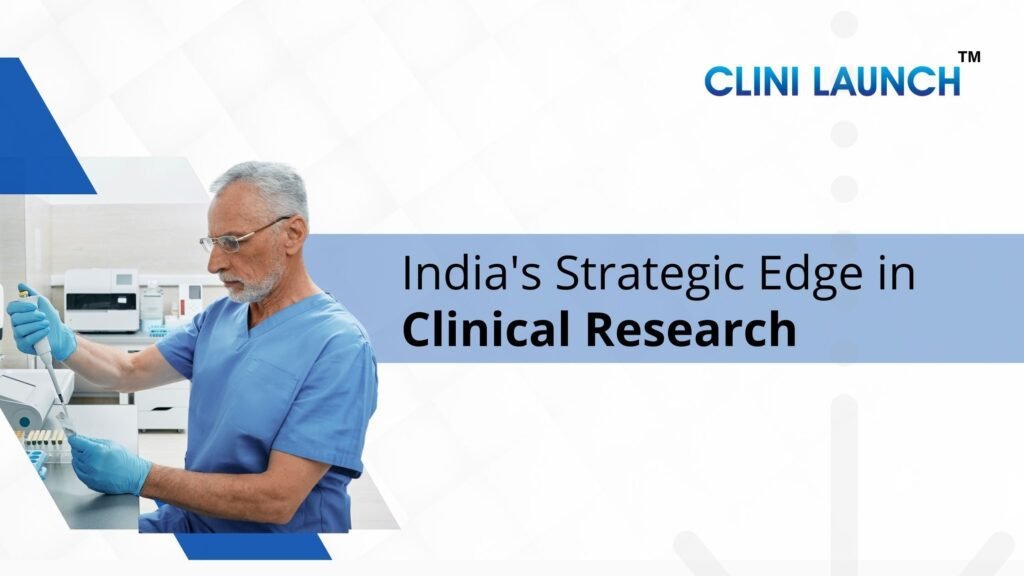
India has become a preferred hub for clinical research owing to several strategic advantages. The country’s vast genetic diversity and population of over 1.3 billion offer a rich patient pool for a broad spectrum of clinical trial. This genetic variation provides critical data for developing therapies targeting various disease conditions.
Furthermore, the economic, ecological, and environmental variations across India contribute to diverse disease patterns, making it an ideal location for comprehensive clinical studies. For instance, non-communicable diseases (NCDs) like cardiovascular issues and diabetes have higher prevalence in southern states such as Kerala and Tamil Nadu compared to northern regions like Rajasthan and Bihar.
Favorable regulatory reforms have further solidified India’s position in global clinical research. These streamlined approval processes encourage international firms to conduct cost-effective, high-quality trials in the country.
Creative Designed by Tezas Dhanakoti (video content creator at CliniLaunch)
India’s competitive edge in clinical trial lies in its cost-efficiency. Clinical trial expenses in India are approximately 50% lower than in the U.S. and Europe, significantly reducing research costs for global pharmaceutical companies. This financial advantage, combined with a large pool of trained professionals, makes India a prime destination for large-scale Phase III trials requiring diverse patient demographics.
Moreover, India’s established infrastructure, including state-of-the-art research facilities and expert investigators, ensures trials meet global compliance standards while maintaining budget efficiency.
Growth of the Clinical Trial Supplies Market
Parallel to the expanding clinical trial sector, the clinical trial supplies market in India is also experiencing significant growth. Projected to grow from USD 2.70 billion in 2024 to USD 4.79 billion by 2033, this growth is driven by rising chronic disease prevalence, evolving regulatory norms, and the globalization of clinical research.
Technological advancements such as blockchain technology and IoT-based supply chain management are further transforming the efficiency and security of clinical trial supplies. These innovations ensure real-time tracking, secure data management, and reduced logistical delays.
India plays a crucial role in this market by adhering to standards set by the Central Drugs Standard Control Organization (CDSCO), ensuring compliance with global regulatory requirements.
The Globalization of Clinical Trials
The globalization of clinical trials has amplified the demand for efficient supply chain management, as pharmaceutical companies expand operations into emerging markets like India. This expansion requires streamlined logistics, advanced packaging solutions, and reliable delivery mechanisms to meet clinical trial timelines effectively.
India’s strategic geographical location, along with its robust clinical research capabilities, makes it an essential hub for global trials. The country’s infrastructure allows for the seamless distribution of clinical supplies, facilitating faster research progress.
India’s Expanding Workforce in Clinical Trial
Creative Designed by Tezas Dhanakoti (video content creator at CliniLaunch)
India’s clinical trial market has also contributed significantly to employment generation. More than 300,000 professionals, including clinical research associates, data managers, regulatory experts, and biostatisticians, are directly or indirectly involved in the industry. With the rising demand for clinical research, these numbers are expected to grow substantially in the coming years.
India’s regulatory reforms since 2013 have made a substantial impact in streamlining clinical trial approval processes. The Central Drugs Standard Control Organization (CDSCO) has introduced measures to reduce approval timelines and promote compliance with international standards.
Future Focus Areas in Indian Clinical Research
Looking forward to 2025 and beyond, India’s clinical research sector is expected to emphasize pressing health challenges, including antimicrobial resistance (AMR), tuberculosis (TB), cancer, and non-communicable diseases (NCDs) such as diabetes and cardiovascular issues. Other focus areas include neonatal care, anemia management, and emergency response treatments.
The Indian Council of Medical Research (ICMR) plays a pivotal role in spearheading national health programs, facilitating advancements in diagnostics, treatment innovations, and public health initiatives.
Conclusion
Indian clinical trials market is on a steady growth trajectory, driven by cost-effectiveness, a vast and diverse patient pool, skilled medical expertise, and supportive government policies. As global clinical trial expand, India stands out as a critical player in accelerating drug development and advancing medical innovation.
With its ever-evolving infrastructure, strong compliance standards, and strategic focus on emerging health challenges, India remains a leading destination for global pharmaceutical companies seeking to conduct efficient, high-quality trials. Does the scope for employment in this field is going to grow immensely.
Unlock your career in clinical research today with Clinilaunch! Join now to gain hands-on expertise in clinical trials, data management, and regulatory compliance. Don’t miss the opportunity to become a part of this dynamic and fast-growing industry. Enroll today and take the first step towards becoming a clinical research expert!
The future of healthcare innovations is driven by more patients, more technology and more information!
Healthcare innovations are brimming with possibilities, driven by advancements in technology and the integration of cutting-edge practices. Healthcare professionals are at the forefront of this transformation, requiring specialized training in areas like clinical research, medical coding, and AI/ML in healthcare. These fields are pivotal in streamlining healthcare operations, enhancing patient outcomes, and driving efficiency across the sector.
At CliniLaunch, we understand that creating meaningful change demands collaboration. Through our corporate partnerships, we bridge the gap between academic learning and real-world understanding and applications. By working hand-in-hand with leading organizations, our collaborations ensure students gain practical experience and access career opportunities that shape the future of healthcare innovations.
The Role of Training in Healthcare innovation programs
Clinical Research: Revolutionizing Patient Care
Clinical research is integral to advancing medical science and improving treatment protocols. Our clinical research courses equip candidates with specialized skills to design, manage, and analyze clinical trials effectively. With an emphasis on healthcare innovation programs, we focus on students learning to integrate the latest medical tools, technologies and innovations to enhance trial outcomes and streamline processes. Which will lead the student to a successful and bright career in this domain changing the healthcare industry.
Through corporate partnerships in healthcare and information technology domain, students gain exposure to live projects, hands-on training and industry trends. These experiences help them understand the practical applications of clinical research in shaping the future of healthcare innovations.
Medical Coding : Ensuring Compliance and Efficiency
Accurate medical coding is critical for healthcare systems, ensuring compliance, minimizing errors, and improving reimbursement processes. At CliniLaunch, our medical coding course provides hands-on training in industry standards like ICD-10 and CPT codes, coupled with the latest tools and technologies.
Through corporate partnerships in healthcare collaboration with industry leaders through CliniLaunch, we ensure our curriculum stays relevant and forward-looking. This approach not only enhances employability but also contributes to the overall efficiency of healthcare systems, a cornerstone of the future of healthcare innovations.
Medical Scribe : Enhancing Patient-Provider Efficiency
The medical scribe course at CliniLaunch trains students to document patient encounters in real-time, ensuring physicians can focus on delivering quality care. As healthcare systems become increasingly digitized, medical scribes play a crucial role in streamlining workflows and maintaining accurate electronic health records (EHR).
Through corporate partnerships, students gain hands-on experience with advanced documentation tools and systems used in leading healthcare organizations. This training not only enhances employability but also contributes significantly to healthcare efficiency, a vital element in the future of healthcare innovations.
Bioinformatics : Bridging Data and Biology
The field of bioinformatics combines biology, computer science, and data analysis to unlock insights from complex biological data. CliniLaunch’s bioinformatics course prepares students to work on genome sequencing, personalized medicine, and drug discovery projects.
With the support of our healthcare collaborations, students engage in industry-relevant projects, applying bioinformatics tools to real-world challenges. This course ensures students are ready to contribute to the rapidly growing field of precision medicine, a cornerstone of healthcare innovation programs.
AI and ML in Healthcare: Driving Future of healthcare Innovations
Through corporate partnerships in healthcare, students work on real-world projects, applying AI/ML tools to solve complex healthcare challenges. These collaborations exemplify how corporate partnerships are shaping the next generation of innovators who are instrumental in the future of healthcare innovations.
Collaboration with Corporate Partners
Highlights of CliniLaunch Healthcare Collaborations
Through our collaborations and tie ups, students engage with industry leaders in pharmaceuticals, biotechnology, clinical research, and healthcare IT. These partnerships foster innovation, helping organizations stay ahead in the competitive landscape while enabling students to develop practical skills that shape the future of healthcare innovations. Our collaboration with industry partners ensures that students receive in-depth knowledge and skill sets in AI-driven trial management, setting them apart as future-ready professionals.
The Importance of CliniLaunch Corporate Partnerships
Collaboration is at the heart of progress, and our key partnerships play a vital role in bridging the gap between education and the workplace. By aligning our training programs with the needs of healthcare organizations, we prepare professionals who are ready to contribute to impactful healthcare innovation in this domain.
These partnerships provide students with internship opportunities, mentorship, and exposure to the latest industry practices. This corporate partnership for healthcare innovation gains access to a pool of well-trained, job-ready talent that drives organizational success.
Building the Future of Healthcare Together
Advancing Healthcare Innovation Programs, our focus on healthcare innovation programs goes beyond theoretical learning. Through experiential training, live interactive classes and mentorship provided by our institute and CliniLaunch corporate partnerships, we create a dynamic learning environment that fosters creativity and critical thinking. This approach ensures our graduates are well-prepared to contribute meaningfully to the future of healthcare innovations.
Corporate Partnerships in Healthcare as Drivers of Change
Corporate partnerships in healthcare are more than just collaborations; they are pathways to a meaningful and transformative change. By working with industry leaders, we co-develop programs that address real-world challenges, ensuring our students are equipped to lead innovation in clinical research, medical coding, and AI applications.
Conclusion
We are committed to building skilled professionals, who are armed with recent techniques and ready for a workforce that drives meaningful changes in the healthcare sector. Through our tailored programs, we empower professionals to innovate and lead. Whether it’s clinical research, medical coding, or AI in healthcare, it is your partner in advancing the future of healthcare innovations.
Be a part of the transformation. Join CliniLaunch and gain the skills, knowledge, and connections to lead the future of healthcare innovations. Partner with us and take your career to new heights through our CliniLaunch corporate partnerships. Together, let’s shape the future of healthcare.
Introduction
As the year comes to an end, it’s the right time to reflect on the advancements and progress clinical research companies have made throughout the year. It’s that time of the year where clinical research companies can review medical trials based on a clinical trial database, and set new goals based on what worked best for the industry.
Healthcare industry has seen numerous advancements especially in the field of clinical research. Clinical research is ever evolving with new innovations leading the way. According to an analysis by Future market insights, (FI), the global clinical research companies has soared to US$58.0 billion in 2022 and is projected to reach US $139.6 by 2033.
In this blog topic, we will be discussing Top 5 clinical research trends that shaped the medical trails to reach new heights.
We can’t talk about the clinical research trends without covering the practical and aspirational applications of Artificial Intelligence and machine learning.
AIML has revolutionized medical trials in hundreds of ways. Drug discovery and developments checks top in the list. Ai can analyze large clinical trial datasets to identify potential drug targets. This process in turn accelerates and streamlines the process of drug discovery.
As a contribution in improved CTS clinical trial design, AI can help in patient selection and stratification, risk prediction and optimizing CTS clinical trial designs thereby reducing delays in recruitment. AI and L also aid in real world data analysis by extracting valuable insights from clinical trial databases to monitor drug safety and effectiveness.
According to the Personalized Medicine Coalition, personalized medicine accounted for 34% of all new FDA drug approvals in 2022.
To explain in detail, Precision medicine or Personalized medicine refers to creation of tailored treatment plans for individual patients. This technology uses the most advanced applications in genomics, where AI is being used to analyze a patient’s DNA to diagnose and treat diseases. This leads to the creation of precision medicines customized to specific individuals down to molecular level and target specific molecular pathways as in targeted therapies.
A number of medical trials have proved and clinical research companies believe that the personalized approach to healthcare leads to better patient outcomes thereby we can use the medical resources effectively. AI and precision medicine go hand in hand as Ai can develop diagnostic tests that can identify patients who can benefit from these targeted therapies and personalized treatment approaches.
Decentralized clinical trials and Digital health
The decentralizing clinical trials refers to collection of clinical trial databases and conducting medical trials by clinical trial companies remotely. This approach has been an essential way in conducting medical trials to improve patient access and to reduce the cost of the medical trials.
According to market digits, decentralised clinical trials are valued at US $ 8.5 billion in 2023. The market is expected to reach US $ 13.3 billion by 2030. This shows robust CAGR of 6.6% during the forecast period of 2023 to 2030.
These kinds of remote Medical Trends and Clinical Research Trends trials conducted by clinical trial companies leverage the use of wearable devices such as a wrist watch or a patch with CTS clinical trial software sensensors. Decentralized clinical trial databases also leverage digital health technologies such as mobile apps, remote tracking devices and telemedicine, to conduct medical trials remotely, increasing the accessibility and reducing patient burden. This clinical trial trend uses real world databases to supplement traditional medical trials is a new clinical trend named Real World Evidence.
This multicenter medical trial approach is another clinical trial trend that has been gaining popularity among the clinical research companies.
CTS clinical trial software and clinical trial database shows the data collected over years and it emphasizes the importance of a diverse medical trial population. For a clinical trial to be successful, it should include participants from different regions and ethnic backgrounds.
Conducting medical trials across many countries increases the efficiency of the drug development process and ensures patient diversity. To increase awareness about this aspect among the clinical trial companies, and CTMS Clinical Trial the regulatory bodies particularly, FDA , is working towards increasing clinical trial diversity.
Collaborating with global clinical trial company partners to share resources like CTS clinical trial software, CTMS Clinical Trial and clinical trial database, is an important step towards including the diversity and inclusivity in medical trials and to share expertise on the field. Initiatives have been aimed at participation from underrepresented racial and ethnic populations to broaden the healthcare equality goals.
Regenerative medicine and cell therapy
Another upcoming clinical trial trend is Regenerative medicine and Cell therapy. Medical trials from clinical trial companies and biotech companies can unveil some groundbreaking transformations.
The most apt example could be the refinement and increased accessibility of gene editing technologies like CRISPR-Cas-9 for treating genetic diseases. The Gene therapy process and procedures are promising to cure particular genetic disorders.
Advanced medical trials and research have been conducted on Stem cell therapies by clinical trial companies interested in developing therapies based on stem cells to regenerate damaged tissue.
In addition to this clinical trial trend, 3D printing, where products are constructed using 3D printing, is a major advancement in healthcare. It can be used to print tools and devices like surgical instruments, orthopedic and dental implants and prosthetics.
Conclusion
Every year medical research connects to enhanced patient care and precision care approaches. Though there are many challenges, clinical research companies with their innovative medical trials are driving innovations, leading to more effective and targeted treatments and aid in emerging new clinical trial trends.
To learn more about Clinical Research and to dive deep into these projects you can join our organization. Visit our website CliniLaunch and enroll today for our Clinical Research courses.
If you are a passionate healthcare professional and ready for your next step, dream big, make a change in innovation, and make an impact on patients lives! A Masters in Business Administration (MBA) in Healthcare Management can be a powerful tool to transform your career and enhance your leadership quality in the healthcare domain. An MBA in hospital management bridges the gap between business expertise and medical knowledge, playing a crucial role in patient care. As health administration masters responsibilities grow, effective leadership ensures the availability of providers, resources, and funding to meet patient needs.
This program equips MBA healthcare professionals to tackle these challenges, fostering strong leadership skills to drive healthcare advancements. To unlock your leadership potential and enhance your future career in healthcare, enrolling for an MBA in hospital and healthcare management empowers you to achieve your goals.
An MBA in Hospital and healthcare management is a specific tailored business degree course mainly focusing on administration and leadership domain of healthcare industry. It provides extensive knowledge to students to blend business principles with healthcare operations, covering numerous topics such as healthcare policies, financial management, strategic planning, human resources, and marketing. Earning a degree in MBA hospital administration will help you understand the details regarding different aspects to manage healthcare and hospital settings.
This specially tailored program prepares students to effectively manage hospital resources, optimise patient health, and navigate complexities of the healthcare domain. Freshers and graduates are armed to take on leadership roles in clinics, institutes, hospitals, pharmaceutical industries, and healthcare industries, improving patient outcomes, and driving the overall success of healthcare institutions.
Scope and Recognition of MBA in Hospital Management
Credit: Karthik C(Graphic Designer at CliniLaunch)
An MBA health administration masters program offers numerous benefits to professionals and healthcare providers along with freshers to make a lasting impact on the healthcare industry. To explore how this degree can transform your professional journey take a closer look at the benefits:
Flexible Schedule
In MBA in healthcare management one of the key benefits is the study timing schedules. You can have your online courses at your preferred timing. You can select timing and schedules for MBA courses as per your convenience. As there is no fixed timings and schedules you can get enrol to courses that prefer your prior commitment such as work, family and others.
The structure of an MBA in hospital management program is designed to fit around your ongoing professional work. Which will allow you to continue in your current job role while pursuing the management program.You can apply your hands-on real time experience to your on-going job, reinforcing your skills and tackling workplace challenges. Thus you can manage your work life balance as per your tailored course which in long run helps you grow professionally by reinforcing your learning without taking a career break, enhancing your effectiveness and boosting career advancement.
Diverse Career Opportunities
Post completion of an MBA in hospital and healthcare management opens doors to numerous career opportunities which were out of reach previously. The MBA in healthcare management program provides you with extencive business and management skills applicable to various opportunities in the healthcare sector. Freshers, graduates and proffesionals can pursue roles such as Health Services Manager, Project coordinator, Healthcare Marketing Manager, Pharmaceutical Project Manager, and much more. These profesional roles broaden the expertise in this field, including strategic planning, hospital management, and marketing strategies, positioning individuals for enhancing and advancement of new opportunities in the healthcare domain.
Post completing an MBA health administration masters, one can have a list of different professional roles with competitive salary expectations. These MBA in healthcare roles span across different sectors providing various opportunities and expand your skills in the healthcare horizon. The salary offering for various professional roles depend upon your experience, project collaboration, course credibility and internship you have done. Few job roles such as health information manager, hospital CEO can bag high income such as INR 8L to 40L annually. Some senior roles such as financial analyst, operational manager, clinical manager, hospital financial manager can bag an income ranging from 4 Lakhs to 10 Lakhs annually.
These health administration masters cover a variety of industries, giving candidates lots of chances to put their abilities to use and succeed in the fast-paced world of healthcare administration. Your experience, collaborative projects, work functions, program reputation, and other factors will affect the final pay call. One of the most significant takeaways from this blog is that it is always preferable to learn from a reputed institute, work on a project, do an internship, work part time for experience depending on your timetable. This additional experience can help your CV stand out to the world’s leading multinational corporations and recruiters.
Dual Specialization Programs from CliniLaunch
Credit: Karthik C(Graphic Designer at CliniLaunch)
MBA in hospital management programs will provide you advancement in your career by advancing your knowledge. You can enrol for an executive MBA in hospital administration and healthcare management, you will be getting the advantage to pursue one more specialisation. CliniLaunch offers specialisations and the courses are IAO, LSSSDC, NSDC, and IAF accredited. These courses are affiliated with Grade A++ NAAC accredited Bangalore University.
Healthcare Management (Major)
In this course we are offering a major course in MBA in Hospital Management. This major course helps you develop strategies in the context of the healthcare management domain. You will be able to prioritize various aspects of your profession and succeed in your career by mastering the ideas. The employment profiles listed below are available to postgraduate students: Healthcare manager, Hospital manager, Compliance officer, Chief executive officer, Chief nursing officer, and other positions related to the healthcare industry.
Specialization in marketing management is in high demand and has emerged as one of the most important competencies in the healthcare field. Selecting this particular area of expertise will undoubtedly make you a valuable asset to the related company. Possessing marketing management skills will help you progress in your career and open you a wide range of employment options.
Business Analytics (Specialization)
According to the U.S. Bureau of Labor Statistics, with the skyrocketing demand of data scientists, the market is projected to jump by 35% in job openings between 2022 and 2032 fueled by the critical role of data. In the generation of artificial intelligence, business analytics is making its impact on the workforce. A specialization in the field of business analytics is an added advantage for you. By getting knowledge in this field, you will be able to deliver meaningful actionable insights from the data that has been collected and organized.
In the context of logistics trends to watch, DHL Group reported the continuation of sustainable logistics as a success factor imperative to the environment in 2024. No business can sustain itself without food customer service. A specialization in logistics and supply chain management is very important. By enrolling, logistics & supply chain management specialization will equip you on the crucial segment of the business like customer service, inventory, and warehousing. Supply chain strategies, freight transportation, and revenue management go hand in hand as they are interdisciplinary and you will be benefited from it.
The postgraduate diploma offers you an advanced sub-discipline of study bridging the gap between real-world healthcare improvements and scientific discovery. Along with the curriculum’s theoretical components, this program is specifically focused on teaching students and working professionals how to use their knowledge and skills in the real world.
Ready to explore how artificial intelligence and machine learning in healthcare programs can improve the experiences of healthcare providers and patient care. This program includes topics such as AI fundamentals, ethical considerations, data analysis, model development, interdisciplinary collaboration, hands-on projects, and practical applications.
Conclusion
An MBA in healthcare management offers a flexible path to achieve your career goals, leveraging advanced technology to provide a student-centred learning experience. These MBA health administration programs are designed to meet the latest industry trends, ensuring you gain relevant and up to date knowledge. At CliniLaunch we offer an accessible and affordable MBA in hospital Management program, perfect for freshers and professionals looking to accelerate their careers without interrupting their current role and work. Whether you are looking to advance your leadership skills or expand your knowledge, this healthcare program is tailored to your needs. Contact our Academic Advisor today to begin your journey towards a brighter future.
MBA in hospital management program you can explore different options available, it is very important to consider whether the curriculum includes relevant courses or not. At cliniLaunch we offer dual specialisation courses provided by expert professionals. To learn more enrol at cliniLaunch.
Master of Business administration Healthcare management is an extensive discipline comprehensively related to the business acumen of medicine. With the rising responsibilities of healthcare management, it is very critical to patient care successes. By fostering effective leadership in a healthcare setting, they ensure that there are enough providers and resources to meet the need of patient care along with its funding.
Providing extensive knowledge to students, MBA healthcare management is a two-year postgraduate degree offering candidates management skills combining business acumen specific to the healthcare and hospital industry. Earning a degree in MBA healthcare management will help you understand in detail regarding different aspects to manage healthcare and hospital settings.
In this blog post, we will be exploring Core competencies of MBA healthcare management, career paths in healthcare management including PG Diploma courses from CliniLaunch, and benefits of pursuing an MBA in healthcare management.
Importance of MBA Healthcare Management
Master of business administration healthcare management degree helps you groom and nurture your leadership abilities. By enrolling in MBA healthcare management aims to build future leadership in charge of managing tasks in pharmaceutical companies, hospitals, and healthcare settings or organizations. Its importance lies in helping you increase quality patient care, save costs, and embrace your leadership skills to be able to lead a healthcare staff. By understanding the issues faced by management and leadership roles require skill sets to perfect functioning of the healthcare sector.
Core Competencies of Healthcare Professionals with Master of Business Administration in Hospital Management
Generally, core competencies of leaders with MBA healthcare management degree include key factors such as knowledge, skills, and traits determining the abilities and readiness to provide high-quality patient care healthcare services. However, the professional with a shortage of updated skills often results in underperformance based on the role requirements. In the context of a systematic scope review, the competencies of hospital managers include the element related to professionalism:
Evidence-based decision making ability
Nowadays data as evidence influences decision-making like never before. With the explosion of data and evidence-based decision making has transformed the healthcare industry. InsightAce Analyticreported that the market size of patient-generated health data is valued at $5.9 Bn in 2023. It is also predicted to reach $21.05 Bn in 2031 at a compound annual interest rate of 17.3% based on the forecasted data for 2024-2031.
Presently, data comes from anywhere and the healthcare management professionals get the data from the various resources like disease registries, wearable devices, wellness applications including insurances, geographic, and financial data. Moreover, by getting the personal health information, population health statistics and other sources listed here helps the healthcare management professionals to influence evidence-based data decisions.
Management of resources with administration and operation
Additionally, the management healthcare professionals take the responsibilities to manage organizational physical resources that includes equipment, facilities, and supplies. It also involves the proper maintenance, repairs, and replacement of resources if necessary.
Organizational health communication and environment knowledge
A study from the National Academy of Medicine found that improved communication among healthcare providers can significantly reduce medical errors and thereof, improve patient outcomes. Effectively applying your communication skills are crucial to build relationships with healthcare staff, patients, and the community. By doing it as a healthcare management professional, you ensure that the information flows smoothly leading to better decision-making and coordination.
Furthermore, a thorough understanding of the environmental factors impact healthcare delivery is vital. These factors may include population health, economic conditions, and government policies. By inculcating remedial understanding of these factors, healthcare managers can develop strategies addressing specific needs of the healthcare community ensuring the organization is sustainable.
Interpersonal communication and relationship management skills
According to the International Journal of Organization Leadership, strong relationships with external stakeholders leads to increased support to the organizational goals and initiatives. Furthermore, building and maintaining relationships with external stakeholders are essential. These external stakeholders can be government officials, insurance companies, and community leaders. This may influence funding, policy decisions, and public perception of the healthcare organization.
Leadership in organizations and people
According to Betterworks, effective leadership inspires and motivates teams, foster a positive work environment, and drive organizational performance. Management leaders in healthcare organizations must possess a deep understanding of their team strengths, weaknesses, and aspirations to create a supportive and productive atmosphere.
In the context of strong leadership, it can significantly improve patient outcomes, employee satisfaction, and financial performance. Effective leaders create a shared vision, communicate effectively, and empower their team to make a decision. Healthcare managers as a leader also foster a culture of continuous learning and improvement, ensuring that the organization remains adaptable to the current healthcare scenarios.
The ability to enable and manage changes
In the context of the International Medical Science Research Journal, healthcare management professionals can successfully navigate change, able to improve patient outcomes, enhance operational efficiency, and drive financial sustainability. With the ability to enable and manage change is vital core competency for healthcare management professionals. In the context of the changing nature of healthcare, effective change management is essential for healthcare organizations to adapt to these changes and remain competitive based on the factors such as technological advancements, regulatory change, and shifting patient needs.
By anticipating and planning for change, healthcare management professionals can minimize disruption and ensure that the organization is well-positioned to take advantage of new opportunities. Additionally effective change management can help to improve employee morale and engagement, which is crucial for attracting and retaining top talent in the healthcare industry.
Benefits of Pursuing an MBA Healthcare Management
Credit: Karthik C (Graphic Designer at CliniLaunch)
Career Advancement Opportunities
With plenty of opportunities to explore in the field of healthcare management, it requires leadership skills to obtain management roles. In the context of master of business administration hospital management, following are the job title and average salary reported by Glassdoor and AmbitionBox:
A master of business administration in hospital management degree means an increase in salary expectations. The US Bureau of Labor Statistics suggests that they earn a median salary of $110,680 per annum in the context of medical healthcare and service managers. However, some of the highest-paid workers in the field of healthcare make an average $128,740 pa while working with public and private hospitals.
In comparison, healthcare professionals in the government sector earn a median salary of $125,590 pa and they are working in outpatient care facilities earning $104,710 pa. When it comes to medical and health service managers, working in doctor’s offices and nursing or residential care facilities with respect to a median salary $102,360 and $97,490 pa.
In comparison to these, the top 10% of healthcare management professionals in this field earn more than $216,750 per annum.
Logical Progression with PGD in Clinical Research or AI & ML
Providing experiential learning opportunities to students with a bachelor’s degree, master in hospital administration and healthcare management helps you to step up. CliniLaunch offers cross functional post graduate diploma courses to help you grow your career in particular areas of Clinical Research or AI & ML in healthcare.
The master of business administration healthcare management with dual specialization and a PG diploma program that complements each other. It is meant for students who already have some experience in a healthcare setting or have some education in management or administration. With a logical progression, you can get into leadership roles and see yourself moving forward in the management domain.
Want to pursue a master of business administration in hospital management to become a leader in the healthcare industry? Earning a degree in MBA will help you reach beyond personal career goals. Landing a job with a degree in the core area of healthcare management will be a great choice for you.
Post completion of MBA, you will be able to make data-driven decisions about healthcare management, marketing, business analytics, logistics & supply chain management, and others. Your decision can have a long-lasting impact on the lives of thousands of patients. With your leadership role in healthcare management, you will find yourself implementing changes or making improvements that save lives.
Thus, equipping yourself with the knowledge and skills to work in your preferred medical care setting to stand making a difference. Earning a MBA in hospital administration and healthcare management with a specialization to bring yourself in the managerial position requires expertise and passion.
In-depth Understanding of healthcare policies and regulations
With the vital skills you earned master of business administration in hospital management, you will be able to address unique challenges that may occur in a healthcare or hospital setting. However, with the courses coursework and specialized modules with a focus on healthcare management, the course enables you to gain in-depth understanding of healthcare, its policies, and regulations.
Enrolling for a master of business administration healthcare management from CliniLaunch opens up the door to choose two core areas in healthcare like Clinical research or AI & ML in healthcare and Business analytics or marketing management or logistics & supply chain management.
Dual Specialization Programs from CliniLaunch
Credit: Karthik C (Graphic Designer at CliniLaunch)
Pursuing MBA healthcare management? You will be able to focus on your career by including your specializations in your resume. By enrolling for an MBA in hospital administration and healthcare management, you will be getting the advantage to pursue one more specialization. With the advancements in educational and training parameters based on the industry, IAO, LSSSDC, NSDC, and IAF accredited CliniLaunch offers specializations in affiliation with Grade A++ NAAC accredited Bangalore University.
Healthcare Management (Major)
In the course, you will have a major course in Healthcare Management. This vertical of management helps you develop strategies to address all the business facets in the context of healthcare management. By learning the concepts, you will have the ability to excel in your career while prioritizing different areas in your profession. Following are the job profiles that are open to postgraduates: Chief executive officer, Chief nursing officer, Compliance officer, Healthcare manager, Hospital manager, and other profiles in alignment with the healthcare sector.
Marketing Management (Specialization)
In-demand marketing management specialization, it has become one of the most required skills in the healthcare profession. One who knows how market trends are going on, and makes policies or agendas for the organization. As a specialization, no doubt, choosing this area will make you a great asset for any organization. Marketing management skills will taper your path to career advancement and bring a vast variety of job roles to choose from.
Business Analytics (Specialization)
According to the U.S. Bureau of Labor Statistics, with the skyrocketing demand of data scientists, the market is projected to jump by 35% in job openings between 2022 and 2032 fueled by the critical role of data. In the generation of artificial intelligence, business analytics is making its impact on the workforce. A specialization in the field of business analytics is an added advantage for you. By getting knowledge in this field, you will be able to deliver meaningful actionable insights from the data that has been collected and organized.
In the context of logistics trends to watch, DHL Group reported the continuation of sustainable logistics as a success factor imperative to the environment in 2024. No business can sustain itself without food customer service. A specialization in logistics and supply chain management is very important. By enrolling, logistics & supply chain management specialization will equip you on the crucial segment of the business like customer service, inventory, and warehousing. Supply chain strategies, freight transportation, and revenue management go hand in hand as they are interdisciplinary and you will be benefited from it.
The postgraduate diploma offers you an advanced sub-discipline of study bridging the gap between real-world healthcare improvements and scientific discovery. Along with the curriculum’s theoretical components, this program is specifically focused on teaching students and working professionals how to use their knowledge and skills in the real world.
Ready to explore how artificial intelligence and machine learning in healthcare programs can improve the experiences of healthcare providers and patient care. This program includes topics such as AI fundamentals, ethical considerations, data analysis, model development, interdisciplinary collaboration, hands-on projects, and practical applications.
Choosing the Right Additional Program
Considering a program in Clinical research or AI & ML in healthcare, you must choose one that aligns with your personal interests and career aspirations. These alignments can significantly help you enhance your learning experiences, motivation, and long-term success. Accreditations from recognised regulatory bodies are specifically crucial factors that you should consider when selecting a program.
MBA Healthcare Management in affiliation with A++ grade NAAC accredited Bangalore University will help you to enhance your quality leadership skills in the healthcare sector. Similarly, a Postgraduate diploma in clinical research and AI & ML in healthcare from IAO, IAF, Brit Qualis, and NSDC accredited CliniLaunch helps you to ensure that it will help you initiate in the field of healthcare.
Career Paths Post Master of Business Administration Healthcare Management Course Completion
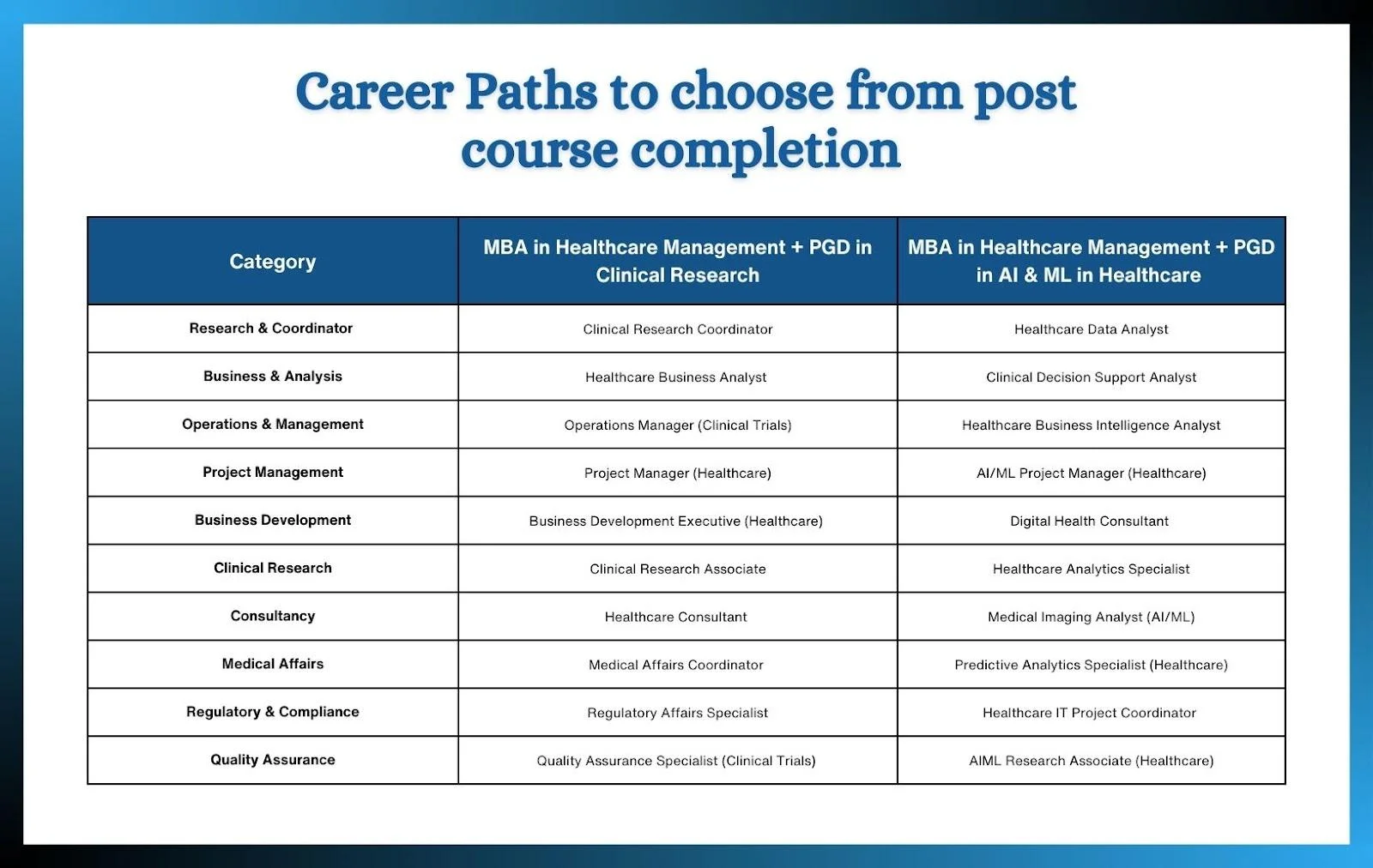
Master of business administration healthcare management degree opens doors to a wide variety of career paths. It includes roles in healthcare consulting, hospital administration, health information management and more. You can expect a salary based on various factors such as your experience, location, and roles & responsibilities. However, post Master of business administration hospitals management degree, competitive salaries and excellent career paths can be expected. Following are the combination of roles to leverage your expertise in healthcare management, clinical research and AI & ML in healthcare from CliniLaunch.
Credit: Karthik C (Graphic Designer at CliniLaunch)
To Sum Up
In conclusion, the pursuit of MBA Healthcare Management with additional programs offers a compelling pathway to a rewarding and impactful career in the healthcare industry. By equipping individuals with the essential business acumen, leadership skills, and specialized knowledge, these programs empower professionals to address the complex challenges and opportunities that lie ahead.
As the healthcare landscape continues to evolve, the demand for skilled and innovative leaders will only intensify. By investing in your education and professional development through an MBA Healthcare Management program, you can position yourself at the forefront of this dynamic field. Take your first step towards a fulfilling Career in Healthcare. Join this MBA in Hospital Administration and Healthcare Management.
Clinical trials are the cornerstone of medical progress, meticulously evaluating new drugs and treatments for safety and efficacy. Throughout this process, patient safety is of the utmost importance, and adverse event reporting clinical trials is essential to guaranteeing both the success of a clinical study and the well-being of the patients. Any negative and unexpected sign, symptom, or abnormality in the laboratory linked to the administration of an experimental medication or medical technology is called an adverse event.
Researchers can detect possible dangers connected with the intervention and make well-informed decisions about whether to continue the trial using effective adverse event reporting. Not only is this data essential for patient safety, but it also makes a major contribution to the significance of adverse event reporting in medical research. Robust adverse event reporting (AE) enables researchers to revise guidelines for adverse event management and develop best practices for adverse event reporting by giving a complete picture of the impacts of the intervention.
Adverse Event Reporting Clinical Trials – The Complexities
Credit: Karthik C (Graphic Designer at CliniLaunch)
Adverse event reporting in clinical trials can be a challenging procedure, despite its important function. Identifying and categorizing AEs is one of the main issues. The picture may be complicated by pre-existing disorders, symptoms may be mild, and it may be challenging to distinguish between an AE and a typical physiological response. The establishment of best practices for adverse event reporting may be hampered by this ambiguity, which may result in underreporting.
Another level of complication is added by negotiating the labyrinth of regulatory requirements and compliance. Adverse event reporting in clinical trials is governed by regulations set forth by regulatory agencies such as the FDA. Adhering to these regulations necessitates close attention to detail.
There are obstacles in data analysis and management as well. A large quantity of data is generated by adverse event reporting, and it is essential to gather, store, and analyze this data effectively. To guarantee data quality and integrity, effective adverse event reporting requires strong data management systems and qualified staff.
Lastly, it is impossible to exaggerate the effect that underreporting has on trial results. Incomplete data sets make possible hazards harder to see and make it more difficult for researchers to evaluate the intervention’s safety profile. Delays in approvals may result from this, endangering patient safety and eventually impeding the clinical trial’s overall success.
Importance of AE Reporting in Medical Research -The CliniLaunch Advantage
Credit: Karthik C (Graphic Designer at CliniLaunch)
Patient safety must always come first throughout research trials. To accomplish this, adverse event reporting clinical trials reporting is essential. Leading research organization CliniLaunch, renowned for its best practices in clinical research, provides researchers with the skills and resources they need to handle AE reporting efficiently.
In order to minimize hazards and guarantee prompt intervention, early detection and reporting are essential. CliniLaunch stresses how crucial it is for research personnel to receive thorough training in order to identify the possible importance of AE reporting in medical research. This entails training staff members on standardized language (such as MedDRA) and cultivating an environment of candid communication where participants feel at ease disclosing any negative experiences.
For proper analysis of AEs, standardized data collection and management are necessary. Electronic data capture (EDC) devices are among the effective data collection techniques that Clinilaunch provides researchers with. By reducing errors and guaranteeing consistency, these solutions enable effective AE management.
The AE reporting process is further streamlined by utilizing technology. CliniLaunch emphasizes the advantages of using specialist software for reporting and tracking aftereffects. This kind of software expedites communication with regulatory bodies, simplifies data processing, and automatically generates follow-up report reminders.
The Ripple Effect – Benefits of the Importance of AE Reporting in Medical Research
One cannot stress the importance of AE reporting in medical research. A well-implemented AE reporting plan has several advantages:
Enhanced patient safety: Timely identification and reporting of AEs enable prompt interventions, protecting patient well-being.
Data integrity and reliability: Accurate and complete AE data are essential for drawing valid conclusions from clinical trials.
Accelerated drug development: Efficient AE management contributes to streamlined regulatory submissions and faster drug approval processes.
Regulatory compliance: Adherence to guidelines for adverse event management ensures that clinical trials meet regulatory standards.
By prioritizing adverse event reporting and implementing robust strategies, researchers are able to significantly enhance the overall quality and impact of their clinical trials.
A Roadmap to Success – Implementing Effective Adverse Event (AE) Reporting
Credit: Karthik C (Graphic Designer at CliniLaunch)
Building a robust adverse event (AE) reporting system is crucial for safeguarding patient safety and ensuring the success of clinical trials. Here are some key steps:
1. Develop Standard Operating Procedures (SOPs): Clearly define SOPs outlining best practices for adverse event reporting that are essential and cannot be omitted. These SOPs should encompass standardized AE definitions, data collection methods, and reporting timelines.
2. Invest in Training and Education: Comprehensive training for investigators and research staff is vital. This training should cover guidelines for adverse event management, AE identification and classification, and the importance of AE reporting in medical research.
3. Leverage Technology: Utilize electronic data capture (EDC) systems to streamline data collection, minimize errors, and facilitate efficient adverse event reporting. These systems can also automate reminders for follow-up reports and expedite communication with regulatory bodies.
4. Implement Ongoing Monitoring and Evaluation: Continuously monitor the effectiveness of your AE reporting system. This includes evaluating data completeness, timeliness of reporting, and adherence to SOPs
The Future of AE Reporting – Trends and Innovations
The landscape of adverse event reporting is continuously evolving, driven by emerging technologies:
Artificial Intelligence (AI) and Machine Learning (ML): These technologies hold immense promise for analyzing vast amounts of AE data and identifying potential safety signals more efficiently.
Predictive Analytics: Utilizing AI and ML, researchers can potentially predict which study participants are at higher risk for specific AEs, allowing for proactive interventions.
Real-World Evidence Integration: Integrating real-world data with clinical trial data can provide a more comprehensive picture of an investigational drug or device’s safety profile.
CliniLaunch remains committed to staying at the forefront of these advancements, ensuring that our clients have access to the most up-to-date strategies for effective adverse event reporting. Their courses in AI and ML in healthcare and biostatistics equip graduates with the necessary skills to navigate this evolving landscape.
Conclusion
Effective adverse event (AE) reporting is paramount for clinical trial success. By adhering to best practices and leveraging advanced technologies, researchers can enhance patient safety, data quality, and regulatory compliance. CliniLaunch offers comprehensive solutions, including expert training and resources, to optimize AE management. Our commitment to excellence empowers researchers to navigate the complexities of adverse event reporting and achieve optimal trial outcomes. Partner with CliniLaunch to elevate your AE reporting practices and contribute to the advancement of medical science.
Understanding the importance of patient advocacy in trials will provide one with the expertise to promote significant change in clinical research. CliniLaunch – a pioneer in healthcare upskilling, provides specialized courses to help individuals embrace the power of patient advocacy and contribute to a healthier future.
In this blog, let’s dive into the field of patient advocacy and look at how it may transform the face of medical research.
Bridging the gap between patients and clinical research
Patient advocacy groups in clinical trials, while necessary for medical advances, can encounter considerable challenges. The key problem is effectively involving patients throughout the study process. This gap between patients and researchers can result in a variety of problems, including poor enrolment rates, high dropout rates, and restricted generalizability of study findings.
The importance of patient advocacy in trials is evident in the far-reaching implications of the absence of patient participation. Patients may be unwilling to participate because they perceive a lack of openness, are concerned about potential hazards, or feel disengaged. As a result, studies frequently enrol a small and homogeneous patient sample, reducing the generalizability of study findings. Furthermore, a lack of patient involvement might result in therapies that do not meet real-world patient requirements and experiences.
A study published in the Journal of Clinical Oncology found a correlation between patient participation and trial efficacy. The study discovered that trials with higher levels of patient engagement had significantly higher enrolment rates and improved retention. These findings underline the importance of including patients as active participants in the study process.
CliniLaunch recognizes the critical need to bridge this gap. Our specialized upskilling courses empower individuals to become effective patient advocates, equipping them with the knowledge and skills to drive meaningful change in clinical research. By actively involving patients in the research process, the impact of advocacy organizations on clinical trials can significantly lead to success of clinical trials.
Check out what courses we have on offer related to interest and requirements by clicking here.
Patient advocacy groups in clinical trials – Fostering collaboration and improving outcomes
Patient advocacy groups in clinical trials offer a viable strategy for addressing the problems of medical research. These organizations facilitate collaboration among patients, healthcare practitioners, and researchers, resulting in a synergistic environment that speeds medication discovery and improves patient outcomes.
The role of patient groups in medical research is very instrumental and much more than just a supportive role. They actively shape the research agenda and ensure that studies reflect patient-centred goals. This collaborative approach increases the relevance and effect of clinical studies.
For example, the Crohn’s and Colitis Foundation has played an important role in sponsoring research and fighting for individuals suffering from inflammatory bowel disease. Their efforts have resulted in substantial advances in treatment choices and higher quality of life for those affected.
Furthermore, patient advocacy groups have a thorough awareness of patients’ needs and experiences. This knowledge is extremely useful in developing patient-centred clinical trials, increasing enrolment, and boosting retention rates. By incorporating patients in the study process from the start, advocacy organizations assist in establishing trust and a sense of ownership among participants.
Benefits of patient advocacy groups in clinical trials
Patient advocacy groups in clinical trials are instrumental in improving the efficiency and impact of clinical trials actively incorporating patients in the research process, which helps improve patient advocacy in studies.
Improved patient recruitment and retention
Patient advocacy groups in clinical trials are crucial in increasing patient knowledge and participation in clinical trials. By developing confidence and addressing patient issues, these groups have a significant effect on patient recruitment and retention rates
Enhanced trial design and execution
Patient advocacy groups provide crucial insights into the patient’s experience, which is necessary for performing good clinical studies. By including patient perspectives, researchers may create studies that are more relevant, practical, and patient-centred.
Accelerated drug development
The role of patient groups in medical research is undeniable. Patient advocacy groups can accelerate medicine development by supporting efficient patient recruitment, improving data quality, and boosting stakeholder participation.
Better patient outcomes
Patient advocacy groups play an important role in ensuring that patient needs and goals are central to the research agenda. By advocating for patient-centred research, these groups contribute to the development of medications that benefit patients directly.
CliniLaunch recognizes the tremendous importance of patient advocacy in trials and provides specialized training to educate people with the skills needed to create positive change. We seek to create a collaborative environment that accelerates medical discoveries and improves patient lives by educating healthcare professionals and individuals.
Shaping the future of clinical trials: The role of patient advocacy groups
The collaboration between patient advocacy groups in clinical trials is poised for major expansion and development. As the healthcare environment changes, these organisations will work more on novel methods to clinical trial design, patient involvement, and data utilization.
A future in which patient advocacy groups are included in the medication development process offers great promise. These organizations may increase their effect on clinical trials by utilising technology and data analytics. For example, patient-reported outcome (PRO) measurements can be improved to better capture patient experiences, resulting in more relevant and patient-centred research.
To fully realize the potential of patient advocacy groups, ongoing investment in education, training, and support is required. By providing advocates with the appropriate skills and expertise, we can foster a healthcare environment in which patient views are heard and research is genuinely patient-centred.
Patient advocacy groups in clinical trials are the future of healthcare. By collaborating closely with industry, we can accelerate drug development, improve patient outcomes, and shape a healthier future.
Conclusion
Patient advocacy groups are crucial in transforming the landscape of clinical research. By bridging the gap between patients and researchers, these organizations play a vital role in enhancing patient engagement, improving trial outcomes, and accelerating drug development. As the healthcare landscape continues to evolve, the importance of patient advocacy in clinical trials will only grow. By investing in education, training, and support for patient advocates, we can create a future where research is truly patient-centered and benefits individuals worldwide.
Traditional medicine clinical research has been a fundamental component of healthcare systems for a long time now. It comprises a wide range of treatments that have their roots in cultural and spiritual beliefs. However, clinical research uses exacting scientific procedures to assess the effectiveness and safety of medical treatments. Although traditional and contemporary medicine have always functioned in relative isolation from one another, there is growing recognition of the possibility for the integration of traditional and modern medicine together.
This investigation explores the field where clinical research in conventional medicine meets. Through an analysis of the obstacles and possibilities that arise from merging these two paradigms, our goal is to provide light on the way towards a healthcare system that is both more extensive and efficient.
Traditional therapies in clinical trials has been a topic of interest for research for a long now. Through scientific investigation of these traditional techniques, researchers can uncover the potential benefits of traditional medicine in healthcare. This confluence offers a chance to solve unmet medical needs, improve patient outcomes, and expand treatment alternatives.
This exploration delves into the landscape where traditional medicine clinical research converges. By examining the challenges and opportunities inherent in integrating these two paradigms, we aim to illuminate the path towards a more comprehensive and effective healthcare system.
Unveiling the Potential – Traditional Medicine Awaits Rigorous Evaluation
Credit: Karthik C (Graphic Designer at CliniLaunch)
Despite this historical gap, traditional medicine possesses a vast wealth of knowledge accumulated over millennia. Herbal remedies, acupuncture, and other traditional therapies offer a potential treasure trove of benefits of traditional medicine in healthcare. A growing body of anecdotal evidence suggests their efficacy in treating various ailments. However, to fully unlock this potential and integrate traditional medicine into mainstream healthcare, rigorous scientific evaluation through traditional medicine clinical research is paramount.
By incorporating traditional therapies in clinical trials, researchers can assess their safety and effectiveness with a high degree of scientific credibility. This not only validates the potential benefits of traditional medicine in healthcare but also paves the way for its integration with modern therapeutic approaches. Institutes like CliniLaunch, with their expertise in clinical research design and implementation, can be instrumental in facilitating the initiation of such traditional medicine clinical research studies.
Bridging the Gap – Integrating Traditional Medicine into Clinical Research
Credit: Karthik C (Graphic Designer at CliniLaunch)
Unlocking the potential of traditional medicine requires its integration with the established practices of traditional medicine clinical research. This necessitates a multidisciplinary approach, bringing together traditional medicine practitioners, clinical researchers, and scientists. Their collaborative efforts bridge the gap between traditional knowledge and modern scientific methodologies.
Integrating traditional therapies into clinical trials involves selecting appropriate methodologies. While randomized controlled trials (RCTs) remain the gold standard, observational studies can be valuable for capturing the role of traditional therapies in clinical trials within real-world settings.
Standardization is paramount for ensuring scientific rigour. Developing standardized protocols for treatment delivery, data collection, and quality control across studies is vital for generating reliable and generalizable results. This allows researchers to accurately assess the benefits of traditional medicine in healthcare. Institutions like CliniLaunch, with their network of researchers and trial sites, can facilitate this integration.
Benefits of Traditional Medicine Clinical Research
Traditional medicine clinical research offers a multitude of advantages that can revolutionize healthcare delivery. Patients stand to gain significantly from the integration of traditional and modern medicine.
One of the most compelling benefits lies in the potential for improved efficacy and reduced side effects. Traditional therapies, honed over generations, may offer effective management for specific conditions. By subjecting these therapies to rigorous clinical trials, researchers can determine their true effectiveness and identify potential side effects, leading to safer and more targeted treatment options for patients.
Traditional medicine clinical research can also unlock a treasure trove of knowledge for drug discovery. Traditional medical practices often rely on plant-based remedies and natural products. Integrating these with modern scientific methodologies can lead to the identification of novel drug targets and the development of entirely new therapeutic approaches.
Furthermore, traditional medicine often boasts affordability and accessibility. Many traditional remedies utilize readily available plant materials, making them potentially cost-effective healthcare solutions, especially in resource-limited settings. Traditional medicine clinical research can pave the way for the incorporation of these affordable options into mainstream healthcare, improving overall healthcare economics.
Institutions like CliniLaunch, with their expertise in clinical research methodologies, can be instrumental in navigating the complexities of cost-benefit analyses. Their resources can equip researchers with the tools needed to assess the economic viability of integrating traditional medicine into healthcare systems.
The Future of Traditional Medicine Clinical Research
Credit: Karthik C (Graphic Designer at CliniLaunch)
The landscape of healthcare is undergoing a transformative shift, marked by a growing convergence of traditional and modern medicine. The potential benefits of traditional medicine in healthcare have ignited significant interest and investment in traditional medicine clinical research. To fully realize the promise of this field, robust collaborations among researchers, clinicians, and policymakers are essential.
By conducting rigorous clinical trials focused on the role of traditional therapies, researchers can generate robust evidence to inform healthcare practices. Policymakers, in turn, can create an enabling environment for the integration of traditional and modern medicine through supportive regulations. As this field matures, further research is imperative to establish evidence-based guidelines for the safe and effective utilization of traditional therapies. Institutions like CliniLaunch play a pivotal role in advancing this domain by fostering innovation and training the next generation of clinical research professionals.
Conclusion
This exploration underscores the immense potential of traditional medicine clinical research. By merging traditional and modern medicine, we can harness the wisdom of ancient practices to address contemporary healthcare challenges. Embracing the role of traditional therapies in clinical trials is pivotal in unlocking the full benefits of traditional medicine in healthcare. We encourage readers to explore this burgeoning field and contribute to its advancement.
To delve deeper into the world of clinical research and explore how to integrate traditional medicine into your work, consider CliniLaunch. Their comprehensive courses and expert guidance can equip you with the necessary skills. Visit https://test.clinilaunch.in/courses/ to learn more.
Clinical research is the engine driving medical progress. It’s through these trials that new treatments and therapies are developed, tested, and refined. Yet, despite their importance, clinical research is often shrouded in misconceptions. These clinical research common misconceptions can prevent people from participating in trials, hindering scientific advancement and potentially delaying access to life-saving treatments.
In this blog post, we’ll debunk some of the most common myths in clinical research misconceptions and clinical trial myths, aiming to shed light on the realities of clinical research participation.
Safety is a paramount myth in clinical research. Before reaching human trials, potential treatments undergo rigorous testing in labs and often on animals. Clinical research common misconceptions often center around this initial phase, but it’s important to remember there are multiple phases in a clinical trial. The first phase of human trials, typically involving a small group of healthy volunteers, focuses solely on safety assessment.
Only after a treatment demonstrates a good safety profile will it progress to larger trials that evaluate effectiveness. Throughout the entire process, researchers and Institutional Review Boards (IRBs) closely monitor participant safety.
While clinical trials pave the way for future advancements, they can also significantly benefit participants themselves. Participants in trials often receive state-of-the-art care and close monitoring from healthcare professionals. They also have the potential to gain access to promising new treatments before they become widely available. Additionally, some trials offer participants the chance to play a more active role in managing their health condition.
In most cases, covering the cost of any study-related medical care, including the intervention itself, doctor visits, and tests are common misconceptions in clinical research. Participants are not typically billed for these services. In fact, some trials may offer compensation for time and travel associated with participation. It’s always best to check with the specific trial coordinator about what costs are covered by the research.
Doctors Won’t Listen To Your Concerns
Clinical research prioritizes participant autonomy and informed consent. This means you have the right to ask questions, voice any concerns, and withdraw from the trial at any point, for any reason. Researchers hold regular consultations with participants to ensure their well-being and address any questions or concerns they may have.
There’s a wider variety of clinical trials than you might think. Trials recruit participants with a diverse range of health conditions, ages, and backgrounds. Clinicaltrials.gov, a US government website, is a helpful resource for searching for ongoing trials based on specific criteria.
Important Considerations for Clinical Trial Participation
While we’ve addressed some of the major clinical research common misconceptions, there are some important factors to consider before enrolling in a clinical trial.
Understanding the Trial: It’s crucial to thoroughly understand the purpose, procedures, and potential risks and benefits of the specific trial you’re considering. Ask questions and don’t hesitate to seek clarification from the research team.
Eligibility Criteria: Each trial has specific criteria for participation. These criteria may include factors like age, health status, and medical history.
Potential Side Effects: No treatment is without risks. Carefully consider the potential side effects associated with the intervention being tested in the trial you’re interested in.
Time Commitment: Trials can vary significantly in terms of the time commitment required from participants. Be sure you understand the frequency and duration of clinic visits, tests, or other trial procedures.
Finding a Trial: Several resources can help you find clinical trials that match your needs. These include Clinicaltrials.gov, patient advocacy groups, and your doctor’s office.
Conclusion
Clinical research plays a vital role in advancing medical knowledge and improving patient care. By debunking clinical research misconceptions and understanding the realities of trial participation, we can empower more people to make informed decisions about joining these crucial endeavors. Remember, clinical trials hold the potential to revolutionize healthcare, and you can be a part of that progress.