Artificial Intelligence (AI) is transforming the healthcare industry, with Convolutional Neural Networks (CNNs) leading the path in medical imaging and radiology. The growing need for accurate and fast diagnosis has driven the adoption of deep learning techniques in healthcare. Among these, CNNs have shown exceptional capability in visual recognition tasks, making them ideal for analyzing medical images such as X-rays, MRI scans, and CT scans.
Medical imaging plays a significant role in disease detection, treatment planning, and monitoring. However, traditional methods rely on human expertise, which can be subjective and time-consuming. This is where Convolutional Neural Network in deep learning comes in, enabling automated and highly accurate image analysis. This blog explores how CNNs work, what their key applications are, and which challenges they face in medical imaging.
Neural networks consist of multiple layers, including an input layer, hidden layers, and an output layer. Convolutional Neural Networks are a specialized type of deep learning model designed for image-based tasks, particularly image recognition and processing. These networks are inspired by the way the human visual system processes images, automatically detecting patterns, edges, and features without human intervention.
Compared with other models, the model with twice transfer learning CNN with output neuron achieved the best accuracy of 98.9%.
How CNNs Work
CNNs function through multiple layered operations:
Convolutional Layers: Apply filters (kernels) to detect edges, textures, and complex structures.
Pooling Layers: Reduce spatial dimensions while retaining essential image features.
Activation Functions: Typically, Rectified Linear Unit is used to introduce non-linearity and improve feature learning.
Fully Connected Layers: Interpret extracted features and generate final predictions.
Which Features Make CNNs Unique?
Unlike traditional Neural Networks, CNNs automatically learn features from raw data, making them more effective at analyzing complex medical images without requiring manual feature extraction.
Creative Designed by Md Aayan Ansari (Graphic Designer at CliniLaunch)
Why is Medical Imaging Important in Healthcare?
Medical imaging is a non-invasive technique that allows healthcare professionals to visualize internal organs, tissues, and abnormalities. It plays a crucial role in diagnosing conditions such as cancer, neurological disorders, and cardiovascular diseases.
Which Imaging Modalities Use CNNs?
CNNs are applied in various medical imaging techniques, including:
X-rays: Used for detecting fractures, pneumonia, and tuberculosis.
CNNs are revolutionizing medical imaging and radiology by enhancing diagnostic accuracy, speed, and automation. While challenges such as data privacy and regulatory hurdles remain, the continued development of Convolutional Neural Networks for visual recognition and their integration with Recurrent Neural Networks will further enhance their role in healthcare.
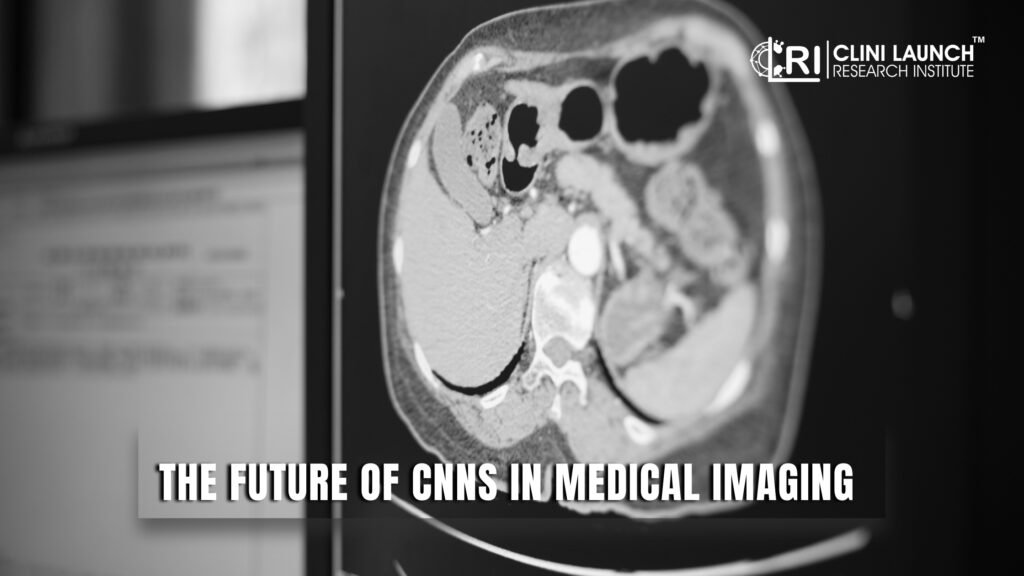
As deep learning technologies evolve, CNNs will play an even greater role in early disease detection, predictive analytics, and remote healthcare solutions. The future of AI-driven radiology is bright, paving the way for a more efficient, accurate, and accessible medical system. Ready to explore advanced AI solutions for medical imaging? CliniLaunch Research Institute is at the forefront of innovation, driving advancements in deep learning for healthcare.
Biostatistics is a critical and growing field within biometrics and healthcare recognizing its potential. With the recent projections, the demand for biostatisticians is clearly indicating increase in funding and salaries. They are experts in biological data analysis crucial in healthcare. The expertise in biostatistics professionals will be aligned with the ongoing demand of societal, technological, and regulatory changes.
In this blog post, we will be exploring the top 5 reasons biostatisticians will be crucial hire for the future of biometrics and healthcare applications.
Advancing Biometric and Healthcare Data
The consistent change in healthcare data indicates analysis is crucial in these developing trends. According to the US Bureau of Labour Statistics, the expected demand for biostatisticians rise significantly by 2031 with an increase up to 31%.
With the significant growth in experiencing biostatistics (especially in biometrics), with the rise in salaries and projected funding. However, the demand for biostatisticians has consistently exceeding their supply in the United States since Covid 19. Even, this trend is followed by the European Union and developing regions. They are experiencing similar demand with the same expectations specifically driven by healthcare sector and biometrics adoption.
The increasing demand for tailored results underscores the growing reliance on biostatisticians. Their specialized skills in study design, data collection, and the interpretation of complex datasets are essential for extracting meaningful insights. Therefore, attracting and retaining the best biostatisticians is critical now, before the demand becomes unsustainable.
5 Reasons Biostatisticians will be crucial hire
Let us explore the top five reasons to hire biostatistics professionals for the growth of clinical research team in 2025 to establish the relevance of overall biostatistical analysis.
Healthcare Data Explosion
The healthcare industry is facing a data explosion, fueled by sources like electronic health records, wearables, and genomic sequencing. This influx of complex information creates both a challenge and a significant opportunity for analysis. Projections estimate a 36% compound annual growth rate for-healthcare data by 2025, exceeding growth rates in sectors like media and entertainment.
Big data analytics holds the potential to improve quality of life and reduce operational costs in healthcare. It facilitates predictive analytics for early disease detection, population health management, precision medicine, and improved healthcare operational efficiency.
This surge in data has created a growing demand for biostatisticians. Their expertise is crucial for coordinating and interpreting these massive datasets. Biostatisticians develop and implement statistical models to uncover patterns, trends, and relationships within the data. This work is essential for advancing disease prediction, personalized treatment strategies, and optimizing the allocation of healthcare resources.
The Changing Roles in Healthcare
Biostatistical analysis is crucial in managing huge healthcare data and its significance will only grow in the future. With the rapidly evolving role of biostatisticians due to explosion of healthcare data and the adoption of technologies such as big data and artificial intelligence. If a clinical research team doesn’t have a biostatistician, it is highly recommended to hire them as they become essential for successful endeavour.
Here is why?
Biostatistics for Healthcare Data:The healthcare industry is experiencing a data explosion, particularly with the rise of biometrics from wearables and genetic testing. This surge in data has created a high demand for biostatisticians, who are experts in using data science tools to analyze complex biological and health data. By uncovering hidden patterns within this data, they play a crucial role in personalizing medicine and improving patient outcomes.
Biometric Data Analysis:By applying sophisticated analytical techniques to massive datasets of biological information, biostatisticians are able to make more accurate predictions about patient health and develop more effective, personalized treatments.
Developing Biometric Models:Biostatisticians are creating innovative statistical models to analyze complex biometric data, which will enable a deeper understanding of healthcare patterns and trends, ultimately leading to better healthcare outcomes.
Optimizing Biometric Data Use: The working professionals play a vital role in maximizing the value of the increasing amount of biometric data in healthcare. They help healthcare organizations effectively utilize this data to make well-informed decisions.
In the data-driven healthcare future, they will be essential leaders, guiding clinical teams through complex information and driving meaningful change.
Health in Focus
The COVID-19 pandemic has underscored the need for prioritizing public health solutions, particularly for the growing population of older adults. It is crucial to develop practical and evidence-based strategies that promote healthy aging and effectively address age-related health concerns.
The number of older adults in the United States is expected to grow significantly in the coming decades. In the context of the United Healthcare by 2050, it is estimated that there will be 82 million Americans aged 65 and older, a 47% increase from 2022. This increase in the older adult population is likely to lead to a rise in the prevalence of chronic diseases, such as heart disease, diabetes, and Alzheimer’s. As these conditions often require hospitalization, the growing number of older adults with chronic diseases could put a strain on the healthcare system. It is therefore important to develop and implement interventions and preventive measures to address the health needs of this population.
To meet the healthcare challenges of a growing elderly population, it is crucial to develop clinical programs that encourage healthy aging, effectively manage chronic illnesses, and offer comprehensive long-term care options.
It is essential for public health initiatives to addressing the challenges of an aging population. With the use of their expertise in data analysis, evaluation, and predictive modelling, these skilled professionals contribute to:
Data Analysis and Interpretation: Biostatisticians analyze biometric data from public health programs, such as vaccination campaigns. They examine participation trends across different demographic groups and use biometric identification patterns to pinpoint and address unequal access to these programs through targeted interventions.
Biometric Monitoring:Biostatisticians use data from wearables like fingerprint and facial recognition to monitor heart rate and sleep patterns in older adults participating in chronic disease programs. This analysis helps determine how effective the programs are.
Predictive Modelling:By combining biometric data like gait and vital signs with traditional health information, biostatisticians can better predict healthcare needs and the effects of aging on public health. This allows for proactive planning and the development of targeted biometric monitoring tools for at-risk patients.
Future Role of Biostatistics Professionals
The increasing prevalence of chronic illnesses and aging populations necessitates the expertise of biostatisticians. Their data analysis skills are crucial for healthcare teams to understand trends in these conditions, facilitating effective planning and targeted responses.
Biostatisticians will play a key role in developing personalized interventions to improve health outcomes for these vulnerable groups. Therefore, employing qualified biostatisticians will significantly enhance healthcare services for those who require them most.
Precision and Personalized Medicine
The fields of precision and personalized medicine are rapidly expanding. According to Statista, it is estimated that global spending on precision medicine treatments will reach $82 billion by 2027, which is a 150% increase from 2022. The global personalized medicine market is expected to surpass $1.2 trillion by 2033.
It is believed that traditional one-size-fits-all healthcare methods are inadequate with the expansion of the precision and personalized medicine. Cellpress reported that precision medicine is crucial with the increase in technological advancements and developing needs in the healthcare by 2030. From the technological advancements, healthcare organizations are facing challenges in customizing treatments for each patient while they use data-driven approaches.
Let’s discuss the contribution and critical functions of these key professionals working as Biostatisticians:
Data Analysis Expertise: They excel themselves at refining intricate datasets with the identification of essential patterns for personalized treatment decisions.
Trial Design Proficiency: Biostatisticians have the skills in setting up clinical trials to confirm new personalized medicine methods by relying on solid evidence-based healthcare practices.
Risk Stratification Expertise: The healthcare professionals use sophisticated data analysis to spot high-risk patients. It will help them understand their situations, take early action, and tailored treatments to prevent complications.
Communication and Collaboration: The main function includes that they make the data understandable and practical to advance the personalized medicine projects.
The Importance of Biostatisticians in Targeted and Precision Healthcare
Biostatisticians are vital in the rise of personalized medicine. Their expertise in data analysis, trial design, and results interpretation enables the creation of individualized healthcare plans, ensuring treatments are grounded in strong evidence.
Current medical treatments are only effective for a minority of patients (30-60%). Personalized medicine aims to address this gap by tailoring treatments to an individual’s unique genetic makeup, environment, and lifestyle.
Biostatistics professionals are increasingly involved in using data science tools. They are into analysing detailed personal healthcare data likely the information from dietary trackers and activity monitors. Health analysis allows the healthcare professionals to predict most effective treatments will for individual patients. This leads to tailored healthcare plans and it will help potentially in improving health outcomes.
To sum it all up, we have found that the increase in importance of biostatisticians with the technology and data collection methods advance. It is also essential for the development and refinement in medical treatments through the analysis of patient outcomes. Therefore, the healthcare professionals will be key to future advancements in the biometric and healthcare data in 2025.
Increasing Regulations
As clinical trials have evolved over the past decade, it is to satisfy the increasing requirements of regulators, law enforcement, and healthcare providers. With the technological revolutions, it has simplified the development of drugs, medical devices, invasive procedures, innovative therapies, strict regulatory norms (due to rise of precision medicine), and treatments.
Several factors are contributing to stricter government oversight of the development and approval of new medical treatments:
Public Safety Concerns: Due to past safety concerns with medications, regulations have become stricter, including measures to protect biometric data and ensure public health.
Ensuring Biometric Device Efficacy: Biometric device regulations play a crucial role in ensuring the reliability and accuracy of these devices. By enforcing strict standards and guidelines, these regulations help prevent the use of faulty devices that could lead to inaccurate measurements and potentially compromise patient safety.
Transparency and Accountability in Biometric Research: When gathering biometric data, it’s important to have rules that are both moral and clear. These rules do two things: They help people trust that their information is safe and used correctly, and they make sure that everyone involved is responsible for following the rules.
Advancing Biometric Science: To maintain data reliability and accuracy, healthcare regulations are continuously revised to reflect the latest developments in biometrics.
Global Standardization: International regulators are joining forces to create standardized rules for biometric data. Their goal is to make it easier to approve biometric devices and encourage the safe and responsible use of this technology on a global scale.
The Role of Biostatisticians in Regulatory Navigation
Biostatisticians are essential in navigating the evolving landscape of government regulations for emerging technologies like wearable devices. Their expertise is crucial for ensuring clinical trials meet all regulatory standards, from determining appropriate sample sizes and maintaining data quality to managing risks and facilitating collaboration among stakeholders. They act as a bridge between complex data and regulatory requirements, enabling companies to bring innovative health solutions to market while maintaining compliance.
Beyond individual technologies, biostatisticians play a vital role in shaping health policy. By analyzing population-level data and evaluating the effectiveness of public health interventions, they provide the evidence needed to inform policy decisions aimed at improving health outcomes and reducing healthcare disparities. Initiatives like the Limited CMC Development and Readiness Pilot (CDRP) and the FDA’s emphasis on diversity and inclusion in clinical trials underscore the growing importance of biostatisticians in driving both regulatory compliance and innovation within the healthcare industry.
These regulatory developments have far-reaching implications for all stakeholders in healthcare, including pharmaceutical companies, research institutions, and, most importantly, patients. Maintaining compliance with these evolving regulations is not just a legal requirement; it’s fundamental to ensuring the accuracy and reliability of clinical trial data, which ultimately impacts patient safety and treatment efficacy. These regulations represent a collective effort to enhance healthcare safety, effectiveness, and inclusivity across the US. Therefore, engaging the expertise of a qualified biostatistician is a critical investment for any organization seeking to navigate this complex regulatory environment and uphold the integrity of their clinical trials.
Increasing Interdisciplinary Collaborations
Modern healthcare is undergoing a significant transformation, moving away from the traditional siloed approach towards a collaborative, interdisciplinary model. Previously, healthcare professionals often worked in isolation, with specialists concentrating solely on their specific areas of expertise. This fragmented approach, however, has proven inadequate for addressing the increasingly complex health challenges of today.
Recognizing the limitations of this traditional structure, the healthcare field is embracing the power of interdisciplinary teams. These teams are composed of professionals from a diverse range of disciplines, including physicians, nurses, therapists, social workers, pharmacists, and biostatisticians. By bringing together this varied expertise, healthcare providers can offer more comprehensive and holistic patient care.
This collaborative approach has clear advantages, including:
Enhanced Patient Care:Interdisciplinary teams, by drawing on expertise from various fields, create comprehensive care plans that address the multifaceted nature of a patient’s health. This holistic approach not only leads to improved patient outcomes but also enhances their overall quality of life.
Reduced Errors:Interdisciplinary teams, composed of individuals with diverse backgrounds and areas of expertise, offer a significant advantage in healthcare by enhancing patient safety and elevating the standard of care. By bringing together a variety of perspectives, these teams are better equipped to identify potential errors or oversights, preventing them before they can negatively impact patient well-being. This collaborative approach ensures that all aspects of a patient’s care are thoroughly considered, leading to more comprehensive and effective treatment plans.
Improved Communication:Healthcare collaboration fosters open communication between providers and patients. When professionals from different fields work together, everyone involved in a patient’s care is well-informed and aligned in their approach.
Biostatisticians are essential to modern healthcare, playing a crucial role within interdisciplinary teams. Their specialized knowledge in statistical analysis and research methodologies allows them to contribute significantly to both patient care and medical research. From designing studies to interpreting data, their expertise is invaluable for advancing medical knowledge and improving patient outcomes.
Let us explore how:
Data Analysis
Biostatisticians play a crucial role in the medical field by working closely with clinicians and researchers. Their expertise lies in analyzing substantial volumes of medical data, encompassing patient records, clinical trial outcomes, and population health statistics. Through careful examination of this data, they uncover hidden patterns and trends, generating valuable insights that directly influence clinical decision-making and the development of effective treatment strategies.
One example of this collaborative work is the partnership between biostatisticians and oncologists. By analyzing data from cancer patients, they can pinpoint factors that correlate with treatment response and survival rates. These findings empower clinicians to personalize treatment plans for individual patients, leading to improved outcomes by maximizing the treatment’s effectiveness while minimizing potential side effects.
Research Collaboration
Biostatisticians are essential to the success of clinical trials. They work closely with doctors and scientists, contributing their expertise to all stages of the research process. This includes developing the study protocols, which outline how the trial will be conducted, and calculating the appropriate sample size to ensure statistically meaningful results. Perhaps most importantly, biostatisticians are responsible for analyzing the data collected during the trial to determine whether a new treatment is safe and effective.
A common example of their work is collaborating with pharmaceutical companies or academic institutions to design randomized controlled trials.
These trials are used to rigorously evaluate the effectiveness of new drugs for specific medical conditions. By carefully designing the study and applying appropriate statistical methods, biostatisticians ensure the results are reliable. This reliable evidence is then used to inform clinical practice, helping doctors make the best treatment decisions for their patients, and also plays a critical role in regulatory decisions about whether a new drug can be approved for use.
Cost-Effectiveness Analysis
Biostatisticians play a crucial role in healthcare by collaborating with administrators and policymakers to determine the cost-effectiveness of various treatments. They carefully analyze the potential costs and benefits of different interventions, considering factors such as treatment efficacy, patient outcomes, and how resources are used. For instance, a biostatistician might work with hospital administrators to analyze data on healthcare utilization to assess whether a new healthcare program or intervention is financially viable. By providing data-driven recommendations, they help healthcare organizations make the best use of their resources and enhance patient care.
The increasing integration of biometrics and the growing recognition of the importance of interdisciplinary collaboration in healthcare highlight the vital role of biostatisticians. Their expertise in data analysis and research is essential for driving innovation and improving patient care. They work effectively with clinicians, researchers, and healthcare administrators across various disciplines, bridging the gap between data and practical application.
Looking ahead to 2025, clinical research teams planning large or multidisciplinary projects should prioritize including biostatisticians in their collaborations. Their specialized skills in statistical analysis and interpretation are essential for the success of complex research endeavors and for translating research findings into meaningful improvements in healthcare practice.
Final Thoughts for Aspirants
The growth in the demand for biostatisticians, making them indispensable players in shaping the future of healthcare. By navigating the complexities of healthcare data, integration of artificial intelligence technologies, and advancement in personalized medicine is marking the importance of expertise in biostatistics.
With the increase in demand of data-driven and interdisciplinary collaboration, CliniLaunch provides the best bioinformatics training in India to the healthcare professionals. Looking ahead and beyond, CliniLaunch involves in upskilling the professionals and students working in the field of healthcare while we also help in driving innovation and contributing to the improvement in patient outcomes. For more details, visit our Biostatistics Training Course page.
Healthcare management has always been a complex field, and in 2025, financial challenges in healthcare management are taking center stage. As the demand for healthcare services grows and technologies advance, maintaining financial stability has become a significant hurdle for providers, insurers, and governments alike. Let us dive into the key financial challenges that shape the healthcare space in 2025 and explore strategies to address them.
Overview of Financial Challenges in Healthcare Management in 2025
Healthcare management is evolving rapidly, fueled by technological advancements, changing patient demographics, and global health trends. While innovations like AI, telemedicine, and wearable devices promise better outcomes, they come with hefty price tags. Simultaneously, an aging population and the prevalence of chronic diseases are increasing the demand for services, straining already tight budgets.
Rising Healthcare Costs
Factors Contributing to Cost Increases
Financial challenges in healthcare have skyrocketed due to multiple factors. Cutting-edge technologies, though beneficial, are expensive to develop and implement. For instance, AI-driven diagnostic tools and robotic surgeries demand substantial investments.
Additionally, labor shortages have driven wages higher. With burnout and stress causing many healthcare workers to leave the field, organizations must invest heavily in recruitment and retention.
Impacts on Providers and Patients
For providers, rising costs mean slimmer profit margins. For patients, higher expenses often translate to delayed or avoided care, further complicating health outcomes.
Insurance and Reimbursement Complexities
The healthcare reimbursement system remains a labyrinth. Insurance providers frequently delay or deny payments, creating cash flow issues for hospitals. At the same time, patients are shouldering more out-of-pocket expenses, leaving many unable to pay their bills.
Value-Based Payment Models
The shift from fee-for-service to value-based care aims to improve patient outcomes while reducing costs. However, the transition is fraught with financial risks, as providers must invest in data analytics and staff training without immediate returns.
Workforce Challenges
Labor Shortages in Healthcare
The shortage of skilled healthcare professionals is a growing concern. Training and retaining staff require significant financial resources, and overtime costs are piling up as current employees work extra hours to fill gaps.
Regulatory and Compliance Pressures
Strict regulations ensure patient safety but add to the financial burden of compliance. From electronic health record (EHR) requirements to data security standards, compliance costs are eating into operational budgets.
The Role of Technology in Cost Management
Benefits and Costs of Digital Health Tools
Technologies like telehealth and EHRs offer long-term savings but demand upfront investments. Many organizations struggle to balance these costs against the potential benefits.
Cybersecurity Costs
With the healthcare industry being a prime target for cyberattacks, investing in robust cybersecurity measures is no longer optional. Data breaches not only compromise patient trust but also result in hefty fines and legal fees.
Medical debt is a growing issue, with many patients unable to keep up with rising costs. Providers are adopting strategies like flexible payment plans and financial counseling to improve collections without alienating patients.
Aging Population and Chronic Diseases
Cost Implications of an Aging Population
The aging population is placing unprecedented demands on systems to mitigate financial challenges in healthcare. Long-term care facilities, home care services, and chronic disease management programs are stretching financial resources thin.
Chronic Disease Management Programs
Prevention and early intervention programs are cost-effective but require initial investments. Scaling these programs remains a challenge for many organizations.
Global Health Crises and Pandemics
The COVID-19 pandemic highlighted the need to sabotage financial challeges in healthcare. Investing in emergency response systems and stockpiling supplies may seem expensive, but it’s essential for mitigating future crises.
Public vs. Private Healthcare Funding
Balancing public and private contributions is critical for financial sustainability. Governments face budget constraints, while private entities focus on profitability, making collaboration vital.
Strategies to Overcome Financial Challenges
Cost-Reduction Initiatives
Organizations are adopting strategies like bulk purchasing, energy efficiency, and process automation to cut costs without compromising care quality.
Leveraging Public-Private Partnerships
Collaboration between public and private sectors can pool resources and share risks, leading to innovative financing solutions.
Innovations in Healthcare Financing
Healthcare providers are exploring alternative funding models, such as outcome-based loans and social impact bonds, to secure the capital needed for growth.
Future Outlook
The financial challenges in healthcare are significant but not insurmountable. By embracing innovation, fostering collaboration, and implementing efficient strategies, stakeholders can navigate these obstacles and create a sustainable healthcare system for the future.
Conclusion
The financial challenges in healthcare in 2025 reflect the complexity of balancing innovation, quality, and affordability. While the road ahead is tough, proactive strategies and collaborative efforts can make a difference. Now is the time for all stakeholders to come together and prioritize sustainable solutions.
FAQs
1. What are the main financial challenges in healthcare management in 2025?
Rising costs, labor Rising costs, labor shortages, regulatory pressures, and technological expenses are among the main challenges.
2. How do value-based payment models affect healthcare finances?
While they improve patient outcomes, they require upfront investments in training and technology, which can strain finances during the transition.
3. What role does technology play in managing healthcare costs?
Technology offers efficiency and improved outcomes but demands significant initial investments and ongoing maintenance.
4. How can healthcare providers manage rising patient debt?
Flexible payment plans, financial counseling, and robust billing systems can help manage patient debt effectively.
5. What strategies can mitigate the financial impact of global health crises?
Preparedness measures like emergency funds, stockpiling, and robust response systems can help reduce financial strain during crises.
The healthcare industry is evolving rapidly!
Today’s healthcare industry is driven by technological advancements, shifting patient expectations, and global challenges. To stay competitive, professionals must adapt to these changes by acquiring advanced skills and knowledge. An Executive MBA in Healthcare is an excellent pathway to achieve this transformation. Specially designed for working professionals, our program equips individuals with the expertise to lead, manage, and innovate in the healthcare sector.
At the forefront of this educational revolution- CliniLaunch, we are offering a unique Executive MBA Healthcare program that integrates dual specializations in AI and Machine Learning in Healthcare and Clinical Research. This groundbreaking program is tailored for healthcare professionals seeking to elevate their career trajectories. By blending technology with healthcare management principles, empowers leaders to excel in diverse roles within the healthcare domain.
The Executive MBA in Healthcare provides the leadership tools required to navigate the complexities of healthcare systems. With a focus on strategic planning, team management, and ethical decision-making, candidates learn to tackle challenges such as resource allocation, patient care delivery, and regulatory compliance. For those kinds of programs, we emphasize practical applications, preparing graduates to lead with confidence in roles like hospital administration or pharmaceutical management.
MBA in Healthcare Management Programs and Expertise in Clinical Research
Clinical research is pivotal in advancing medical science and delivering new therapies to patients. CliniLaunch integrates clinical research into its MBA in Healthcare Management Programs, ensuring students gain a comprehensive understanding of trial design, regulatory frameworks, and ethical considerations. This knowledge is crucial for roles in research organizations, pharmaceutical companies, and biotech firms, enabling professionals to contribute to the next generation of medical breakthroughs.
We are offering a tailored and very specific Executive MBA Healthcare program that integrates dual specializations courses with AI and Machine Learning in Healthcare and Clinical Research. This specializes dual specializations providing executive MBA Healthcare to elevate your skills.
Mastering AI and Machine Learning in Healthcare Management
AI and Machine Learning are revolutionizing healthcare by enhancing diagnostics, personalizing treatment plans, and streamlining operations. Our dual specialization course of MBA in Healthcare with AI and Machine Learning in Healthcare equips professionals with cutting-edge knowledge of how to implement these technologies and merge different techniques. This expertise not only opens doors to innovative roles but also enables graduates to drive transformative projects, such as predictive analytics for patient outcomes or automated workflows for improved efficiency.
An Executive MBA Healthcare is more than an academic qualification. It is a gateway to building meaningful and impactful professional relationships. For healthcare professionals, networking is very crucial for career advancement, knowledge sharing, and staying updated with industry trends. Programs like the Executive MBA for Healthcare Professionals offered by CliniLaunch provide unparalleled opportunities to connect with like-minded peers, industry leaders, and experienced faculty members.
Networking begins within the classroom, where students from diverse healthcare backgrounds collaborate on projects, share insights, and exchange ideas. This dynamic environment fosters lifelong relationships that often translate into professional collaborations and mentorship opportunities. Additionally, we organise MBA fairs, industry events, seminars, and workshops featuring top executives, healthcare innovators, and AI specialists. These platforms enable students to engage with key decision-makers, expanding their access to potential employers, partners, and mentors.
We especially focus on dual specializations, AI and Machine Learning in Healthcare and PG Diploma in Clinical Research with MBA degree in healthcare. This expertise makes them valuable connections for others in the industry, further enhancing their professional network.
Investing in an Executive MBA Healthcare significantly boosts earning potential and career advancement. By mastering healthcare management principles and cutting-edge technologies, professionals become highly sought after in competitive markets. Graduates of CliniLaunch’s program, equipped with dual specializations, are uniquely positioned for roles such as Chief Operating Officer in hospitals, AI strategist in healthcare, or clinical research director, commanding premium salaries and leadership opportunities.
Executive MBA healthcare management programs will provide you advancement in your career by giving you in-depth knowledge. You can enrol for an executive MBA healthcare management. hospital administration and healthcare management, you will be getting the advantage to pursue one more specialisation. We are offering specialisations and the courses are IAO, LSSSDC, NSDC, and IAF accredited.
Healthcare Management (Major)
In this course we are offering a major course in Healthcare Management. This major course helps you develop strategies in the context of the healthcare management domain. You will be able to prioritize various aspects of your profession and succeed in your career by mastering the ideas.
Specialization in marketing management is in high demand and has emerged as one of the most important competencies in the healthcare field. Selecting this particular area of expertise will undoubtedly make you a valuable asset to the related company. Possessing marketing management skills will help you progress in your career and open you a wide range of employment options.
In today’s generation of artificial intelligence, business analytics in executive MBA healthcare programs are making an impact on the workforce. A specialization in the field of business analytics is an added advantage for you. By getting knowledge in this field, you will be able to deliver meaningful actionable insights from the data that has been collected and organized.
A specialization in logistics and supply chain management is very important. By enrolling, logistics & supply chain management specialization will equip you on the crucial segment of the business like customer service, inventory, and warehousing. Supply chain strategies, freight transportation, and revenue management go hand in hand as they are interdisciplinary and you will be benefited from it.
Our postgraduate diploma course offers you an advanced sub-discipline of study bridging the gap between real-world healthcare improvements and scientific discovery. Along with the curriculum’s theoretical components, this program is specifically focused on teaching students and working professionals how to use their knowledge and skills in the real world.
Ready to explore how artificial intelligence and machine learning in healthcare programs can improve the experiences of healthcare providers and patient care. This program includes topics such as AI fundamentals, ethical considerations, data analysis, model development, interdisciplinary collaboration, hands-on projects, and practical applications.
We go beyond academics by fostering professional networks, offering an Executive MBA Healthcare that redefines career trajectories. With dual specializations in AI and Machine Learning in Healthcare and PGD in Clinical Research, we bridge the gap between technology and management, empowering professionals to lead the future of healthcare.
In today’s dynamic and fast growing healthcare environment, an Executive MBA Healthcare is the ultimate tool for professionals aiming to achieve impactful leadership and career growth. Here the innovative program offers more than just a degree—it delivers a transformative experience by combining dual specializations in AI and Machine Learning in Healthcare and PG Diploma in Clinical Research. This unique blend of technical expertise and management acumen prepares graduates to excel in diverse, high-demand roles across the healthcare sector.
Ready to transform your career? Join the CliniLaunch Executive MBA in Healthcare program today and step into a world of limitless possibilities.
In today’s rapidly evolving world, healthcare professionals and technology enthusiasts are constantly seeking ways to upskill their knowledge. CliniLaunch, a trusted name in professional training, is at the forefront of this transformation, offering cutting-edge certification programs tailored to bridge the gap between technology and healthcare.
One of the standout programs offered by CliniLaunch is the AI in Healthcare Certification Program, designed to equip learners with the knowledge and expertise needed to excel in the ever-growing field of artificial intelligence in healthcare. But that’s not all—CliniLaunch offers a range of courses tailored to meet the diverse needs of professionals aiming to revolutionize healthcare with technology. Let’s take a closer look at these programs and their key highlights.
AI in Healthcare Certification Program
Credit: Amala Thomas (Video Editor at CliniLaunch)
The healthcare industry is undergoing a digital revolution, with artificial intelligence (AI) and machine learning (ML) playing pivotal roles in enhancing diagnostics, treatment, and patient care. CliniLaunch’s AI in Healthcare Certification Program is the perfect getaway for professionals looking to dive into this exciting domain.
Key Features of the Program:
Comprehensive Curriculum: This program covers core concepts of AI and ML in healthcare training Institute in India, and their practical applications in healthcare. From predictive analytics to patient data management, the curriculum ensures a solid foundation.
Hands-On Learning: Learners engage with real-world case studies, ensuring they can apply theoretical knowledge to practical scenarios.
Industry-Relevant Skills: Designed in collaboration with healthcare and tech experts, this certification equips participants with skills to tackle current and future challenges in the sector.
Flexible Learning Options: As an AI in Healthcare Online Course, it provides the flexibility to learn at your own pace, making it accessible for working professionals.
Whether you’re a healthcare professional, IT specialist, or researcher, the Artificial Intelligence in Healthcare Certificate Program offers the tools to enhance your career trajectory.
While the AI in Healthcare Certification Program is a flagship offering, CliniLaunch also provides other specialized courses tailored to various healthcare domains. These programs ensure professionals across different sectors can upskill and stay competitive.
1. Clinical Research Certification Programs
Gain insights into clinical trials, regulatory requirements, and ethical considerations.
Ideal for aspiring clinical researchers and professionals in the pharmaceutical industry.
2. Digital Health Transformation Courses
Focused on leveraging technology to optimize healthcare delivery and operations.
Covers topics like telemedicine, health informatics, and wearable technology.
3. Regulatory Affairs and Compliance Training
Comprehensive guidance on navigating regulatory landscapes in healthcare.
Perfect for professionals working in compliance or product development roles.
4. Data Science in Healthcare
A course designed to empower learners to use data analytics to drive decision-making in healthcare.
Includes advanced techniques in data visualization, predictive modeling, and patient data management.
Enrolling in CliniLaunch’s programs is straightforward. Their user-friendly website provides detailed information about each course, along with registration steps. The AI and ML in healthcare training Institute in India, AI in Healthcare Online Course, for instance, offers flexible enrollment schedules to accommodate busy professionals.
Steps to Get Started:
Visit CliniLaunch’s website.
Browse the available courses and select the one that aligns with your career goals.
Complete the online registration process.
Start your learning journey with access to world-class content and expert support.
Success Stories: Transforming Careers with CliniLaunch
Learners who have completed the Artificial Intelligence in Healthcare Certificate Program often share inspiring stories of career growth. From transitioning into data-driven healthcare roles to leading AI initiatives in hospitals, the impact of CliniLaunch certifications is undeniable.
Credit: Amala Thomas (Video Editor at CliniLaunch)
Conclusion: The Future of Healthcare with AI
The integration of AI into healthcare is not just a trend—it’s the future. By enrolling in CliniLaunch’s AI in Healthcare Certification Program or other advanced courses, professionals can stay ahead of the curve and become pioneers in shaping the healthcare landscape.
Whether you’re in India or beyond, CliniLaunch is your partner in navigating the complexities of modern healthcare technology. Join a growing community of innovators today and make your mark in this transformative industry.
Ready to Launch Your Career? Explore the full range of programs at CliniLaunch and take the first step towards a brighter, tech-driven future in healthcare.
It wouldn’t be wrong when I say, the world is a better place today because of the discoveries and inventions in the field of science and technology. Starting from the food we eat, medical care we get and to the new advancements in our daily hood, the influence of science has been phenomenal.
The major credits for this growth goes to the branch of science called Bioinformatics. Bioinformatics, as the name suggests, is a combination of biology and information science. This field is specifically designed to use computational tools to analyze, interpret and manage huge volumes of biological information.
In this blogpost, we will discuss in detail about the top 5 components of bioinformatics.
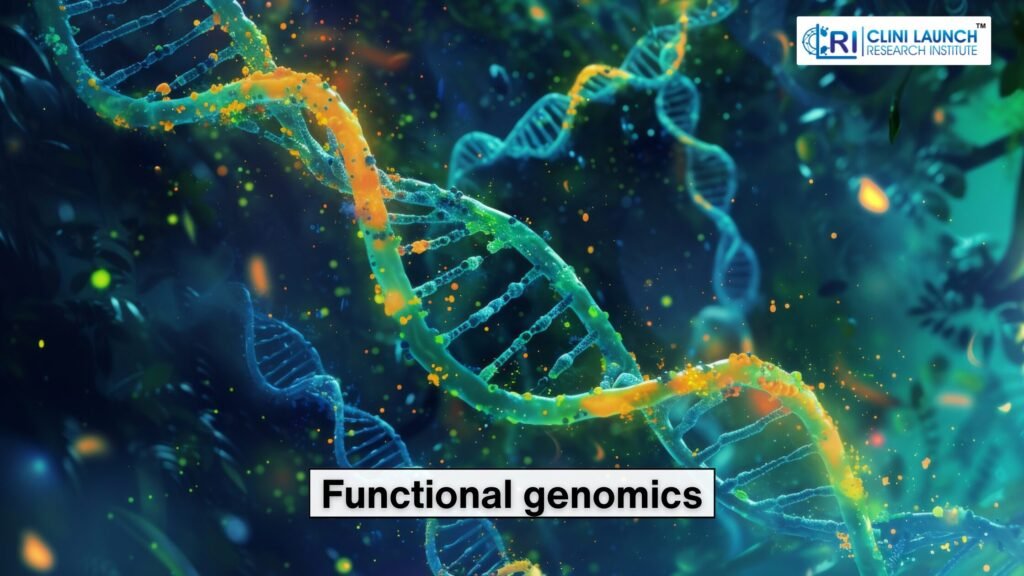
Functional Genomics
Credit: Karthik C (Graphic Designer at CliniLaunch)
Functional genomics is one of the components of bioinformatics. It is a branch of molecular biology that defines the functions and interactions of the genes.
This component of bioinformatics utilizes the vast amount of data generated by genomic and transcriptomic datasets. This information explains the dynamic behavior of genes including gene expression, gene regulation and even protein -protein interaction. Researchers can analyze and understand the different levels of gene expression in gene expression profiling by using techniques like microarray analysis and RNA-sq. They can also understand protein interactions and draw conclusions about linking genetic variations to specific traits and diseases.
Functional genomic component of Bioinformatics has its purpose mainly in Bioinformatics drug discovery process, agriculture bioinformatics and DNA sequence analysis in bioinformatics.
Bioinformatics drug discovery process involves identifying potential new drug targets and designing more effective therapies and treatments.
Agricultural bioinformatics has also benefited from this component of bioinformatics, where the technology is used to improve the yield of the crop and the discovery and development of crops that are resistant to pets.
There are tremendous advancements in the field of DNA sequence and analysis that have led to inventions of bioinformatics drug discovery and developing new diagnostic tools for diseases.
Structural Genomics
Credit: Karthik C (Graphic Designer at CliniLaunch)
Structural genomics is another important component of bioinformatics, that helps in studying the three dimensional structure of the proteins. This study is particularly useful in understanding the structure, function and interaction of a protein with other drug molecules.
To study the structure of a protein, scientists use techniques like X- ray crystallography, where a protein structure is crystallized and then it is bombarded with the x-rays producing a diffraction pattern deterring the 3 D structure of the protein.
Other techniques include Nuclear magnetic resonance [NR] spectroscopy, cyclo electron microscopy.
The most important application of this component of bioinformatics can be seen in bioinformatics drug discovery and development. This process typically begins by identification and validation of potential drug targets and then subject to screening against a library of drug-like compounds.
Studying the structure of proteins involved in the disease, the scientists can provide insights in the disease’s progression and potential treatment options.
Comparative Genomics
Comparative genomics is that component of bioinformatics, where researchers use a variety of computational tools to compare the complete genome sequence of different species of organisms.
This understanding of comparison of different genes of different species helps the researchers gain insight into their evolutionary relationships. Also they can identify conserved genes and genetic basis of phenotypic differences.
The implication of Comparative components of bioinformatics can be seen mainly in the bioinformatics drug discovery field, agricultural bioinformatics, application of bioinformatics in biotechnology and DAN sequence analysis in bioinformatics.
Bioinformatics drug discovery and development is one area of bioinformatics that is believed to excel as a result of development of computational tools like Alpha fold 2, and comparative tools like RoseTTAfold.
With new approaches and tools as well as developments in previously existing components of bioinformatics, the agricultural bioinformatics, DNA sequence analysis in bioinformatics and bioinformatics drug discovery applications in immunology,as well as virology, has lead to the therapeutic intervention targets and the results have been described in various scientific literature.
Particularly in agricultural bioinformatics, the cooperative genoe component of bioinformatics has been able to improve crop yields and disease resistance by identifying genes responsible for these traits.
DNA Microarrays
A DNA microarray, also known as a chip or a biochip is a collection of microscopic DNA spots attached to a solid surface. Scientists use these chips or DNA microarrays to measure the expression levels of a large number of genes simultaneously or to genotype multiple regions of a genome.
The DNA microarray has revolutionized bioinformatics drug discovery by employing the study of genetic variation in a sample or by deterring the expression levels of genes. These studies can provide important information on the biochemical pathways involved in the field of bioinformatics in biotechnology. This also helps in the field of bioinformatics drug discovery by helping researchers understand and analyse the description of genes involved in physiological and pathological processes.
Another huge contributing factor in DNA analysis in bioinformatics is identification of signature genes responsible for disease process and identification of disease related genes that may become targets for therapeutic intervention and monitoring.
The revolutionary advancements in agricultural bioinformatics is Hybridization. This extension has enabled researchers to study complex biological processes and possible disease traits and resistant breeds at a large scale.
Medical Informatics
Credit: Karthik C (Graphic Designer at CliniLaunch)
This is another extension of components of bioinformatics that deals with the application of information of biomedical data with particular reference to biomolecules, in vitro studies and clinical trials majorly in the field of application of bioinformatics in biotechnology.
It involves acquisition, storage and retrieval of genome information for DNA analysis in bioinformatics and bioinformatics drug discovery.
The process involves creation of a database for organizing, storage and management of biological genome based data sets. Researchers can access the datasets to retrieve the existing information for DNA analysis in bioinformatics or bioinformatics drug discovery. They can also yield new research information like protein sequence data banks for molecular structure in bioinformatics in biotechnology.
DNA analysis in bioinformatics involves the use of medical informatic tools like development of data algorithms and statistics to analyse and interpret the genome data sets.
This includes analysis of the DNA and RNA sequence and study of other protein structure and sequence, gene expression profiles and biochemical pathways. This information is widely used across the bioinformatics in biotechnology arena to interpret and guide the inventions using DNA analysis in bioinformatics which aids in drug discovery by disease surveillance and researches on public health.
Conclusion
Bioinformatics and components of bioinformatics nerges biology and computer science has become indispensable in the field of biotechnology.
Bioinformatics and components of bioinformatics nerges biology and computer science has become indispensable in the field of biotechnology. By applying computational tools to biological data, agricultural bioinformatics has seen immense growth as in hybridization. DNA analysis in bioinformatics has taken the disease prediction to a more realistic level where scientists can analyse gene expression profiles to locate the disease linked genes. Bioinformatics in drug discovery is another area which has benefitted in the sense of scanning and identifying potential drug targets. Join a Bioinformatics Course at CliniLaunch.
Certification in Biostatistics is a program specially designed to teach comprehensive statistical methods used in different fields of public health, biological sciences and medical research. This Biostatistics training provides students with the skills to analyze complex statistical data from clinical trials and epidemiological studies from our Biostatistics training institute. This course includes the key topics such as data interpretation, statistical modeling, hypothesis testing, and the use of software tools for biostatistical analysis. This biostatistics certificate is ideal for those, who are looking to upskill their knowledge and ability to make data-driven decisions in health research/management, policy-making. To enhance your capability and to become a future leader inscience and healthcare industries you can join our biostatistics Training Institute.
The growing demand for biostatistics courses in public health and research is driven by the increasing availability of healthcare related data and the need for evidence-based decision-making. Biostatistics is important in today’s data-driven world as it helps analyze complex data from clinical trials and health surveys. With the rising challenges such as pandemics, chronic diseases, and health disparities, biostatistics is essential for making informed policy decisions, evaluating healthcare programs, and predicting outcomes, ultimately leading to better public health strategies and more effective healthcare systems.
An Overview of the Certification
Certification in Biostatistics provides tools and techniques needed to study and interpret health-related data. In this program students learn how to design studies, perform data analysis, and make informed decisions based on statistical results. Biostatistical training institutes will provide different topics ranging from hypothesis testing to survival analysis and data modeling, which will prepare individuals to handle real-world challenges in healthcare data analysis.
Key Benefits of Biostatistics Course Certificate
Credit: Karthik C (Graphic Designer at CliniLaunch)
Pursuing a certification in biostatistics, one can have exciting career opportunities in healthcare, research, and medical field. With this credential, one can gain advanced analytical skills, making you a distinct professional capable of interpreting complex healthcare data. Biostatistics course certification boosts your credibility and it will enhance your earning potential. It also demonstrates your commitment to staying current in a rapidly evolving field. This course offers the learning assessment, practical exercise that is needed to stand out in a competitive job market while sharpening your expertise.
Core Skills You’ll Gain with Biostatistics Course Certificate
A certification in biostatistics can provide you with a range of core skills, which are essential in today’s data-driven world. One can master different statistical techniques including hypothesis testing, regression analysis, and survival analysis. You can also gain proficiency in statistical software like SAS, R, SPSS. Moreover, you’ll also develop a solid understanding of study design, clinical trial analysis, and data visualization. These skills are critical for making informed decisions in healthcare and research. By enrolling in biostatistics course certification you will enhance your analytical abilities and boost your capacity for solving real-world problems.
Career Opportunities for Certification in Biostatics
Credit: Karthik C (Graphic Designer at CliniLaunch)
A Biostatistics training institute opens up a wide range of career opportunities across different industries, including healthcare, research, public health and medical field. Here are some key job roles and career paths for those with a certification in Biostatistics
Biostatistician in Pharmaceutical companies, research institutions.
Epidemiologist in Public health organizations, government, universities, healthcare agencies.
Data Scientist in Health tech companies, hospitals, research labs.
Clinical research coordinator/Manager in Medical research organizations, pharmaceutical companies, hospitals.
Statistical Analyst in Hospitals, health insurance companies, government agencies.
Health Policy Analyst inGovernment agencies, think tanks, non-profit organizations.
Biostatistics Consultant in Consulting firms, pharmaceutical companies, academic research.
Pharmaceutical Statistician inPharmaceutical companies, contract research organizations.
Medical Research Scientist in Academic institutions, research hospitals, private research firms.
Public Health Analyst in Government health departments, public health, research organizations.
How to Choose the Right Biostatistics Certification Program
Credit: Karthik C (Graphic Designer at CliniLaunch)
When it comes to choose the right Biostatistical course, the following criteria one should follow, for example accreditation and Reputation of the biostatistics training institute, Curriculum and Course Content, Format and Flexibility, Duration and Intensity, Instructor Expertise, Job Support and Networking Opportunities, Cost and Financial Aid, Student review, alumni success.
In this blog we cover different course contents and applications of the biostatistics course certification. By enrolling yourself in our biostatistics training institute, you can pursue various impactful roles that can blend statistical analysis with real-world healthcare applications, research, and policy-making. Furthermore, these positions not only offer promising career growth but also provide the opportunity to make meaningful changes to advancing global health and wellbeing.In our Biostatistics Training Institute we provide detailed and comprehensive introduction and techniques about biostatistics. At CliniLaunch we offer the best certificate course in Biostatistics, to learn more please join our program of Biostatistics course.
Recently, the University of CINCINNATI reported 28% growth in jobs for healthcare managers from 2022 to 2032. The increase in chronic disease to meet the patient care needs with healthcare services are the most important reasons for growth. Beside growing demand for healthcare managers, they could effectively manage complex tasks while driving most decisions related to their department.
Henceforth, pursuing an MBA healthcare administration or management program will help you acquire business acumen. It will also help you with implications and nurturing your leadership skills to excel in the healthcare industry. Given this comprehensive guide, deep dive into the key aspects of an MBA program including curriculum, career opportunities, and admission requirements.
What is an MBA healthcare administration?
Designed by Karthik C (Graphic Designer at CliniLaunch)
MBA healthcare management is a 2-year degree that combines core administration principles with healthcare-specific knowledge. It provides you a deep understanding of the healthcare industry including different aspects such as finance, operations, regulations, and strategic planning. With the completion of MBA in healthcare, graduates develop the skills required to manage hospitals, clinics, and healthcare insurance companies, and other healthcare organizations effectively.
MBA Healthcare Management Course Syllabus at CliniLaunch
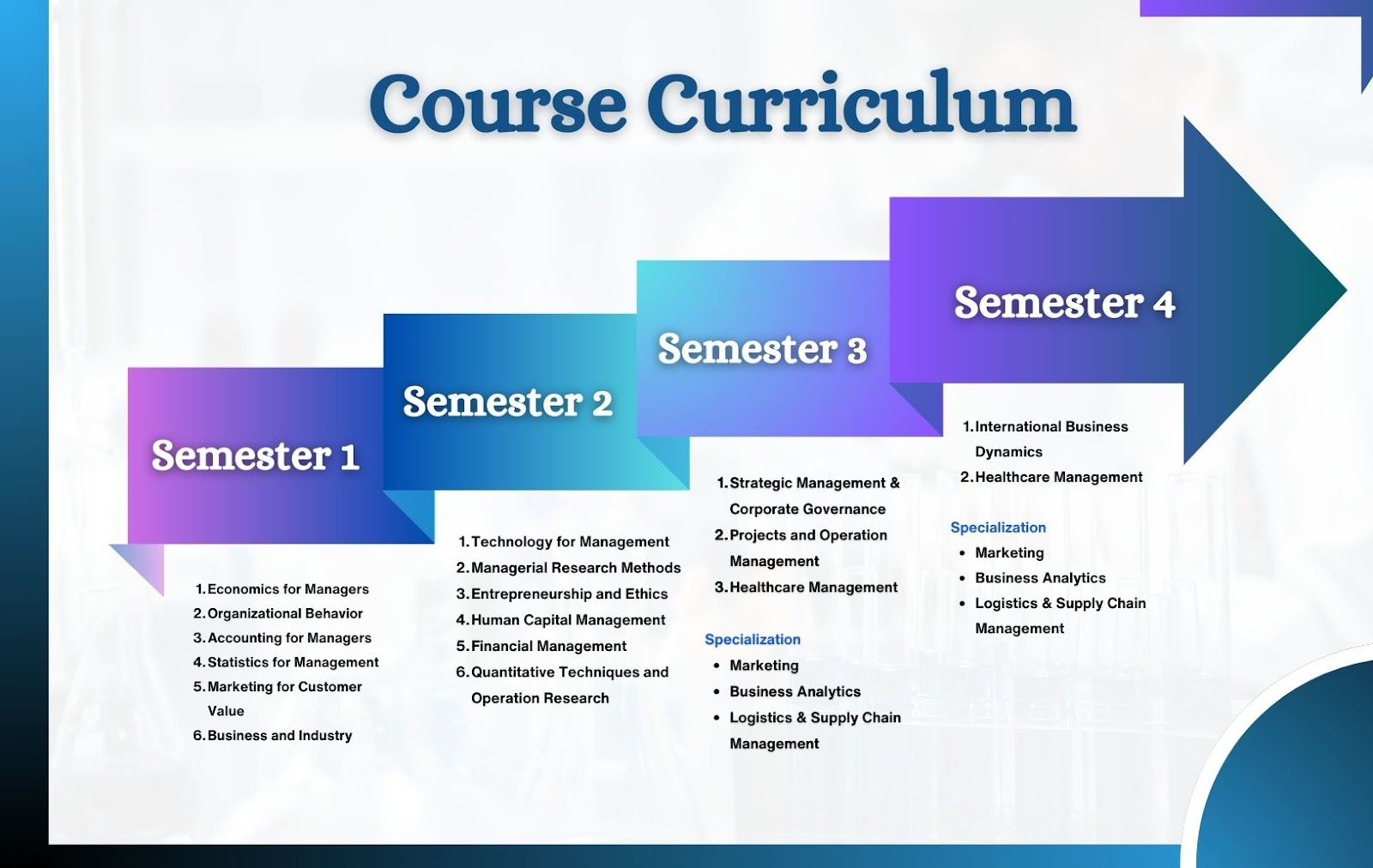
MBA Healthcare Management course from CliniLaunch offer 3x impact on your career with a dual specialization and one PG Diploma Program in Clinical Research or AI & ML in healthcare. A dual specialization in an MBA program allows you to focus on two business administration areas within a single course leading to a variety of benefits. Moreover, with one major course as healthcare management, you are going to explore either marketing management, business analytics or logistics & supply chain management along with one postgraduate CliniLaunch course. Check below given course syllabus for MBA (Healthcare Management) in affiliation with Bangalore University.
Semester 1
Semester 2
– Economics for Managers – Organizational Behavior – Accounting for Managers – Statistics for Management – Marketing for Customer Value – Business and Industry
– Technology for Management – Managerial Research Methods – Entrepreneurship and Ethics – Human Capital Management – Financial Management – Quantitative Techniques and Operation Research
Additional Programs- Post Graduate Diploma in Clinical Research | AI & ML in Healthcare.
Summer Internship Program in Healthcare- Gain practical experience with leading organizations.
100% Placement Assistance in collaboration with Healthcare and Pharmaceutical Companies.
Industry-Experienced Faculty- Learn from Healthcare Experts.
Blended Education and Upskilling- Combining formal education with professional development.
Selection of Additional Program
In addition to three major courses during semester 3 of MBA in healthcare management program, you shall have to choose a specialization whether in Marketing Management, Logistics & Supply Chain Management, or Business Analytics. From Semester 2, you need to choose between one PG diploma course from CliniLaunch either Clinical Research or AI & ML in Healthcare. Ideally, the PG Diploma Program will be conducted before students proceed for Semester 3. Also, during Semester 4, you shall have to continue your second specialized program you chose during semester 3.
Career Paths Post MBA Hospital Administration
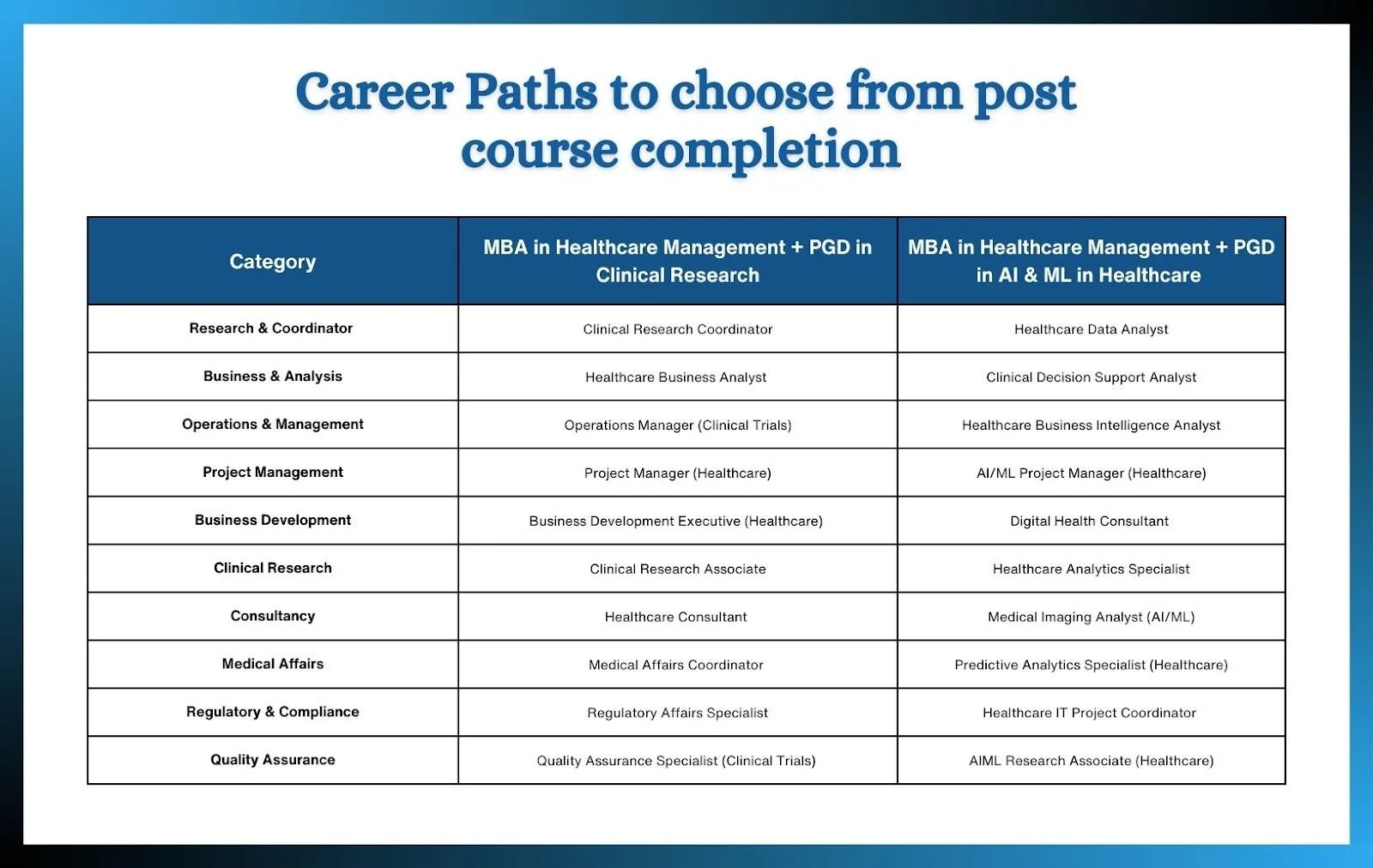
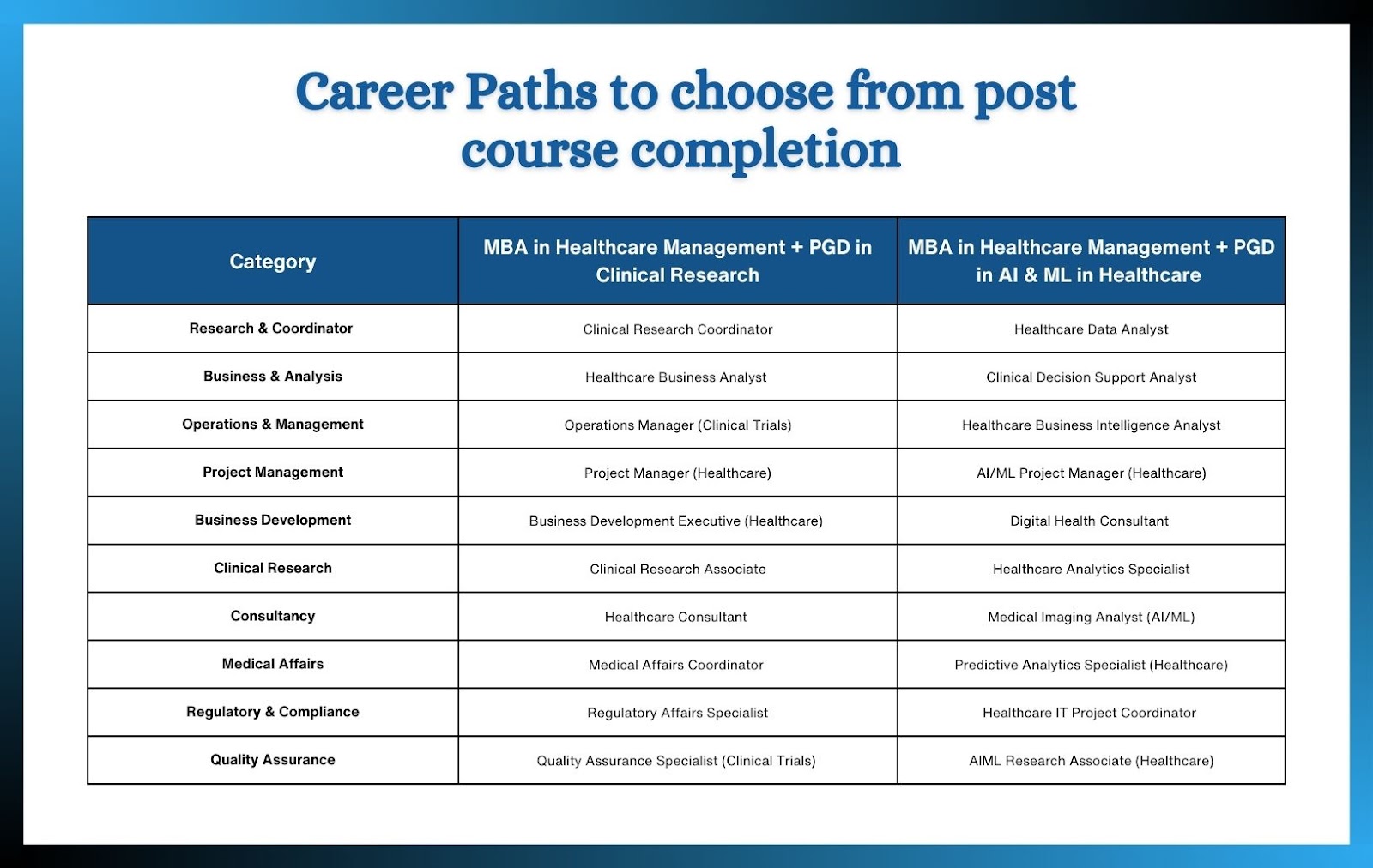
MBA hospital administration degree or management degree opens doors to a wide range of career paths with CliniLaunch offered courses. It may include the roles of healthcare consulting, health information management, hospital administration itself. Expect your salary based on the factors such as your experience, roles & responsibilities, and location. However, post MBA degree, competitive salaries, and excellent career paths can be expected. Following are the combination of roles to leverage your expertise in healthcare management, clinical research or AI & ML in healthcare from CliniLaunch.
Designed by Karthik C (Graphic Designer at CliniLaunch)
Eligibility Criteria
The eligibility criteria for MBA healthcare administration includes undergraduates or graduates with a bachelor’s degree in life sciences, biotechnology, biomedical engineering, MSc. Microbiology, or Chemistry, etc.
Note: Those of you in the final year or semester of your Bachelor’s degree are also eligible for the course.
MBA hospital Administration for Working Professionals
As a working professional, you get immense quality time to study at CliniLaunch full-time MBA with an on-campus program twice a week. It might be a viable option for you as you will be able to learn at your own pace. By enrolling for an MBA in Healthcare management, you can focus on developing your leadership & strategic capabilities, manage complex changes and lead healthcare operations within the organizations. You just need to balance your studies with your career and personal commitments.
Conclusion
An MBA in Healthcare Administration is a valuable degree for individuals who aspire to leadership roles within the healthcare industry. By combining business acumen with healthcare expertise, MBA graduates are well-prepared to address the complex challenges facing healthcare organizations today. Whether you are interested in hospital administration, healthcare consulting, or entrepreneurship, an MBA can provide you with the skills and knowledge you need to succeed.
Why Choose CliniLaunch for MBA?
CliniLaunch’s MBA course is grounded in real-world healthcare and taught by industry-led experts. It pushes you to consider your business perspectives. With 15+ Corporate tie-ups, 500+ industry relations, and 8000+ vacancies shared to students and working professionals, CliniLaunch offers growth opportunities in the field of healthcare. With continuous corporate connect, and world-class qualified faculty, the expert interaction helps you to get corporate ready (if new).
You will get access to e-resources, robust curriculum, and highly-qualified industry professionals. Moreover, the centralized placement team ensures 100% placement assistance for you on a national or global level. To know more, visit: https://test.clinilaunch.in/mba-in-healthcare-management/
According to my point of view, choosing a course to advance your career with an MBA degree in healthcare administration is a daunting task. You may be overwhelmed as you are passionate about being in a leadership position in healthcare. With an MBA Degree in Healthcare Administration or MBA healthcare management, it can be challenging for you because each program covers essential hard and soft skills that healthcare managers need.
MBA in Healthcare Management from IAO, NSDC, Brit Qualis & IAF accredited CliniLaunch in affiliation with Bangalore University focuses on mentoring you with all the essential skills you need with this comprehensive degree program. CliniLaunch shifted its focus towards management courses in 2024 and will guide you to become a leader in the healthcare management domain.
In this blog post, you will delve deeper into the influence of an MBA degree with dual specialization, the significance of choosing a postgraduate diploma program, and how the combination of courses will help you advance your career.
What influences professionals for this MBA degree in Healthcare Administration?
Designed by Karthik C(Graphic Designer at CliniLaunch)
An MBA degree in healthcare management is a discipline that teaches us to operate with administration, coordination, and planning based on the facilities, resources, and services. As it is the most crucial part of healthcare services, professionals with an MBA in hospital management must ensure the efficient and smooth running of clinics, hospital operations, and medical institutions. Advanced career opportunities are one of the most significant factors for healthcare management professionals to dive into.
Economic Times reported a 12.59% growth rate of the healthcare sector in India in 2024-25. The Healthcare industry has grown rapidly over the past few years and is now a major sector in the economy both in terms of employment and revenue. Including executive management positions in the healthcare sector, this sector offers hospital CEO and administrative roles, such as clinical administrator, nursing home manager, and health services manager.
Education in healthcare management is a relatively new concept in India but is emerging and gaining popularity rapidly. With this fast-paced healthcare sector, McKinsey & Company reported expecting a bend in medical cost trends enabling data-driven decision-making with a compound annual growth rate of 7% to 9% EBITDA. Success in the field of healthcare depends upon many factors yet the demand of healthcare management professionals is the most important one.
Therefore, the professional seeking opportunities to become a pioneer of healthcare management can move ahead with this MBA degree in healthcare administration offered by CliniLaunch.
Career with MBA degree in healthcare administration
Designed by Karthik C(Graphic Designer at CliniLaunch)
Due to the growing demand for expert healthcare managers, the industry consistently seeks MBA graduates. The graduates with an MBA in Hospital Management will be provided with a wide range of career opportunities from government agencies to multinational company jobs post-course completion. Considering it is the highest paying and most rewarding profession, the salary of the healthcare management consultant will be approximately ₹5 to ₹ 6 LPA.
Masters of business administration in healthcare management holders have bright careers including various roles. Let’s explore why you should choose an MBA in hospital administration as your career.
Fastest growing Industry
Recently, International Trade Admission reported that the healthcare industry is expected to reach $610 bn by 2026. The rapid growth in the Indian healthcare industry market size is specifically due to the need for specialized high-quality healthcare facilities. It is also recognized that products and services driving this market are clinical trials, hospitals, health insurance, medical devices, medical and diagnostic equipment, medical tourism, and telemedicine.
With this estimation, CliniLaunch believes that skilled healthcare professionals can position themselves as administrator or manager in government agencies or MNCs to manage costs, resources, and manpower. Therefore, enrolling in an MBA in Healthcare Management program is a sustainable way to quickly start a career in the healthcare industry.
The U.S. Bureau of Labor Statistics (BLS) reported a 28% growth in the number of medical and health services managers from 2022 to 2032 concerning all occupations. Earning an MBA degree in healthcare administration will help you gain business acumen & management ideas, techniques, and theories of medical establishment including the case. Getting the edge over your competitors will enable you to stand out among leaders and peers.
Holistic Growth and Advancement
The advancements and growth in technological aspects of healthcare, enable seamless and streamlined healthcare operations. The main aim of this holistic growth and advancement is to improve outcomes, increase efficiency, and reduce costs. As a healthcare management professional, you will be in a better position to amp up your ability in dealing with various aspects including diversity, ethics, and cultural differences. It will assure you of holistic career growth where you can deliver improved quality care.
Promotions and Financial Rewards
According to a report, the average annual salary of freshers with MBA degrees in healthcare management is approximately ₹5 lakhs. As you gain more skills and experience, it may go up to ₹20 lakhs per annum. In general, MBA degree courses are known to lead to higher compensation, and a specialization can increase your earning potential even more. Based on the research from AMBA (Association of MBAs), 94% of MBA graduates see themselves operating at a senior level of management within the next five years. However, in terms of promotions, more than a fifth of MBA in hospital administration graduates see themselves running their organization.
Designed by Karthik C(Graphic Designer at CliniLaunch)
Join the full-time MBA in healthcare management with the flexibility to attend offline classes twice a week. Never before, has a program that gives you the flexibility to attain a regular degree with weekend classes. Enhance your expertise with IAO, NSDC, and LSSSDC-accredited CliniLaunch’s postgraduate diploma programs. Offering MBA healthcare management in affiliation with A++ NAAC Accredited Bangalore University, you can benefit 3 times with CliniLaunch courses:
Pursue an MBA in Healthcare Management
Choose Second Specialization
(Marketing, Business Analytics, Logistics & Supply Chain Management)
This MBA degree in healthcare administration allows you to reap the benefits of earning an MBA credential while maintaining your career and position. You do not need to forgo income or professional opportunities. It significantly helps you with 7 Key Strategies to Balanced Work-Life with an MBA in Healthcare Management.
By enrolling for an MBA degree in healthcare administration, CliniLaunch can help you accelerate with in-demand skills by applying strategies to real-world case scenarios. All the courses offered by industry-experienced professionals help you turn theory into practical pursuits.
To Sum Up
The MBA Course offered by CliniLaunch presents a unique blend of opportunities to advance your career in the healthcare industry. While focusing on dual specialization and a postgraduate diploma program, this MBA healthcare management program provides a comprehensive education to help you drive essential skills and knowledge.
By enrolling in CliniLaunch’s MBA dual specialization program, you can 3x multiply the benefits of a flexible learning format and industry-relevant curriculum, and the opportunity to gain valuable experience through internships. With the increase in demand for healthcare management professionals coupled with the rapid growth in the sector, this time is best to pursue an MBA Degree in Healthcare Administration.
The healthcare sector in India has become one of the largest sectors in terms of employment and revenue. According to the International Trade Administration, the Indian Healthcare industry reached above $370 billion in 2022.
Meanwhile, a report from economic times shows that it is poised for substantial growth and the expectations of hiring managers for the healthcare sector is increasing by 15 to 20 percent during 2024-2025.
“The MBA in Healthcare Management Dual Specialization is a two-year post-graduate degree for you to manage a variety of operations in the healthcare and pharmaceutical companies effectively. Enroll for Master of Business Administration in Healthcare Management.”
– CliniLaunch Research Institute
An increase in demand for superior healthcare facilities, change in health awareness & policies, aging population, and the growing consciousness towards preventive healthcare played major contributing factors that offered expansion of the healthcare industry.
What is an MBA in Healthcare Management dual Specialization at CliniLaunch?
An MBA in Healthcare Management from CliniLaunch in affiliation with Bangalore University is to help you earn a dual degree in healthcare management & Marketing or Business Analytics or Logistics & Supply Chain Management.
The key difference here in comparison with other institutions is specializations in different domain at the same time. With this dual specialization in MBA in Healthcare Management, you will be a sought after candidate for the employers want in the healthcare industry.
An MBA in Healthcare Management Dual Specialization concentration may be a good fit, if you:
Are already working in a healthcare setting.
Want to upgrade your career with new roles and responsibilities.
Lookout for an entry point and want to gain access to numerous organizations
Have a passion to improve your healthcare leadership skills.
Want a logical progression from a healthcare management bachelor’s degree.
Want more than just a business degree.
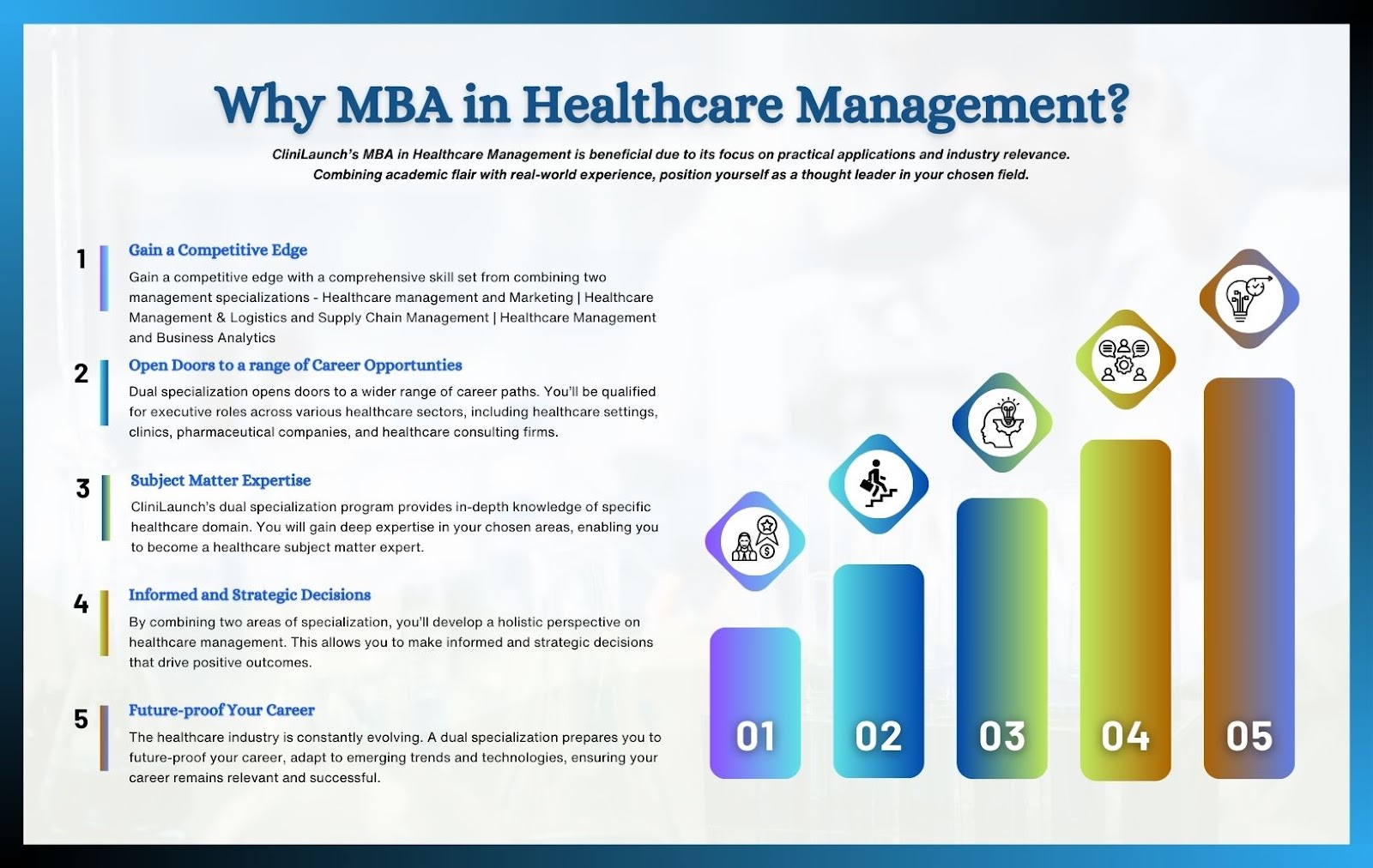
If it fits your career goals for a leadership in administration or you have additional reasons to seek MBA in Healthcare Management with dual specialization, take a look at these five benefits why this could be a great choice for you.
5 Benefits of an MBA in Healthcare Management
Learning effective leadership in healthcare provides students with various opportunities to develop healthcare management leadership traits, critical thinking abilities, problem-solving, and communication skills. These upskilling in healthcare are the most valuable asset as a student to thrive in the field of healthcare and other domains. Earning an MBA in healthcare management with dual specialization has many benefits.
Career Advancement Opportunities
Nowadays, there are plenty of job opportunities that you can explore in the field of healthcare management, which requires leadership skills to obtain management roles. According to Glassdoor and AmbitionBox, these are some of the sought-after jobs after MBA in Healthcare Management including job titles and average salary.
A master of business administration in healthcare management degree means an increase in salary expectations. In the context of medical healthcare and service managers, the US Bureau of Labor Statistics suggests that they earn a median salary of $110,680 per annum. Some highest-paid workers in the field make an average of around $128,740/annum working with public and private hospitals.
In the government sector, professionals earn a median salary of $125,590 pa, while working in outpatient care facilities they earn $104,710 pa. In the context of medical and health services managers, working in doctors’ offices and nursing or residential care facilities with respect to a median salary $102,360 and $97,490 pa.
In comparison to these, the top 10% of healthcare management professionals in this field earn more than $216,750 per annum.
Logical Progression with PGD in Clinical Research or AI & ML
Providing experiential learning opportunities to students with a bachelor’s degree, MBA in Healthcare Management helps to step up in the game. CliniLaunch offers a cross functional PG Diploma in clinical research or AI & ML in Healthcare to help students choose one core area.
The Master of Business Administration in Healthcare Management with dual specialization and a PG diploma program is complementing each other. It is meant for students who already have some experience in a healthcare settings or have some education in management or administration. With a logical progression, you can get into leadership roles and see yourself moving forward in the management domain.
Do you want to pursue an MBA healthcare management dual specialization to become a leader in the healthcare industry? Earning it will help you reach far beyond your personal career goals. Landing a job with it will help you make a difference in the healthcare industry, it could be a great choice for you.
By being a healthcare manager, you will be able to make decisions about healthcare operations, insurance, and other aspects. Your decisions can have a long-lasting impact on the lives of thousands of patients. With your leadership in healthcare management, you may find yourself implementing changes or making improvements that save lives.
Therefore, equipping yourself with the right skill sets to work in your preferred medical care setting to stand making a difference. Earning your MBA Healthcare Management with dual specialization to step yourself up to managerial positions requires expertise, passion and empathy.
In-depth Understanding of healthcare policies and regulations
Studying MBA in Healthcare Management-dual specialization from CliniLaunch equips you with a solid foundation in business administration. This may include development of skill sets in healthcare with marketing management or business analytics or logistics & supply chain management.
These are vital skills to address unique challenges that may occur in a healthcare setting. Through overall coursework and specialized modules with a focus on healthcare management, the course enables students to gain in-depth understanding of healthcare, its policies and regulations.
These skill sets and knowledge are crucial for making informed decisions that may impact overall organization’s success with analytical, marketing & logistics efficiency and patient care.
Course Curriculum- MBA in Healthcare Management
Course Objectives
To impart a strong foundation in business management principles, including logistics and supply chain management, marketing, and business analytics with a focus on their application in the healthcare sector.
To develop a deep understanding of the healthcare industry, its ecosystem, policies, regulations, and emerging trends.
To provide specialized knowledge and skills in either Clinical Research or AI & ML to address critical healthcare challenges.
To enhance problem-solving, decision-making, and leadership abilities to effectively manage healthcare organizations.
To foster a research-oriented mindset and encourage the application of evidence-based practices in healthcare.
To prepare graduates for leadership roles in hospitals, pharmaceutical companies, healthcare IT, consulting firms, and research institutions.
Course Highlights
MBA in Healthcare Management dual specialization is a 2 year postgraduate program for executives and/or students.
Offline classes for the MBA program shall be conducted on weekends in our Bangalore Center.
Post completion of Semester II, students need to choose one specialization (Marketing or Logistics & Supply Chain Management or Business Analytics) offered by Bangalore University Dual Specialization program.
Students need to choose one specialization before the commencement of Semester III.
In between Semester II and III, with the commencement of a program, students shall have to choose one post graduate diploma program (Clinical Research or AI & ML in Healthcare) from CliniLaunch.
This Postgraduate diploma program shall be conducted online and/or offline on weekdays from Monday to Friday.
Why MBA In Healthcare Management From CliniLaunch?
With dual specialization, CliniLaunch’s MBA offers effective leadership in healthcare combining academic flair. By pursuing this MBA in healthcare, you will excel with real-world experience while positioning yourself as a thought leader in your chosen field. Find out more below.
Eligibility Criteria
If a master of business administration in healthcare management with duals specialization sounds like a good fit for you, find out if you are eligible for CliniLaunch’s MBA program.
CliniLaunch welcomes applications from aspirants who are:
Undergraduates or graduates with a background in
Life Sciences
Biotechnology
Biomedical Engineering
MBBS
MSc.Microbiology
Chemistry, etc.
Note: Those candidates who are in their final year or semester of their Bachelor’s program are also eligible for the course.
Career Paths Post MBA Graduation
With dual specialization and premier postgraduate diploma programs from CliniLaunch that complements your career by accelerating your healthcare career with different roles and responsibilities. However, after completion of the course, there are two of the greatest aspects of earning a MBA in Healthcare Management- job security and flexibility. Presenting possible career paths post course completion below.
Challenges and Opportunities in Healthcare Management
If you know the emerging trends like digital health and telemedicine, you can offer a promising avenue addressing these challenges. According to mobilehealthnews.com, digital health technologies, encompassing wearables, mobile applications, and remote monitoring devices are enabling proactive patient care, disease prevention, and improved health outcomes.
In the context of Healthcare Value Hub, telemedicine expands access to healthcare services i.e., particularly in rural and underserved areas, while reducing costs associated with in-person visits. These emerging trends require robust data management capabilities and digital infrastructure as it emphasizes the role of logistics & supply chain management ensuring seamless operations.
Furthermore, the development of emerging trends also complements the integration of AI & ML in healthcare. In the context of mobile health news, artificial intelligence and machine learning in healthcare holds diagnostic potential, drug discovery, and personalized treatment plans, driving efficiency and accuracy.
Marketing management principles become essential for effectively communicating the value of digital health services, building patient trust, and managing healthcare brand reputation. A deep understanding of business analytics empowers healthcare managers to uncover actionable insights, measure performance, and drive data-driven decision-making.
By embracing these emerging trends and leveraging your management expertise as a healthcare leader, you can contribute to a more sustainable, accessible, and patient-centric healthcare system.
Conclusion
If you are seeking a leadership role in the healthcare field, an MBA in Healthcare Management with dual specialization is a valuable degree. Explore more about MBA Healthcare Management if it is a good fit for your interests and career goals in affiliation with Bangalore University. Ready to take the next step, fill up the form below and earn your healthcare management leadership traits from CliniLaunch’s MBA in Healthcare Management Program.