Medical coding is a strong career choice in India, driven by healthcare growth, digital transformation, and global outsourcing demand. It offers stable entry-level opportunities, structured career growth, and long-term future potential, especially as AI and automation continue to reshape healthcare processes and improve efficiency.
Introduction
Standing at the crossroads of education and employment, many Indian graduates feel overwhelmed by the countless career paths available, and with healthcare digitization and growing global demand, the need for skilled professionals is rising, making it challenging to know where to start. This is why the medical coding career scope in India is gaining strong attention among students and freshers looking for stable and future-ready healthcare careers. Many students today are exploring a medical coding course in India as a strong entry point into the healthcare industry, where clinical knowledge intersects with data precision, while trends like telemedicine, electronic health records, and digital health solutions continue to grow, making medical coding an essential field that drives healthcare efficiency and innovation.
The global medical coding market is expanding rapidly, projected to grow from USD 18.4 billion in 2024 to USD 32.7 billion by 2030, driven by healthcare IT and data-driven care models. In India, the market was valued at USD 865 million in 2024 and is expected to grow significantly, reflecting strong local and outsourced demand. This blog will explore the Medical Coding Career Scope in India, long-term growth, role diversity, company types and mobility, specialization, career opportunities, career paths (skills and tools), and future trends.
The medical coding field is experiencing significant transformation, driven by expanding healthcare services, regulatory changes, and digital adoption. This rapid evolution highlights the strong medical coding future scope in India, especially with increasing global outsourcing and healthcare digitization.
Industry Growth and Opportunities in Medical Coding
The expansion of healthcare services and growth in insurance and billing are creating significant career opportunities for medical coders. The Indian Healthcare BPO Market is projected to reach USD 694 billion by 2030, increasing the demand for skilled coders. As insurance coverage rises, claims processing grows, creating diverse roles in healthcare organizations, insurance companies, and outsourcing services. This growth ensures reliable, long-term opportunities, offering job stability and evolving career prospects for students entering the medical coding field.
Regulatory Updates and the Need for Upskilling
Regulatory updates, such as changes to ICD and CPT codes, occur annually, with ICD updates on October 1st and CPT revisions in January. These updates align coding systems with advancements in healthcare and treatment protocols, driving the demand for coders to implement new coding requirements. Coders must pursue professional certifications and continuous upskilling to stay compliant and accurate. This fosters job security, career growth, and specialization opportunities. As a result, healthcare organizations hire more medical coding professionals to meet evolving industry standards and manage the increased workload created by regulatory changes.
Impact of Technology and Automation on Medical Coding Careers
Technology and automation have revolutionized medical coding by streamlining routine tasks and enhancing accuracy. AI tools and automation now handle basic coding, allowing coders to focus on complex cases and compliance. The global AI in healthcare market is estimated to be USD 27.46 billion in 2024 and is projected to grow to USD 476.14 billion by 2033. This growth reflects the increasing integration of AI and automation in healthcare, driving demand for skilled professionals. This shift has created new roles, such as AI-based coding analysts, telemedicine coding specialists, and health data analysts. With advancements in AI, machine learning, blockchain, and cloud computing, the field is evolving, offering increased career opportunities.
Remote and Hybrid Opportunities
Remote and hybrid opportunities are transforming medical coding careers by offering flexibility and broader access to global job markets. These opportunities allow coders to work from anywhere, enhancing work‑life balance and increasing job satisfaction. According to the 2026 Medical Coding and Billing Salary Report by AAPC, 64.8% of medical records specialists work fully remote, highlighting the real shift toward flexible work in this field. As automation handles routine tasks, hybrid roles combining coding with data analysis and IT skills are emerging.
Medical Coding Career Scope in India
The medical coding industry in India is rapidly growing, driving demand for skilled coders. This section covers career growth, role diversity, opportunities, and specialization, highlighting success potential in this expanding field.
Long-term Career Growth in Medical Coding
Medical coding offers a strong entry point through short-term training, allowing students to quickly start their careers, while experience opens pathways into specialized roles like auditing, compliance, and analytics.
Regular advancements in coding standards and evolving healthcare regulations ensure that skilled professionals are always in demand, helping students stay relevant and build long-term career stability.
Quality coding plays a direct role in hospital revenue and financial performance, making it a critical function in healthcare operations and ensuring consistent career importance over time.
Global outsourcing and the rapid growth of healthcare services are expanding opportunities, giving students access to stable roles, international exposure, and long-term career progression in the medical coding industry.
Diversity of Roles in Medical Coding
The medical coding field offers a wide variety of roles, allowing professionals to specialize in different areas. These roles span from specialty coding to administrative, compliance, and technology-driven positions.
Specialty Coding Roles
Specialty coding focuses on specific clinical areas within medical coding, requiring a deeper understanding of medical records and coding guidelines. With increasing adoption of electronic health records and standardized systems, these roles are becoming more structured and specialized across healthcare organizations. This shift is creating strong career opportunities for students to build domain expertise, move beyond general coding, and enter high-value roles that offer better growth, responsibility, and industry relevance.
Administrative and compliance roles in medical coding focus on maintaining accurate documentation and ensuring adherence to regulatory standards across healthcare systems. With expanding electronic health records and increasingly strict compliance requirements, these roles are becoming more critical in managing coding quality and reducing errors. This growing importance creates strong career opportunities for students to develop expertise in auditing, compliance, and healthcare governance, leading to stable, high-responsibility roles within the healthcare industry.
Coding Auditor
Compliance Officer
Health Information Administrator
Coding Quality Analyst
Technology and Innovation Roles
Technology and innovation roles in medical coding focus on integrating advanced tools to improve accuracy, efficiency, and automation in healthcare documentation. With the rapid adoption of AI, machine learning, and digital health systems, coding is evolving into a technology-driven function. This shift is creating strong career opportunities for students to build skills in healthcare technology, data systems, and automation, enabling them to move into high-value roles that combine coding expertise with innovation.
Health Informatics Specialist
Medical Coding Technology Analyst
AI-Assisted Coding Trainer
Clinical Data Systems Manager
3. Career Opportunities for Medical Coders in India
India offers vast career opportunities for medical coders due to the rapid growth of the healthcare and IT-enabled services sector, with a rising demand for medical coding jobs for freshers across healthcare BPOs, insurance companies, and global outsourcing firms, providing strong entry-level opportunities, structured career growth, and exposure to international healthcare systems.
Career Opportunities for Medical Coders in Medical Coding & RCM Companies
Manage coding, billing, and insurance claim processes for global healthcare providers, supporting accurate documentation and reimbursement workflows
Strong global outsourcing demand, especially from US and UK healthcare systems, ensures consistent project flow and scalability in operations
For example, Cotiviti India expanded with a 900-seat Uppal Hyderabad facility, while Shine.com reports over 12,000 medical coding vacancies nationwide, reflecting strong hiring demand.
Hiring organizations include Optum, Omega Healthcare, Cotiviti, Cognizant, and Infosys BPM
Career Opportunities for Medical Coders in IT & Consulting Companies
Integrate technology, data analytics, and automation into medical coding and revenue cycle management, enabling efficient, data-driven healthcare operations
Increasing adoption of AI-driven platforms, automation tools, and healthcare data systems is expanding the scope of coding into technology-enabled, high-value domains
Hiring organizations include Accenture, TCS, Deloitte, and IBM
Career Opportunities for Medical Coders in Global Healthcare & BPO Companies
Handle high-volume coding, billing, and claims processing with a focus on speed, accuracy, and large-scale healthcare operations
Scalable process models enable continuous workflow, global exposure, and structured growth in operations, quality, and process management
India’s healthcare outsourcing market is expected to grow over 10.7% CAGR, driven by global demand and digital transformation, expanding healthcare BPO services.
Hiring organizations include Concentrix, EXL Service, Genpact, WNS, and Cognizant
4. Specialization in Medical Coding
Medical coding is evolving beyond general roles, with niche specializations becoming critical for career growth. Areas like risk adjustment, CDI, AI-assisted coding, and radiology require deep expertise and offer higher-value, future-focused opportunities.
Risk Adjustment / HCC Coder
Risk Adjustment (HCC) coding focuses on documenting patient health conditions for insurance and value-based care models. It helps determine risk scores and reimbursements using clinical data. According to recent reports, over 35 million Medicare Advantage beneficiaries are covered under risk-adjusted payment systems, showing strong demand for skilled coders in this domain
Clinical Documentation Integrity (CDI) Specialist
Clinical Documentation Integrity (CDI) Specialists ensure clinical records are complete, accurate, and properly reflect patient diagnoses and treatments for correct medical coding and reimbursement. They work closely with physicians to improve documentation quality and reduce coding errors in hospitals and healthcare systems. According to industry reports, CDI programs have been shown to reduce claim denial rates by up to 25%, highlighting strong demand for skilled professionals in this field across hospitals and healthcare organizations
AI-Assisted Coding Analyst
AI-Assisted Coding Analysts use AI and computer-assisted coding tools to assign and validate medical codes from clinical documentation. They ensure accuracy and compliance while reviewing AI suggestions. Industry insights show AI-driven coding can improve efficiency by up to 40%, increase demand for professionals skilled in both coding and AI tools.
Interventional Radiology Coder (IR)
Interventional Radiology (IR) coding involves assigning accurate codes for image-guided minimally invasive procedures like angioplasty, stent placement, and biopsies. It requires interpreting complex radiology reports for correct reimbursement and compliance. Industry reports show the interventional radiology market is growing at a CAGR of around 5.6%, increasing demand for skilled IR coding professionals
Medical Coding vs Clinical Research: Which Career is Better?
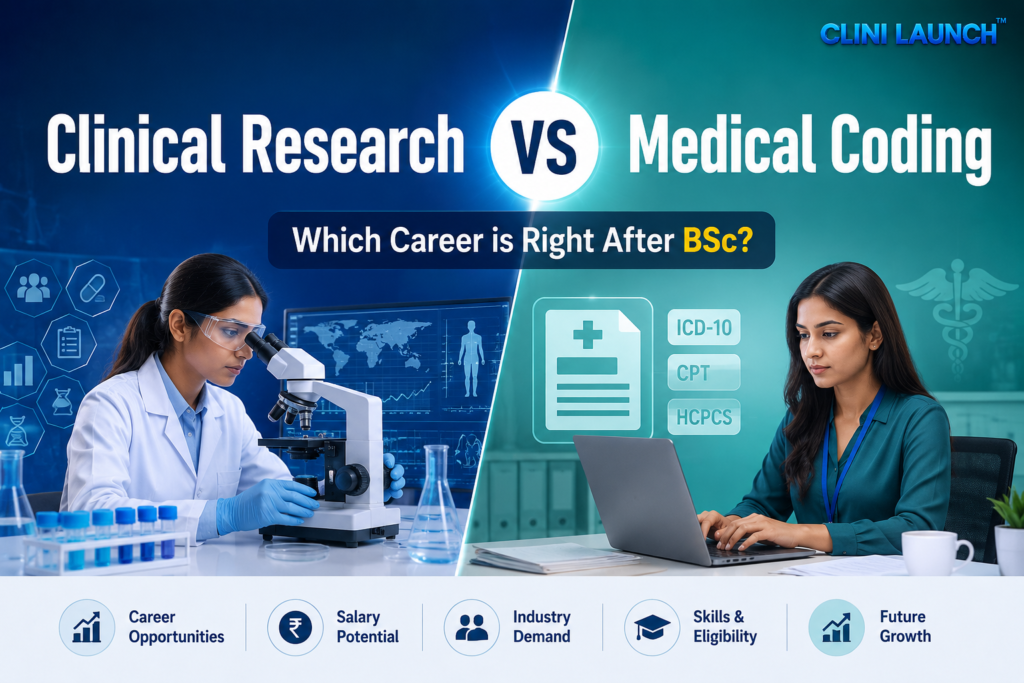
Both medical coding and clinical research are strong healthcare career paths, but they differ in focus, required skills, and growth opportunities, and this comparison helps students make an informed choice based on their interests, strengths, and long-term career goals.
Medical Coding vs Clinical Research
Factor
Medical Coding
Clinical Research
Nature of Work
Translating medical records into standardized codes
Conducting clinical trials and drug development studies
Core Skills
ICD/CPT coding, medical terminology, documentation
Clinical trials, GCP, pharmacovigilance, data analysis
Technical Exposure
Moderate (coding tools, EHR systems)
High (AI tools, data analysis, research platforms)
Salary Growth
Steady and consistent
Higher potential with specialization
Advanced Diploma in
Medical Coding
Build practical skills in medical coding used in healthcare documentation, insurance claims, and hospital operations. This program focuses on real-world coding standards, classification systems, and compliance processes used across global healthcare systems.
Medical coding careers begin with training and certification, leading to entry-level roles where professionals build foundational skills. With experience, they advance to senior coder, auditor, or specialist positions that require greater accuracy and domain expertise. Continuous upskilling and exposure to complex cases enable further progression into leadership roles such as team lead or manager. The field is projected to grow by 8% (2019–2029), ensure stable, long-term career opportunities.
Medical Coder Career Progression
Medical coding offers clear career growth, progressing from entry-level roles to specialized, auditing, and data-driven positions.
Medical Coding Salary by Experience Level
Level
Experience
Salary Range
Key Roles
Fresher / Entry-Level
0–2 Years
₹2.5 – ₹4.5 LPA (₹3–5 LPA with certification)
Trainee Medical Coder
Mid-Level
2–5 Years
₹5 – ₹8 LPA
Senior Medical Coder, SME
Experienced
5–10 Years
₹8 – ₹15 LPA
Auditor, QA, Team Lead
Senior / Leadership
10+ Years
₹15 – ₹25+ LPA
Operations Manager, Delivery Manager
Freelance / Remote
Varies
₹25,000 – ₹1,00,000+/month
Independent Coder
Healthcare Analyst Career Progression
Healthcare analytics offers clear career growth, progressing from entry-level analyst roles to advanced, specialized, and strategic decision-making positions
Healthcare Analytics Career Growth & Salary
Level
Experience
Salary Range
Key Roles
Key Growth Factors
Entry-Level
0–2 Years
₹3 – ₹5 LPA
Junior Healthcare Analyst
Excel, basic SQL, understanding of healthcare data
Associate Level
2–4 Years
₹5 – ₹8 LPA
Healthcare Analyst
Data analysis, dashboards, domain knowledge (RCM/clinical data)
Mid-Level
4–7 Years
₹8 – ₹14 LPA
Senior Healthcare Analyst
Advanced SQL, data visualization, problem-solving
Advanced Level
6–10 Years
₹12 – ₹18 LPA
Lead Analyst / Analytics Consultant
Stakeholder management, data storytelling, project handling
Leadership Level
10+ Years
₹18 – ₹30+ LPA
Analytics Manager / Healthcare Consultant
Team leadership, business strategy, client management
Risk Adjustment Auditor Career Progression
Risk adjustment auditing offers structured career growth, progressing from coding roles to specialized auditing, compliance, and advanced risk analytics positions.
Risk Adjustment Career Growth & Salary
Level
Experience
Salary Range
Key Roles
Key Growth Factors
Entry-Level
0–2 Years
₹3 – ₹5 LPA
Risk Adjustment Coder / Trainee
Strong basics in ICD-10, medical terminology, certification
Associate Level
2–4 Years
₹5 – ₹8 LPA
Risk Adjustment Analyst / Coder
HCC coding knowledge, accuracy, understanding of payer guidelines
Risk score validation, client reporting, team mentoring
Leadership Level
10+ Years
₹18 – ₹30+ LPA
Audit Manager / Risk Adjustment Manager
Team management, client handling, regulatory expertise
Key Skills to Build a Career in Medical Coding
A successful career in medical coding goes beyond memorizing codes; it requires a strong foundation in clinical knowledge, precision, and data interpretation. As healthcare becomes more data-driven, these skills are essential for ensuring billing accuracy, compliance, and effective decision-making. Mastering both core coding skills and technical tools not only improves job performance but also paves the way for long-term career growth and specialization.
Core Skills Required
Building a strong foundation in core skills is critical for medical coding professionals. These skills help interpret clinical data accurately, assign the correct codes, and ensure compliance with healthcare standards.
ICD-10-CM/PCS: Classifying diagnoses and inpatient procedures.
CPT®: Reporting medical, surgical, and diagnostic services.
HCPCS Level II: Services and supplies not covered by CPT, such as durable medical equipment
Medical Terminology: Understanding prefixes, suffixes, and root words used in healthcare.
Anatomy and Physiology: Knowledge of human body systems and how they function.
Pathophysiology: Understanding the physiological processes related to disease and injury.
Knowledge of Electronic Health Records (EHR): Navigating systems like Epic, Cerner, or Meditech.
Certifications That Add Value
Certifications play a major role in career growth and job readiness, with CPC certification medical coding being one of the most recognized qualifications, highly preferred by employers for validating coding expertise and improving career opportunities, while a structured medical coding certification course helps learners build strong foundations in coding systems, medical terminology, and compliance requirements, making them industry-ready for healthcare roles.
AAPC (American Academy of Professional Coders)
CPC (Certified Professional Coder): Focuses on physician-based and outpatient medical coding.
COC (Certified Outpatient Coder): Specializes in outpatient hospital and facility coding.
CIC (Certified Inpatient Coder): Covers coding for inpatient hospital services.
CRC (Certified Risk Adjustment Coder): Focuses on risk adjustment and HCC coding.
AHIMA (American Health Information Management Association)
CCS (Certified Coding Specialist): Advanced certification for inpatient and outpatient hospital coding.
CCS-P (Certified Coding Specialist – Physician-based): Focuses on coding for physician offices and clinical practices.
RHIT (Registered Health Information Technician): Combines medical coding with health data management and patient records.
RHIA (Registered Health Information Administrator): Focuses on managing health information systems and healthcare data operations.
Future Trends that will shape Medical Coding Careers
The field of medical coding is evolving rapidly, driven by technological advancements and the increasing integration of data-driven solutions in healthcare. As automation, AI, and new technologies reshape the industry; medical coders must adapt to stay ahead of these changes. Understanding these future trends is key for professionals looking to thrive in a dynamic and growing field.
AI and Automation (Autonomous Coding)
AI is shaping the future of medical coding through advanced NLP engines, speech-to-code integration, and autonomous coding systems connected with EHRs. NLP technologies such as cTAKES, MetaMap, and CAC-integrated AI models will be increasingly used to process clinical data. Predictive technologies will enable real-time code generation and validation, automating routine tasks. This evolution will shift professionals toward auditing, analytics, and complex case validation within an efficient, AI-driven healthcare ecosystem.
Telehealth & Virtual Care Coding
Telemedicine and digital health are expected to play a central role in future healthcare delivery, expanding virtual care services, and digital patient interactions. As these systems evolve, medical coding will increasingly adapt to new documentation formats, remote care workflows, and emerging guidelines, making coding more technology-driven and essential for accurate reimbursement, compliance, and data management in digital healthcare environments.
Data Security and Privacy (HIPAA)
Data security and privacy will become increasingly critical as healthcare continues to shift toward digital systems, with evolving regulations strengthening protection of electronic patient information. Advancing technologies will drive stricter compliance and cybersecurity measures, increasing the need for professionals to ensure secure data handling, regulatory adherence, and trust in healthcare systems.
Data-Driven Decision-Making in Medical Coding
Data-driven decision -making improves medical coding by enhancing accuracy, reducing errors, and enabling faster, insight-based workflows compared to traditional manual coding methods. In the evolving healthcare landscape, these approaches play a key role by leveraging complex datasets including electronic health records, medical imaging, patient demographics, and real-time monitoring data to support accurate code assignment, early error detection, compliance validation, and improved reimbursement outcomes.
As data systems continue to expand driven by digital healthcare adoption, increasing patient volumes, and the integration of AI and analytics coding is evolving into a more analytical and technology-driven function. This shift requires professionals to interpret insights, enhance validation, and support advanced healthcare operations, positioning medical coding as a high-value, future-ready career path.
AI-Augmented Medical Coding & Revenue Intelligence Certificate
Learn how artificial intelligence enhances medical coding accuracy and optimizes revenue cycle processes in healthcare. This program focuses on real-world applications such as AI-assisted coding, claims analysis, denial management, and revenue intelligence used in modern healthcare systems.
Medical coding has emerged as a promising career in India, fueled by the rapid growth of the healthcare industry, digitalization, and global outsourcing demand. Once viewed as a backend task, it is now a vital function impacting healthcare operations, billing accuracy, and compliance. With a clear career path and opportunities across multiple sectors, medical coding offers both stability and long-term growth.
For life science graduates, medical coding provides accessible entry into the healthcare field. The integration of AI and technology is enhancing the profession, creating advanced roles instead of replacing jobs. With the right skills, certifications, and a commitment to continuous learning, medical coding can lead to a rewarding, future-ready career. This growing field provides professionals with the chance to contribute meaningfully to healthcare while enjoying strong career prospects and global opportunities.
CPC certification is not always mandatory, but it is highly preferred by employers as it validates coding knowledge and improves job opportunities.
Yes, students from any background can enter medical coding with proper training in medical terminology, coding guidelines, and healthcare basics.
The demand for skilled medical coders is growing rapidly in India, driven by global outsourcing and healthcare digitalization.
Medical coding is generally structured and process-driven, but workload and deadlines can create moderate stress depending on the organization.
AI and automation help speed up repetitive tasks and reduce errors, but human coders are still needed for complex cases and compliance.
Yes, medical coding offers many remote work opportunities, especially with digital health growth and outsourcing.
Entry-level coders earn ₹2.5 – ₹4.5 LPA, while experienced coders can make ₹8 – ₹15 LPA or more.
Yes, medical coding is a great career for freshers with strong job stability and career growth opportunities.
AI will not replace coders but will assist them by automating repetitive tasks and improving accuracy.
Bengaluru, Chennai, Hyderabad, and Pune offer the highest number of medical coding job opportunities in India.
The medical industry offers diverse, future-ready careers in AI, diagnostics, genomics, devices, regenerative medicine, and clinical specialties, creating strong opportunities for healthcare and life science graduates by 2026.
Medical industry careers for 2026 are no longer limited to doctors, nurses, or lab technicians. Healthcare is shifting toward AI-driven diagnostics, digital therapeutics, precision genomics, medical robotics, and advanced regenerative treatments. The roles emerging today are hybrid, technology-enabled, and built around real-world clinical impact.
Globally, healthcare is expanding at an unprecedented pace. The market, valued at nearly USD 11 trillion in 2024, is projected to cross USD 17 trillion by 2032. Investment is flowing into digital health platforms, biomarker diagnostics, AI-assisted imaging, wearable monitoring, and cell and gene therapies. That expansion is creating demand for professionals who can combine scientific understanding with data, systems, compliance, and applied technology.
In India alone, the medical and pharmaceutical ecosystem contributes significantly to GDP and supports millions of jobs across research, clinical operations, diagnostics, manufacturing, and healthcare technology. As innovation accelerates, the demand is shifting toward specialized, future-ready roles rather than conventional hospital-only careers.
Whether you come from life sciences, biotechnology, pharmacy, healthcare, engineering, or data backgrounds, the opportunities ahead are broad and structured around skills that directly impact patient care and medical systems.
Below are 22 high-growth, future-aligned roles shaping the medical industry landscape for 2026.
Top 22 Careers in the Medical Industry
The careers listed below represent modern roles in the medical industry that are gaining importance. They are designed for those looking to explore stable, future-ready career paths in healthcare.
A . Digital Health, AI & Data
This domain focuses on how technology and data are transforming healthcare delivery and decision-making. It includes roles that support diagnostics, patient monitoring, clinical decision systems, and digital healthcare platforms.
Careers in this space sit at the intersection of medicine, data, and technology, enabling safer, smarter, and more efficient healthcare systems.
1 . Clinical AI Safety & Bias Auditor
As AI tools are increasingly embedded in healthcare systems improving diagnostics, clinical decision-making, and operational efficiency the lack of governance, explainability, and oversight has emerged as a critical challenge that industry leaders are actively addressing, driving demand for professionals who can ensure these technologies are safe, fair, and effective.
A Clinical AI Safety & Bias Auditor ensures that artificial intelligence tools used in healthcare are safe, unbiased, and clinically reliable. While AI teams build models and clinicians use them to support medical decisions, this role focuses on checking whether those systems behave correctly in real-world healthcare settings.
As AI becomes more common in diagnostics, imaging, and clinical decision support, healthcare organizations need professionals who can review risks, fairness, and reliability. This role plays a key part in making sure technology improves patient care rather than creating new problems.
Why AI Oversight Is Critical in Healthcare
AI systems can influence medical decisions, and if they are biased or poorly tested, they can affect patient safety and trust. This role exists to ensure AI tools are reliable, unbiased, and used responsibly in healthcare.
What a Clinical AI Safety & Bias Auditor Does
They review AI outputs, compare performance across different patient groups, and identify risks or inconsistencies. They work closely with clinicians, data teams, and quality teams to ensure AI tools are suitable for real-world medical use.
Key responsibilities include:
Determining whether systems are ready for clinical reliance
Examining how outcomes are generated and documented
Confirming adherence to safety expectations
Supporting investigations when issues arise
Improving clarity around AI-supported decisions
Clinical AI Safety & Bias Auditor — Role Snapshot
Category
Details
Key Skills Required
Clinical data interpretation, AI validation basics, bias detection, risk analysis, documentation, stakeholder communication
Common Tools / Areas Worked On
Clinical AI dashboards, model output reports, validation datasets, audit documentation, healthcare data systems
Where This Role Works
Hospitals using AI tools, health tech companies, medical device firms, digital health platforms
2 . Medical AI Deployment Engineer
Healthcare providers are moving beyond AI experimentation toward large-scale implementation within routine care delivery, creating strong demand for professionals who can operationalize and maintain these systems inside complex clinical environments. As hospitals invest in real-world integration, deployment expertise is becoming essential for successful adoption.
A Medical AI Deployment Engineer is responsible for implementing AI systems inside hospitals and diagnostic workflows. While data scientists build AI models and clinicians use the outputs, this role focuses on making sure AI tools are properly integrated into real hospital systems and day-to-day clinical operations.
As hospitals adopt AI for diagnostics, imaging, patient monitoring, and decision support, there is a growing need for professionals who can bridge the gap between technology and healthcare environments. This role ensures that AI solutions actually work where care is delivered.
Why Hospitals Need Dedicated AI Implementation Roles
As healthcare adopts new technologies, these tools must work safely and smoothly in real medical environments. This role exists to ensure systems are reliable, properly used, and support patient care without disrupting clinical workflows.
What a Medical AI Deployment Engineer Does
They work on integrating AI tools with hospital systems such as diagnostic platforms, imaging systems, and clinical dashboards. They test deployments, monitor performance, and coordinate with clinicians, IT teams, and vendors to ensure smooth adoption.
Key responsibilities include:
Installing and configuring AI solutions in clinical environments
Ensuring compatibility with hospital infrastructure
Supporting go-live and rollout activities
Resolving technical issues in operational settings
Managing updates and system changes
Over time, they gain exposure to multiple care settings such as radiology departments, diagnostic labs, ICUs, and digital health platforms.
Medical AI Deployment Engineer — Role Snapshot
Category
Details
Key Skills Gained
Healthcare systems understanding, AI implementation basics, workflow integration, system testing, stakeholder coordination
Common Tools / Areas Worked On
Hospital IT systems, diagnostic platforms, AI dashboards, integration and testing environments
Where This Role Works
Hospitals, diagnostic centers, healthtech companies, medical AI solution providers
3 . Digital Therapeutics (DTx) Product Specialist
As healthcare systems increasingly adopt software-based treatments for chronic disease management and remote care delivery, demand is growing for professionals who can translate clinical requirements into regulated, patient-ready digital products. The expansion of prescription digital therapeutics is turning product specialization into an important capability for healthcare organizations.
A Digital Therapeutics (DTx) Product Specialist works on prescription-grade software therapies used to prevent, manage, or treat medical conditions. Unlike wellness apps, digital therapeutics are clinically validated and prescribed by healthcare professionals as part of patient care.
As healthcare shifts toward long-term disease management and remote care, software-based therapies are being used for conditions such as diabetes, mental health disorders, chronic pain, and sleep issues. This role ensures that these digital therapies are designed, managed, and delivered in line with medical and regulatory expectations.
Why Software-Based Therapies Require Medical Oversight
Many chronic and lifestyle-related conditions require continuous care beyond hospital visits. This role exists to ensure digital therapies are clinically effective, patient-friendly, and aligned with medical standards, allowing software to safely support long-term treatment and behavior change.
What a Digital Therapeutics Product Specialist Does
They work on the development and improvement of digital therapy products, coordinating between clinical teams, technology teams, and regulatory stakeholders. They help define product features, review clinical evidence, support validation processes, and ensure the therapy meets patient and clinician needs.
Key responsibilities include:
Defining product requirements based on clinical use
Aligning features with therapeutic goals
Supporting evidence and validation activities
Gathering input from clinicians and patients
Contributing to product improvements across releases
Digital Therapeutics (DTx) Product Specialist — Role Snapshot
Category
Details
Key Skills Required
Healthcare product understanding, clinical requirements translation, digital health workflows, stakeholder coordination
Common Tools / Areas Worked On
Digital therapy platforms, patient engagement tools, clinical documentation, product dashboards
Where This Role Works
Digital health companies, healthtech startups, hospitals, chronic care platforms
Health Outcomes & Value-Based Care Analyst
As healthcare systems worldwide shift from volume-driven reimbursement toward outcome-focused models, organizations increasingly rely on specialists who can measure effectiveness, quality, and cost impact across real patient populations. This transition is making outcomes analysis a priority capability for providers, payers, and healthcare networks.
A Health Outcomes & Value-Based Care Analyst focuses on measuring how effective medical treatments are in real-world healthcare settings. Instead of looking only at clinical trial results, this role examines patient outcomes, quality of care, and cost effectiveness across hospitals and health systems.
As healthcare systems move toward value-based care models where providers are rewarded for better patient outcomes rather than the number of services delivered, this role has become increasingly important. It helps healthcare organizations understand what treatments truly work and where improvements are needed.
Why Measuring Real-World Outcomes Matters
Healthcare systems need to know whether treatments improve patient outcomes in real life, not just in controlled studies. This role exists to measure care quality and outcomes, helping organizations deliver better results while controlling costs.
What a Health Outcomes & Value-Based Care Analyst Does
They analyze healthcare data to track patient outcomes, treatment effectiveness, and care for quality indicators. They work with clinicians, administrators, and payer teams to identify trends, compare treatment approaches, and support value-based care initiatives.
Key responsibilities include:
Building outcome measurement frameworks
Evaluating variations in care performance
Supporting benchmarking across providers or programs
Translating findings into improvement insights
Informing strategy for value-based initiatives
Health Outcomes & Value-Based Care Analyst — Role Snapshot
Category
Details
Key Skills Gained
Healthcare data analysis, outcomes measurement, population health concepts, reporting and communication
Hospitals, healthcare networks, insurance providers, health analytics firms
5. Medical NLP Specialist
As healthcare organizations accelerate their use of electronic records and data-driven decision systems, the ability to convert large volumes of clinical text into structured information is becoming essential. This growing reliance on computable data is making medical language processing expertise a key capability toward 2026.
A Medical NLP Specialist works on extracting meaningful insights from unstructured clinical text such as doctor notes, discharge summaries, pathology reports, and medical records. Instead of relying only on structured data, this role focuses on turning written clinical information into usable insights.
As a large portion of healthcare data exists in text form, organizations need specialists who can help convert this information into structured, analyzable data. This role plays an important part in improving clinical understanding, research, and healthcare decision-making.
Why Clinical Text Data Needs Specialized Interpretation
Most medical information is recorded as free text, making it difficult to analyze at a scale. This role exists to convert clinical language into actionable data, helping healthcare teams access insights that would otherwise remain hidden.
What a Medical NLP Specialist Does
They analyze clinical text to identify key medical terms, patterns, and relationships. They work with data teams and clinicians to validate extracted information and support use cases such as clinical analytics, research, and reporting.
Key responsibilities include:
Converting free text into structured data elements
Mapping clinical language to standard terminologies
Improving extraction accuracy and consistency
Supporting datasets used for analytics or research
Refining rules or models based on clinical feedback
Medical NLP Specialist — Role Snapshot
Category
Details
Key Skills Gained
Clinical text interpretation, basic NLP concepts, healthcare data understanding, validation and documentation
Common Tools / Areas Worked On
Clinical notes, EHR systems, text analysis workflows, validation datasets
Where This Role Works
Hospitals, health tech companies, research organizations, healthcare analytics firms
6.Healthcare Systems Integration Architect
As hospitals expand digital infrastructure and adopt multiple specialized technologies, the ability to make systems communicate seamlessly has become a major operational priority. Growing emphasis on interoperability and connected data environments is driving strong demand for integration expertise across healthcare networks.
A Healthcare Systems Integration Architect is responsible for connecting different healthcare systems such as electronic health records (EHRs), medical devices, imaging platforms, and laboratory systems. While each system may work well on its own, this role ensures they communicate smoothly to support patient care and clinical operations.
As healthcare becomes more digital, hospitals and health networks rely on multiple systems to manage patient information. This role helps bring those systems together, enabling accurate data flow, faster decision-making, and better coordination across departments.
Why Healthcare Systems Must Work Together
Healthcare data is often spread across many disconnected systems, which can slow down care and create errors. This role exists to ensure information flows seamlessly between systems, helping clinicians access complete and reliable patient data when they need it.
What a Healthcare Systems Integration Architect Does
They design and manage integrations between EHRs, diagnostic systems, medical devices, and lab platforms. They work closely with hospital IT teams, clinicians, vendors, and administrators to ensure systems are compatible, secure, and efficient.
Key responsibilities include:
Designing data exchange frameworks between platforms
Defining interface specifications and workflows
Enabling interoperability using healthcare standards
Overseeing data mapping and transformation
Guiding long-term integration strategy
Category
Details
Key Skills Gained
Healthcare IT understanding, system integration concepts, workflow mapping, cross-team coordination
Common Tools / Areas Worked On
EHR platforms, medical devices, imaging systems, lab information systems
Where This Role Works
Hospitals, healthcare networks, healthtech companies, medical technology providers
Many roles in digital health and AI require more than theoretical knowledge they demand an understanding of how technology is applied within real healthcare environments. Building familiarity with healthcare workflows alongside practical AI concepts can make it easier to move into these emerging roles.
PG Diploma in
AI & ML in Healthcare
Build practical skills to apply artificial intelligence and machine learning in real healthcare and life sciences use cases. Learn how healthcare data is processed, models are developed, and AI-driven insights are applied across clinical research, diagnostics, and healthcare systems.
Python for AI & ML, Healthcare Data Analysis, Machine Learning Algorithms, Deep Learning Fundamentals, AI in Medical Imaging & Diagnostics, Predictive Analytics in Healthcare, Real-world Healthcare Projects
This domain focuses on how diseases are identified, analyzed, and understood using diagnostic tests, medical imaging, and genetic information. It plays a critical role in early detection, accurate diagnosis, and personalized treatment decisions.
Careers in this space support clinicians by providing reliable diagnostic data and insights that guide patient care across hospitals, labs, and specialized medical centers.
1. Medical Imaging Informatics Specialist
As diagnostic imaging volumes grow and radiology becomes fully digital, healthcare providers require professionals who can manage complex image data environments and ensure reliable system performance. The expansion of AI-enabled imaging workflows is further strengthening demand for informatics expertise in this area.
A Medical Imaging Informatics Specialist manages digital systems used to store, process, and analyze medical images such as X-rays, CT scans, MRIs, and ultrasounds. While radiologists focus on interpreting images, this role ensures that imaging data flows smoothly across systems and is easily accessible for clinical use.
As radiology departments increasingly rely on digital platforms and AI-assisted imaging tools, this role has become essential for maintaining accuracy, efficiency, and reliability in diagnostic imaging workflows.
Why Modern Imaging Needs Dedicated Data Management
Modern medical imaging relies on large volumes of digital data that must be stored, retrieved, and analyzed quickly and accurately. This role exists to ensure imaging systems are well-managed, integrated with hospital workflows, and capable of supporting both radiologists and AI-based diagnostic tools.
What a Medical Imaging Informatics Specialist Does
They manage imaging systems such as PACS and radiology information platforms, ensure image quality and data integrity, and support integration with hospital systems. They work closely with radiologists, IT teams, and imaging vendors to keep diagnostic workflows efficient and reliable.
Key responsibilities include:
Administering storage and retrieval of imaging data
Optimizing image workflow across departments
Maintaining system performance and uptime
Supporting migration or archiving activities
Assisting clinicians in accessing diagnostic information
Medical Imaging Informatics Specialist — Role Snapshot
Category
Details
Key Skills Gained
Medical imaging workflows, system management, data handling, coordination with clinical teams
Common Tools / Areas Worked On
PACS, radiology information systems, imaging databases, AI-assisted imaging platforms
Where This Role Works
Radiology departments, diagnostic imaging centers, hospitals, medical imaging technology companies
Medical Imaging Informatics Specialist
As laboratories transition from microscope-based workflows to high-resolution digital platforms, demand is increasing for professionals who can manage slide digitization, image systems, and AI-supported analysis environments. The modernization of pathology infrastructure is making digital expertise central to diagnostic operations.
A Digital Pathology Specialist works with digitized pathology slides and AI-driven tools to support disease diagnosis, especially in cancer care. While pathologists focus on medical interpretation, this role ensures that pathology images are correctly digitized, analyzed, and managed using modern digital systems.
As pathology moves from microscopes to high-resolution digital slides, healthcare organizations are adopting AI to improve accuracy, speed, and consistency in diagnosis. This role supports that transition by managing digital pathology workflows and systems.
Why Cancer Diagnosis Is Moving to Digital Platforms
Traditional pathology relies on manual slide review, which can be time-consuming and variable. This role exists to support faster, more consistent diagnoses by managing digital slide systems and AI tools that assist pathologists in identifying disease patterns.
What a Digital Pathology Specialist Does
They manage whole-slide imaging systems, support AI-assisted analysis, and ensure pathology data is properly stored and accessible. They work closely with pathologists, lab teams, and technology providers to maintain smooth diagnostic workflows.
Key responsibilities include:
Coordinating digitization of glass slides
Managing case queues for digital review
Verifying image completeness and clarity
Supporting workflow between labs and specialists
Maintaining organized access to pathology records
Digital Pathology Specialist — Role Snapshot
Category
Details
Key Skills Gained
Pathology workflow understanding, digital imaging basics, data management, collaboration with clinical teams
Common Tools / Areas Worked On
Whole-slide imaging systems, digital pathology platforms, AI pathology tools
Where This Role Works
Pathology labs, cancer centers, diagnostic hospitals, digital pathology companies
Precision Diagnostics Scientist
As treatment strategies increasingly depend on biomarker-guided decisions, healthcare and biotechnology organizations require experts who can translate biological signals into clinically actionable tests. The expansion of precision medicine programs is making advanced diagnostics capability a major growth area toward 2026.
A Precision Diagnostics Scientist develops diagnostic tests based on biomarkers that help detect diseases early, classify patients, and guide personalized treatment decisions. Rather than relying only on symptoms, this role focuses on identifying biological signals that indicate how a disease behaves in different individuals.
As healthcare moves toward personalized and targeted therapies, diagnostic tests must become more precise and predictive. This role supports that shift by linking laboratory science with clinical needs to improve diagnostic accuracy.
Why One-Size-Fits-All Diagnostics No Longer Work
Many diseases respond differently across patients, and traditional tests may not capture these differences. This role exists to develop biomarker-based diagnostics that enable earlier detection, better treatment matching, and more personalized healthcare decisions.
What a Precision Diagnostics Scientist Does
They work on identifying and validating biomarkers using clinical and laboratory data. They collaborate with clinicians, lab teams, and research groups to develop diagnostic assays and support their use in real-world medical settings.
Key responsibilities include:
Designing studies to evaluate biomarker relevance
Supporting analytical and clinical validation
Interpreting laboratory findings for diagnostic use
Contributing to assay optimization
Assisting in translation from research to application
Precision Diagnostics Scientist — Role Snapshot
Category
Details
Key Skills Gained
Biomarker analysis, diagnostic development, clinical-lab collaboration, data interpretation
Common Tools / Areas Worked On
Biomarker assays, molecular diagnostics platforms, clinical laboratory data
Where This Role Works
Diagnostic laboratories, biotech companies, research hospitals, precision medicine firms
Genomic Data Interpretation Analyst
As genetic testing becomes integrated into routine care across oncology, rare disease diagnosis, and preventive medicine, the need for specialists who can translate sequencing outputs into clinically meaningful conclusions is rising rapidly. Expanding genomics programs are making interpretation expertise a critical workforce area toward 2026.
A Genomic Data Interpretation Analyst converts raw genetic sequencing data into meaningful clinical insights. While sequencing technologies generate large volumes of genetic information, this role focuses on understanding what that data means for disease risk, diagnosis, and treatment decisions.
As genetic testing becomes more common in oncology, rare diseases, and preventive care, healthcare organizations need professionals who can translate complex genomic data into clear, clinically usable interpretations.
Why Genetic Data Needs Clinical Context
Genomic sequencing alone does not help clinicians unless the data is correctly interpreted. This role exists to transform complex genetic information into actionable insights that support accurate diagnosis, risk assessment, and personalized treatment planning.
What a Genomic Data Interpretation Analyst Does
They analyze sequencing results to identify relevant genetic variants and assess their clinical significance. They work with clinicians, genetic counselors, and lab teams to validate findings and prepare clear interpretation reports.
Key responsibilities include:
Reviewing sequence data for clinically relevant changes
Classifying variants based on established guidelines
Correlating findings with patient information
Preparing structured interpretation summaries
Updating conclusions as new evidence emerges
Genomic Data Interpretation Analyst — Role Snapshot
Category
Details
Key Skills Gained
Genomic data interpretation, variant analysis, clinical reporting, collaboration with medical teams
Genetic testing labs, diagnostic hospitals, genomics companies, precision medicine centers
5. Genomic Counselor
As genetic testing expands across preventive care, oncology, and reproductive health, more individuals require expert guidance to understand the meaning and implications of their results. This growing use of genomics in routine care is increasing demand for trained professionals who can bridge complex science and patient decision-making.
A Genomic Counselor advises patients and families using genetic test results to explain disease risks, inherited conditions, and possible health implications. While genetic tests generate complex data, this role focuses on translating that information into clear, understandable guidance for patients.
As genetic testing becomes more common in areas such as cancer risk assessment, prenatal screening, and rare disease diagnosis, genomic counselors play a key role in helping patients make informed healthcare decisions.
Why Patients Need Guidance on Genetic Risk
Genetic information can be complex and emotionally sensitive for patients. This role exists to help individuals understand their genetic risks, reduce confusion or anxiety, and support informed medical and lifestyle decisions.
What a Genomic Counselor Does
They review genetic test reports, explain results to patients, and discuss potential health risks or preventive steps. They work closely with clinicians, genetic testing labs, and families to ensure information is accurate, ethical, and clearly communicated.
This domain focuses on technologies that support diagnosis, treatment, and patient monitoring through medical devices, wearable sensors, and robotic systems. It plays an important role in improving accuracy, safety, and efficiency across healthcare settings.
Careers in this space combine healthcare knowledge with engineering and technology, helping clinicians deliver better care both inside hospitals and in remote or home-based environments.
Medical Device Human Factors Engineer
As medical technologies become more advanced and highly regulated, manufacturers are placing greater emphasis on usability and real-world interaction between devices and users. The need to minimize human error and demonstrate safe design is to make human factors expertise a critical capability toward 2026.
A Medical Device Human Factors Engineer designs and evaluates medical devices to ensure they are safe, intuitive, and easy for clinicians and patients to use. While engineers focus on technical performance, this role focuses on how real users interact with devices in clinical settings.
As medical devices become more complex, poor design can lead to user errors and patient risk. This role helps prevent those issues by improving device usability and supporting safer healthcare delivery.
Why Device Design Directly Impacts Patient Safety
Medical devices are used in high-pressure environments where small design flaws can cause serious errors. This role exists to reduce user-related mistakes by ensuring devices are designed with safety, usability, and real clinical workflows in mind.
What a Medical Device Human Factors Engineer Does
They study how clinicians and patients interact with devices, conduct usability evaluations, and identify potential risks. They work with engineering, quality, and clinical teams to improve device design and ensure it supports safe and effective use.
Key responsibilities include:
Planning and running user experience studies
Identifying use-related hazards
Recommending design modifications
Supporting validation of user interfaces
Contributing to usability documentation
Medical Device Human Factors Engineer — Role Snapshot
Medical device companies, design and engineering firms, healthcare technology providers
2. Medical Wearables Algorithm Specialist
As remote patient monitoring and consumer-connected health devices become integral to chronic care and preventive medicine, demand is rising for specialists who can transform continuous sensor streams into dependable clinical information. The growth of wearable ecosystems is making algorithm expertise increasingly important toward 2026.
A Medical Wearables Algorithm Specialist builds algorithms that process data from wearable sensors used for health monitoring. These sensors track signals such as heart rate, activity levels, sleep patterns, and oxygen saturation to support continuous patient monitoring.
As wearable devices become widely used in chronic care, preventive health, and remote patient monitoring, this role ensures that sensor data is accurately converted into meaningful health insights
Why Sensor Data Must Be Clinically Reliable
Wearable devices generate large volumes of raw sensor data that must be processed correctly to be useful. This role exists to ensure sensor algorithms produce reliable, clinically meaningful insights that support safe and effective remote health monitoring.
What a Medical Wearables Algorithm Specialist Does
They develop and test algorithms that filter, analyze, and interpret wearable sensor data. They work with clinicians, device teams, and data teams to validate results and improve monitoring accuracy.
Key responsibilities include:
Designing logic to convert raw signals into metrics
Refining detection of events or anomalies
Evaluating algorithm performance in real use
Adjusting parameters to improve accuracy
Supporting continuous improvement of monitoring models
Medical Wearables Algorithm Specialist — Role Snapshot
Category
Details
Key Skills Gained
Sensor data analysis, algorithm basics, healthcare data understanding, validation techniques
As modern care environments increasingly depend on continuous physiological monitoring, healthcare systems require specialists who can transform complex signal streams into reliable clinical information. The growth of device-generated data in critical care is making signal processing expertise highly valuable toward 2026.
A Biomedical Signal Processing Engineer works on analyzing physiological signals such as ECG, EEG, and ICU monitoring data to support diagnosis and patient monitoring. These signals provide real-time insights into heart activity, brain function, and critical care status.
As hospitals and medical devices generate continuous streams of physiological data, this role ensures that signals are accurately processed, filtered, and interpreted for clinical use.
Why Physiological Signals Need Advanced Analysis
Physiological signals are often noisy and complex, making them difficult to interpret reliably. This role exists to process and analyze these signals accurately so clinicians can make timely and informed decisions, especially in critical care settings.
What a Biomedical Signal Processing Engineer Does
They design and test signal processing methods to clean and analyze physiological data from medical devices. They work with clinicians, device teams, and researchers to validate outputs and improve monitoring accuracy.
Key responsibilities include:
Developing filters for noise reduction
Extracting clinically relevant signal features
Building pipelines for real-time analysis
Evaluating accuracy against reference standards
Supporting optimization of monitoring performance
Biomedical Signal Processing Engineer — Role Snapshot
Category
Details
Key Skills Gained
Signal processing basics, physiological data analysis, device data interpretation, validation methods
Common Tools / Areas Worked On
ECG, EEG, ICU monitoring data, signal analysis workflows
Where This Role Works
Hospitals, medical device companies, critical care technology providers
4. Medical Robotics Systems Engineer
As surgical and rehabilitation robotics expand across hospitals, maintaining safe and reliable system performance has become a priority for healthcare providers. The growing footprint of robotic platforms is increasing demand for professionals who can support operation, maintenance, and technical continuity toward 2026.
A Medical Robotics Systems Engineer manages robotic systems used in surgery and rehabilitation. While surgeons and therapists use these systems for procedures and recovery support, this role ensures the robotic platforms function reliably, safely, and as intended.
As robotic technologies become more common in operating rooms and rehabilitation centers, healthcare organizations need specialists who can manage, maintain, and support these advanced systems.
Why Robotic Systems Require Specialized Oversight
Robotic medical systems are complex and require precise operation to ensure patient safety. This role exists to ensure robotic platforms are properly managed, maintained, and integrated into clinical workflows, reducing technical risks during use.
What a Medical Robotics Systems Engineer Does
They oversee the setup, testing, and operation of robotic systems used in surgery and rehabilitation. They work with clinicians, biomedical teams, and vendors to ensure systems perform consistently and safely.
Key responsibilities include:
Preparing robotic platforms for procedures
Calibrating and verifying system accuracy
Monitoring functionality during use
Performing technical checks and maintenance
Coordinating service or repair activities
Medical Robotics Systems Engineer — Role Snapshot
Category
Details
Key Skills Gained
Medical robotics understanding, system operation, troubleshooting, coordination with clinical teams
Common Tools / Areas Worked On
Surgical robots, rehabilitation robotics, system control interfaces
Where This Role Works
Hospitals, surgical centers, rehabilitation facilities, medical robotics companies
5. Advanced Rehabilitation Technology Specialist
As rehabilitation centers increasingly adopt robotics, neuro-stimulation, and sensor-based recovery tools, there is rising demand for professionals who can apply these technologies within structured therapy programs. The expansion of tech-assisted recovery models is making this expertise highly relevant toward 2026.
An Advanced Rehabilitation Technology Specialist works with robotic systems and neuro-technology to support patient recovery after injury, surgery, or neurological conditions. While therapists guide rehabilitation plans, this role focuses on using advanced technologies to enhance and personalize recovery.
As rehabilitation moves beyond traditional therapy methods, robotics and neuro-tech are increasingly used to improve mobility, strength, and functional outcomes. This role supports the effective use of these technologies in clinical and rehabilitation settings.
Why Rehabilitation Is Becoming Technology-Driven
Traditional rehabilitation methods may not fully address complex recovery needs. This role exists to apply advanced technologies that support more precise, consistent, and effective rehabilitation, helping patients regain function more efficiently.
What an Advanced Rehabilitation Technology Specialist Does
They manage and support robotic and neuro-technology-based rehabilitation systems, assist therapists during sessions, and monitor system performance. They work closely with clinical teams to ensure technology is used safely and effectively.
Key responsibilities include:
Preparing devices for patient therapy sessions
Adjusting technology to match rehabilitation plans
Observing response during assisted treatment
Recording usage and progress information
Helping optimize technology-supported recovery
Advanced Rehabilitation Technology Specialist — Role Snapshot
Category
Details
Key Skills Gained
Rehabilitation technology use, system monitoring, patient safety awareness, clinical coordination
Common Tools / Areas Worked On
Rehabilitation robots, neuro-tech devices, therapy monitoring systems
This domain focuses on developing and applying treatments that restore, repair, or replace damaged tissues and biological functions. It includes advanced therapies that go beyond symptom management and aim for long-term healing.
Careers in this space combine medical science, biotechnology, and clinical application, playing a key role in shaping the future of disease treatment and recovery.
Tissue Engineer
As regenerative medicine moves from experimental research toward clinical and commercial application, demand is increasing for specialists who can design functional biological replacements for damaged tissues. Advances in biomaterials, cell science, and translational research are positioning tissue engineering as a major growth area toward 2026.
A Tissue Engineer develops lab-grown tissues and, in advanced cases, organ-like structures to support disease treatment, injury repair, and medical research. Instead of relying only on traditional transplants or therapies, this role focuses on creating biological tissues that can replace or restore damaged body functions.
As regenerative medicine advances, tissue engineering is becoming essential for addressing organ shortages, improving healing, and enabling safer drug testing. This role supports that shift by combining biology, material science, and medical applications.
Why Lab-Grown Tissues Are the Future of Treatment
Many patients require tissue repair or replacement, but donor availability and compatibility remain major challenges. This role exists to develop lab-grown tissue solutions that support healing, reduce transplant dependency, and advance regenerative treatment options.
What a Tissue Engineer Does
They design and develop biological tissues using cells, scaffolds, and growth systems. They work with research scientists, clinicians, and manufacturing teams to test tissue functionality and support translation into therapeutic use.
Key responsibilities include:
Selecting appropriate cell sources and materials
Developing culture and growth conditions
Evaluating structural and functional performance
Refining constructs for therapeutic goals
Tissue Engineer — Role Snapshot
Category
Details
Key Skills Gained
Cell biology application, biomaterials understanding, tissue development methods, research collaboration
Common Tools / Areas Worked On
Cell cultures, tissue scaffolds, regenerative lab systems
Where This Role Works
Biotech companies, regenerative medicine labs, research hospitals, biomedical research institutes
Regenerative Medicine Manufacturing Specialist
As cell and gene therapies progress from research programs into approved treatments, healthcare and biotech organizations require professionals who can produce these products consistently at clinical and commercial scale. The shift toward routine therapeutic delivery is making specialized manufacturing expertise increasingly important toward 2026.
A Regenerative Medicine Manufacturing Specialist focuses on scaling the production of cell and gene therapies so they can be delivered safely and consistently to patients. While researchers develop these advanced therapies in the lab, this role ensures they can be manufactured at quality and scale.
As cell and gene therapies move from research into real-world treatment, reliable manufacturing becomes critical. This role supports that transition by maintaining quality, consistency, and compliance in therapy production.
Why Advanced Therapies Need Controlled Manufacturing
Cell and gene therapies are complex and highly sensitive to manufacturing conditions. This role exists to ensure these therapies are produced safely, consistently, and at scale so they can reach patients without compromising quality.
What a Regenerative Medicine Manufacturing Specialist Does
They support manufacturing processes for cell and gene therapies, monitor production conditions, and maintain quality standards. They work closely with scientists, quality teams, and operations staff to ensure therapies meet required specifications.
Key responsibilities include:
Executing production steps within controlled environments
Maintaining sterility and handling protocols
Recording batch and process data
Verifying adherence to manufacturing procedures
Supporting preparation for product release
Regenerative Medicine Manufacturing Specialist — Role Snapshot
Category
Details
Key Skills Gained
Biomanufacturing fundamentals, quality control, process monitoring, regulatory awareness
Cell & gene therapy companies, biomanufacturing facilities, research hospitals
Stem Cell Therapy Specialist
As regenerative treatments expand into clinical practice for orthopedic, neurological, and degenerative conditions, healthcare providers need trained professionals who can support safe preparation and application of these advanced therapies. The movement from laboratory innovation to patient delivery is making this role increasingly relevant toward 2026.
A Stem Cell Therapy Specialist applies stem cell–based regenerative treatments in clinical settings to support healing and recovery. While researchers develop stem cell therapies and clinicians oversee patient care, this role focuses on the safe preparation, handling, and application of these treatments in practice.
As regenerative therapies are increasingly used for conditions involving tissue damage and degeneration, this role helps bridge the gap between laboratory innovation and real patient treatment.
Why This Role Exists
Stem cell therapies require careful handling and controlled application to ensure patient safety and effectiveness. This role exists to support the clinical use of regenerative treatments in a structured, safe, and standardized manner.
What a Stem Cell Therapy Specialist Does
They assist in preparing stem cell materials, supporting treatment procedures, and monitoring therapy protocols under clinical supervision. They work closely with clinicians, lab teams, and regulatory staff to ensure treatments follow approved guidelines.
Regenerative medicine clinics, hospitals, specialty care centers
4. Neurotechnology Specialist
As neurostimulation and brain–computer interface technologies expand across rehabilitation and neurological care, healthcare providers increasingly require professionals who can manage and support these sophisticated systems. The rise of device-assisted neural therapies is making neurotechnology expertise a growing field toward 2026.
A Neurotechnology Specialist works on technologies that interact directly with the nervous system, such as brain–computer interfaces (BCIs) and neurostimulation devices. While clinicians focus on diagnosis and treatment, this role supports the use and functioning of technologies that help monitor, stimulate, or restore neural activity.
As neurotechnology is increasingly used for conditions like paralysis, movement disorders, chronic pain, and neurological rehabilitation, this role plays an important part in applying advanced technology to improve brain and nerve function.
Neurological conditions are complex and often difficult to treat using traditional methods alone. This role exists to support technologies that interact with the nervous system, enabling better monitoring, stimulation, and restoration of neural function in a safe and controlled way.
What a Neurotechnology Specialist Does
They support the setup, testing, and use of neurotechnology devices, including stimulation systems and brain–computer interfaces. They work with clinicians, engineers, and therapy teams to ensure devices function correctly and safely in clinical or rehabilitation settings.
Key responsibilities include:
Preparing systems for neural monitoring or stimulation
This domain focuses on the systems, processes, and oversight that keep healthcare organizations running safely and efficiently. It includes roles that ensure compliance, manage risk, and support reliable healthcare delivery.
Careers in this space play a critical role behind the scenes, helping healthcare systems maintain quality, safety, and trust while adapting to new technologies and regulations.
1. Clinical AI Governance Specialist
As artificial intelligence becomes integral to clinical and operational decision-making, healthcare organizations are establishing formal governance structures to manage accountability, transparency, and regulatory expectations. This shift is creating strong demand for professionals who can oversee responsible AI adoption toward 2026.
A Clinical AI Governance Specialist oversees the ethical, safe, and compliant use of AI in medical settings. While AI teams develop tools and clinicians use them in care delivery, this role ensures AI systems follow healthcare regulations, ethical standards, and internal governance policies.
As AI becomes more deeply embedded in diagnostics, decision support, and patient management, healthcare organizations need clear oversight to ensure these technologies are used responsibly and transparently.
Why Ethical and Regulatory Control of AI Is Essential
AI systems can influence medical decisions and patient outcomes, making oversight essential. This role exists to ensure AI tools are used ethically, meet regulatory expectations, and maintain trust among patients, clinicians, and healthcare organizations.
What a Clinical AI Governance Specialist Does
They define and monitor governance frameworks for AI use, review compliance with ethical and regulatory standards, and coordinate with clinical, legal, and technology teams. They also support audits, risk assessments, and policy updates related to AI in healthcare.
Key responsibilities include:
Establishing rules for acceptable AI use
Defining approval and oversight pathways
Aligning AI practices with regulations
Managing documentation for accountability
Guiding organizational AI policy evolution
Clinical AI Governance Specialist — Role Snapshot
Category
Details
Key Skills Gained
AI governance concepts, regulatory awareness, risk assessment, policy documentation
Common Tools / Areas Worked On
AI governance frameworks, compliance documentation, risk assessment reports
As medical devices, software-driven tools, and AI-enabled systems face increasing regulatory scrutiny across global markets, healthcare organizations require specialists who can maintain compliance throughout the technology lifecycle. Strengthening safety expectations are making compliance expertise a critical function toward 2026.
A Medical Technology Compliance & Safety Analyst ensures that medical technologies meet global safety and regulatory standards before and after they are used in healthcare settings. While product teams design medical technologies and clinicians use them in practice, this role focuses on compliance, risk management, and patient safety.
As medical devices, digital health tools, and AI systems are increasingly regulated worldwide, healthcare organizations need professionals who can navigate complex regulatory requirements and ensure technologies are safe for clinical use.
Why Medical Technologies Must Meet Global Safety Standards
Medical technologies must meet strict safety and regulatory standards to protect patients and healthcare providers. This role exists to ensure technologies comply with global regulations, reduce risk, and support safe adoption in medical environments
What a Medical Technology Compliance & Safety Analyst Does
They review medical technologies for compliance with regulatory requirements, support safety assessments, and maintain documentation. They work with quality teams, regulatory bodies, and product stakeholders to ensure ongoing compliance throughout the technology lifecycle.
Key responsibilities include:
Interpreting applicable regulatory standards
Preparing and maintaining compliance records
Supporting product safety evaluations
Tracking corrective or preventive actions
Medical Technology Compliance & Safety Analyst — Role Snapshot
Medical device companies, healthtech firms, regulatory-focused healthcare organizations
Roles related to safety, compliance, and governance often rely on a solid understanding of clinical research processes and regulatory frameworks. Learning how clinical trials are planned, monitored, and governed provides a strong foundation for navigating these areas of the medical industry.
Advanced Diploma in
Clinical Research
Build practical, industry-aligned skills to work across real clinical trial environments. Learn how clinical studies are planned, conducted, documented, and monitored, with a strong emphasis on ethics, patient safety, and regulatory compliance throughout the trial lifecycle.
The medical industry is rapidly moving toward specialized, technology-driven roles that go far beyond traditional career paths. From digital health and advanced diagnostics to regenerative medicine and high-demand clinical specialties, these emerging roles reflect where healthcare is heading next.
For professionals and graduates looking to enter this evolving landscape, practical exposure and industry understanding matter as much as academic knowledge. CliniLaunch Research Institute plays a focused role here by offering clinical research courses designed around real-world medical industry workflows, regulatory practices, and job-aligned skill development. This approach helps learners move from academic backgrounds into applied healthcare roles with greater clarity and confidence.
Choosing the right domain early and building the right skills can position you strongly for future-ready careers in the medical industry.
Frequently Asked Questions (FAQs)
1. Who is this blog meant for?
This blog is designed for life science graduates, healthcare professionals, freshers, and career switchers who want to explore future-ready careers in the medical and pharmaceutical industry.
2. Are these careers suitable for beginners?
Yes. Many of the roles listed are beginner-friendly and focus on applied skills, domain understanding, and industry workflows rather than deep specialization at the start.
3. Do I need to be a doctor to pursue these medical industry careers?
No. While some roles are clinical specialties, most careers in this list are open to candidates from biotechnology, pharmacy, life sciences, healthcare, engineering, and data-related backgrounds.
4. How are these careers different from traditional medical jobs?
These roles go beyond conventional doctor or hospital-based careers. They combine healthcare knowledge with technology, diagnostics, data, devices, operations, and specialized therapeutic areas.
5. Which domains are expected to grow the fastest by 2026?
Digital Health & AI, Diagnostics & Genomics, Medical Devices & Robotics, Regenerative Medicine, and Healthcare Operations & Governance are expected to see strong growth due to innovation and changing healthcare needs.
6. Do these roles require coding or advanced technical skills?
Not all roles require coding. Many focus on clinical understanding, systems, safety, diagnostics, or patient care. Technical depth varies depending on the role and domain.
7. Are these careers limited to India or relevant globally?
These careers are globally relevant. Advances in healthcare technology and research have created demand for similar roles across international healthcare and pharmaceutical markets.
8. How should someone choose the right career from this list?
Start by identifying your background and interests, then align them with the domain that best fits your strengths such as technology, diagnostics, clinical care, or operations and build role-specific skills accordingly
Your 7-Step Guide to Mastering Medical Billing in 2025
In the ecosystem of healthcare, while the focus often remains on patient care and advanced medical treatments, there’s a vital, often unseen, process that keeps the entire system functioning: medical billing. Far more than just sending invoices, medical billing is the sophisticated mechanism that translates healthcare services into financial claims, ensuring that providers are compensated for their invaluable work. It’s the bridge connecting patients, healthcare providers, and insurance companies, orchestrating the financial flow that underpins the delivery of quality care.
For anyone involved in healthcare, from administrators to aspiring professionals, a profound understanding of medical billing is not merely advantageous—it’s essential. This comprehensive guide will demystify the complexities of medical billing, exploring its core principles, its symbiotic relationship with medical coding, and the critical steps involved in a successful revenue cycle. We’ll delve into key terminology, common challenges, and best practices to ensure your medical and billing operations are as efficient and profitable as possible.
To understand medical billing, one must first appreciate its inseparable partner: medical coding. These two disciplines are two sides of the same coin, both crucial for accurate and efficient healthcare reimbursement.
Medical coding is the process of transforming healthcare diagnoses, procedures, medical services, and equipment into universal medical alphanumeric codes. These codes provide standardized language that allows for clear communication across different healthcare entities, including providers, payers, and regulatory bodies. The most common coding systems include:
ICD-10 (International Classification of Diseases, 10th Revision): Used for reporting diagnoses and inpatient procedures. For instance, a diagnosis of “Type 2 diabetes mellitus” will have a specific ICD-10 code.
CPT (Current Procedural Terminology): Developed by the American Medical Association (AMA), CPT codes describe medical, surgical, and diagnostic services. Every office visit, surgical procedure, or lab test has a corresponding CPT code.
HCPCS (Healthcare Common Procedure Coding System) Level II: This system covers products, supplies, and services not included in CPT codes, such as ambulance services, durable medical equipment, and certain drugs.
Once medical services are meticulously coded, the medical biller takes over. The medical bill that goes to the payer is built upon these precise codes. The biller’s role is to review the patient’s medical records, apply the correct codes, compile this information into a claim, and then submit it to the appropriate insurance company for reimbursement. Without accurate coding, the billing process would halt, leading to claim denials and significant revenue loss. This close partnership highlights why a strong foundation in medical coding is often a prerequisite for a successful career in medical billing.
The Pivotal Contributions of the Medical Billing Professional
A medical biller is the financial backbone of any healthcare practice or organization. Their responsibilities extend far beyond simply processing payments; they are revenue cycle managers, compliance experts, and crucial liaisons between patients, providers, and payers. A skilled medical biller ensures that a physician’s services are appropriately reimbursed, directly impacting the financial health and sustainability of the practice.
Key responsibilities of a medical biller include:
Patient Registration and Information Collection: Gathering comprehensive demographic, medical history, and insurance details from patients.
Claim Preparation and Submission: Transforming patient encounters into accurate claims using appropriate diagnosis (ICD) and procedure (CPT/HCPCS) codes. This includes creating “superbills” from medical records.
Claim Tracking and Follow-up: Monitoring the status of submitted claims, identifying and resolving any issues such as rejections or denials.
Payment Posting: Accurately applying payments received from insurance companies and patients to the respective accounts.
Patient Billing and Communication: Billing patients for any remaining balances (co-pays, deductibles, non-covered services) and handling patient inquiries regarding their bills.
Compliance Adherence: Ensuring all billing practices comply with federal regulations (like HIPAA) and payer-specific guidelines to prevent fraud and abuse.
Accounts Receivable Management (AR): Proactively managing outstanding claims and patient balances to optimize revenue flow.
A knowledgeable and efficient medical biller is an invaluable asset, capable of significantly enhancing the revenue performance and operational efficiency of any healthcare entity. They navigate the labyrinthine rules of various insurance payers, ensuring that every service rendered results in appropriate reimbursement.
The Medical Billing Process: A Comprehensive 8-Step Journey
The medical billing process is a methodical series of steps, each critical to the successful collection of payments for healthcare services. Understanding this cycle, also known as the revenue cycle management (RCM), is fundamental to minimizing errors, reducing claim denials, and maximizing revenue.
Patient Registration and Verification: The journey begins with the patient. When a patient registers for an appointment or service, the billing department collects crucial information: full name, date of birth, contact details, and most importantly, their health insurance information. This initial data collection must be meticulous, as any inaccuracies here can lead to rejections down the line.
Insurance Eligibility and Benefits Verification: Before any service is rendered, it is significant to verify the patient’s insurance coverage. This step involves contacting the insurance company (either electronically or via phone) to confirm active coverage, identify the primary and secondary payers, understand specific benefits for the planned services, and determine patient financial responsibilities such as co-payments, deductibles, and co-insurance. This proactive check prevents billing surprises for both the patient and the provider.
Medical Coding: After the patient encounter, the healthcare provider’s documentation (e.g., physician notes, lab results, surgical reports) is reviewed by a medical coder. This is where medical coding comes into play. The coder assigns specific ICD-10 diagnosis codes (explaining why the service was necessary) and CPT or HCPCS procedure codes (describing what services were performed). Modifiers may also be appended to CPT codes to provide additional context. Accuracy in this step is non-negotiable; incorrect codes are a leading cause of claim denials.
Charge Entry and Claim Generation (Superbill to Claim): The coded information is then entered into the practice management or billing software. This data, often originating from a “superbill” (a document summarizing services provided and codes), forms the basis of electronic claim. The system compiles all relevant patients, providers, services, and diagnostic information into a standardized format, typically the CMS-1500 form for professional claims. This electronic claim is then ready for submission.
Claim Submission: Once generated, the claim is submitted to the payee. Many claims are submitted electronically through a clearinghouse. A clearinghouse acts as an intermediary, scrubbing claims errors and ensuring they meet payer-specific requirements before forwarding them. This process significantly reduces errors and speeds up reimbursement compared to manual submission. Some larger practices may submit claims directly to payers that support it.
Claim Adjudication and Payment Posting: Upon receiving the claim, the insurance company begins the adjudication process. This involves reviewing the claim for medical necessity, coverage, coding accuracy, and compliance with policy terms. The payer will then decide to approve, deny, or partially pay the claim. The outcome is communicated via an Explanation of Benefits (EOB) for commercial payers or an Electronic Remittance Advice (ERA) for electronic payments. The medical biller then posts these payments and adjustments to the patient’s account in the billing system. Denied claims are flagged for immediate follow-up.
Patient Billing and Follow-up: After the insurance company has paid its portion, any remaining balance becomes the patient’s responsibility. The medical biller generates a detailed patient statement outlining the services provided, the amount covered by insurance, and the outstanding balance. These statements are sent to the patient, usually with clear instructions on how to pay. The billing team then follows up on overdue patient accounts, sometimes involving payment plans or collection efforts if necessary.
Accounts Receivable Management: This ongoing process involves continually monitoring all unpaid claims and patient balances. The medical billing team actively works to resolve any outstanding issues, re-submit corrected claims, appeal denials, and pursue payments from both payers and patients. Effective AR management is crucial for maintaining a healthy revenue cycle and preventing revenue leakage.
Essential Terminology in Medical Billing and Insurance
Navigating the world of medical and billing requires familiarity with a specific lexicon. Understanding these terms is key to effective communication and successful claim processing.
Accounts Receivable (AR): Money owed to the practice for services rendered but not yet collected. Effective AR management is vital for financial health.
Adjudication: The process by which an insurance company reviews a claim and determines the amount it will pay.
Advance Beneficiary Notice of Noncoverage (ABN): A notice given to beneficiaries in Original Medicare to sign before services are provided, informing them that Medicare may not pay for certain services.
Allowed Amount: The maximum amount an insurance plan will pay for a covered healthcare service.
Applied to Deductible (ATD): The portion of the allowed amount that the patient is responsible for paying before the insurance coverage kicks in fully.
Assignment of Benefits (AOB): An agreement by which the patient authorizes their insurance carrier to pay their healthcare provider directly.
Authorization: Approval from the health plan for a member to obtain services from a provider. Often required for specialist visits, surgeries, or expensive procedures.
Claim Adjustment Reason Code (CARC): Codes used on an ERA/EOB to explain why a claim line item was adjusted.
Clearinghouse: An intermediary that scrubs medical claims for errors and sends them to insurance companies.
Co-insurance: The percentage of the cost of a covered healthcare service you pay after you’ve paid your deductible. (e.g., 20% co-insurance means you pay 20% of the allowed amount).
Co-payment (Co-pay): A fixed amount you pay for a covered healthcare service, usually when you receive the service.
Credentialing: The process of verifying a healthcare provider’s qualifications, licenses, and experience.
Deductible: The amount you must pay for healthcare services before your health insurance begins to pay.
Denied Claim: A claim that an insurance company refuses to pay due to various reasons (e.g., lack of medical necessity, incorrect coding, non-covered service).
Electronic Data Interchange (EDI) Enrollment: The process of setting up electronic communication between a provider and a payer for claim submission and remittance.
Electronic Funds Transfer (EFT): Electronic payment from the insurance company directly into the provider’s bank account.
Explanation of Benefits (EOB): A statement sent by the health insurance company to the patient explaining what medical treatments and/or services were paid for on their behalf.
Rejected Claim: A claim that contains errors or omissions and is returned to the provider by the clearinghouse or payer before it enters the adjudication process. It needs correction and re-submission.
Revenue Cycle Management (RCM): The entire administrative and clinical process that tracks patient care, from appointment scheduling to the final payment for a service.
Challenges and Best Practices in Modern Medical Billing
Despite its structured process, medical billing is fraught with challenges that can significantly impact a practice’s financial health. Understanding these hurdles and implementing best practices is crucial for success.
Common Challenges:
Coding Errors: Incorrect ICD-10, CPT, or HCPCS codes are a primary reason for claim denials. This can stem from a lack of coding expertise or incomplete documentation.
Payer-Specific Rules: Each insurance company has unique billing guidelines, rendering the process highly complex. What one payer accepts, another might reject it.
Prior Authorizations: Many services require pre-approval from insurance companies, and failure to obtain it leads to denials.
Outdated Patient Information: Inaccurate demographics or insurance details are common causes of rejections at the initial claim submission stage.
Lack of Follow-up: Neglecting to track claims, appeal denials, or follow up on patient balances results in significant lost revenue.
Understanding EOBs/ERAs: Misinterpreting remittance advice can lead to incorrect payment posting or failure to identify denial reasons.
Staff Training and Turnover: A lack of ongoing training for billing staff or high turnover can lead to inconsistencies and errors.
Cybersecurity Threats: Protecting sensitive patient data (PHI) during the billing process is paramount, with data breaches posing significant risks.
Best Practices for Optimized Medical and Billing:
Invest in Continuous Education: Ensure your medical coding and billing staff receive ongoing training on the latest coding updates, payer policies, and industry regulations. Professional certifications are highly recommended.
Thorough Eligibility Verification: Make insurance verification a standard procedure for every patient, every visit. This includes checking deductibles, co-pays, and prior authorization requirements.
Accurate and Detailed Documentation: Stress the importance of comprehensive and accurate clinical documentation by providers. The medical record is the foundation for correct coding and billing.
Leverage Technology: Utilize robust practice management and electronic health record (EHR) systems that integrate billing functionalities. Clearinghouses with strong claim-scrubbing capabilities are invaluable.
Proactive Claim Monitoring: Don’t just submit and wait. Actively track claim statuses and address rejections and denials immediately. Implement a system for timely follow-up.
Efficient Denial Management: Analyze denial trends to identify root causes. Develop a systematic process for appealing denials, ensuring all necessary documentation is included.
Clear Patient Communication: Educate patients about their financial responsibilities upfront. Provide clear, understandable patient statements and multiple payment options.
Regular Audits: Conduct internal and external audits of your billing processes and coded claims to identify errors and ensure compliance before they become major issues.
Outsourcing Considerations: For practices struggling with in-house billing complexities, consider partnering with a reputable medical bill outsourcing company. This can streamline operations, reduce errors, and improve revenue.
Focus on Revenue Cycle Management (RCM): Adopt a holistic approach to RCM, viewing the entire process from patient scheduling to payment as interconnected. Optimize each step to improve overall financial performance.
The Impact of Medical Billing on Healthcare Sustainability
The efficiency and accuracy of medical billing directly influences the financial viability of healthcare providers. In a landscape of rising costs and evolving regulations, robust billing practices are not just about profit; they are about sustainability. When claims are accurately submitted and promptly paid, practices have the resources to invest in better equipment, attract top talent, and expand services, ultimately leading to improved patient outcomes. Conversely, a flawed billing process can lead to significant revenue leakage, cash flow problems, and even the closure of practices limiting access to care.
Furthermore, effective medical billing plays a crucial role in maintaining patient satisfaction. Transparent billing practices, clear communication about financial responsibilities, and prompt resolution of billing inquiries enhance the patient’s experience. A patient who understands their medical bill and feels treated is more likely to return for future services and recommend the practice to others.
The synergy between medical coding and billing, the meticulous adherence to process steps, and the continuous adaptation to industry changes are all vital for navigating the complex financial currents of healthcare. As healthcare continues to evolve, the demand for skilled med bill professionals who can optimize the revenue cycle will only grow.
To Sum Up
Medical billing is the modern healthcare industry, a complex yet rewarding field that demands precision, dedication, and continuous learning. From the initial patient encounter to the final payment, every step in the billing cycle is critical to ensuring the financial health of healthcare providers and maintaining access to quality care. By mastering the intricacies of medical coding, understanding the complete medical and billing process, and staying abreast of the evolving regulatory landscape, professionals in this field play an indispensable role in the smooth operation of healthcare.
Whether you are a healthcare administrator seeking to optimize your practice’s revenue cycle, a recent graduate looking to enter a dynamic field, or a professional aiming to enhance your skills, the journey into advanced medical billing is one of continuous growth and significant impact. The demand for highly skilled medical billers and coders continues to rise, driven by the ever-increasing complexities of healthcare finance.
Are you ready to elevate your expertise and become a leader in medical billing and coding?
CliniLaunch Research offers comprehensive courses and training programs designed to equip you with the knowledge and practical skills needed to excel in this vital field. Discover how our expert-led instruction and industry-aligned curriculum can transform your career.
Visit CliniLaunch Research today to learn more and enroll in our Medical Coding and Billing programs!
Every diagnosis, every procedure, every patient encounters must be meticulously documented and translated into a universally understood language. This language, for diagnoses, is the International Classification of Diseases, Tenth Revision, Clinical Modification, or ICD-10-CM coding. Far more than just a series of alphanumeric codes, ICD-10-CM coding forms the bedrock of accurate medical billing, robust data analysis, epidemiological tracking, and ultimately, high-quality patient care.
The transition from ICD-9-CM to ICD-10-CM coding was a monumental shift, introducing a level of granularity and specificity previously unimaginable. For medical coders, billers, healthcare providers, and administrative staff, mastering ICD-10-CM coding is not merely an advantage; it’s a fundamental necessity. Errors in ICD-10-CM coding can lead to delayed reimbursements, claim denials, compliance issues, and even compromise patient safety.
This comprehensive guide will delve into the ICD-10-CM coding, exploring its structure, significance, and the common challenges faced by professionals. More importantly, we will unveil 7 expert strategies to help you not just understand but truly master ICD-10-CM coding, enabling you to unlock precision in your work and advance your career in the dynamic field of medical coding. Whether you’re a seasoned professional or just beginning your journey in medical coding, CliniLaunch Research will upskill you with expert guidance and assistance with placements.
The Genesis and Evolution of Diagnostic Classification: From ICD-9 to ICD-10-CM
The International Classification of Diseases (ICD) is a global standard developed by the World Health Organization (WHO) for the classification of diseases and health problems. Its purpose is to promote international comparability in the collection, processing, classification, and presentation of mortality and morbidity statistics.
The United States adopted the ICD for healthcare purposes, developing clinical modifications to suit its specific needs. ICD-9-CM, the predecessor to ICD-10-CM, served as the diagnostic coding system for decades. While effective for its time, ICD-9-CM began to show its limitations as medical knowledge and technology advanced.
It lacked the specificity needed to accurately describe new diseases, complex procedures, and detailed patient conditions. Its structure, with a limited number of characters and a less robust hierarchical organization, made it challenging to capture the nuance of modern medicine.
The transition to ICD-10-CM coding in October 2015 marked a significant leap forward. Unlike ICD-9-CM’s 13,000 codes, ICD-10-CM boasts over 68,000 codes, offering unparalleled detail. This expansion was driven by the need for:
Improved data for quality reporting and research: More precise data allows for better analysis of healthcare outcomes, disease prevalence, and treatment effectiveness.
Enhanced public health surveillance: Accurate coding aids in tracking epidemics, identifying health trends, and implementing timely interventions.
Greater specificity for clinical care: Detailed codes help clinicians better communicate patient conditions and plan appropriate treatment.
Facilitation of value-based care initiatives: As healthcare shifts towards outcomes-based models, specific coding is vital for demonstrating value.
Alignment with international standards: While the clinical modification is unique to the U.S., ICD-10-CM maintains alignment with the global ICD-10 framework.
The shift to ICD 10 CM brought with it a learning curve, but the long-term benefits in terms of data quality and healthcare precision are undeniable.
Deconstructing ICD-10-CM
Understanding the fundamental structure of ICD-10-CM coding is the first step towards mastery. Unlike the primarily numeric ICD-9-CM codes, ICD-10-CM codes are alphanumeric, consisting of 3 to 7 characters. Each character holds specific significance, providing layers of detail:
First Character: Always an alphabet, indicating the chapter to which the code belongs. There are 21 chapters in ICD-10-CM, categorizing diseases and conditions by body system or type (e.g., A00-B99 for certain infectious and parasitic diseases, C00-D49 for neoplasms).
Second and Third Characters: Numeric, forming the subcategory of the diagnosis. These characters, combined with the first, define the basic condition or disease.
Fourth, Fifth, and Sixth Characters: Alphanumeric, providing further specificity. These characters can denote laterality (left, right, bilateral), episode of care (initial, subsequent, sequela), type of fracture, severity, or other crucial details. This is where much of the enhanced detail of ICD 10CM lies.
Seventh Character: An alphanumeric extender, primarily used for injuries and external causes. This character indicates the encounter type (initial encounter, subsequent encounter, sequela) and is crucial for accurate billing and tracking of care progression.
For example, consider a diagnosis of a simple fracture of the shaft of the right tibia. An ICD-10-CM code might look something like S82.221A.
S: Indicates injuries, poisoning, and certain other external causes.
82: Specifies fracture of shaft of tibia.
22: Further specifies transverse fracture.
1: Indicates right tibia.
A: Signifies initial encounter for closed fracture.
This detailed breakdown highlights how ICD 10 CMS allows for a granular representation of a patient’s condition, providing invaluable information for clinical and administrative purposes.
The Critical Role of ICD-10-CM Coding in the Healthcare Ecosystem
The impact of accurate ICD-10-CM coding resonates throughout the entire healthcare ecosystem. Its significance extends far beyond simply generating a bill; it directly influences:
Reimbursement and Revenue Cycle Management: Accurate ICD-10-CM coding is fundamental for submitting clean claims to payers. Incorrect codes can lead to claim denials, delays in payment, and ultimately, significant revenue loss for healthcare providers. Consumers can use these codes to determine medical necessity and process payments, making precision in ICD10 coding non-negotiable.
Compliance and Regulatory Adherence: Healthcare is a heavily regulated industry. ICD-10-CM coding compliance is mandated by HIPAA (Health Insurance Portability and Accountability Act) and other regulations. Non-compliance can result in hefty fines, audits, and legal repercussions. Maintaining up-to-date knowledge of coding guidelines is vital.
Data Analysis and Public Health: The wealth of detailed data generated by ICD-10-CM coding is invaluable for public health initiatives. It allows epidemiologists to track disease outbreaks, monitor chronic conditions, and assess the effectiveness of public health interventions. Researchers utilize this data to study disease patterns, develop new treatments, and improve healthcare delivery.
Quality Measurement and Performance Improvement: Healthcare organizations are increasingly evaluated based on quality metrics. ICD-10-CM codes are used to identify patient populations for quality reporting, assess outcomes, and benchmark performance against industry standards. Accurate coding provides the foundation for identifying areas for improvement in patient care.
Resource Allocation and Planning: Data derived from ICD-10-CM coding helps healthcare systems understand disease burden and patient needs, informing decisions about resource allocation, staffing levels, and the development of new services.
Legal and Forensic Medicine: In legal cases involving personal injury or medical malpractice, ICD-10-CM codes provide objective documentation of diagnoses and conditions, serving as crucial evidence.
The precision offered by ICD 10 CM empowers a more transparent, accountable, and data-driven healthcare system.
Common Challenges in ICD-10-CM Coding
Despite its undeniable benefits, mastering ICD-10-CM coding presents several challenges for experienced professionals. Understanding these hurdles is the first step towards overcoming them:
Sheer Volume and Specificity: With over 68,000 codes, the transparent volume of ICD-10-CM can be overwhelming. The increased specificity demands meticulous attention to detail and a thorough understanding of anatomical, physiological, and medical terminology.
Clinical Documentation Imperfections: The expression “if it’s not documented, it wasn’t done” holds true for coding. Incomplete, vague, or inconsistent clinical documentation is a primary impediment to accurate ICD-10-CM coding. Coders rely entirely on the information provided by clinicians.
Frequent Updates and Guidelines: ICD-10-CM codes and their corresponding guidelines are updated annually (effective October 1st). Staying informed of these changes, including new codes, revised codes, and updated sequencing rules, requires continuous learning and vigilance.
Understanding of Pathophysiology and Medical Terminology: Effective ICD-10-CM coding requires a solid understanding of human anatomy, physiology, and the pathophysiology of diseases. Coders must understand how conditions are present, how they are treated, and the nuances of medical terminology.
Modifier Usage and Sequencing: While ICD-10-CM is primarily for diagnoses, understanding how diagnosis codes interact with CPT codes (for procedures) and modifiers is crucial for accurate billing. Correct sequencing of diagnosis codes also impacts reimbursement.
Distinguishing “Rule Out” vs. Confirmed Diagnoses: Coders often encounter documentation where a diagnosis is suspected but not yet confirmed. Knowing when to code a definitive diagnosis versus a sign/symptom or a “rule out” condition requires careful interpretation of guidelines.
Software and System Integration: While technology aids coding, issues with electronic health record (EHR) systems, coding software, and interoperability can create bottlenecks and errors.
These challenges underscore the need for a strategic approach to ICD-10-CM coding education and practice.
7 Expert Strategies to Master ICD-10-CM Coding
Let’s explore seven actionable strategies that will empower you to master ICD-10-CM coding and excel in your medical coding career. These strategies are designed to address common challenges and foster a deeper understanding of the coding system.
Strategy 1: Immerse Yourself in the Official Guidelines for Coding and Reporting
The ICD-10-CM Official Guidelines for Coding and Reporting are authoritative sources for accurate coding. These guidelines, developed by the Centers for Disease Control and Prevention (CDC) and the Centers for Medicare & Medicaid Services (CMS), provide comprehensive instructions on applying ICD-10-CM codes.
Make them your daily companion: Treat the guidelines as your go-to reference. Don’t just skim them; read them thoroughly, chapter by chapter.
Focus on chapter-specific guidelines: Each chapter within the ICD-10-CM manual has specific coding rules. Pay close attention to these, as they often dictate how certain conditions within that chapter should be coded.
Understand general coding conventions: Familiarize yourself with concepts like principal diagnosis, primary diagnosis, secondary diagnoses, manifestations, and “code first” and “use additional code” instructions.
Pay attention to “excludes1” and “excludes2” notes: These notes are critical for avoiding miscoding. “Excludes1” means “NOT CODED HERE!” and indicates mutually exclusive conditions. “Excludes2” means “Not included here” and indicates that the condition excluded is not part of the code, but a patient may have both conditions at the same time.
Regularly review updates: As mentioned, the guidelines are updated annually. Make it a habit to review these updates promptly to ensure your coding practices remain compliant.
Mastering the official guidelines is the single most important step in achieving accuracy in ICD-10-CM coding.
Strategy 2: Cultivate a Deep Understanding of Anatomy, Physiology, and Medical Terminology
ICD-10-CM coding is not just about memorizing codes; it’s about understanding the underlying medical conditions. A strong foundation in anatomy, physiology, and medical terminology is indispensable.
Invest in comprehensive textbooks: Utilize resources that break down complex medical concepts into easily digestible information.
Focus on body systems: Understand the structure and function of each body system (cardiovascular, respiratory, digestive, musculoskeletal, etc.) and the common diseases that affect them.
Learn common prefixes, suffixes, and root words: This knowledge will help you decipher unfamiliar medical terms and understand the meaning of diagnoses.
Connect conditions to their codes: When you encounter a code, don’t just note the code itself; understand the medical condition it represents, its causes, symptoms, and common treatments. This holistic understanding will make coding more intuitive and less prone to error.
Utilize medical dictionaries and online resources: Keep reliable medical dictionaries handy, both physical and online, to quickly look up terms you’re unsure about.
The more you understand the clinical picture, the more accurately you can apply the correct ICD 10 CM code.
Garbage in, garbage out. The quality of ICD-10-CM coding is directly dependent on the quality of clinical documentation. As a coder, you are a detective, piecing together the patient’s story from the physician’s notes.
Read the entire medical record: Don’t just jump to the diagnosis. Review the history and physical, progress notes, operative reports, discharge summaries, and diagnostic test results.
Identify discrepancies and seek clarification: If documentation is unclear, contradictory, or incomplete, initiate a query to the physician. Develop professional and compliant query templates.
Look for key indicators of specificity: For example, when coding fractures, look for documentation of laterality (left/right), type of fracture (open/closed, displaced/non-displaced), and the encounter type (initial, subsequent, sequela). For diabetes, look for details on the type (Type 1, Type 2), and any associated complications.
Understand the “reason for the visit” vs. “all conditions treated”: Ensure the primary diagnosis accurately reflects the reason for the patient’s encounter, while also capturing all other co-morbidities and conditions treated during the visit.
Advocate for improved documentation: As a coding professional, you play a vital role in educating clinicians on the importance of comprehensive and specific documentation for accurate ICD 10 CMS coding.
Strong documentation review skills are a cornerstone of effective ICD10 coding.
Strategy 4: Master the Coding Manual and Digital Tools
While understanding the guidelines and medical concepts is crucial, efficient navigation of the ICD-10-CM coding manual (or its digital equivalent) is equally important.
Familiarize yourself with the Alphabetic Index: This is your starting point. Begin by locating the main term (usually the condition, disease, or symptom) in the Alphabetic Index.
Cross-reference with the Tabular List: After finding a code in the Alphabetic Index, always verify it in the Tabular List. The Tabular List provides the full code description, along with important instructional notes (e.g., “code also,” “excludes,” “use additional code”). Never code directly from the Alphabetic Index.
Understand the conventions of the Tabular List: Pay attention to punctuation (e.g., parentheses, brackets), nonessential modifiers, and other conventions that guide code selection.
Utilize coding software and encoders: While manual coding is essential for learning, modern coding practices often involve sophisticated software and encoders. Learn how to effectively use these tools, understanding their search functionalities, edit checks, and compliance features.
Practice with real-world scenarios: The more you practice coding various clinical scenarios, the more proficient you will become in navigating the manual and applying the rules.
Efficient use of coding tools enhances both speed and accuracy in ICD-10-CM coding.
Strategy 5: Engage in Continuous Learning and Professional Development
The field of medical coding is dynamic, with constant updates and evolving regulations. Continuous learning is not an option; it’s a necessity for anyone involved in ICD-10-CM coding.
Join professional organizations: Organizations like the American Academy of Professional Coders (AAPC) and the American Health Information Management Association (AHIMA) offer valuable resources, continuing education units (CEUs), and networking opportunities.
Attend webinars and workshops: Stay updated on the latest ICD-10-CM guideline changes, common coding challenges, and best practices by attending relevant professional development events.
Subscribe to industry newsletters and publications: Keep abreast of coding news, regulatory changes, and emerging trends by subscribing to reputable healthcare coding publications.
Pursue advanced certifications: Consider specializing in areas like risk adjustment coding, inpatient coding, or auditing, which can enhance your expertise and career prospects in ICD 10 CM.
Participate in online forums and communities: Engage with other coding professionals to share knowledge, discuss challenging cases, and learn from their experiences.
A commitment to lifelong learning is the hallmark of a successful ICD10 coding professional.
Strategy 6: Develop Strong Critical Thinking and Problem-Solving Skills
ICD-10-CM coding is not a routine memorization task; it requires critical thinking and problem-solving. Every patient encounter presents a unique coding puzzle.
Analyze the entire clinical picture: Don’t just look for keywords. Understand the full context of the patient’s condition, including comorbidities, complications, and underlying causes.
Question ambiguous documentation: If something doesn’t make sense, or if there are multiple possible interpretations, pause and seek clarification rather than making an assumption.
Think about the “why”: Why is this diagnosis being made? What are its implications for the patient’s care and billing? Understanding the clinical “why” helps in selecting the most appropriate and specific code.
Understand the impact of your coding decisions: Recognize that your coding choices have significant financial and clinical ramifications. This awareness fosters a sense of responsibility and encourages meticulousness.
Practice scenario-based coding: Work through hypothetical and real-world coding scenarios to hone your problem-solving abilities and decision-making skills.
Strong analytical skills are crucial for navigating the complexities of ICD-10-CM coding.
Strategy 7: Embrace Technology and Data Analytics for Enhanced Accuracy
While human expertise remains paramount, technology plays an increasingly vital role in optimizing ICD-10-CM coding accuracy and efficiency.
Leverage Computer-Assisted Coding (CAC) tools: CAC software can help identify potential codes from clinical documentation, streamline the coding process, and reduce manual errors. However, remember that CAC tools are assistive; they do not replace the human coder’s judgment.
Utilize Clinical Documentation Improvement (CDI) software: CDI programs help healthcare organizations identify gaps in documentation and provide tools for querying physicians, leading to more precise and compliant ICD 10 CM codes.
Analyze coding data for trends: Regularly review coding audit reports and claim denial patterns. Identify common coding errors or areas of ambiguity and use this data to refine your coding practices and provide targeted education.
Stay informed about AI and machine learning in coding: The future of medical coding will undoubtedly involve more advanced AI-powered solutions. Staying aware of these developments can help you adapt and prepare for future changes in the ICD 10 CMS.
Understand data security and privacy: When working with patient data and coding systems, always adhere to HIPAA regulations and ensure data security and privacy.
Technology, when used strategically, can significantly enhance the accuracy and efficiency of your ICD10 coding efforts.
The Future of Medical Coding: Adaptability and Expertise in ICD-10-CM
The landscape of healthcare is constantly evolving, and with it, the demands of medical coding professionals are increasing. The increasing complexity of medical knowledge, the shift towards value-based care, and the growing reliance on data analytics all underscore the enduring importance of expert ICD-10-CM coding.
As healthcare moves towards more personalized medicine and highly specialized treatments, the need for precise and granular diagnostic data will only intensify. This means that professionals who can master the intricacies of ICD-10-CM coding, coupled with strong analytical and communication skills, will be highly sought after. The ability to not only apply codes but also to understand the clinical context and communicate effectively with clinicians will set you apart.
The future of medical coding is bright for those who are committed to continuous learning, embracing technological advancements, and maintaining a rigorous dedication to accuracy and compliance in ICD 10 CM.
To Sum Up
Mastering ICD-10-CM coding is more than just learning a set of rules; it’s about developing a profound understanding of medical conditions, meticulous attention to detail, and a commitment to continuous professional growth. The 7 expert strategies outlined in this guide – from deep diving into official guidelines and cultivating medical knowledge to embracing technology and critical thinking – provide a robust framework for achieving excellence in this vital field.
If you’re looking to elevate your medical coding career, navigate the complexities of ICD-10-CM coding with confidence, and become an invaluable asset to any healthcare organization. Specialized training and expert guidance are essential.
Ready to unlock your full potential in medical coding and become a master of ICD-10-CM?
CliniLaunch Research Offers comprehensive medical coding courses designed to equip you with the knowledge, skills, and practical experience needed to excel. Our expert-led programs cover all aspects of ICD-10-CM coding, ensuring you gain a thorough understanding of the guidelines, nuances, and real-world applications. From foundational concepts to advanced techniques, Clinilaunch provides the cutting-edge education necessary to thrive in this demanding and rewarding field.
In the intricate world of healthcare, where patient care meets administrative precision, a universal language is essential. This language, critical for communication between providers, payers, and patients, is built upon a system of standardized codes. At its heart lies CPT coding Current Procedural Terminology. More than just a series of numbers, CPT codes represent the very fabric of medical procedures, diagnostic tests, and services performed by healthcare professionals.
For anyone involved in the healthcare ecosystem from clinicians and administrators to billers and aspiring medical coders with a deep understanding of CPT coding is not just beneficial, it’s vital. This comprehensive guide will demystify CPT codes, explore their significance, differentiate them from other coding systems, and provide insights into mastering this crucial skill.
At its core, CPT coding is a standardized classification system developed and maintained by the American Medical Association (AMA). Its primary purpose is to provide a uniform language to describe medical, surgical, and diagnostic services. As defined by TechTarget, CPT codes are a medical code set that is used to report medical, surgical, and diagnostic procedures and services to entities such as physicians, health insurance companies and accreditation organizations. This standardization ensures that healthcare providers can accurately communicate the services they render, and importantly, get reimbursed for those services.
Each CPT code is a five-character alphanumeric code, although the vast majority are numeric. These codes are meticulously updated annually to reflect advancements in medical practice and technology, ensuring that the system remains relevant and comprehensive. The CPT codebook is an expansive document, divided into six main sections:
Evaluation and Management (E/M): Covers physician services such as office visits, hospital inpatient visits, consultations, and emergency department services.
Anesthesia: Pertains to anesthesia services.
Surgery: The largest section, encompassing a vast array of surgical procedures across all body systems.
Radiology: Includes diagnostic imaging procedures like X-rays, MRIs, and CT scans.
Pathology and Laboratory: Covers lab tests and pathological examinations.
Medicine: A diverse section for non-surgical procedures and services, including immunizations, chemotherapy, and various therapeutic procedures.
Understanding the structure and content of these sections is the first step towards becoming proficient in CPT coding.
The Role of CPT Coding in Healthcare
The indespensible role of CPT Coding in Healthcare
The impact of accurate CPT coding resonates throughout the entire healthcare system. Its importance cannot be overstated for several key reasons:
Accurate Reimbursement: This is arguably the most critical function. Insurance companies rely exclusively on CPT codes to process claims and determine appropriate reimbursement for services rendered. Incorrect or incomplete codes can lead to claim denials, delayed payments, and significant revenue loss for healthcare organizations.
Data Analysis and Research: CPT codes provide invaluable data for tracking healthcare trends, epidemiology, and public health initiatives. Researchers utilize this data to understand disease patterns, evaluate treatment effectiveness, and allocate resources efficiently.
Quality Improvement: By analyzing CPT data, healthcare organizations can identify areas for process improvement, measure the quality of care provided, and benchmark their performance against industry standards.
Legal and Regulatory Compliance: Adherence to CPT coding guidelines is a cornerstone of regulatory compliance. Errors can result in audits, penalties, and even accusations of fraud or abuse.
Standardized Communication: CPT codes bridge the communication gap between different healthcare entities, ensuring that everyone speaks the same “language” when discussing procedures and services.
In essence, CPT coding is the backbone of efficient, transparent, and financially viable healthcare operations.
CPT Codes vs. HCPCS Codes
While discussing CPT coding, it’s inevitable to encounter HCPCS codes. Often used interchangeably by those unfamiliar with medical coding, these two systems, though related, serve distinct purposes. Understanding their relationship is crucial for comprehensive medical coding.
HCPCS stands for Healthcare Common Procedure Coding System. It’s broadly divided into two main levels:
HCPCS Level I: This is precisely where CPT codes fit in. All CPT codes are considered HCPCS Level I codes. They are primarily used to report medical, surgical, and diagnostic procedures performed by physicians and other healthcare providers.
HCPCS Level II: This level covers products, supplies, and services not included in CPT codes. Think of durable medical equipment (DME), ambulance services, certain drugs, and other non-physician services. These codes begin with a letter followed by four numbers (e.g., J codes for drugs, E codes for durable medical equipment).
So, while all CPT codes are HCPCS Level I codes, not all HCPCS codes are CPT codes. HCPCS Level II codes fill in the gaps where CPT codes don’t adequately describe a service or supply. Mastering both systems are essential for complete and accurate medical billing.
The Hospital Coding
The Nuances of Hospital Coding: Where CPT Meets Facility Billing
Hospital coding presents a unique dimension to the application of CPT codes. While CPT codes are used by physicians to bill for their professional services, hospitals use a combination of coding systems for their facility charges.
For outpatient hospital services, CPT codes are frequently utilized. However, the billing for inpatient hospital stays relies primarily on ICD-10-CM (International Classification of Diseases, 10th Revision, Clinical Modification) for diagnoses and ICD-10-PCS (Procedure Coding System) for inpatient procedures.
This distinction is vital. A physician performing surgery in a hospital would use CPT codes to bill their professional fee, while the hospital would use ICD-10-PCS codes for the facility charges associated with the surgery (e.g., operating room usage, nursing care, supplies). Effective hospital coding requires a comprehensive understanding of how these different coding systems interact and are applied to ensure accurate billing for both the professional and facility components of care.
The Rise of RPM CPT Codes
The landscape of healthcare is constantly evolving, with technology playing an increasingly significant role in patient care delivery. Remote Patient Monitoring (RPM) is a prime example of this evolution, allowing healthcare providers to monitor patients’ health data from a distance. As RPM becomes more widespread, understanding the associated RPM CPT codes is critical for proper reimbursement.
RPM CPT codes typically fall under the “Medicine” section of the CPT manual and are specifically designed to describe services related to the collection and interpretation of physiological data from patients remotely. These codes cover various aspects, including:
Setup and education: Initial setup of RPM equipment and patient education on its use.
Device supply: The provision of the remote monitoring device itself.
Data transmission: The ongoing transmission of data from the patient to the provider.
Monitoring and interpretation: The physician or qualified healthcare professional’s time spent reviewing and interpreting the transmitted data.
The specific codes and their guidelines are crucial for ensuring that these innovative services are appropriately documented and reimbursed. Staying updated on the latest RPM CPT codes and their billing requirements is essential for practices adopting remote patient monitoring solutions.
Conquering the CPT Exam
For those aspiring to a career in medical coding, passing the CPT exam is a significant milestone. Certifications like the Certified Professional Coder (CPC) from the American Academy of Professional Coders (AAPC) or the Certified Coding Specialist (CCS) from the American Health Information Management Association (AHIMA) often require a deep knowledge of CPT coding. Also, you can join medical coding course from CliniLaunch Research and obtain globally recognized certifications.
Preparing for the CPT exam demands dedication and a structured approach. Key strategies include:
Thorough Study of the CPT Manual: Familiarize yourself with the layout, guidelines, appendices, and index of the CPT codebook. This is your primary resource.
Understanding Anatomy and Medical Terminology: A strong foundation in these areas is crucial for accurately interpreting physician documentation and selecting the correct codes.
Practice, Practice, Practice: Work through numerous coding scenarios and practice questions. This helps solidify your understanding and improves your speed and accuracy.
Focus on Guidelines: Pay close attention to the general guidelines at the beginning of each CPT section and the specific guidelines preceding individual codes. These guidelines are paramount for correct code selection.
Utilize Study Resources: Consider review courses, online practice exams, and study groups to enhance your preparation.
Success on the CPT exam not only validates your expertise but also opens doors to a rewarding career in the evolving field of medical coding.
Adapting to Healthcare Industry
The future of CPT Coding: Adapting to a Dynamic Healthcare Landscape
The healthcare industry is in a constant state of flux, driven by technological advancements, evolving care models, and regulatory changes. CPT coding must adapt to these changes. The annual updates to the CPT manual are a testament to this ongoing evolution, incorporating new procedures, technologies, and services.
Looking ahead, we can anticipate continued emphasis on:
Telehealth and Virtual Care: As virtual care become more integrated, new CPT codes and guidelines will emerge to accurately capture and reimburse these services.
Precision Medicine: The growing field of personalized medicine, with its focus on genetics and targeted therapies, will necessitate new and more granular codes.
Artificial Intelligence and Automation: While AI won’t replace human coders entirely, it will increasingly assist in streamlining the coding process, making accuracy even more critical for human oversight.
Data Analytics: The wealth of data generated by CPT codes will become even more valuable for healthcare analytics, driving insights for improved patient outcomes and operational efficiency.
Staying informed about these trends and embracing continuous learning is crucial for anyone working with CPT coding.
To Sum up
CPT coding is far more than just assigning numbers to medical procedures; it’s the critical language that drives healthcare reimbursement, facilitates data analysis, and ensures the financial health of medical practices and hospitals. From mastering the intricacies of the CPT manual to understanding the distinctions between CPT and HCPCS codes, and from navigating the complexities of hospital coding to accurately reporting RPM CPT codes, a solid grasp of this system is indispensable.
Whether you’re an aspiring medical coder preparing for your CPT exam, a healthcare administrator seeking to optimize billing processes, or a clinician aiming for accurate documentation, investing in your CPT knowledge is an investment in the future of healthcare. The demand for skilled medical coders who can accurately translate complex medical documentation into billable codes continues to grow.
At CliniLaunch, we understand the critical role of accurate medical coding in today’s healthcare landscape. Our comprehensive training programs are designed to equip you with the knowledge and practical skills needed to excel in CPT coding, master HCPCS codes, navigate hospital coding complexities, and understand emerging areas like RPM CPT codes. Our expert-led courses provide the in-depth understanding and hands-on practice necessary to confidently pass your CPT exam and thrive in a rewarding career.
Visit CliniLaunch today to explore our courses and take the next step towards your success in medical coding!
The accurate translation of medical diagnoses, procedures, and services into standardized codes is the crucial work of medical coders. This process forms the financial and informational backbone of healthcare. While mastering coding systems like ICD-10-CM, CPT, and HCPCS is essential, a deep and comprehensive understanding of anatomy and physiology serves as an indispensable foundation for achieving accuracy and efficiency in billing and coding.
Without a solid understanding of how the human body is structured and how its various systems function, medical coders risk misinterpreting medical documentation, leading to inaccurate code assignments. These inaccuracies can have significant repercussions, impacting healthcare provider revenue, patient billing, and the integrity of healthcare data. This comprehensive exploration delves into the vital connection between anatomy and physiology and accurate medical coding, highlighting why this knowledge is not merely supplementary but essential for aspiring and practicing certified coding specialists and medical billing specialists alike.
Anatomy, the study of the body’s structure, provides the fundamental vocabulary for understanding medical reports. Medical documentation is replete with anatomical terms describing organs, tissues, bones, muscles, nerves, and blood vessels. A medical coder must be fluent in this language to decipher the location, extent, and nature of a patient’s condition or the site of a medical procedure.
Consider a surgical report detailing the “resection of the distal phalanx of the third digit of the left hand.” Without anatomical knowledge, a coder might struggle to identify precisely which bone and finger are involved, potentially leading to an incorrect procedural code. Understanding that “distal” refers to the part farthest from the body’s center, “phalanx” denotes a finger or toe bone, and “third digit” signifies the middle finger is crucial for selecting the appropriate CPT code.
Similarly, diagnostic reports often rely heavily on anatomical descriptions. A radiology report describing a “fracture of the lateral malleolus of the right ankle” requires the coder to know that the lateral malleolus is the bony prominence on the outer side of the ankle, formed by the fibula. This anatomical understanding differentiates it from a medial malleolus fracture (involving the tibia) and ensures the correct ICD-10-CM diagnosis code is assigned.
Furthermore, understanding anatomical relationships is vital. Knowing the proximity of different organs and structures can provide context for diagnoses and procedures. For instance, understanding the location of the appendix in relation to the ileum and cecum is essential when coding appendicitis or related surgical interventions.
Physiology as the Operational Manual
The symphony of Life: Physiology as the Operational Manual
Physiology, the study of how the body’s structure’s function, adds another critical layer to the coder’s understanding. Medical documentation often describes not just what is wrong (diagnosis) or what was done (procedure), but also the underlying physiological processes involved. Understanding these processes helps coders grasp the clinical context and the rationale behind the medical interventions.
For example, when coding for heart failure, understanding the physiological mechanisms of the condition – the heart’s inability to pump blood effectively – provides crucial context for interpreting the physician’s documentation. Knowing the difference between systolic and diastolic heart failure, and their respective physiological implications, can influence the selection of the most accurate ICD-10-CM code.
Similarly, when coding for respiratory conditions like asthma or chronic obstructive pulmonary disease (COPD), understanding the physiology of the respiratory system – how air flows in and out of the lungs, gas exchange, and the role of different respiratory structures – is essential for accurately coding the severity and type of the condition.
Understanding physiological processes also helps in coding procedures. For instance, knowing how different anesthetic agents affect the nervous system and the patient’s physiological state is relevant when coding anesthesia services. Similarly, understanding the physiological principles behind different surgical techniques aids in selecting the most appropriate procedural code.
Anatomy and Physiology in Action
Anatomy and physiology are not isolated subjects but rather intricately intertwined. Understanding the structure of an organ often provides clues about its function, and vice versa. This interconnectedness is crucial for accurate medical coding.
Consider the kidneys. Anatomically, they are bean-shaped organs located in retroperitoneal space. Physiologically, they filter waste products from the blood and produce urine. Understanding this relationship is vital when coding for kidney diseases, such as glomerulonephritis (inflammation of the kidney’s filtering units) or nephrolithiasis (kidney stones). The anatomical location and the physiological function both contribute to the accurate coding of these conditions and their associated treatments.
Similarly, understanding the anatomy of the musculoskeletal system – the bones, muscles, ligaments, and tendons – is essential for coding musculoskeletal injuries and procedures. Knowing the specific muscles involved in a movement (physiology) helps in understanding the site and nature of a strain or tear (anatomy), leading to more accurate coding.
Errors and Their Impact
The conseuquences of ignorance: Errors and Their Impact
A lack of adequate knowledge in anatomy and physiology can lead to a multitude of coding errors, each with potentially significant consequences:
Incorrect Diagnosis Coding: Misinterpreting anatomical locations or physiological processes can lead to the selection of the wrong ICD-10-CM diagnosis code. This can result in claim denials, underpayment, or even accusations of fraud.
Incorrect Procedure Coding: Without understanding the anatomical structures involved or the physiological principles behind a surgical or medical procedure, coders may select an inappropriate CPT or HCPCS code. This can lead to incorrect reimbursement and compliance issues.
Lack of Specificity: Medical documentation often contains detailed anatomical and physiological information. Without understanding this information, coders may fail to capture the necessary level of specificity in their coding, leading to under coding and lost revenue.
Increased Audit Risk: Inaccurate coding, stemming from a lack of foundational knowledge, increases the risk of audits by payers and regulatory bodies. This can lead to significant financial penalties and reputational damage.
Delayed Payments: Errors in coding often result in claim rejections or denials, leading to delays in payments for healthcare providers and potential frustration for patients.
Resources for Anatomy and Physiology
Recognizing the critical importance of anatomy and physiology, aspiring and practicing medical coders should actively seek opportunities to enhance their knowledge in these areas. Fortunately, numerous resources are available:
Formal Education: Many medical coding programs incorporate comprehensive anatomy and physiology coursework as a core component of their curriculum.
Anatomy and Physiology Online Course: For those seeking flexible learning options, numerous reputable anatomy and physiology online courses are available. These courses often utilize interactive tools, visuals, and assessments to facilitate learning.
Textbooks and Reference Materials: A wide range of anatomy and physiology textbooks and reference materials cater specifically to healthcare professionals.
Professional Development: Organizations like the American Academy of Professional Coders (AAPC) and the Professional Association of Healthcare Coding Specialists (PAHCS) often offer workshops, webinars, and certifications that emphasize the importance of anatomical and physiological knowledge.
Medical Terminology Resources: Mastering medical terminology, which is heavily rooted in anatomy and physiology, is another crucial step. Online dictionaries, glossaries, and courses can be invaluable resources.
Clinical Experience (Observation): Where possible, observing medical procedures or shadowing healthcare professionals can provide valuable real-world context for understanding anatomy and physiology in practice.
Integrating Knowledge for Success
The path to expertise: Integrating Knowledge for Success
Becoming a proficient and accurate medical code requires more than just memorizing codes. It demands a deep understanding of medical language, which is intrinsically linked to anatomy and physiology. By investing time and effort in building a strong foundation in these basic medical sciences, aspiring certified coding specialists and medical billing specialists can:
Improve Accuracy: A solid understanding of the body’s structure and function enables coders to interpret medical documentation with greater precision, leading to more accurate code assignments.
Enhance Efficiency: When coders understand the underlying medical concepts, they can navigate medical records more efficiently and identify relevant information more quickly.
Increase Confidence: A strong knowledge base fosters confidence in coding decisions, reducing errors and the need for constant second-guessing.
Advance Career Opportunities: Employers increasingly seek medical coders with a strong understanding of anatomy and physiology, recognizing their ability to contribute to accurate and compliant billing and coding practices.
Contribute to Better Healthcare: Ultimately, accurate medical coding plays a vital role in ensuring proper reimbursement for healthcare services, supporting the financial stability of healthcare providers, and contributing to the integrity of healthcare data used for research and quality improvement.
To Sum Up
In the demanding field of medical coding, the significance of anatomy and physiology cannot be overstated. It is the bedrock upon which accurate and compliant coding practices are built. For those pursuing a career as a certified coding specialist or a medical billing specialist, embracing the study of the human body is not merely an academic exercise but a fundamental investment in their professional success and the integrity of the healthcare system.
By diligently acquiring and continuously refining their knowledge of anatomy and physiology, medical coders can transform from mere code assigners to insightful healthcare information specialists, playing a crucial role in the delivery of quality patient care and the efficient functioning of the healthcare industry. The journey to becoming a truly proficient medical coder is paved with a deep and abiding understanding of the remarkable machine that is the human body.
Ready to launch your career in the dynamic field of medical coding? Explore comprehensive training programs and resources at CliniLaunch and build a strong foundation in anatomy, physiology, and coding best practices.
A deep insight into medical terminology can help you navigate critical medical situations with confidence, and the ability to interpret medical language accurately is paramount for healthcare providers across all disciplines. For an individual harboring an interest in the intricate world of medicine, possessing a comprehensive understanding of medical verbiage, etymological roots, and the systematic structure of medical terminology will undoubtedly serve as a significant catalyst for career advancement and professional efficacy. This extensive blog post delves into a detailed and comprehensive guide to medical terminology, meticulously crafted to serve as a robust and enduring foundation upon which you can continually diversify and refine your medical language proficiencies.
Decoding the Language of Healthcare: Medical Terminology
At its core, medical terminology is defined as the specialized vocabulary and precise language employed within the health and medical domain to articulate a vast spectrum of concepts, from fundamental anatomical structures to intricate physiological processes, complex medical procedures, diverse pathological conditions, and various therapeutic interventions. The basic medical terminology serves as the bedrock of this linguistic framework, providing the essential lexicon used to represent the fundamental building blocks of the human body, the mechanisms of disease, and the initial steps in diagnosis and treatment.
While the prospect of memorizing the seemingly endless array of medical terms across numerous medical specialties might initially appear daunting, the inherent structure and logical organization of medical language render it surprisingly manageable when approached with a systematic understanding of its constituent parts. This intricate language system is fundamentally classified into three core components, each contributing a distinct layer of meaning to the overall term:
Deconstructing Medical Terms: The Tripartite Structure
Medical Prefixes: The Initial Modifiers: Positioned at the very beginning of a medical term, a prefix acts as a crucial modifier, imparting essential information regarding a multitude of aspects. These include anatomical location (e.g., epi- meaning above, sub- meaning below), directional orientation (e.g., antero- meaning front, postero- meaning back), qualitative characteristics (e.g., tachy- meaning fast, brady- meaning slow), quantitative measures (e.g., hyper- meaning excessive, hypo- meaning deficient), or the specific type or nature of the condition or process being described (e.g., dys- meaning difficult or painful, an- meaning without). A thorough understanding of common medical prefixes significantly enhances the ability to decipher the meaning of unfamiliar medical terms.
Medical Suffixes: The Terminal Designators: Situated at the terminal end of a medical term, a suffix plays a pivotal role in denoting a wide range of attributes related to the term’s core meaning. These can include the type of medical test or diagnostic procedure being performed (e.g., -gram indicating a recording, -scopy indicating a visual examination), the specific medical specialty involved (e.g., -logy indicating the study of, -iatry indicating a branch of medicine dealing with), the physiological function or activity being described (e.g., -stasis meaning stopping, -kinesis meaning movement), a particular medical or surgical procedure (e.g., -ectomy meaning surgical removal, -ostomy meaning surgically creating an opening), the current status or condition of the patient (e.g., -algia meaning pain, -itis meaning inflammation), or the general nature of a disease or disorder (e.g., -oma meaning tumor, -pathy meaning disease). Recognizing common medical suffixes is instrumental in quickly grasping the fundamental nature of a medical term.
Medical Root Terms: The Core Meaning Bearers: The root term forms the central nucleus of a medical term, carrying its primary or fundamental meaning. While a root term can appear at the beginning of a word if a prefix is absent (e.g., cardi- in cardiology), it invariably forms the core around which prefixes and suffixes are attached to create more complex and nuanced medical terms. These roots often derive from Latin or Greek, reflecting the historical foundations of Western medicine. Examples include hepato- referring to the liver, nephro- referring to the kidney, and gastro- referring to the stomach. Mastering a substantial vocabulary of medical root terms provides an indispensable key to unlocking the meaning of a vast array of medical terms.
The Indispensable Significance of Comprehending Medical Terminology
To learn medical terminology is to acquire far more than just a list of words; it is to gain a profound and nuanced understanding of the very fabric of medicine and the intricate workings of the healthcare community. The entirety of the healthcare ecosystem, from initial patient encounters to complex interdisciplinary collaborations, is fundamentally constructed upon the bedrock of medical terminology’s precise and universally understood verbal foundation.
Physicians, regardless of their diverse training backgrounds at different universities and their experiences across varied hospitals, medical disciplines, and geographical locations, rely on a singular, standardized system of medical terminology to ensure clear, unambiguous communication. This shared linguistic framework is absolutely essential to deliver effective, safe, and high-quality patient care and to mitigate the potentially catastrophic consequences of miscommunication or linguistic ambiguity.
The mastery of medical terms is particularly significant for both aspiring and established healthcare professionals across a wide spectrum of roles within the medical domain. Medical terminology courses and formal certifications are frequently a mandatory prerequisite for admission into most graduate-level degree or certificate programs in the allied health fields. This underscores the fundamental importance placed on linguistic competence as a foundational element of professional preparedness.
Furthermore, professionals who are already actively engaged in various capacities within the medical field, including medical records specialists responsible for accurate documentation, radiology technicians interpreting complex imaging reports, and even seasoned physicians communicating diagnoses and treatment plans, can significantly enhance their professional practice through continuous engagement with both traditional and emerging medical terminology.
This ongoing refinement of their medical lexicon can provide crucial support for their daily tasks and may even be a stipulated requirement for professional license renewal, emphasizing the dynamic and evolving nature of medical language. Moreover, for those involved in medical coding and billing, a precise understanding of specialized terms like hcc medical term (Hierarchical Condition Category medical term) is absolutely critical for accurate claims submission and reimbursement processes.
The Critical Role of Standardization in Medical Terminology
The implementation and consistent adherence to a standardized medical terminology system yields significant enhancements to the overall operational efficiency and effectiveness of hospitals and healthcare organizations. This standardization positively impacts a wide range of critical functions, particularly in the realms of data management and clinical applications. When healthcare professionals across different departments and specialties utilize a common and precisely defined vocabulary, the accuracy and interoperability of electronic health records (EHRs) are substantially improved. This facilitates seamless information exchange, reduces the likelihood of errors arising from ambiguous terminology, and ultimately contributes to enhanced patient safety and improved clinical outcomes.
Moreover, standardized medical terminology underpins the effective utilization of sophisticated clinical decision support systems. These systems rely on precisely coded medical information to provide clinicians with timely and relevant insights, aiding in diagnosis, treatment planning, and medication management. The accuracy and reliability of these systems are directly contingent upon the consistent and unambiguous application of medical terms.
Furthermore, the standardization of medical terminology is indispensable for robust data analytics and research endeavors within the healthcare domain. When medical data is consistently coded using a standardized vocabulary, it becomes possible to aggregate and analyze large datasets with greater accuracy and confidence. This, in turn, facilitates the identification of trends, the evaluation of treatment effectiveness, and the advancement of medical knowledge through evidence-based research. Understanding the specific nuances of terms like hcc medical term is also vital for population health management initiatives and risk stratification.
Conclusion
The mastery of medical terminology is not merely an academic exercise but a fundamental prerequisite for effective communication, accurate documentation, and the delivery of high-quality patient care within the complex and multifaceted healthcare landscape. By diligently striving to learn medical terminology, healthcare professionals and anyone involved in the medical domain equip themselves with an indispensable tool that enhances their professional capabilities, fosters seamless collaboration, and ultimately contributes to the well-being of patients.
Ready to Elevate Your Expertise in Medical Coding?
With a world of opportunities in the dynamic field of clinical research. At CliniLaunch, we offer comprehensive training programs designed to equip you with the essential knowledge and practical skills to excel in this rapidly growing sector. Whether you are a seasoned healthcare professional looking to expand your horizons or an aspiring researcher eager to make a meaningful impact, our expertly crafted courses provide the foundational understanding and specialized expertise you need to thrive.
Visit CliniLaunch today to take the first step towards a rewarding career in clinical research!
Introduction
Ever wondered how a shattered bone becomes a perfect, 3D-printed replacement? Or how a surgeon navigates a labyrinth of arteries with a model built from pixels? We’re not talking science fiction; we’re talking about the silent revolution happening in medicine, powered by 3D printing. But here’s the twist: behind every incredible advancement, there’s a secret language, a code that unlocks its potential. It’s the language of medical coding, and it’s about to change everything you thought you knew about healthcare. Intrigued? Good. Because you’re about to discover how a simple diploma in medical coding certification can place you at the heart of this extraordinary transformation.
What is meant by 3D Printing?
The additive manufacturing process involves 3D printing, which builds objects layer by layer from a digital model. This process begins with a detailed 3D design that is sliced into thin layers. These layers are then sequentially deposited by the printer to form the final product.
Key technologies are:
Selective Layer Sintering (SLS)
Direct Layer Metal Sintering (DMLS) and Electron Beam Melting (EBM)
Personalized Prosthetics: The Art of Crafting Second Chances
Imagine a world where prosthetics don’t just replace limbs; they become extensions of the person, perfectly tailored to their unique form. 3D printing makes this a reality, crafting personalized limbs that move and feel like the real thing. But how do we capture the magic of these bespoke creations? The answer lies in the intricate codes that describe their design and function. This isn’t just about billing; it’s about documenting the story of a patient’s second chance. An advanced medical coding course will reveal the secrets behind these codes, turning you into a storyteller of medical innovation.
In 2022, the global size of 3D printing medical devices market in terms of revenue was estimated to be worth USD 2.7 billion. It’s expected to reach USD 6.9 billion by 2028. It’s growing at a Compound Annual Growth Rate (CAGR) of 17.1% from 2022 to 2028.
Surgical Planning: When Pixels Become Reality (And Lives Are Saved)
Ever wondered how surgeons tackle the most complex cases? They don’t just rely on textbooks; they hold the patient’s anatomy in their hands, thanks to 3D-printed models. These models are like roadmaps, guiding surgeons through intricate procedures with pinpoint accuracy. But translating these digital blueprints into real-world procedures requires a language of its own. Professionals with a diploma in medical coding become interpreters, ensuring every step is meticulously documented, bridging the gap between innovation and patient care.
Bioprinting: The Quest to Build Life, One Layer at a Time
What if we could print organs? What if we could heal injuries by printing new tissue? Bioprinting is pushing the boundaries of what’s possible, promising a future where damaged tissues can be regenerated, and organ shortages become a thing of the past. But this frontier of medicine requires a new lexicon, a way to describe the incredible processes involved. Institutions like Clini Launch Research Institute are pioneering these techniques, and they need coders who can speak this evolving language. An advanced medical coding course is your passport to this uncharted territory, where you’ll learn to decode the future of medicine.
Custom-Made Tools: The Surgeon’s Secret Weapon
Imagine a surgeon wielding a tool designed specifically for their hand, their technique, their patient. 3D printing makes this a reality, creating bespoke surgical instruments that improve accuracy and efficiency. But these aren’t just tools; they’re extensions of the surgeon’s skill. And like any masterpiece, they need to be documented with care and accuracy. This is where medical coders step in, ensuring every detail is captured, every innovation recorded.
Drug Delivery: The Future of Personalized Medicine, One Pill at a Time
What if your medication could be tailored to your DNA? 3D printing is making this a reality, creating personalized drug delivery systems that revolutionize treatment. But how do we track and manage these bespoke medications? The answer lies in the codes that define their composition and delivery. A medical coding certification will empower you to navigate this new era of personalized medicine, where every pill tells a story.
Point-of-Care Miracles: Bringing Medicine to the Ends of the Earth
Imagine a remote village, miles from the nearest hospital, where a 3D printer creates life-saving medical devices on demand. This isn’t a dream; it’s the potential of point-of-care manufacturing. But how do we ensure these devices are safe, effective, and properly documented? The answer lies in standardized coding practices, ensuring that medical innovation reaches every corner of the world.
The Coders’ Secret: Unlocking the Future of Medicine (And Your Own)
The truth is medical coding isn’t just about numbers and codes; it’s about being a vital part of a revolution. It’s about translating innovation into care, ensuring that every breakthrough reaches the patients who need it most. And by pursuing a medical coding diploma, you’re not just learning a skill; you’re joining a community of visionaries, shaping the future of healthcare.
Conclusion: Your Invitation to the Future
3D printing is more than a technology; it’s a promise, a glimpse into a future where medicine is personalized, precise, and accessible to all. But these future needs interpreters, storytellers, and codebreakers. It needs you. Are you ready to join the revolution? Are you ready to speak the secret language of 3D-printed miracles? The future is calling, and your medical coding certification is your answer. Take the first step towards a rewarding career in this transformative field. Explore our comprehensive advanced diploma in medical coding programs and discover how you can become a vital part of the future of healthcare. Visit Clini Launch Research Institute today!
References
3D Printing in Medical Device Manufacturing: Transforming Innovation with Precision and Personalization
3D Printing Medical Devices Market Size by Component (3D Printer, 3D Bioprinter, Material, Software, Service), Technology (EBM, DMLS, SLS, SLA, DLP, Polyjet), Application (Surgical Guides, Prosthetics, Implants), End User & Region – Global Forecast to 2028
In healthcare, data analytics in revenue cycle optimization plays a crucial role, especially in financial management. It helps organizations identify inefficiencies, reduce errors, and improve their financial performance. With the transformation in the industry, healthcare organizations use electronic health records (EHRs) universally. Now, they focus on rising patient financial responsibilities, approaching collections, and patient communications. In the context of revenue cycle management, its impact is significant for healthcare organizations with the increase in 15-25% spending based on the growing complexity of reimbursement. Due to the increase in complexity, healthcare organization adopt data analytics as it offers actionable and valuable insights to streamline billing and collection based on claims.
Healthcare Revenue Cycle Management
Creative Designed by Md Aayan Ansari(Graphic Designer at CliniLaunch)
Data analytics is crucial in improving efficiency and optimizing the revenue cycle within healthcare organizations. By analyzing extensive datasets, organizations can identify and address recurring problems, such as claim denials and delays in payment.
The increasing adoption of AI-driven solutions and predictive analytics is further enhancing these efforts. These technologies enable healthcare organizations to reduce claim denials, improve collections, and accelerate payment cycles. For example, data-driven organizations often experience a 10-15% increase in clean claim rates, resulting in fewer denials and faster reimbursement (Becker’s Hospital Review).
The presence of clean claims directly impacts cash flow. By minimizing the need for rework and streamlining the payment process, organizations can improve their financial stability and ensure timely access to necessary funds.
Key Metrics to Track with Data Analytics in Revenue Cycle Optimization
Creative Designed by Md Aayan Ansari(Graphic Designer at CliniLaunch)
Healthcare organizations can significantly optimize their Revenue Cycle Management (RCM) processes by closely monitoring key performance indicators. Data analytics tools play a crucial role in this by enabling real-time tracking of these metrics. This allows RCM teams to promptly identify and address any issues, make data-driven decisions, and ultimately improve the overall efficiency and effectiveness of their revenue cycle.
Denial Rates
Claim denials represent a substantial drain on healthcare revenue. Industry reports reveal that a staggering 90% of these denials could be avoided through meticulous documentation and prompt claim submissions (Becker’s Hospital Review). By leveraging analytics solutions to analyze historical claim data, healthcare providers can identify recurring patterns in denied claims. This valuable insight empowers providers to proactively implement strategies that mitigate the risk of denials and ultimately safeguard revenue streams.
Days in Accounts Receivable (A/R)
Days in Accounts Receivable (A/R) reflect the average time it takes to collect payments from customers. A high A/R figure signals delays in collections, negatively impacting cash flow. By employing analytics, organizations can identify bottlenecks in their billing and claims processes, leading to faster collections. Companies that utilize predictive analytics have reported a significant 20-30% reduction in A/R days, enabling them to accelerate their revenue cycles.
Revenue Leakage
Revenue leakage, stemming from inefficiencies like inaccurate billing, undercoding, or missed charges, can severely impact healthcare organizations. Studies conducted by Becker’s Hospital Review have demonstrated that the strategic implementation of analytics can effectively mitigate this issue. By leveraging data-driven insights, healthcare providers can potentially recapture 1-5% of lost revenue, significantly improving their financial bottom line by capturing revenue that might have otherwise slipped through the cracks.
The Role of Artificial Intelligence and Automation in Medical Billing
Creative Designed by Md Aayan Ansari(Graphic Designer at CliniLaunch)
Automation is revolutionizing healthcare revenue cycle management (RCM) by streamlining repetitive tasks. AI-powered solutions automate processes like claims processing and eligibility checks, significantly reducing errors and freeing up valuable staff time. This allows RCM teams to focus on more complex and strategic initiatives.
TechTarget emphasizes the critical role of AI in addressing common RCM challenges, such as coding errors and denials. Early adopters of AI-driven analytics have experienced substantial improvements in revenue capture and billing accuracy, demonstrating the significant benefits of AI-powered solutions.
Beyond automation, predictive analytics is empowering healthcare providers to make more informed financial decisions. With the proper analysis of historical data, predictive models can forecast future revenue trends, enabling organizations to effectively plan for cash flow fluctuations and optimize resource allocation. Furthermore, these tools can proactively identify potential denials, allowing RCM teams to implement preventive measures and minimize revenue disruptions.
Conclusion
The healthcare industry is facing mounting financial pressures. In this challenging scenario, the adoption of data analytics in revenue cycle optimization is no longer a luxury, but a necessity. Data analytics provides the critical insights that are required to address key challenges like reduction of claim denials, improvement in clean claim rates, and collection acceleration.
By harnessing the power of data, healthcare providers can automate routine tasks while utilizing predictive models to anticipate potential issues. This data-driven approach empowers organizations to make informed decisions that optimize their revenue cycle operations.
Learn to translate medical information into codes and medical billing for insurance companies. CliniLaunch medical coding training institute in India provides the best medical coding classes online. If you are a working professional in the field of healthcare, CliniLaunch is 100% committed to providing healthcare IT and pharma training standards and provides the best infrastructure with well-equipped education and training facilities for individuals.
The field of medical education is undergoing a rapid transformation, driven by groundbreaking technological advancements and innovative teaching methodologies.
Staying relevant with these emerging trends ensures healthcare professionals receive high-quality training and practices, leading to improved patient care and better health outcomes for patients.
In this blog you will explore the top seven medical education trends reshaping the industry in 2025.
1. Microlearning Modules
Microlearning has become a game-changer in medical education. This approach delivers content in concise, focused modules, making complex subjects more manageable and easier to retain. Research suggests that microlearning can boost knowledge retention by as much as 22%, making it particularly effective for skill-based training in healthcare.
By breaking down extensive topics into smaller segments, learners can concentrate on mastering one concept at a time. However, challenges such as unequal access to technology and concerns about data privacy on digital platforms remain. Future studies should explore the direct impact of microlearning on patient care and clinical outcomes.
A key benefit of the flipped classroom is its emphasis on active learning. With foundational knowledge in hand, students can participate in deeper discussions and practical applications of theory. For success, it is essential to align pre-class and in-class activities effectively. Research by Kim et al. has identified nine core design principles for flipped classrooms, emphasizing a learner-centric approach and motivating students to prepare in advance. These principles highly encourage and guide each individual by offering early exposure and deep understanding to content before classroom.
A 2020 study revealed that VR training improved procedural accuracy by 29%. These technologies enhance comprehension and offer a safe platform for practice, significantly reducing risks to patients. As VR and AR tools become more advanced and affordable, they are poised to play a central role in medical education trends, and they are widely adopted for medical training.
Gamified learning environments encourage healthy competition in medical education, by encouraging healthy competition and collaboration, gamified learning promotes active involvement. While many current applications focus on achievement metrics, the addition of collaborative challenges and realistic simulations can further improve effectiveness. Gamification is particularly impactful in areas requiring repetitive practice, such as anatomy and pharmacology.
5. Artificial Intelligence (AI) in Learning
Artificial Intelligence (AI) is revolutionizing medical education by offering personalized learning experiences and streamlining administrative tasks. AI-driven platforms evaluate student progress, deliver customized feedback, and recommend tailored learning resources. Research indicates that AI tools can reduce grading time by up to 30%.
Adaptive learning systems powered by AI adjust content based on individual performance, allowing learners to focus on areas needing improvement. This approach enhances learning efficiency and outcomes. As AI technologies continue to advance, they will become indispensable in both self-paced learning and structured training programs.
6. Interprofessional Education (IPE) and Multidisciplinary Learning
By exposing learners to multidisciplinary perspectives, IPE promotes a holistic understanding of healthcare. However, implementing this approach requires addressing challenges like schedule coordination and curriculum standardization across disciplines.
7. Simulation-Based Learning
Simulation-based learning has emerged as a cornerstone of modern medical education, providing students with realistic clinical scenarios for hands-on practice. This approach enhances psychomotor skills, decision-making, and confidence while reducing real world clinical errors.
A 2021 study found that simulation training reduced clinical errors by 20%. From simple task trainers to high-fidelity mannequins mimicking complex emergencies, simulations offer invaluable learning experiences. The COVID-19 pandemic further highlighted the importance of simulations when clinical access was restricted.
Conclusion
The medical education landscape is being transformed by trends such as microlearning, flipped classrooms, gamification, and simulation-based learning. By embracing these innovations, institutions can enhance student engagement, improve knowledge retention, and refine clinical skills. As these trends continue to evolve, they hold immense potential to improve both medical education outcomes and patient care quality, ensuring future healthcare professionals are better equipped for the challenges of modern medicine.
To learn more about medical education and programs visit our website CliniLaunch. Take the next step in your medical education journey with CliniLaunch and explore our innovative programs and enroll today to stay ahead in this dynamic field!