Bioinformatics Skills in 2026
Bioinformatics skills in 2026 go beyond tools. Employers value professionals who can interpret biological data, judge data quality, apply scientific context, and translate insights into real research or clinical decisions. Strong analytical thinking, biological understanding, and practical data interpretation are becoming essential for careers in genomics, drug discovery, precision medicine, and clinical research.
Bioinformatics is often presented as a checklist of tools and techniques. Job descriptions reinforce this by highlighting specific software, pipelines, and programming skills, making the career path appear straightforward: learn what is listed, and you are ready to work.
The reality is more complex. Many professionals entering the field assume mastering tools are enough to build a career in bioinformatics. However, a strong bioinformatics qualification goes beyond tools and includes analytical thinking and biological interpretation. In practice, industry teams expect something deeper: the ability to interpret biological data, question results, and translate findings into meaningful research or clinical decisions.
According to IDC, nearly 90% of the world’s data has been generated in just the last two years, much of it is driven by high-throughput research technologies. In life sciences, this surge includes massive volumes of genomic and biological data.
As data volume grows, bioinformatics work is no longer just about running analyses. Many learners today prefer a bioinformatics online course with certificate to build these skills flexibly. Teams increasingly value professionals who can judge data quality, interpret results in context, and explain what findings mean for research or clinical decisions.
This growing gap between listed skills and real expectations defines bioinformatics roles in 2026. This blog looks beyond common skill lists to explore what truly makes a bioinformatician industry-ready, combining visible technical skills with the less obvious abilities that drive long-term success. For those exploring structured learning paths, PG Diploma in bioinformatics training programs can help develop these skills in real research environments. A well-designed bioinformatics certificate course- Advanced Diploma in Bioinformatics, can provide structured exposure to real-world datasets and analytical workflows.
What skills are required for Bioinformatics Careers?
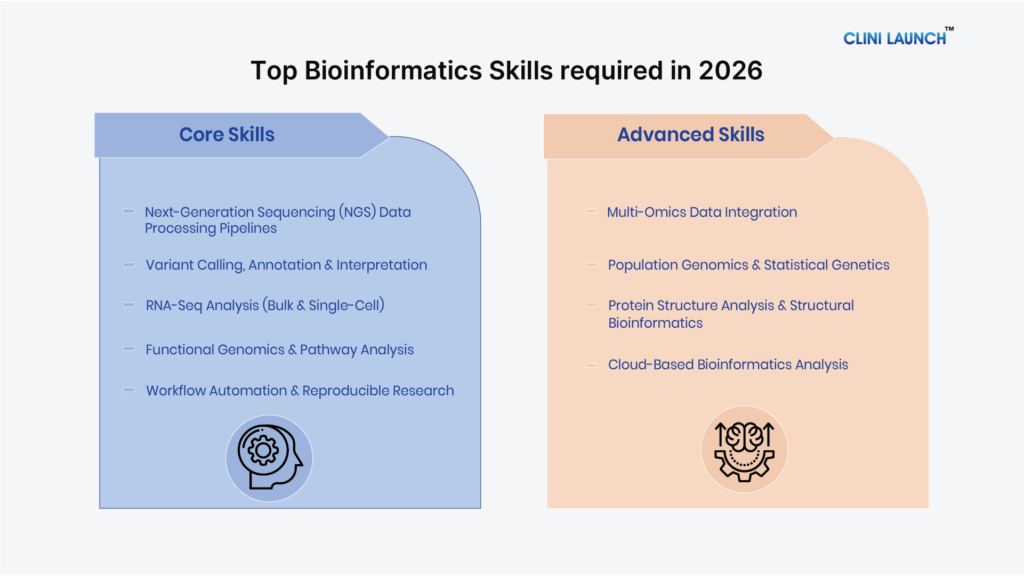
Bioinformatics professionals require a combination of biological knowledge, computational skills, and analytical reasoning. These foundational competencies are often referred to as essential Skills for Bioinformatics, forming the base for any successful career in this field. Core competencies include genomic data analysis, RNA-Seq interpretation, and automated bioinformatics workflows.
Advanced professionals often develop expertise in areas such as multi-omics integration, population genomics, structural bioinformatics, and cloud computing.
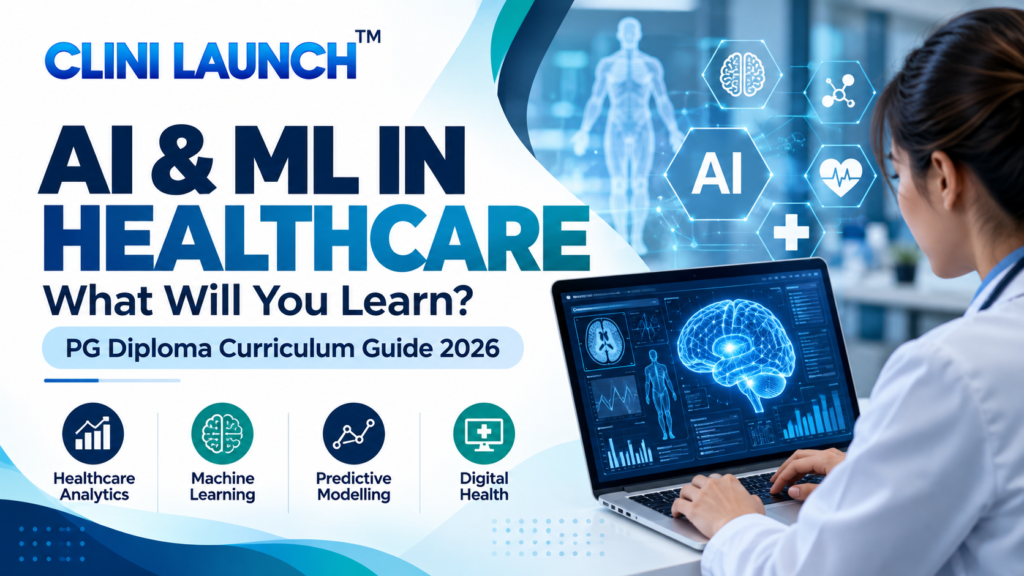
Increasingly, PG Diploma in AI and ML in HealthCare are becoming important for interpreting large-scale biological datasets, especially in areas such as healthcare analytics and biomedical research.
A. Core Bioinformatics Skills Required in 2026
Despite differences in roles and job titles, companies consistently expect a common set of bioinformatician skills. These are the capabilities that appear most often in hiring requirements and are treated as the starting point for bioinformatics work in industry. A strong bioinformatics qualification includes the ability to apply these skills in practical biological and research environments.
The skills listed below represent what companies openly look for in 2026. These represent the most in-demand skills required for bioinformatics and form the foundation of modern bioinformatics course skills taught in industry-focused programs. Each one plays a direct role in handling biological data, running analyses, and supporting real research or clinical projects. We’ll look at these skills one by one to understand what they involve and why they continue to matter.
1. NGS Data Processing Pipelines: Essential Bioinformatics Skill in 2026
Next-generation sequencing generates extremely large volumes of raw genomic data. A single whole-genome sequencing sample can produce around 90–200 GB of data, and real research projects may include hundreds or thousands of samples.
NGS pipelines convert raw sequencing output into reliable, structured results through steps such as quality control, alignment, and variant detection. In industry environments, automated pipelines ensure consistent analysis across datasets and make results reproducible. Today, bioinformaticians are valued not only for running pipelines but for understanding how workflow design affects data reliability and downstream biological interpretation.
2. Variant Calling, Annotation & Interpretation
Detecting and interpreting genetic variation is one of the core challenges in bioinformatics because every human genome contains millions of differences compared with a reference sequence. A typical human genome contains millions of variants compared with the reference genome. Variant calling is the process of identifying these differences from sequencing data. Once variants are called, annotation involves assigning biological meaning to them linking them to specific genes, functional regions, or known clinical effects while interpretation focuses on deciding which variants matter for a given biological or clinical question.
In real industry projects, accurate variant analysis supports applications such as disease gene discovery, genetic diagnostics, and personalized medicine. In modern research environments not only to detect variants reliably but also to interpret their potential impact in context, helping research and clinical teams make informed decisions.
3. RNA-Seq Analysis Skills for Modern Bioinformatics Careers
RNA-Seq analysis is used to understand how genes are expressed across conditions, tissues, or cell types. While bulk RNA-Seq measures average gene expression across a population of cells, single-cell RNA-Seq enables expression profiling at the level of individual cells, revealing biological heterogeneity that bulk analysis cannot capture.
Large-scale single-cell RNA-Seq studies now routinely analyze tens of thousands of individual cells in a single experiment. In industry projects, RNA-Seq analysis supports disease biology, oncology, immunology, and drug discovery by identifying differentially expressed genes, cell populations, and biological pathways. In industry settings, professionals must confidently analyze both bulk and single-cell RNA-Seq data and understand how analytical choices influence biological interpretation.
4. Functional Genomics & Pathway Analysis
Functional genomics focuses on understanding how genes work together to drive biological processes, rather than analyzing genes in isolation. Pathway analysis plays a critical role here by organizing gene-level results into known biological pathways, signaling cascades, and molecular networks, helping researchers move from raw gene lists to meaningful biological interpretation.
The scale of pathway knowledge itself highlights why this skill is essential. Databases such as Reactome organize genes into curated biological pathways that help researchers interpret large gene lists.
In industry projects, functional genomics and pathway analysis are used to interpret RNA-Seq and multi-omics results, identify dysregulated biological systems, prioritize therapeutic targets, and explain disease mechanisms in a structured way. By 2026, companies expect bioinformaticians to go beyond reporting differentially expressed genes and instead explain how groups of genes collectively alter pathways and biological systems.
5. Workflow Automation Skills Required for Bioinformatics Professionals
Workflow automation and reproducible research focus on ensuring that bioinformatics analyses can be reliably repeated, verified, and reused across projects, teams, and computing environments. As datasets grow larger and analyses become more complex, manual execution and ad-hoc scripts increase the risk of inconsistencies and results that cannot be independently reproduced.
In industry environments, workflow automation addresses this challenge by ensuring analyses run the same way every time, with clear versioning, traceability, and minimal manual intervention. In advanced genomics projects design reproducible, automated workflows that reduce error, support audits, and allow results to be confidently reused in research, clinical, and regulatory settings. As bioinformatics projects grow more complex, professionals increasingly need skills that go beyond foundational genomic analysis. At this stage, advanced Skills for Bioinformatics become critical for handling large-scale biological datasets. The next set of capabilities reflects how the field is expanding toward large-scale biological systems and integrated datasets.
B. Advanced Bioinformatics Skills Required in 2026
Bioinformatics is rapidly expanding beyond foundational genomic analysis. As datasets become more complex, professionals are increasingly expected to work with advanced analytical approaches. These skills help bioinformaticians integrate biological data, analyze large-scale patterns, and interpret complex biological systems. While not always required for entry-level roles, they are becoming valuable in research, biotechnology, and pharmaceutical environments.
6. Multi-Omics Data Integration
Advanced Multi-omics data integration combines data from genomics, transcriptomics, proteomics, metabolomics, and other biological layers to understand how molecular changes interact across biological systems.
In research, biotechnology, and pharmaceutical environments, it is used to identify disease mechanisms, validate biomarkers, and support drug target discovery through integrated biological data analysis.
7. Population Genomics & Statistical Genetics
Population genomics and statistical genetics focus on analyzing genetic variation across large populations to understand disease risk, traits, and population-level genetic patterns.
In research, biotechnology, and pharmaceutical settings, they are used for genome-wide association studies, polygenic risk scoring, and large-scale disease risk analysis.
8. Protein Structure Analysis & Structural Bioinformatics
Protein structure analysis and structural bioinformatics focus on studying the three-dimensional structure of proteins to understand their function, interactions, and stability.
In biotechnology, pharmaceutical, and research environments, they are used in drug discovery, target validation, antibody engineering, and analysis of protein function and genetic variants.
9. Cloud-Based Bioinformatics Analysis
Cloud-based bioinformatics analysis uses scalable cloud computing environments to process, store, and manage large biological datasets instead of relying on local infrastructure.
In biotechnology, pharmaceutical, and research environments, it is used for population genomics, multi-omics analysis, and collaborative large-scale biological data research.
Bioinformatics
Build practical skills to analyze, manage, and interpret large-scale biological data used in genomics, clinical research, and drug discovery. Learn how computational tools transform DNA, RNA, and protein data into meaningful scientific insights. Choosing a practical bioinformatics certificate course helps bridge the gap between academic knowledge and industry requirements.

How to Become a Bioinformatician in 2026
Becoming a bioinformatician in 2026 requires a mix of biological knowledge, computational skills, and practical project exposure. As genomics, precision medicine, and AI-driven healthcare expand, companies increasingly look for professionals who can work across both life sciences and data analysis.
Educational Background
Most professionals enter bioinformatics from Biotechnology, Microbiology, Genetics, Biochemistry, Pharmacy, Life Sciences, Biomedical Sciences, or Computer Science backgrounds. Many also pursue a specialized bioinformatics qualification such as a diploma, PG Diploma, or bioinformatics certificate course to build industry-relevant skills.
Required Tools and Skills
Common bioinformatician skills include:
- Python and R programming
- Linux command-line usage
- Genomics and sequence analysis
- Statistical analysis and data visualization
- Biological databases and NGS workflows
- Bioinformatics pipelines and workflow tools
Modern bioinformatics course skills also increasingly include cloud computing and AI-supported biological data analysis.
Importance of Internships and Projects
Internships and industry projects help learners understand how biological data is handled in real research and clinical environments. Employers increasingly value practical exposure, analytical thinking, and project experience beyond certifications alone.
Career Roadmap
A common pathway includes:
- Build foundations in biology and genetics
- Learn programming and bioinformatics tools
- Work on projects and biological datasets
- Gain internship or research exposure
- Specialize in areas like genomics, structural bioinformatics, or multi-omics analysis
By 2026, companies increasingly expect professionals to combine technical workflows with biological interpretation and research-oriented thinking.
Why tool knowledge alone is no longer enough
Learning bioinformatics tools once gave professionals a clear advantage. Today, that advantage has narrowed. Most workflows are standardized, pipelines are automated, and many professionals work with the same set of tools and tutorials.
As a result, tool knowledge has become a baseline expectation rather than a differentiator.
In real projects, challenges begin after the tools finish running. Teams must decide whether results are reliable, biologically meaningful, and appropriate for the question being asked. These decisions cannot be made by software alone.
By 2026, bioinformatics roles increasingly support research direction and clinical decision-making. Companies therefore value professionals who can interpret results, explain uncertainty, and guide next steps rather than simply generate outputs.
This shift explains why some careers accelerate while others plateau. The next section focuses on the skills that address this gap: the ones rarely written in job descriptions but consistently noticed in real-world work.
Why Upskilling and Reskilling matter
Bioinformatics evolves rapidly as new sequencing technologies, analytical methods, and computational tools emerge. Professionals therefore need continuous learning to remain effective.
Upskilling helps bioinformaticians improve existing competencies such as genomic analysis, multi-omics integration, or machine learning. Reskilling allows professionals from biology or data science backgrounds to transition into computational life-science roles.
In practice, successful bioinformatics professionals treat learning as an ongoing process supported by interdisciplinary collaboration and structured training programs. A bioinformatics online course with certificate allows professionals to continuously upgrade their skills without interrupting their careers.
AI-Driven Bioinformatics skills shaping the future
Artificial intelligence and machine learning are transforming how biological data is analyzed and interpreted. As biological datasets grow and complexity, traditional analytical methods alone are often insufficient to capture the patterns hidden within genomic and multi-omics data. AI-driven bioinformatics combines computational models with biological expertise to uncover relationships that would otherwise remain invisible. By 2026, organizations increasingly expect bioinformatics professionals to understand how AI and machine learning techniques can support biological discovery, clinical interpretation, and precision medicine initiatives.
- Long-Read Sequencing Data Analysis
Long-read sequencing data analysis emerged to address this gap. By working with reads that span much larger stretches of DNA, bioinformaticians can directly observe complex genomic regions instead of reconstructing them from fragmented short reads. High-fidelity (HiFi) long-read sequencing produces reads with typical lengths around 10–25 kilobases, allowing single reads to cover repetitive and structurally complex regions that short-read data struggle to assemble reliably.
This capability has reshaped how genomics problems are approached in areas such as rare disease analysis, cancer genomics, genome assembly, and haplotype phasing. By 2026, long-read data analysis is no longer just an advanced add-on. It represents a fundamental shift toward resolving biological complexity directly rather than approximating it through indirect reconstruction.
- Epigenomics Data Analysis
For a long time, bioinformatics focused primarily on DNA sequence variation to explain biological differences. While sequence data revealed what genes were present, it often failed to explain why the same genome behaved differently across tissues, developmental stages, or disease states. Many critical regulatory effects remained invisible when sequence alone was considered.
Epigenomics data analysis emerged to address this limitation by examining chemical modifications to DNA and histone proteins that regulate gene activity without altering the underlying sequence. Large-scale efforts have demonstrated the scope of this regulatory layer. This capability fundamentally changed how gene regulation is studied. Epigenomics analysis enables bioinformaticians to identify regulatory elements, understand tissue-specific gene expression, and interpret disease-associated variants that fall outside coding regions. By 2026, epigenomic data analysis is no longer optional; it is central to understanding how genetic potential is translated into real biological outcomes.
- Pharmacogenomics & Gene–Drug Interaction Analysis People
For a long time, drug development and prescribing followed a largely uniform approach, if most patients would respond similarly to the same medication. In practice, this often failed with some individuals experiencing reduced efficacy or serious adverse drug reactions that could not be explained by clinical factors alone.
Pharmacogenomics and gene–drug interaction analysis emerged to address this gap by linking genetic variation to drug response, metabolism, and toxicity. The clinical importance of this field is now formally recognized in regulation. According to the U.S. Food and Drug Administration, more than 300 approved drug labels include pharmacogenomic biomarker information, explicitly associating genetic variants with drug dosing, safety warnings, or therapeutic response.
This capability has changed how drugs are developed, prescribed, and monitored. Pharmacogenomics analysis enables bioinformaticians to interpret gene–drug relationships, identify clinically actionable variants, and support precision medicine strategies. By 2026, companies increasingly expect bioinformatics professionals to connect genomic data with therapeutic decision-making, making pharmacogenomics a critical bridge between genomics and clinical care.
- AI / Machine Learning for Biological Data
AI and machine learning are increasingly used to analyze complex biological datasets. Genomics, transcriptomics, imaging, and multi-omics experiments generate high-dimensional data that traditional statistical methods may struggle to interpret.
Machine learning models can identify hidden patterns in gene expression, classify cell types, predict variant impact, and integrate multiple biological data layers. However, biological data is noisy and context-dependent, which means models must be carefully validated. As a result, bioinformatics professionals are increasingly expected to understand how machine learning can support biological discovery while maintaining scientific rigor.
AI & ML in Healthcare
Learn how artificial intelligence and machine learning are applied to healthcare, clinical research, and life-science data. This program focuses on real-world use cases such as predictive analytics, medical data interpretation, and AI-driven healthcare insights.
Underrated but Powerful Bioinformatics Skills
Beyond tools and pipelines, these skills reflect how experienced bioinformaticians think, decide, and operate when real-world complexity sets in.
1. Biological question framing for computational analysis
Strong bioinformaticians begin analysis with clearly defined biological questions. Precise problem framing prevents technically correct analyses from solving the wrong problem.
2. Data quality intuition & batch-effect awareness
Less experienced professionals trust results if pipelines run without errors or warnings. Experienced bioinformaticians instinctively question whether patterns reflect true biology or hidden technical artifacts. This intuition often prevents entire projects from being built on misleading or irreproducible results.
3. Context-aware tool and method selection
Inexperienced analysts apply popular tools uniformly, regardless of study design or data limitations. Strong bioinformaticians choose methods based on context, assumptions, and biological questions at hand. This judgment leads to results that are defensible, interpretable, and aligned with real-world constraints.
4. Interpretation of negative or inconclusive results
Many beginners view negative results as failures or signs that something went wrong. Experienced professionals recognize that inconclusive findings still carry valuable information about biology or study design. This perspective helps teams avoid false confidence and make more informed next-step decisions.
5. Cross-team translation (lab ↔ clinician ↔ data teams)
Inexperienced analysts focus on technical accuracy without adapting communication to different audiences.
Strong bioinformaticians translate findings clearly between experimental scientists, clinicians, and data teams.
This skill ensures insights are understood, trusted, and acted upon rather than lost in translation.
How Hiring Managers Evaluate Bioinformatics Skills
Hiring managers rarely judge bioinformatics candidates based only on the number of tools they know. Instead, interviews often focus on how candidates think about problems, explain analytical choices, and interpret results.
Project discussions reveal much more than technical questions. Managers pay attention to how candidates frame biological questions, evaluate data quality, and justify conclusions.
This is why real skill development rarely comes from clean tutorial datasets alone. Experience with messy data, unclear research questions, and real-world constraints helps professionals develop the judgment required in industry environments.
Bioinformatics Career Path and Progression
Bioinformatics careers span research institutions, biotechnology companies, pharmaceutical organizations, healthcare analytics firms, and genomics startups. Many professionals begin as bioinformatics analysts or junior computational biologists, where they focus on running analyses, managing datasets, and supporting research teams.
With experience, professionals move into roles such as bioinformatics scientist, computational biologist, or genomics data scientist. These positions involve designing analytical strategies, developing pipelines, interpreting biological results, and contributing to research publications or product development. A strong bioinformatics qualification combined with practical experience accelerates career progression.
At senior levels, bioinformaticians may transition into specialized or leadership roles such as:
- Senior Bioinformatics Scientist
- Genomics Research Lead
- Translational Bioinformatics Specialist
- Bioinformatics Pipeline Architect
- Director of Computational Biology
Career progression increasingly depends not only on technical expertise but also on the ability to interpret biological data, collaborate across disciplines, and translate analytical findings into actionable scientific or clinical insights.
Bioinformatics Career Opportunities in India and Globally
The demand for bioinformatics professionals is expanding rapidly across both India and global life-science markets. Advances in genomics, precision medicine, drug discovery, and AI-driven healthcare analytics have created a strong need for experts who can analyze complex biological data.
Globally, major biotechnology and pharmaceutical hubs in the United States, Europe, and Singapore continue to invest heavily in genomics research, multi-omics studies, and large-scale biomedical data programs. Large research initiatives and clinical sequencing programs are generating unprecedented volumes of biological data, increasing the need for skilled bioinformatics professionals.
India is also emerging as a significant contributor to the global bioinformatics ecosystem. The growth of genomics startups, contract research organizations, pharmaceutical companies, and AI-driven healthcare platforms has created new opportunities for trained professionals. Government initiatives in biotechnology and digital health are further accelerating the development of computational life-science capabilities.
As global collaboration in biomedical research expands, bioinformatics professionals increasingly work in interdisciplinary teams across countries, making the field both globally relevant and locally promising for skilled candidates.
The Bioinformatics Professional Who Thrives in 2026
By this point, the pattern should be clear.
The bioinformatics professionals who progress fastest are not those who simply execute analyses, but those who consistently make sound judgments when data is incomplete, noisy, or ambiguous. They are trusted not because they know every tool, but because they ask better questions, recognize limitations early, and explain their reasoning clearly.
They operate comfortably between biology, data, and application whether that application is research direction, clinical insight, or product decision-making. Over time, this ability to connect dots across domains becomes more valuable than speed or technical breadth alone.
In 2026, success in bioinformatics is less about standing out on paper and more about becoming someone teams rely on when clarity is needed most.
Conclusion
Bioinformatics is no longer a role defined by how many tools you know or how quickly you can run an analysis. As data volumes grow and biological questions become more complex, industry readiness increasingly depends on judgment, context, and the ability to translate results into meaningful decisions. Developing the right Skills for Bioinformatics is what ultimately differentiates industry-ready professionals from those limited to theoretical knowledge. Enrolling in a structured bioinformatics certificate course is one of the most effective ways to gain industry-relevant skills.
At CliniLaunch Research Institute, bioinformatics training is designed with this reality in mind focusing not only on core tools and workflows, but also on how to think with data, interpret results responsibly, and align analysis with real research and clinical use cases.
In 2026, success in bioinformatics won’t come from chasing longer skill lists. It will come from learning how to apply skills thoughtfully, adapting to complexity, and delivering insights that matter. Ultimately, the right bioinformatics qualification determines long-term career growth and adaptability in this evolving field.