The medical industry offers diverse, future-ready careers in AI, diagnostics, genomics, devices, regenerative medicine, and clinical specialties, creating strong opportunities for healthcare and life science graduates by 2026.
Medical industry careers for 2026 are no longer limited to doctors, nurses, or lab technicians. Healthcare is shifting toward AI-driven diagnostics, digital therapeutics, precision genomics, medical robotics, and advanced regenerative treatments. The roles emerging today are hybrid, technology-enabled, and built around real-world clinical impact.
Globally, healthcare is expanding at an unprecedented pace. The market, valued at nearly USD 11 trillion in 2024, is projected to cross USD 17 trillion by 2032. Investment is flowing into digital health platforms, biomarker diagnostics, AI-assisted imaging, wearable monitoring, and cell and gene therapies. That expansion is creating demand for professionals who can combine scientific understanding with data, systems, compliance, and applied technology.
In India alone, the medical and pharmaceutical ecosystem contributes significantly to GDP and supports millions of jobs across research, clinical operations, diagnostics, manufacturing, and healthcare technology. As innovation accelerates, the demand is shifting toward specialized, future-ready roles rather than conventional hospital-only careers.
Whether you come from life sciences, biotechnology, pharmacy, healthcare, engineering, or data backgrounds, the opportunities ahead are broad and structured around skills that directly impact patient care and medical systems.
Below are 22 high-growth, future-aligned roles shaping the medical industry landscape for 2026.
Top 22 Careers in the Medical Industry
The careers listed below represent modern roles in the medical industry that are gaining importance. They are designed for those looking to explore stable, future-ready career paths in healthcare.
A . Digital Health, AI & Data
This domain focuses on how technology and data are transforming healthcare delivery and decision-making. It includes roles that support diagnostics, patient monitoring, clinical decision systems, and digital healthcare platforms.
Careers in this space sit at the intersection of medicine, data, and technology, enabling safer, smarter, and more efficient healthcare systems.
1 . Clinical AI Safety & Bias Auditor
As AI tools are increasingly embedded in healthcare systems improving diagnostics, clinical decision-making, and operational efficiency the lack of governance, explainability, and oversight has emerged as a critical challenge that industry leaders are actively addressing, driving demand for professionals who can ensure these technologies are safe, fair, and effective.
A Clinical AI Safety & Bias Auditor ensures that artificial intelligence tools used in healthcare are safe, unbiased, and clinically reliable. While AI teams build models and clinicians use them to support medical decisions, this role focuses on checking whether those systems behave correctly in real-world healthcare settings.
As AI becomes more common in diagnostics, imaging, and clinical decision support, healthcare organizations need professionals who can review risks, fairness, and reliability. This role plays a key part in making sure technology improves patient care rather than creating new problems.
| Why AI Oversight Is Critical in Healthcare |
|---|
| AI systems can influence medical decisions, and if they are biased or poorly tested, they can affect patient safety and trust. This role exists to ensure AI tools are reliable, unbiased, and used responsibly in healthcare. |
What a Clinical AI Safety & Bias Auditor Does
They review AI outputs, compare performance across different patient groups, and identify risks or inconsistencies. They work closely with clinicians, data teams, and quality teams to ensure AI tools are suitable for real-world medical use.
Key responsibilities include:
- Determining whether systems are ready for clinical reliance
- Examining how outcomes are generated and documented
- Confirming adherence to safety expectations
- Supporting investigations when issues arise
- Improving clarity around AI-supported decisions
Clinical AI Safety & Bias Auditor — Role Snapshot
| Category | Details |
|---|---|
| Key Skills Required | Clinical data interpretation, AI validation basics, bias detection, risk analysis, documentation, stakeholder communication |
| Common Tools / Areas Worked On | Clinical AI dashboards, model output reports, validation datasets, audit documentation, healthcare data systems |
| Where This Role Works | Hospitals using AI tools, health tech companies, medical device firms, digital health platforms |
2 . Medical AI Deployment Engineer
Healthcare providers are moving beyond AI experimentation toward large-scale implementation within routine care delivery, creating strong demand for professionals who can operationalize and maintain these systems inside complex clinical environments. As hospitals invest in real-world integration, deployment expertise is becoming essential for successful adoption.
A Medical AI Deployment Engineer is responsible for implementing AI systems inside hospitals and diagnostic workflows. While data scientists build AI models and clinicians use the outputs, this role focuses on making sure AI tools are properly integrated into real hospital systems and day-to-day clinical operations.
As hospitals adopt AI for diagnostics, imaging, patient monitoring, and decision support, there is a growing need for professionals who can bridge the gap between technology and healthcare environments. This role ensures that AI solutions actually work where care is delivered.
| Why Hospitals Need Dedicated AI Implementation Roles |
|---|
| As healthcare adopts new technologies, these tools must work safely and smoothly in real medical environments. This role exists to ensure systems are reliable, properly used, and support patient care without disrupting clinical workflows. |
What a Medical AI Deployment Engineer Does
They work on integrating AI tools with hospital systems such as diagnostic platforms, imaging systems, and clinical dashboards. They test deployments, monitor performance, and coordinate with clinicians, IT teams, and vendors to ensure smooth adoption.
Key responsibilities include:
- Installing and configuring AI solutions in clinical environments
- Ensuring compatibility with hospital infrastructure
- Supporting go-live and rollout activities
- Resolving technical issues in operational settings
- Managing updates and system changes
- Over time, they gain exposure to multiple care settings such as radiology departments, diagnostic labs, ICUs, and digital health platforms.
Medical AI Deployment Engineer — Role Snapshot
| Category | Details |
|---|---|
| Key Skills Gained | Healthcare systems understanding, AI implementation basics, workflow integration, system testing, stakeholder coordination |
| Common Tools / Areas Worked On | Hospital IT systems, diagnostic platforms, AI dashboards, integration and testing environments |
| Where This Role Works | Hospitals, diagnostic centers, healthtech companies, medical AI solution providers |
3 . Digital Therapeutics (DTx) Product Specialist
As healthcare systems increasingly adopt software-based treatments for chronic disease management and remote care delivery, demand is growing for professionals who can translate clinical requirements into regulated, patient-ready digital products. The expansion of prescription digital therapeutics is turning product specialization into an important capability for healthcare organizations.
A Digital Therapeutics (DTx) Product Specialist works on prescription-grade software therapies used to prevent, manage, or treat medical conditions. Unlike wellness apps, digital therapeutics are clinically validated and prescribed by healthcare professionals as part of patient care.
As healthcare shifts toward long-term disease management and remote care, software-based therapies are being used for conditions such as diabetes, mental health disorders, chronic pain, and sleep issues. This role ensures that these digital therapies are designed, managed, and delivered in line with medical and regulatory expectations.
| Why Software-Based Therapies Require Medical Oversight |
|---|
| Many chronic and lifestyle-related conditions require continuous care beyond hospital visits. This role exists to ensure digital therapies are clinically effective, patient-friendly, and aligned with medical standards, allowing software to safely support long-term treatment and behavior change. |
What a Digital Therapeutics Product Specialist Does
They work on the development and improvement of digital therapy products, coordinating between clinical teams, technology teams, and regulatory stakeholders. They help define product features, review clinical evidence, support validation processes, and ensure the therapy meets patient and clinician needs.
Key responsibilities include:
- Defining product requirements based on clinical use
- Aligning features with therapeutic goals
- Supporting evidence and validation activities
- Gathering input from clinicians and patients
- Contributing to product improvements across releases
Digital Therapeutics (DTx) Product Specialist — Role Snapshot
| Category | Details |
|---|---|
| Key Skills Required | Healthcare product understanding, clinical requirements translation, digital health workflows, stakeholder coordination |
| Common Tools / Areas Worked On | Digital therapy platforms, patient engagement tools, clinical documentation, product dashboards |
| Where This Role Works | Digital health companies, healthtech startups, hospitals, chronic care platforms |
Health Outcomes & Value-Based Care Analyst
As healthcare systems worldwide shift from volume-driven reimbursement toward outcome-focused models, organizations increasingly rely on specialists who can measure effectiveness, quality, and cost impact across real patient populations. This transition is making outcomes analysis a priority capability for providers, payers, and healthcare networks.
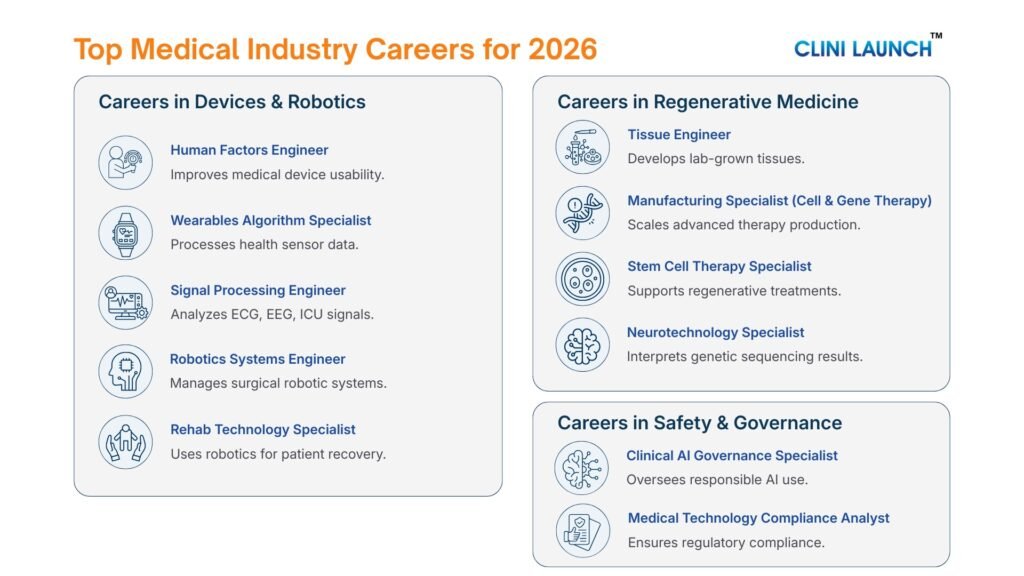
A Health Outcomes & Value-Based Care Analyst focuses on measuring how effective medical treatments are in real-world healthcare settings. Instead of looking only at clinical trial results, this role examines patient outcomes, quality of care, and cost effectiveness across hospitals and health systems.
As healthcare systems move toward value-based care models where providers are rewarded for better patient outcomes rather than the number of services delivered, this role has become increasingly important. It helps healthcare organizations understand what treatments truly work and where improvements are needed.
| Why Measuring Real-World Outcomes Matters |
|---|
| Healthcare systems need to know whether treatments improve patient outcomes in real life, not just in controlled studies. This role exists to measure care quality and outcomes, helping organizations deliver better results while controlling costs. |
What a Health Outcomes & Value-Based Care Analyst Does
They analyze healthcare data to track patient outcomes, treatment effectiveness, and care for quality indicators. They work with clinicians, administrators, and payer teams to identify trends, compare treatment approaches, and support value-based care initiatives.
Key responsibilities include:
- Building outcome measurement frameworks
- Evaluating variations in care performance
- Supporting benchmarking across providers or programs
- Translating findings into improvement insights
- Informing strategy for value-based initiatives
Health Outcomes & Value-Based Care Analyst — Role Snapshot
| Category | Details |
|---|---|
| Key Skills Gained | Healthcare data analysis, outcomes measurement, population health concepts, reporting and communication |
| Common Tools / Areas Worked On | Healthcare datasets, outcomes dashboards, quality metrics, reporting platforms |
| Where This Role Works | Hospitals, healthcare networks, insurance providers, health analytics firms |
5. Medical NLP Specialist
As healthcare organizations accelerate their use of electronic records and data-driven decision systems, the ability to convert large volumes of clinical text into structured information is becoming essential. This growing reliance on computable data is making medical language processing expertise a key capability toward 2026.
A Medical NLP Specialist works on extracting meaningful insights from unstructured clinical text such as doctor notes, discharge summaries, pathology reports, and medical records. Instead of relying only on structured data, this role focuses on turning written clinical information into usable insights.
As a large portion of healthcare data exists in text form, organizations need specialists who can help convert this information into structured, analyzable data. This role plays an important part in improving clinical understanding, research, and healthcare decision-making.
| Why Clinical Text Data Needs Specialized Interpretation |
|---|
| Most medical information is recorded as free text, making it difficult to analyze at a scale. This role exists to convert clinical language into actionable data, helping healthcare teams access insights that would otherwise remain hidden. |
What a Medical NLP Specialist Does
They analyze clinical text to identify key medical terms, patterns, and relationships. They work with data teams and clinicians to validate extracted information and support use cases such as clinical analytics, research, and reporting.
Key responsibilities include:
- Converting free text into structured data elements
- Mapping clinical language to standard terminologies
- Improving extraction accuracy and consistency
- Supporting datasets used for analytics or research
- Refining rules or models based on clinical feedback
Medical NLP Specialist — Role Snapshot
| Category | Details |
|---|---|
| Key Skills Gained | Clinical text interpretation, basic NLP concepts, healthcare data understanding, validation and documentation |
| Common Tools / Areas Worked On | Clinical notes, EHR systems, text analysis workflows, validation datasets |
| Where This Role Works | Hospitals, health tech companies, research organizations, healthcare analytics firms |
6.Healthcare Systems Integration Architect
As hospitals expand digital infrastructure and adopt multiple specialized technologies, the ability to make systems communicate seamlessly has become a major operational priority. Growing emphasis on interoperability and connected data environments is driving strong demand for integration expertise across healthcare networks.
A Healthcare Systems Integration Architect is responsible for connecting different healthcare systems such as electronic health records (EHRs), medical devices, imaging platforms, and laboratory systems. While each system may work well on its own, this role ensures they communicate smoothly to support patient care and clinical operations.
As healthcare becomes more digital, hospitals and health networks rely on multiple systems to manage patient information. This role helps bring those systems together, enabling accurate data flow, faster decision-making, and better coordination across departments.
| Why Healthcare Systems Must Work Together |
|---|
| Healthcare data is often spread across many disconnected systems, which can slow down care and create errors. This role exists to ensure information flows seamlessly between systems, helping clinicians access complete and reliable patient data when they need it. |
What a Healthcare Systems Integration Architect Does
They design and manage integrations between EHRs, diagnostic systems, medical devices, and lab platforms. They work closely with hospital IT teams, clinicians, vendors, and administrators to ensure systems are compatible, secure, and efficient.
Key responsibilities include:
- Designing data exchange frameworks between platforms
- Defining interface specifications and workflows
- Enabling interoperability using healthcare standards
- Overseeing data mapping and transformation
- Guiding long-term integration strategy
| Category | Details |
|---|---|
| Key Skills Gained | Healthcare IT understanding, system integration concepts, workflow mapping, cross-team coordination |
| Common Tools / Areas Worked On | EHR platforms, medical devices, imaging systems, lab information systems |
| Where This Role Works | Hospitals, healthcare networks, healthtech companies, medical technology providers |
Many roles in digital health and AI require more than theoretical knowledge they demand an understanding of how technology is applied within real healthcare environments. Building familiarity with healthcare workflows alongside practical AI concepts can make it easier to move into these emerging roles.
AI & ML in Healthcare
Build practical skills to apply artificial intelligence and machine learning in real healthcare and life sciences use cases. Learn how healthcare data is processed, models are developed, and AI-driven insights are applied across clinical research, diagnostics, and healthcare systems.

Diagnostics, Imaging & Genomics
This domain focuses on how diseases are identified, analyzed, and understood using diagnostic tests, medical imaging, and genetic information. It plays a critical role in early detection, accurate diagnosis, and personalized treatment decisions.
Careers in this space support clinicians by providing reliable diagnostic data and insights that guide patient care across hospitals, labs, and specialized medical centers.
1. Medical Imaging Informatics Specialist
As diagnostic imaging volumes grow and radiology becomes fully digital, healthcare providers require professionals who can manage complex image data environments and ensure reliable system performance. The expansion of AI-enabled imaging workflows is further strengthening demand for informatics expertise in this area.
A Medical Imaging Informatics Specialist manages digital systems used to store, process, and analyze medical images such as X-rays, CT scans, MRIs, and ultrasounds. While radiologists focus on interpreting images, this role ensures that imaging data flows smoothly across systems and is easily accessible for clinical use.
As radiology departments increasingly rely on digital platforms and AI-assisted imaging tools, this role has become essential for maintaining accuracy, efficiency, and reliability in diagnostic imaging workflows.
| Why Modern Imaging Needs Dedicated Data Management |
|---|
| Modern medical imaging relies on large volumes of digital data that must be stored, retrieved, and analyzed quickly and accurately. This role exists to ensure imaging systems are well-managed, integrated with hospital workflows, and capable of supporting both radiologists and AI-based diagnostic tools. |
What a Medical Imaging Informatics Specialist Does
They manage imaging systems such as PACS and radiology information platforms, ensure image quality and data integrity, and support integration with hospital systems. They work closely with radiologists, IT teams, and imaging vendors to keep diagnostic workflows efficient and reliable.
Key responsibilities include:
- Administering storage and retrieval of imaging data
- Optimizing image workflow across departments
- Maintaining system performance and uptime
- Supporting migration or archiving activities
- Assisting clinicians in accessing diagnostic information
Medical Imaging Informatics Specialist — Role Snapshot
| Category | Details |
|---|---|
| Key Skills Gained | Medical imaging workflows, system management, data handling, coordination with clinical teams |
| Common Tools / Areas Worked On | PACS, radiology information systems, imaging databases, AI-assisted imaging platforms |
| Where This Role Works | Radiology departments, diagnostic imaging centers, hospitals, medical imaging technology companies |
Medical Imaging Informatics Specialist
As laboratories transition from microscope-based workflows to high-resolution digital platforms, demand is increasing for professionals who can manage slide digitization, image systems, and AI-supported analysis environments. The modernization of pathology infrastructure is making digital expertise central to diagnostic operations.
A Digital Pathology Specialist works with digitized pathology slides and AI-driven tools to support disease diagnosis, especially in cancer care. While pathologists focus on medical interpretation, this role ensures that pathology images are correctly digitized, analyzed, and managed using modern digital systems.
As pathology moves from microscopes to high-resolution digital slides, healthcare organizations are adopting AI to improve accuracy, speed, and consistency in diagnosis. This role supports that transition by managing digital pathology workflows and systems.
| Why Cancer Diagnosis Is Moving to Digital Platforms |
|---|
| Traditional pathology relies on manual slide review, which can be time-consuming and variable. This role exists to support faster, more consistent diagnoses by managing digital slide systems and AI tools that assist pathologists in identifying disease patterns. |
What a Digital Pathology Specialist Does
They manage whole-slide imaging systems, support AI-assisted analysis, and ensure pathology data is properly stored and accessible. They work closely with pathologists, lab teams, and technology providers to maintain smooth diagnostic workflows.
Key responsibilities include:
- Coordinating digitization of glass slides
- Managing case queues for digital review
- Verifying image completeness and clarity
- Supporting workflow between labs and specialists
- Maintaining organized access to pathology records
Digital Pathology Specialist — Role Snapshot
| Category | Details |
|---|---|
| Key Skills Gained | Pathology workflow understanding, digital imaging basics, data management, collaboration with clinical teams |
| Common Tools / Areas Worked On | Whole-slide imaging systems, digital pathology platforms, AI pathology tools |
| Where This Role Works | Pathology labs, cancer centers, diagnostic hospitals, digital pathology companies |
Precision Diagnostics Scientist
As treatment strategies increasingly depend on biomarker-guided decisions, healthcare and biotechnology organizations require experts who can translate biological signals into clinically actionable tests. The expansion of precision medicine programs is making advanced diagnostics capability a major growth area toward 2026.
A Precision Diagnostics Scientist develops diagnostic tests based on biomarkers that help detect diseases early, classify patients, and guide personalized treatment decisions. Rather than relying only on symptoms, this role focuses on identifying biological signals that indicate how a disease behaves in different individuals.
As healthcare moves toward personalized and targeted therapies, diagnostic tests must become more precise and predictive. This role supports that shift by linking laboratory science with clinical needs to improve diagnostic accuracy.
| Why One-Size-Fits-All Diagnostics No Longer Work |
|---|
| Many diseases respond differently across patients, and traditional tests may not capture these differences. This role exists to develop biomarker-based diagnostics that enable earlier detection, better treatment matching, and more personalized healthcare decisions. |
What a Precision Diagnostics Scientist Does
They work on identifying and validating biomarkers using clinical and laboratory data. They collaborate with clinicians, lab teams, and research groups to develop diagnostic assays and support their use in real-world medical settings.
Key responsibilities include:
- Designing studies to evaluate biomarker relevance
- Supporting analytical and clinical validation
- Interpreting laboratory findings for diagnostic use
- Contributing to assay optimization
- Assisting in translation from research to application
Precision Diagnostics Scientist — Role Snapshot
| Category | Details |
|---|---|
| Key Skills Gained | Biomarker analysis, diagnostic development, clinical-lab collaboration, data interpretation |
| Common Tools / Areas Worked On | Biomarker assays, molecular diagnostics platforms, clinical laboratory data |
| Where This Role Works | Diagnostic laboratories, biotech companies, research hospitals, precision medicine firms |
Genomic Data Interpretation Analyst
As genetic testing becomes integrated into routine care across oncology, rare disease diagnosis, and preventive medicine, the need for specialists who can translate sequencing outputs into clinically meaningful conclusions is rising rapidly. Expanding genomics programs are making interpretation expertise a critical workforce area toward 2026.
A Genomic Data Interpretation Analyst converts raw genetic sequencing data into meaningful clinical insights. While sequencing technologies generate large volumes of genetic information, this role focuses on understanding what that data means for disease risk, diagnosis, and treatment decisions.
As genetic testing becomes more common in oncology, rare diseases, and preventive care, healthcare organizations need professionals who can translate complex genomic data into clear, clinically usable interpretations.
| Why Genetic Data Needs Clinical Context |
|---|
| Genomic sequencing alone does not help clinicians unless the data is correctly interpreted. This role exists to transform complex genetic information into actionable insights that support accurate diagnosis, risk assessment, and personalized treatment planning. |
What a Genomic Data Interpretation Analyst Does
They analyze sequencing results to identify relevant genetic variants and assess their clinical significance. They work with clinicians, genetic counselors, and lab teams to validate findings and prepare clear interpretation reports.
Key responsibilities include:
- Reviewing sequence data for clinically relevant changes
- Classifying variants based on established guidelines
- Correlating findings with patient information
- Preparing structured interpretation summaries
- Updating conclusions as new evidence emerges
Genomic Data Interpretation Analyst — Role Snapshot
| Category | Details |
|---|---|
| Key Skills Gained | Genomic data interpretation, variant analysis, clinical reporting, collaboration with medical teams |
| Common Tools / Areas Worked On | Sequencing data, variant databases, genomic analysis workflows |
| Where This Role Works | Genetic testing labs, diagnostic hospitals, genomics companies, precision medicine centers |
5. Genomic Counselor
As genetic testing expands across preventive care, oncology, and reproductive health, more individuals require expert guidance to understand the meaning and implications of their results. This growing use of genomics in routine care is increasing demand for trained professionals who can bridge complex science and patient decision-making.
A Genomic Counselor advises patients and families using genetic test results to explain disease risks, inherited conditions, and possible health implications. While genetic tests generate complex data, this role focuses on translating that information into clear, understandable guidance for patients.
As genetic testing becomes more common in areas such as cancer risk assessment, prenatal screening, and rare disease diagnosis, genomic counselors play a key role in helping patients make informed healthcare decisions.
| Why Patients Need Guidance on Genetic Risk |
|---|
| Genetic information can be complex and emotionally sensitive for patients. This role exists to help individuals understand their genetic risks, reduce confusion or anxiety, and support informed medical and lifestyle decisions. |
What a Genomic Counselor Does
They review genetic test reports, explain results to patients, and discuss potential health risks or preventive steps. They work closely with clinicians, genetic testing labs, and families to ensure information is accurate, ethical, and clearly communicated.
Key responsibilities include:
- Guiding patients through testing options
- Helping individuals understand risk implications
- Supporting informed consent discussions
- Addressing emotional and family considerations
- Documenting counseling outcomes
Genomic Counselor — Role Snapshot
| Category | Details |
|---|---|
| Key Skills Gained | Genetic risk communication, patient counseling, clinical interpretation, ethical awareness |
| Common Tools / Areas Worked On | Genetic test reports, counseling frameworks, patient education resources |
| Where This Role Works | Genetic counseling clinics, diagnostic hospitals, fertility centers, genomics companies |
Medical Devices, Wearables & Robotics
This domain focuses on technologies that support diagnosis, treatment, and patient monitoring through medical devices, wearable sensors, and robotic systems. It plays an important role in improving accuracy, safety, and efficiency across healthcare settings.
Careers in this space combine healthcare knowledge with engineering and technology, helping clinicians deliver better care both inside hospitals and in remote or home-based environments.
Medical Device Human Factors Engineer
As medical technologies become more advanced and highly regulated, manufacturers are placing greater emphasis on usability and real-world interaction between devices and users. The need to minimize human error and demonstrate safe design is to make human factors expertise a critical capability toward 2026.
A Medical Device Human Factors Engineer designs and evaluates medical devices to ensure they are safe, intuitive, and easy for clinicians and patients to use. While engineers focus on technical performance, this role focuses on how real users interact with devices in clinical settings.
As medical devices become more complex, poor design can lead to user errors and patient risk. This role helps prevent those issues by improving device usability and supporting safer healthcare delivery.
| Why Device Design Directly Impacts Patient Safety |
|---|
| Medical devices are used in high-pressure environments where small design flaws can cause serious errors. This role exists to reduce user-related mistakes by ensuring devices are designed with safety, usability, and real clinical workflows in mind. |
What a Medical Device Human Factors Engineer Does
They study how clinicians and patients interact with devices, conduct usability evaluations, and identify potential risks. They work with engineering, quality, and clinical teams to improve device design and ensure it supports safe and effective use.
Key responsibilities include:
- Planning and running user experience studies
- Identifying use-related hazards
- Recommending design modifications
- Supporting validation of user interfaces
- Contributing to usability documentation
Medical Device Human Factors Engineer — Role Snapshot
| Category | Details |
|---|---|
| Key Skills Gained | Usability analysis, risk assessment, clinical workflow understanding, documentation |
| Common Tools / Areas Worked On | Usability studies, device simulations, risk analysis reports |
| Where This Role Works | Medical device companies, design and engineering firms, healthcare technology providers |
2. Medical Wearables Algorithm Specialist
As remote patient monitoring and consumer-connected health devices become integral to chronic care and preventive medicine, demand is rising for specialists who can transform continuous sensor streams into dependable clinical information. The growth of wearable ecosystems is making algorithm expertise increasingly important toward 2026.
A Medical Wearables Algorithm Specialist builds algorithms that process data from wearable sensors used for health monitoring. These sensors track signals such as heart rate, activity levels, sleep patterns, and oxygen saturation to support continuous patient monitoring.
As wearable devices become widely used in chronic care, preventive health, and remote patient monitoring, this role ensures that sensor data is accurately converted into meaningful health insights
| Why Sensor Data Must Be Clinically Reliable |
|---|
| Wearable devices generate large volumes of raw sensor data that must be processed correctly to be useful. This role exists to ensure sensor algorithms produce reliable, clinically meaningful insights that support safe and effective remote health monitoring. |
What a Medical Wearables Algorithm Specialist Does
They develop and test algorithms that filter, analyze, and interpret wearable sensor data. They work with clinicians, device teams, and data teams to validate results and improve monitoring accuracy.
Key responsibilities include:
- Designing logic to convert raw signals into metrics
- Refining detection of events or anomalies
- Evaluating algorithm performance in real use
- Adjusting parameters to improve accuracy
- Supporting continuous improvement of monitoring models
Medical Wearables Algorithm Specialist — Role Snapshot
| Category | Details |
|---|---|
| Key Skills Gained | Sensor data analysis, algorithm basics, healthcare data understanding, validation techniques |
| Common Tools / Areas Worked On | Wearable sensor data, monitoring algorithms, validation datasets |
| Where This Role Works | Wearable device companies, healthtech firms, remote monitoring platforms |
3. Biomedical Signal Processing Engineer
As modern care environments increasingly depend on continuous physiological monitoring, healthcare systems require specialists who can transform complex signal streams into reliable clinical information. The growth of device-generated data in critical care is making signal processing expertise highly valuable toward 2026.
A Biomedical Signal Processing Engineer works on analyzing physiological signals such as ECG, EEG, and ICU monitoring data to support diagnosis and patient monitoring. These signals provide real-time insights into heart activity, brain function, and critical care status.
As hospitals and medical devices generate continuous streams of physiological data, this role ensures that signals are accurately processed, filtered, and interpreted for clinical use.
| Why Physiological Signals Need Advanced Analysis |
|---|
| Physiological signals are often noisy and complex, making them difficult to interpret reliably. This role exists to process and analyze these signals accurately so clinicians can make timely and informed decisions, especially in critical care settings. |
What a Biomedical Signal Processing Engineer Does
They design and test signal processing methods to clean and analyze physiological data from medical devices. They work with clinicians, device teams, and researchers to validate outputs and improve monitoring accuracy.
Key responsibilities include:
- Developing filters for noise reduction
- Extracting clinically relevant signal features
- Building pipelines for real-time analysis
- Evaluating accuracy against reference standards
- Supporting optimization of monitoring performance
Biomedical Signal Processing Engineer — Role Snapshot
| Category | Details |
|---|---|
| Key Skills Gained | Signal processing basics, physiological data analysis, device data interpretation, validation methods |
| Common Tools / Areas Worked On | ECG, EEG, ICU monitoring data, signal analysis workflows |
| Where This Role Works | Hospitals, medical device companies, critical care technology providers |
4. Medical Robotics Systems Engineer
As surgical and rehabilitation robotics expand across hospitals, maintaining safe and reliable system performance has become a priority for healthcare providers. The growing footprint of robotic platforms is increasing demand for professionals who can support operation, maintenance, and technical continuity toward 2026.
A Medical Robotics Systems Engineer manages robotic systems used in surgery and rehabilitation. While surgeons and therapists use these systems for procedures and recovery support, this role ensures the robotic platforms function reliably, safely, and as intended.
As robotic technologies become more common in operating rooms and rehabilitation centers, healthcare organizations need specialists who can manage, maintain, and support these advanced systems.
| Why Robotic Systems Require Specialized Oversight |
|---|
| Robotic medical systems are complex and require precise operation to ensure patient safety. This role exists to ensure robotic platforms are properly managed, maintained, and integrated into clinical workflows, reducing technical risks during use. |
What a Medical Robotics Systems Engineer Does
They oversee the setup, testing, and operation of robotic systems used in surgery and rehabilitation. They work with clinicians, biomedical teams, and vendors to ensure systems perform consistently and safely.
Key responsibilities include:
- Preparing robotic platforms for procedures
- Calibrating and verifying system accuracy
- Monitoring functionality during use
- Performing technical checks and maintenance
- Coordinating service or repair activities
Medical Robotics Systems Engineer — Role Snapshot
| Category | Details |
|---|---|
| Key Skills Gained | Medical robotics understanding, system operation, troubleshooting, coordination with clinical teams |
| Common Tools / Areas Worked On | Surgical robots, rehabilitation robotics, system control interfaces |
| Where This Role Works | Hospitals, surgical centers, rehabilitation facilities, medical robotics companies |
5. Advanced Rehabilitation Technology Specialist
As rehabilitation centers increasingly adopt robotics, neuro-stimulation, and sensor-based recovery tools, there is rising demand for professionals who can apply these technologies within structured therapy programs. The expansion of tech-assisted recovery models is making this expertise highly relevant toward 2026.
An Advanced Rehabilitation Technology Specialist works with robotic systems and neuro-technology to support patient recovery after injury, surgery, or neurological conditions. While therapists guide rehabilitation plans, this role focuses on using advanced technologies to enhance and personalize recovery.
As rehabilitation moves beyond traditional therapy methods, robotics and neuro-tech are increasingly used to improve mobility, strength, and functional outcomes. This role supports the effective use of these technologies in clinical and rehabilitation settings.
| Why Rehabilitation Is Becoming Technology-Driven |
|---|
| Traditional rehabilitation methods may not fully address complex recovery needs. This role exists to apply advanced technologies that support more precise, consistent, and effective rehabilitation, helping patients regain function more efficiently. |
What an Advanced Rehabilitation Technology Specialist Does
They manage and support robotic and neuro-technology-based rehabilitation systems, assist therapists during sessions, and monitor system performance. They work closely with clinical teams to ensure technology is used safely and effectively.
Key responsibilities include:
- Preparing devices for patient therapy sessions
- Adjusting technology to match rehabilitation plans
- Observing response during assisted treatment
- Recording usage and progress information
- Helping optimize technology-supported recovery
Advanced Rehabilitation Technology Specialist — Role Snapshot
| Category | Details |
|---|---|
| Key Skills Gained | Rehabilitation technology use, system monitoring, patient safety awareness, clinical coordination |
| Common Tools / Areas Worked On | Rehabilitation robots, neuro-tech devices, therapy monitoring systems |
| Where This Role Works | Rehabilitation centers, hospitals, neuro-care facilities, assistive technology providers |
Therapeutics & Regenerative Medicine
This domain focuses on developing and applying treatments that restore, repair, or replace damaged tissues and biological functions. It includes advanced therapies that go beyond symptom management and aim for long-term healing.
Careers in this space combine medical science, biotechnology, and clinical application, playing a key role in shaping the future of disease treatment and recovery.
Tissue Engineer
As regenerative medicine moves from experimental research toward clinical and commercial application, demand is increasing for specialists who can design functional biological replacements for damaged tissues. Advances in biomaterials, cell science, and translational research are positioning tissue engineering as a major growth area toward 2026.
A Tissue Engineer develops lab-grown tissues and, in advanced cases, organ-like structures to support disease treatment, injury repair, and medical research. Instead of relying only on traditional transplants or therapies, this role focuses on creating biological tissues that can replace or restore damaged body functions.
As regenerative medicine advances, tissue engineering is becoming essential for addressing organ shortages, improving healing, and enabling safer drug testing. This role supports that shift by combining biology, material science, and medical applications.
Why Lab-Grown Tissues Are the Future of Treatment
Many patients require tissue repair or replacement, but donor availability and compatibility remain major challenges. This role exists to develop lab-grown tissue solutions that support healing, reduce transplant dependency, and advance regenerative treatment options.
What a Tissue Engineer Does
They design and develop biological tissues using cells, scaffolds, and growth systems. They work with research scientists, clinicians, and manufacturing teams to test tissue functionality and support translation into therapeutic use.
Key responsibilities include:
- Selecting appropriate cell sources and materials
- Developing culture and growth conditions
- Evaluating structural and functional performance
- Refining constructs for therapeutic goals
Tissue Engineer — Role Snapshot
| Category | Details |
|---|---|
| Key Skills Gained | Cell biology application, biomaterials understanding, tissue development methods, research collaboration |
| Common Tools / Areas Worked On | Cell cultures, tissue scaffolds, regenerative lab systems |
| Where This Role Works | Biotech companies, regenerative medicine labs, research hospitals, biomedical research institutes |
Regenerative Medicine Manufacturing Specialist
As cell and gene therapies progress from research programs into approved treatments, healthcare and biotech organizations require professionals who can produce these products consistently at clinical and commercial scale. The shift toward routine therapeutic delivery is making specialized manufacturing expertise increasingly important toward 2026.
A Regenerative Medicine Manufacturing Specialist focuses on scaling the production of cell and gene therapies so they can be delivered safely and consistently to patients. While researchers develop these advanced therapies in the lab, this role ensures they can be manufactured at quality and scale.
As cell and gene therapies move from research into real-world treatment, reliable manufacturing becomes critical. This role supports that transition by maintaining quality, consistency, and compliance in therapy production.
Why Advanced Therapies Need Controlled Manufacturing
Cell and gene therapies are complex and highly sensitive to manufacturing conditions. This role exists to ensure these therapies are produced safely, consistently, and at scale so they can reach patients without compromising quality.
What a Regenerative Medicine Manufacturing Specialist Does
They support manufacturing processes for cell and gene therapies, monitor production conditions, and maintain quality standards. They work closely with scientists, quality teams, and operations staff to ensure therapies meet required specifications.
Key responsibilities include:
- Executing production steps within controlled environments
- Maintaining sterility and handling protocols
- Recording batch and process data
- Verifying adherence to manufacturing procedures
- Supporting preparation for product release
Regenerative Medicine Manufacturing Specialist — Role Snapshot
| Category | Details |
|---|---|
| Key Skills Gained | Biomanufacturing fundamentals, quality control, process monitoring, regulatory awareness |
| Common Tools / Areas Worked On | Cell processing systems, manufacturing workflows, quality documentation |
| Where This Role Works | Cell & gene therapy companies, biomanufacturing facilities, research hospitals |
Stem Cell Therapy Specialist
As regenerative treatments expand into clinical practice for orthopedic, neurological, and degenerative conditions, healthcare providers need trained professionals who can support safe preparation and application of these advanced therapies. The movement from laboratory innovation to patient delivery is making this role increasingly relevant toward 2026.
A Stem Cell Therapy Specialist applies stem cell–based regenerative treatments in clinical settings to support healing and recovery. While researchers develop stem cell therapies and clinicians oversee patient care, this role focuses on the safe preparation, handling, and application of these treatments in practice.
As regenerative therapies are increasingly used for conditions involving tissue damage and degeneration, this role helps bridge the gap between laboratory innovation and real patient treatment.
Why This Role Exists
Stem cell therapies require careful handling and controlled application to ensure patient safety and effectiveness. This role exists to support the clinical use of regenerative treatments in a structured, safe, and standardized manner.
What a Stem Cell Therapy Specialist Does
They assist in preparing stem cell materials, supporting treatment procedures, and monitoring therapy protocols under clinical supervision. They work closely with clinicians, lab teams, and regulatory staff to ensure treatments follow approved guidelines.
Key responsibilities include:
- Preparing materials for scheduled treatments
- Verifying readiness of therapy components
- Assisting during administration procedures
- Tracking protocol compliance during care
- Maintaining accurate treatment records
| Category | Details |
|---|---|
| Key Skills Gained | Stem cell handling basics, clinical protocol support, patient safety awareness, documentation |
| Common Tools / Areas Worked On | Stem cell preparation systems, clinical protocols, treatment documentation |
| Where This Role Works | Regenerative medicine clinics, hospitals, specialty care centers |
4. Neurotechnology Specialist
As neurostimulation and brain–computer interface technologies expand across rehabilitation and neurological care, healthcare providers increasingly require professionals who can manage and support these sophisticated systems. The rise of device-assisted neural therapies is making neurotechnology expertise a growing field toward 2026.
A Neurotechnology Specialist works on technologies that interact directly with the nervous system, such as brain–computer interfaces (BCIs) and neurostimulation devices. While clinicians focus on diagnosis and treatment, this role supports the use and functioning of technologies that help monitor, stimulate, or restore neural activity.
As neurotechnology is increasingly used for conditions like paralysis, movement disorders, chronic pain, and neurological rehabilitation, this role plays an important part in applying advanced technology to improve brain and nerve function.
Why Regenerative Treatments Require Structured Application
Neurological conditions are complex and often difficult to treat using traditional methods alone. This role exists to support technologies that interact with the nervous system, enabling better monitoring, stimulation, and restoration of neural function in a safe and controlled way.
What a Neurotechnology Specialist Does
They support the setup, testing, and use of neurotechnology devices, including stimulation systems and brain–computer interfaces. They work with clinicians, engineers, and therapy teams to ensure devices function correctly and safely in clinical or rehabilitation settings.
Key responsibilities include:
- Preparing systems for neural monitoring or stimulation
- Adjusting parameters under clinical direction
- Observing device response during sessions
- Assisting in troubleshooting technical issues
- Documenting usage and system behavior
Neurotechnology Specialist — Role Snapshot
| Category | Details |
|---|---|
| Key Skills Gained | Neurotechnology fundamentals, device operation, patient safety awareness, clinical coordination |
| Common Tools / Areas Worked On | Neurostimulation devices, brain–computer interfaces, neural monitoring systems |
| Where This Role Works | Neuro-care centers, hospitals, rehabilitation facilities, neurotechnology companies |
5. Operations, Safety & Governance
This domain focuses on the systems, processes, and oversight that keep healthcare organizations running safely and efficiently. It includes roles that ensure compliance, manage risk, and support reliable healthcare delivery.
Careers in this space play a critical role behind the scenes, helping healthcare systems maintain quality, safety, and trust while adapting to new technologies and regulations.
1. Clinical AI Governance Specialist
As artificial intelligence becomes integral to clinical and operational decision-making, healthcare organizations are establishing formal governance structures to manage accountability, transparency, and regulatory expectations. This shift is creating strong demand for professionals who can oversee responsible AI adoption toward 2026.
A Clinical AI Governance Specialist oversees the ethical, safe, and compliant use of AI in medical settings. While AI teams develop tools and clinicians use them in care delivery, this role ensures AI systems follow healthcare regulations, ethical standards, and internal governance policies.
As AI becomes more deeply embedded in diagnostics, decision support, and patient management, healthcare organizations need clear oversight to ensure these technologies are used responsibly and transparently.
Why Ethical and Regulatory Control of AI Is Essential
AI systems can influence medical decisions and patient outcomes, making oversight essential. This role exists to ensure AI tools are used ethically, meet regulatory expectations, and maintain trust among patients, clinicians, and healthcare organizations.
What a Clinical AI Governance Specialist Does
They define and monitor governance frameworks for AI use, review compliance with ethical and regulatory standards, and coordinate with clinical, legal, and technology teams. They also support audits, risk assessments, and policy updates related to AI in healthcare.
Key responsibilities include:
- Establishing rules for acceptable AI use
- Defining approval and oversight pathways
- Aligning AI practices with regulations
- Managing documentation for accountability
- Guiding organizational AI policy evolution
Clinical AI Governance Specialist — Role Snapshot
| Category | Details |
|---|---|
| Key Skills Gained | AI governance concepts, regulatory awareness, risk assessment, policy documentation |
| Common Tools / Areas Worked On | AI governance frameworks, compliance documentation, risk assessment reports |
| Where This Role Works | Hospitals, healthtech companies, regulatory-focused healthcare organizations |
2. Medical Technology Compliance & Safety Analyst
As medical devices, software-driven tools, and AI-enabled systems face increasing regulatory scrutiny across global markets, healthcare organizations require specialists who can maintain compliance throughout the technology lifecycle. Strengthening safety expectations are making compliance expertise a critical function toward 2026.
A Medical Technology Compliance & Safety Analyst ensures that medical technologies meet global safety and regulatory standards before and after they are used in healthcare settings. While product teams design medical technologies and clinicians use them in practice, this role focuses on compliance, risk management, and patient safety.
As medical devices, digital health tools, and AI systems are increasingly regulated worldwide, healthcare organizations need professionals who can navigate complex regulatory requirements and ensure technologies are safe for clinical use.
Why Medical Technologies Must Meet Global Safety Standards
Medical technologies must meet strict safety and regulatory standards to protect patients and healthcare providers. This role exists to ensure technologies comply with global regulations, reduce risk, and support safe adoption in medical environments
What a Medical Technology Compliance & Safety Analyst Does
They review medical technologies for compliance with regulatory requirements, support safety assessments, and maintain documentation. They work with quality teams, regulatory bodies, and product stakeholders to ensure ongoing compliance throughout the technology lifecycle.
Key responsibilities include:
- Interpreting applicable regulatory standards
- Preparing and maintaining compliance records
- Supporting product safety evaluations
- Tracking corrective or preventive actions
Medical Technology Compliance & Safety Analyst — Role Snapshot
| Category | Details |
|---|---|
| Key Skills Gained | Regulatory compliance, safety analysis, documentation, risk management |
| Common Tools / Areas Worked On | Regulatory documentation, safety reports, compliance checklists |
| Where This Role Works | Medical device companies, healthtech firms, regulatory-focused healthcare organizations |
Roles related to safety, compliance, and governance often rely on a solid understanding of clinical research processes and regulatory frameworks. Learning how clinical trials are planned, monitored, and governed provides a strong foundation for navigating these areas of the medical industry.
Clinical Research
Build practical, industry-aligned skills to work across real clinical trial environments. Learn how clinical studies are planned, conducted, documented, and monitored, with a strong emphasis on ethics, patient safety, and regulatory compliance throughout the trial lifecycle.
Conclusion
The medical industry is rapidly moving toward specialized, technology-driven roles that go far beyond traditional career paths. From digital health and advanced diagnostics to regenerative medicine and high-demand clinical specialties, these emerging roles reflect where healthcare is heading next.
For professionals and graduates looking to enter this evolving landscape, practical exposure and industry understanding matter as much as academic knowledge. CliniLaunch Research Institute plays a focused role here by offering clinical research courses designed around real-world medical industry workflows, regulatory practices, and job-aligned skill development. This approach helps learners move from academic backgrounds into applied healthcare roles with greater clarity and confidence.
Choosing the right domain early and building the right skills can position you strongly for future-ready careers in the medical industry.
Frequently Asked Questions (FAQs)
1. Who is this blog meant for?
This blog is designed for life science graduates, healthcare professionals, freshers, and career switchers who want to explore future-ready careers in the medical and pharmaceutical industry.
2. Are these careers suitable for beginners?
Yes. Many of the roles listed are beginner-friendly and focus on applied skills, domain understanding, and industry workflows rather than deep specialization at the start.
3. Do I need to be a doctor to pursue these medical industry careers?
No. While some roles are clinical specialties, most careers in this list are open to candidates from biotechnology, pharmacy, life sciences, healthcare, engineering, and data-related backgrounds.
4. How are these careers different from traditional medical jobs?
These roles go beyond conventional doctor or hospital-based careers. They combine healthcare knowledge with technology, diagnostics, data, devices, operations, and specialized therapeutic areas.
5. Which domains are expected to grow the fastest by 2026?
Digital Health & AI, Diagnostics & Genomics, Medical Devices & Robotics, Regenerative Medicine, and Healthcare Operations & Governance are expected to see strong growth due to innovation and changing healthcare needs.
6. Do these roles require coding or advanced technical skills?
Not all roles require coding. Many focus on clinical understanding, systems, safety, diagnostics, or patient care. Technical depth varies depending on the role and domain.
7. Are these careers limited to India or relevant globally?
These careers are globally relevant. Advances in healthcare technology and research have created demand for similar roles across international healthcare and pharmaceutical markets.
8. How should someone choose the right career from this list?
Start by identifying your background and interests, then align them with the domain that best fits your strengths such as technology, diagnostics, clinical care, or operations and build role-specific skills accordingly