The highest-paying pharmacovigilance jobs in India include Qualified Person for Pharmacovigilance (QPPV), Drug Safety Physician, Pharmacovigilance Manager, Signal Detection & Risk Management Specialist, and Regulatory Affairs & Pharmacovigilance Specialist. Depending on the role, salaries typically range from ₹12 LPA to ₹75 LPA. Most positions require 4–10+ years of pharmacovigilance, regulatory affairs, or drug safety experience, while leadership and physician-level roles generally offer the highest compensation.

The Indian pharmaceutical sector recorded an annual turnover of approximately ₹4.72 lakh crore in FY 2024–25, reflecting its growing global influence.Behind every drug that reaches patients safely is a pharmacovigilance (PV) professional helping monitor and manage drug-related risks. With the growing demand for Pharmacovigilance Jobs in India, opportunities are expanding across areas such as signal detection, regulatory safety, aggregate reporting, adverse event management, and risk management. As global drug safety requirements continue to evolve, skilled pharmacovigilance professionals are increasingly sought after by pharmaceutical companies, CROs, and healthcare organizations.

The global demand for pharmacovigilance professionals and increasing regulatory requirements is reflected not only in hiring volumes but also in the compensation offered across pharmacovigilance roles, creating strong pharmacovigilance career opportunities and drug safety jobs in India. 

Those interested in advancing their careers in pharmacovigilance can explore CliniLaunch Research Institute’Advanced Diploma in AI Integration in Drug Safety and Compliance, which focuses on the intersection of drug safety, compliance, and AI technologies. 

Factors Driving Pharmacovigilance Growth in India 

  • PvPI has established a nationwide network of ADR Monitoring Centres to strengthen drug safety surveillance across India and support pharmacovigilance officers involved in monitoring adverse drug reactions. 
  • CDSCO’s revised 2023–25 regulatory framework made in-house PV operations mandatory for all Schedule H drug manufacturers 
  • Global CROs like IQVIA, Syneos Health, Parexel, Covance, have aggressively expanded their India delivery centres in Hyderabad, Bengaluru, and Pune 
  • Post-COVID regulatory tightening has created a surge in signal detection and ICSR (Individual Case Safety Report) volumes globally. India absorbs a massive share of that workload 

Major employers hiring pharmacovigilance professionals include global Contract Research Organizations (CROs), pharmaceutical companies, biotechnology firms, and drug safety consulting organizations. As drug development pipelines expand and regulatory requirements become more stringent, these employers continue to invest heavily in pharmacovigilance teams across case processing, signal detection, regulatory safety, aggregate reporting, and risk management functions. 

Why Pharmacovigilance Salaries Are Increasing in India 

Pharmacovigilance salaries are increasing due to: 

  • Stricter global and Indian drug safety regulations  
  • Rapid expansion of CROs and pharmacovigilance service providers  
  • Growing volume of global drug safety and compliance activities  
  • Increased outsourcing of pharmacovigilance operations to India  
  • Rising demand for professionals with specialized safety and regulatory expertise 

What Are Pharmacovigilance Jobs? 

Pharmacovigilance jobs focus on monitoring the safety of medicines and identifying potential risks associated with their use. Professionals in these roles evaluate adverse drug reactions, support regulatory compliance, and help ensure patient safety. The field includes specializations such as case processing, signal detection, aggregate reporting, risk management, and drug safety quality assurance, making it an important function within the pharmaceutical and healthcare industries. 

Top Highest Paying Pharmacovigilance Jobs in India in 2026 

These pharmacovigilance jobs span leadership, medical, regulatory, and safety-specialist functions, with salaries varying based on expertise and responsibility. The growing importance of drug safety has created opportunities across multiple pharmacovigilance specializations.  

The following roles are ranked based primarily on their salary potential in India, with compensation varying according to experience, specialization, and regulatory responsibilities. 

1. Qualified Person for Pharmacovigilance (QPPV) 

If there’s one PV role that commands unparalleled authority and a salary to match, it’s the QPPV. Mandated by EU GVP Module I and increasingly referenced in Indian regulatory expectations for MNCs, the QPPV owns the entire pharmacovigilance system of a company. 

2026 Salary Range: ₹35 LPA – ₹75 LPA 

  • Responsible for overseeing the company’s entire pharmacovigilance system and ensuring regulatory compliance across global markets.  
  • Requires 10+ years of drug safety experience and expertise in EMA, FDA, and CDSCO regulations.  
  • Primarily hired by multinational pharmaceutical companies, CROs, and biotechnology organizations.  
  • Limited talent availability and increasing regulatory scrutiny continue to drive strong demand for experienced QPPV professionals. 

2. Drug Safety Physician / Medical Officer – PV 

The only role in PV where an MBBS or MD is non-negotiable. Drug Safety Physicians perform medical case review, assess causality in serious adverse events (SAEs), and provide the clinical lens that distinguishes a noise signal from a regulatory crisis. 

2026 Salary Range: ₹20 LPA – ₹55 LPA 

  • Reviews serious adverse events, performs causality assessments, and provides medical oversight for drug safety decisions.  
  • MBBS is mandatory, while expertise in clinical safety evaluation and REMS programs is highly valued.  
  • Commonly hired by pharmaceutical companies, vaccine manufacturers, biotechnology firms, and global CROs.  
  • Growing drug development activity and safety monitoring requirements are expected to sustain demand for qualified Drug Safety Physicians. 

3. Pharmacovigilance Manager / Associate Director – Drug Safety 

The operational spine of any PV setup is important. PV Managers oversee case processing teams, SOP compliance, audits, and cross-functional safety governance. At the Associate Director level, they own departmental P&L and regulatory submission timelines. 

2026 Salary Range: ₹18 LPA – ₹42 LPA 

  • Manages safety-related regulatory submissions and supports compliance with global pharmacovigilance reporting requirements.  
  • 6–10 years of PV experience mandatory; MBA in pharma management is a differentiator 
  • Essential skills include Argus Safety, Oracle Empirica, ARISg, MedWatch, team management, and pharmacovigilance compliance oversight. 
  • Commonly hired by pharmaceutical companies, CROs, biotechnology firms, and drug safety service providers across major life sciences hubs. 
  • Demand for experienced pharmacovigilance leaders continues to grow as organizations expand global drug safety operations and regulatory oversight. 

4. Signal Detection & Risk Management Specialist 

One of the most intellectually demanding roles in PV, and its compensation reflects that. Signal specialists mine vast ICSR databases using statistical algorithms (PRR, ROR, BCPNN) to detect patterns that could indicate undocumented drug risks, before regulators do. 

2026 Salary Range: ₹14 LPA – ₹32 LPA 

  • Identifies emerging drug safety signals through analysis of large adverse event databases.  
  • Requires expertise in Oracle Empirica, EVDAS, VigiLyze, MedDRA, and benefit-risk assessment.  
  • Hired by pharmaceutical companies, CROs, regulatory consulting firms, and safety analytics teams.  
  • Increasing post-marketing surveillance requirements continue to make signal detection one of the fastest-growing pharmacovigilance specializations. 

5. Regulatory Affairs & PV Specialist 

Where drug safety meets submission science. These specialists straddle PV and regulatory affairs, managing PSURs (Periodic Safety Update Reports), RMPs (Risk Management Plans), and DSURs (Development Safety Update Reports) for global filings. 

2026 Salary Range: ₹12 LPA – ₹28 LPA 

  • Dual expertise in PV + RA makes this profile extremely scarce and well-compensated 
  • Essential skills include expertise in ICH guidelines, regulatory documentation, safety reporting, and pharmacovigilance compliance. 
  • Commonly hired by pharmaceutical companies, generic drug manufacturers, CROs, and regulatory consulting organizations. 
  • Demand is expected to increase as pharmaceutical companies expand global product registrations and regulatory safety activities. 

6. Pharmacovigilance Quality Assurance Auditor 

QA Auditors ensure that ICSR workflows, database validations, and regulatory submissions hold up under inspection by the FDA, EMA, or CDSCO. One failed audit can trigger a Warning Letter which can cost a company hundreds of crores. 

2026 Salary Range: ₹12 LPA – ₹26 LPA 

  • Conducts pharmacovigilance audits and ensures drug safety systems comply with global regulatory standards, pharmacovigilance compliance requirements, and inspection expectations. 
  • GVP Module I–XVI working knowledge is mandatory 
  • Essential skills include GVP compliance, audit management, quality systems, inspection readiness, and safety database validation. 
  • Hired by pharmaceutical companies, CROs, biosimilar manufacturers, vaccine developers, and emerging biotechnology firms. 
  • Demand is increasing as regulatory inspections become more rigorous and companies strengthen quality oversight functions. 

7. Pharmacovigilance Medical Writer 

PV Medical Writers aren’t your conventional content professionals. They produce aggregate safety documents like PSURs, PBRERs, RMPs, that go directly into regulatory submissions. One flawed PBRER can delay a product launch by 6–18 months. The stakes are that high. 

2026 Salary Range: ₹10 LPA – ₹24 LPA 

  • Develops aggregate safety reports and regulatory documents that support drug safety evaluations and health authority submissions.  
  • Essential skills include scientific writing, safety data interpretation, regulatory documentation, and pharmacovigilance reporting. 
  • AMWA or RAC certification adds significant market credibility 
  • Demand remains strong due to increasing requirements for aggregate safety reporting and global regulatory submissions. 
  • Commonly hired by CROs, pharmaceutical companies, biotechnology firms, and regulatory consulting organizations. 

8. Aggregate Reporting Specialist 

Aggregate Reporting Specialists prepare key safety documents like PSURs, PBRERs, DSURs, and signal reports that support global regulatory submissions and drug safety decisions. This role demands strong scientific writing, regulatory expertise, and advanced safety data interpretation skills, making it one of the most specialized niches in pharmacovigilance. 

2026 Salary Range: ₹10 LPA – ₹22 LPA 

  • Prepares and reviews aggregate safety reports that support benefit-risk evaluation and regulatory decision-making.  
  • PSUR, PBRER, and DSUR experience is a major differentiator 
  • Essential skills include aggregate reporting, medical writing, signal interpretation, benefit-risk assessment, and regulatory documentation. 
  • Hired by pharmaceutical companies, CROs, vaccine manufacturers, biotechnology firms, and biologics organizations. 
  • Demand is expected to rise as regulatory authorities place greater emphasis on continuous safety monitoring and benefit-risk evaluation. 

9. PV Case Processing Lead / Senior ICSR Associate 

The production engine of global PV operations. India processes a disproportionately large share of the world’s ICSRs and Senior Case Processing Leads who manage team outputs, QC reviews, and timeline adherence are in relentless demand. 

2026 Salary Range: ₹8 LPA – ₹18 LPA 

  • Oversees adverse event case processing, quality review, and timely submission of Individual Case Safety Reports (ICSRs).  
  • 3–6 years of case processing experience; expertise in E2B(R3) format is non-negotiable 
  • Essential skills include ICSR processing, Argus Safety, MedDRA coding, quality review, and regulatory reporting compliance. 
  • Commonly hired by CROs, pharmaceutical companies, business process service providers, and global drug safety operations centers. 
  • Demand remains high as India continues to serve as a major global hub for pharmacovigilance case processing and safety operations. 

Highest Paying Pharmacovigilance Jobs in India: Salary Comparison 

Rank Pharmacovigilance Job Role Salary Range (2026) Experience Required
1 Qualified Person for Pharmacovigilance (QPPV) ₹35–75 LPA 10+ Years
2 Drug Safety Physician / Medical Officer – PV ₹20–55 LPA 5–12 Years
3 Pharmacovigilance Manager / Associate Director – Drug Safety ₹18–42 LPA 6–10 Years
4 Signal Detection & Risk Management Specialist ₹14–32 LPA 4–8 Years
5 Regulatory Affairs & PV Specialist ₹12–28 LPA 4–8 Years
6 Pharmacovigilance Quality Assurance Auditor ₹12–26 LPA 5–10 Years
7 Pharmacovigilance Medical Writer ₹10–24 LPA 3–8 Years
8 Aggregate Reporting Specialist ₹10–22 LPA 3–8 Years
9 PV Case Processing Lead / Senior ICSR Associate ₹8–18 LPA 3–6 Years

Skills That Can Increase Your Pharmacovigilance Salary 

Professionals in pharmacovigilance often see faster salary growth when they move beyond basic case processing and develop specialized expertise. 

Key skills that employers actively seek include: 

  • Argus Safety and ARISg database proficiency  
  • MedDRA coding and adverse event classification  
  • Signal detection and risk management  
  • Aggregate reporting (PSUR, PBRER, DSUR)  
  • Oracle Empirica and safety analytics tools  
  • FDA, EMA, ICH, and CDSCO regulatory knowledge  
  • Quality assurance and pharmacovigilance audits  
  • Benefit-risk assessment and safety review  

Professionals with expertise in these areas are often considered for higher-paying pharmacovigilance jobs and leadership-track positions. 

Advanced Diploma in AI Integration in Drug Safety and Compliance at CliniLaunch Research Institute, Bangalore, is designed to help learners develop practical expertise in pharmacovigilance, regulatory compliance, and AI-powered drug safety processes, preparing them for emerging opportunities in the pharmaceutical and healthcare industries. 

Conclusion 

The future of pharmacovigilance is being driven by increasing regulatory requirements, expanding global drug safety operations, and the adoption of AI-powered safety technologies. As pharmaceutical companies, CROs, and biotech firms continue to strengthen their safety functions, demand for skilled pharmacovigilance professionals is expected to remain strong in India and global markets. 

From entry-level case processing roles to highly specialized positions such as Signal Detection Specialist, Drug Safety Physician, and Qualified Person for Pharmacovigilance (QPPV), today’s drug safety careers offer strong growth potential and competitive compensation. For those evaluating long-term opportunities in life sciences, pharmacovigilance is a good career, due to its strong demand, diverse specialization pathways, and growing global importance. For life science graduates and healthcare professionals looking to enter this field, you can also explore our Advanced Diploma AI Integration in Drug Safety and Compliance Course to build practical skills in drug safety, regulatory compliance, and pharmacovigilance operations aligned with current industry needs. 

Frequently Asked Questions

Yes. Many companies hire freshers for entry-level Drug Safety Associate and case processing roles, making pharmacovigilance jobs for freshers an accessible entry point into the industry.

Pharmacy, life sciences, biotechnology, nursing, medicine, and other healthcare-related graduates are commonly eligible for pharmacovigilance positions.

No. Most pharmacovigilance roles do not require coding, although familiarity with safety databases and industry software can be beneficial.

Knowledge of drug safety regulations, case processing, MedDRA coding, signal detection, and safety databases are highly valued by employers.

Qualified Person for Pharmacovigilance (QPPV) is among the highest-paying pharmacovigilance roles in India, with salaries ranging from ₹35 LPA to ₹75 LPA depending on experience and regulatory responsibilities.

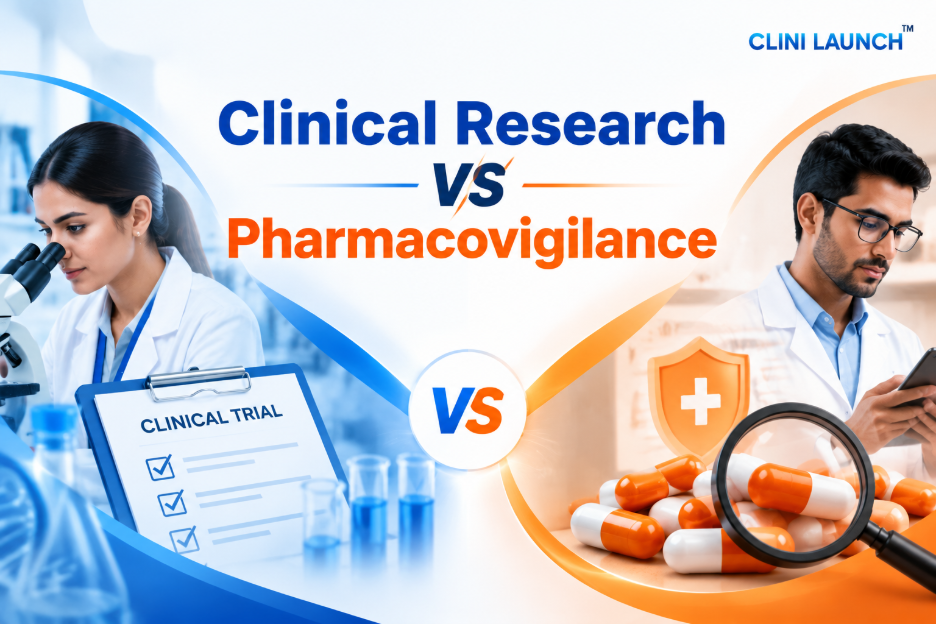
Clinical research focuses on testing drugs during trials, while pharmacovigilance focuses on monitoring and managing drug safety before and after approval.

Hyderabad, Bengaluru, Pune, Mumbai, and Chennai are among the leading hubs for pharmacovigilance and drug safety careers.

Signal detection, aggregate reporting, Argus Safety, MedDRA coding, risk management plans, and regulatory compliance are among the most sought-after skills for drug safety specialists and pharmacovigilance professionals.

Yes. Pharmacovigilance continues to offer strong career prospects due to increasing regulatory requirements, expanding global drug safety operations, and growing demand for professionals with specialized drug safety expertise.

India’s pharmaceutical industry is now the world’s third-largest by volume and pharmacovigilance is the compliance engine keeping it operational. With CDSCO tightening ADR reporting norms and global CROs rapidly expanding drug safety operations across India, skilled PV professionals are in rising demand. This growing demand has increased the popularity of pharmacovigilance courses India, as aspiring professionals seek specialized training in drug safety, adverse event reporting, and regulatory compliance.

India’s pharmacovigilance market is projected to grow at a CAGR of 12.3% through 2028, while only a small percentage of pharmacy graduates receive formal drug safety training. That skill gap is creating major career opportunities in pharma, CROs, and global safety operations. 

Whether you’re looking for a pharmacovigilance certification course, advanced diploma program, or specialized drug safety training, these pharmacovigilance courses in India are helping learners build modern drug safety careers.

At CliniLaunch Research Institute, the Advance Diploma AI Integration in Drug Safety and Compliance is built to provide practical exposure to AI-driven pharmacovigilance workflows, modern safety databases, adverse event processing, and global regulatory reporting practices. 

Why Pharmacovigilance Courses Matter Today 

Modern pharmacovigilance is no longer just about ADR reporting. A quality drug safety course now covers regulatory compliance, signal detection, risk management, and increasingly AI-assisted pharmacovigilance workflows.  

Modern pharmacovigilance is evolving rapidly because of: 

  • Rising global adverse event reporting volumes  
  • AI integration into drug safety workflows  
  • Increasing EMA, FDA, and CDSCO compliance pressure  
  • Growth in clinical trials and biologics  
  • Expansion of PV outsourcing in India  

As global pharmaceutical companies continue expanding safety operations, demand for structured pharmacovigilance training in India continues to rise across pharma companies, CROs, and regulatory organizations. These programs are particularly valuable for pharmacy graduates, Pharm.D professionals, life science graduates, healthcare professionals, and clinical research aspirants looking to build careers in drug safety, regulatory compliance, and pharmacovigilance operations. 

Top Pharmacovigilance Courses in India 

Here are some of the best pharmacovigilance courses in India, including classroom, hybrid, and online learning options covering drug safety, ADR reporting, regulatory compliance, and modern PV workflows. 

1. Advanced Diploma in AI Integration in Drug Safety and Compliance

The Advanced Diploma in AI Integration in Drug Safety and Compliance offered by CliniLaunch Research Institute (CLRI) is designed for students and professionals seeking practical exposure to AI-assisted pharmacovigilance workflows, adverse event case processing, regulatory reporting, and modern drug safety operations used across global pharma and CRO environments. The program also provides practical training and career support aligned with emerging drug safety and pharmacovigilance roles. 

Key Skills Covered 

  • Adverse event case processing 
  • Signal detection 
  • Regulatory reporting 
  • AI in pharmacovigilance 
  • Drug safety workflows 
  • Risk management 
  • Safety data analysis 

What Makes It Stand Out 

  • Focuses on AI-integrated pharmacovigilance and modern drug safety operations 
  • Covers real-world workflows used in global pharma and CRO environments 
  • Includes exposure to AI-assisted safety monitoring and compliance systems 
  • Designed as a 6-month career-oriented program 
  • Delivered through a hybrid learning model with practical training 
  • Includes placement assistance, resume-building support, and interview preparation 

Students can further strengthen their career planning by exploring resources on pharmacovigilance careersdrug safety associate rolesAI in healthcare, and related healthcare domains

Ideal For 

  • B.Pharm / M.Pharm 
  • Pharm.D 
  • Life science graduates 
  • Clinical research professionals 
  • Drug safety aspirants 

Advanced Diploma in AI Integration in Drug Safety & Compliance is a 6-month hybrid program covering AI-enabled pharmacovigilance, adverse event processing, signal detection, regulatory reporting, and drug safety workflows. With practical training, career support, and placement assistance, it prepares learners for modern drug safety roles.

Enroll today to get started with the Advanced Diploma in AI Integration in Drug Safety & Compliance .

2. Pharmacovigilance Training at WHO / PAHO 

The Pharmacovigilance Training program by WHO / PAHO is designed for students and healthcare professionals seeking exposure to global pharmacovigilance systems, ADR monitoring, and international drug safety practices. 

Key Skills Covered 

  • ADR reporting  
  • pharmacovigilance fundamentals  
  • vaccine safety monitoring  
  • signal detection basics  
  • medication safety  
  • global drug safety systems  

What Makes It Stand Out 

  • Developed under WHO/PAHO public health initiatives  
  • Focuses on global pharmacovigilance practices and patient safety  
  • Online self-paced learning format with international exposure  

Ideal For 

  • Pharmacists  
  • Healthcare professionals  
  • Medical students  
  • Life science graduates  

3. Pharmacovigilance and Drug Safety related programs at NIPER  

The pharmacovigilance and drug safety-related programs at NIPER (National Institute of Pharmaceutical Education and Research) are designed for students seeking government-recognized education in pharmaceutical sciences, regulatory science, clinical research, and modern drug safety monitoring practices. 

Key Areas Covered 

  • pharmacology  
  • toxicology  
  • regulatory science  
  • clinical research  
  • drug safety monitoring  

What Makes It Stand Out 

  • Institute of National Importance under the Government of India  
  • Strong research ecosystem and pharmaceutical industry recognition  
  • Exposure to regulatory and safety sciences used in modern pharma operations  

Ideal For 

  • B.Pharm graduates  
  • M.Pharm aspirants  
  • Research-focused students  

4. Pharmacovigilance Programme of India (PvPI) 

The Pharmacovigilance Programme of India (PvPI) is designed for students, pharmacists, and healthcare professionals seeking exposure to India’s national drug safety ecosystem, adverse drug reaction monitoring systems, and regulatory pharmacovigilance practices. 

Key Areas Covered 

  • ADR reporting  
  • pharmacovigilance monitoring  
  • drug safety awareness  
  • signal detection concepts  
  • regulatory reporting workflows  

What Makes It Stand Out 

  • Official national pharmacovigilance initiative under CDSCO  
  • Operated through the Indian Pharmacopoeia Commission (IPC)  
  • Central role in India’s nationwide ADR monitoring network  

Ideal For 

  • Healthcare professionals  
  • Pharmacists  
  • Medical professionals  
  • Drug safety aspirants  

5. NPTEL Pharmacovigilance & Clinical Research Courses 

The pharmacovigilance and clinical research courses offered through NPTEL are designed for students and professionals seeking affordable government-supported online learning in drug safety, clinical research, regulatory science, and healthcare research workflows.   

Key Areas Covered 

  • clinical research fundamentals  
  • pharmacovigilance basics  
  • regulatory science  
  • clinical trial processes  
  • drug development workflows  

What Makes It Stand Out 

  • Government-supported online education initiative  
  • Courses developed with leading academic and research institutions  
  • Flexible self-paced learning structure  

Ideal For 

  • Students  
  • Working professionals  
  • Remote learners  

6. Clinical Research and Translational Science Program at THSTI  

The clinical research and translational science programs at THSTI (Translational Health Science and Technology Institute) are designed for students and professionals interested in translational medicine, clinical safety sciences, biomedical research, and regulatory healthcare research practices. 

Key Areas Covered 

  • clinical research  
  • translational medicine  
  • regulatory science  
  • biomedical research  
  • healthcare innovation  

What Makes It Stand Out 

  • Autonomous institute under the Department of Biotechnology, Government of India 
  • Collaborates on clinical and regulatory research initiatives  
  • Strong healthcare and biomedical research ecosystem 

Ideal For 

  • Biotechnology graduates  
  • Clinical research aspirants  
  • Research-oriented candidates  

7. Indian Pharmacopoeia Commission (IPC) 

The pharmacovigilance and drug safety initiatives conducted by the Indian Pharmacopoeia Commission (IPC) are designed for healthcare professionals and students seeking exposure to India’s national ADR monitoring systems and regulatory drug safety practices. 

Key Areas Covered 

  • pharmacovigilance systems  
  • ADR monitoring  
  • safety reporting  
  • PvPI coordination  
  • drug safety awareness programs  

What Makes It Stand Out 

  • National Coordination Centre for PvPI  
  • Direct involvement in India’s pharmacovigilance ecosystem  
  • Supports nationwide drug safety monitoring initiatives 

Ideal For 

  • Pharmacovigilance aspirants  
  • Regulatory professionals  
  • Healthcare and pharmacy graduates 

8. Certification in Pharmacovigilance Training — BCRI 

The Certification in Pharmacovigilance Training offered by BCRI (Bangalore Clinical Research Institute) is designed for freshers and healthcare graduates seeking practical exposure to adverse event processing and real-world pharmacovigilance workflows used across pharma and CRO environments. 

Key Skills Covered 

  • ICSR processing  
  • MedDRA coding  
  • narrative writing  
  • signal detection  
  • aggregate reporting  
  • SAE reporting  

What Makes It Stand Out 

  • Covers real-time case processing workflows  
  • Includes WHO, ICH, CDSCO, US FDA, and EU PV guidelines  
  • Offers online and classroom training formats  

Ideal For 

  • B.Pharm / M.Pharm  
  • Pharm.D  
  • Life science graduates  
  • Healthcare professionals  

9. Post Graduate Diploma / Executive Diploma in Pharmacovigilance (PGPV/EPV) — IGMPI 

The Post Graduate Diploma / Executive Diploma in Pharmacovigilance (PGPV/EPV) offered by IGMPI (Institute of Good Manufacturing Practices India) is designed for students and professionals seeking structured training in ADR monitoring, regulatory pharmacovigilance, and modern drug safety workflows through flexible learning formats. 

Key Skills Covered 

  • adverse event reporting  
  • signal detection  
  • MedDRA coding  
  • aggregate reporting  
  • pharmacovigilance audits  
  • regulatory compliance  
  • risk management plans  

What Makes It Stand Out 

  • Covers WHO, CDSCO, US FDA, EMA, and ICH pharmacovigilance frameworks  
  • Offers flexible online learning formats  
  • Includes modules in signal detection, PV audits, and aggregate reporting  
  • Conducted under IGMPI’s Faculty of Clinical Research and Drug Safety 

 Ideal For 

  • B.Pharm / M.Pharm  
  • Pharm.D  
  • Life science graduates  
  • Working healthcare professionals  
  • Regulatory and clinical research aspirants  

10. Pharmacovigilance for Industry Program SOAR (Skill India) 

The Pharmacovigilance for Industry program under SOAR (Skill India) (Skilling is designed for students and beginners seeking government-backed exposure to pharmacovigilance, ADR reporting, and modern drug safety practices. 

Key Skills Covered 

  • ADR reporting  
  • pharmacovigilance basics  
  • AI in healthcare  
  • drug safety workflows  
  • regulatory awareness  

What Makes It Stand Out 

  • Government-backed program under Skill India Digital Hub  
  • Focuses on AI readiness and digital healthcare learning  
  • Flexible online learning format  

Ideal For 

  • Pharmacy students  
  • Life science graduates  
  • Healthcare professionals  

11. Professional Certification in Pharmacovigilance Associate (PV Associate) (CPA) IGMPI 

The Professional Certification in Pharmacovigilance Associate (PV Associate) (CPA) offered by IGMPI is designed for students and professionals seeking structured exposure to adverse event reporting, pharmacovigilance workflows, and modern drug safety operations. 

Key Skills Covered 

  • ADR reporting  
  • MedDRA coding  
  • signal detection  
  • SAE reporting  
  • pharmacovigilance regulations  
  • safety databases  
  • risk management basics  

What Makes It Stand Out 

  • Covers CDSCO, US FDA, EMA, and ICH pharmacovigilance frameworks  
  • Offers flexible online weekend classes  
  • Focuses on practical PV workflows and drug safety training  
  • Conducted under IGMPI’s Faculty of Clinical Research and Drug Safety 

Ideal For 

  • B.Pharm / M.Pharm  
  • Pharm.D  
  • Life science graduates  
  • Healthcare professionals 

Comparison of the Best Pharmacovigilance Courses in India

Comparison of Top Pharmacovigilance Courses in India

Sl. No Course Name Duration Learning Format Suitable Candidates
1 Advanced Diploma in AI Integration in Drug Safety and Compliance — CliniLaunch Research Institute, Bangalore 6 Months Instructor-Led Training with Practical Exposure B.Pharm, M.Pharm, Pharm.D, Life Science Graduates, Clinical Research Professionals
2 Pharmacovigilance Training — WHO / PAHO Self-Paced Online Self-Learning Healthcare Professionals, Medical Students, Life Science Graduates
3 Pharmacovigilance and Drug Safety Related Programs — NIPER Varies by Program Full-Time Academic Program B.Pharm Graduates, M.Pharm Aspirants, Research-Focused Students
4 Pharmacovigilance Programme of India (PvPI) Varies by Training Initiative Training Programs & Workshops Healthcare Professionals, Pharmacists, Medical Professionals, Drug Safety Aspirants
5 NPTEL Pharmacovigilance & Clinical Research Courses Typically 4–12 Weeks Online Self-Learning Students, Working Professionals, Remote Learners
6 Clinical Research and Translational Science Programs — THSTI Varies by Program Academic & Research-Based Learning Biotechnology Graduates, Clinical Research Aspirants, Research-Oriented Candidates
7 Indian Pharmacopoeia Commission (IPC) Programs Varies by Program Workshops & Regulatory Training Programs Pharmacovigilance Aspirants, Regulatory Professionals, Healthcare and Pharmacy Graduates
8 Certification in Pharmacovigilance Training — BCRI Short-Term Program Online / Classroom Training B.Pharm, M.Pharm, Pharm.D, Life Science Graduates, Healthcare Professionals
9 Post Graduate Diploma / Executive Diploma in Pharmacovigilance (PGPV/EPV) — IGMPI Typically 6–12 Months Online Learning B.Pharm, M.Pharm, Pharm.D, Life Science Graduates, Working Healthcare Professionals
10 Pharmacovigilance for Industry Program — SOAR (Skill India) Self-Paced Online Self-Learning Pharmacy Students, Life Science Graduates, Healthcare Professionals
11 Professional Certification in Pharmacovigilance Associate (CPA) — IGMPI Typically 3–6 Months Online Weekend Classes B.Pharm, M.Pharm, Pharm.D, Life Science Graduates, Healthcare Professionals

Career Opportunities After Completing Pharmacovigilance Courses in India

  • Drug Safety Associate  
  • Pharmacovigilance Associate  
  • Safety Data Analyst  
  • Case Processing Associate  
  • Signal Detection Associate  
  • Pharmacovigilance Operations Executive  
  • Regulatory Safety Associate 

Entry-level professionals in these roles typically earn between ₹2.5 LPA and ₹5 LPA in India, with salary growth depending on experience, specialization, employer, and regulatory expertise. 

Key Skills You Will Gain from These Courses 

Irrespective of the program you choose every credible PV course arms you with: 

  • MedDRA Coding — Global standard for adverse event classification (v27.0, 2024) 
  • ICSR Writing — Per ICH E2B(R3) electronic transmission format 
  • Aggregate Report Writing — PSURs, PBRERs, DSURs for lifecycle safety management 
  • Signal Detection — Quantitative methods: PRR, ROR, EBGM using FAERS / VigiBase 
  • Regulatory Literacy — CDSCO, EMA, USFDA safety reporting timelines and formats 
  • Risk Management — EU RMP, US REMS design and periodic review 

How to Choose the Right Pharmacovigilance Course in India 

Before enrolling, evaluate these 5 factors carefully: 

1. Practical Exposure 

Choose programs that include workflow simulations, case processing, and safety documentation practices. 

2. Industry Alignment 

The curriculum should reflect current PV operations, not outdated textbook-only concepts. 

3. AI & Automation Exposure 

Modern pharmacovigilance increasingly uses AI-enabled workflows for intake, signal detection, and literature review. 

4. Faculty Background 

Industry professionals usually provide more operational insight than purely academic instruction. 

5. Career Support 

Mock interviews, internships, resume preparation, and placement guidance matter significantly for freshers. 

Conclusion 

Pharmacovigilance is evolving rapidly through AI, automation, and stricter global safety regulations. As adverse event reporting volumes continue rising, companies increasingly need professionals skilled in both traditional drug safety workflows and modern pharmacovigilance technologies. 

Today, the right pharmacovigilance courses in India are not just about certification—they help learners gain practical exposure, regulatory understanding, and industry-ready skills required for modern drug safety careers.

To learn more about AI-integrated drug safety training and pharmacovigilance career pathways, visit CliniLaunch Research Institute and explore the Advance Diploma AI Integration in Drug Safety and Compliance. 

Looking for the Best Pharmacovigilance Course in India?

Build job-ready skills through practical training, industry-relevant projects, career guidance, and placement assistance designed for aspiring drug safety professionals. Join CliniLaunch Research Institute and prepare for rewarding opportunities in pharmacovigilance and drug safety.

Frequently Asked Questions (FAQs)

1. Is pharmacovigilance a good career option in India now?

Yes. Pharmacovigilance is growing rapidly in India due to increasing global drug safety regulations and expanding pharma and CRO operations.

2. Can freshers get jobs in pharmacovigilance?

Yes. Many entry-level pharmacovigilance roles hire freshers with pharmacy, life science, or healthcare backgrounds, especially candidates with practical PV workflow exposure.

3. Which degree is best for pharmacovigilance careers?

B.Pharm, M.Pharm, Pharm.D, MBBS, BDS, nursing, and life science degrees are commonly preferred for pharmacovigilance roles. Pharmacovigilance training or certification can further improve job readiness.

4. Do pharmacovigilance courses require coding skills?

No. Most pharmacovigilance roles focus on drug safety operations, ADR reporting, and regulatory workflows rather than programming.

5. What salary can beginners expect in pharmacovigilance?

Entry-level pharmacovigilance salaries in India commonly range between ₹2.5 LPA and ₹5 LPA depending on skills, certifications, internship exposure, and company type.

6. Are AI skills becoming important in pharmacovigilance?

Yes. Many pharma companies now use AI-assisted workflows for case intake, literature surveillance, signal detection, and safety data analysis.

7. Is pharmacovigilance only for pharmacy students?

No. Life science graduates, healthcare professionals, nurses, dentists, and medical graduates can also build careers in pharmacovigilance.

8. What is the difference between clinical research and pharmacovigilance?

Clinical research focuses on clinical trials, while pharmacovigilance focuses on monitoring drug safety and adverse events during and after drug usage.

About the Author:

Anushree Saha is a healthcare education content specialist focused on Clinical Research, Pharmacovigilance, Clinical Data Management, and healthcare career guidance. She creates structured, research-driven content that helps students and professionals understand complex healthcare domains in a simplified and practical way. Her work focuses on bridging the gap between academic learning and industry expectations, with an emphasis on career clarity, skill development, and emerging opportunities in the clinical research sector. 

India’s pharmaceutical industry is one of the world’s largest suppliers of generic and complex medicines, delivering therapies to 200+ countries and shaping global life-sciences manufacturing, mirroring industry-growth context outlined in your reference document.  

The Indian pharma ecosystem today exceeds 3,000+ manufacturing companies (listed + unlisted) and demands skilled professionals across the full drug lifecycle — including discovery, development, manufacturing, quality, regulation, safety, and clinical evidence generation. 

In this blog, we’ll cover the top 10 pharmaceutical companies in India for the pharma careers with industry talent and opportunity indicators.  

  • Estimated sector workforce: 2.5–2.8 lakh life-science and pharma professionals in core scientific, manufacturing, regulatory, and clinical roles 
  • India has become a global execution hub for complex generics, biosimilars, biologics-adjacent formulations, APIs, CDMO, regulatory filings, and clinical operations
  • Talent demand growth driver: expansion of manufacturing networks, regulatory filings in US/EU/Japan, clinical research, post-marketing safety, and high-throughput analytical labs. 
  • Jobs focus for this blog: number of trained professionals required, career entry-points, hiring volume diversity, regulated-site workforce annexes, clinical trial and filing headcount, and long-term employability scale — instead of “revenue-only” labels. 

Unlike opinion-based “best of” rankings or market-cap listings, this Top 10 Pharma Companies hiring in India list is built on standardized industry-level data

IQVIA Indian Pharmaceutical Market (IPM) – MAT December 2024: The gold-standard dataset used by all major equity analysts, consultants (McKinsey, BCG, Bain), and institutional investors to assess pharma market share and company scale in India 

This methodology mirrors institutional pharma research practices used by Goldman Sachs, Morgan Stanley, and global consulting firms, ensuring credibility and reproducibility for professional use. 

About the Company: 

Founded in 1983 by Dilip Shanghvi, Sun Pharmaceutical Industries Limited is India’s largest pharmaceutical company by market share and a global leader in specialty generics, complex molecules, and differentiated formulations. With 

annual revenues exceeding ₹520 billion and a global footprint spanning 100+ countries, Sun Pharma has transformed from a domestic player into a multinational pharma powerhouse. 

This best pharma employers India company holds a commanding 7.7% IPM market share in the Indian domestic market and operates 40+ manufacturing facilities across India, the United States, Europe, and emerging markets. Sun’s portfolio spans specialty areas including dermatology, neurology, ophthalmology, gastroenterology, and oncology—reflecting a highly differentiated strategy beyond commodity generics. 

Backed by substantial R&D investments (6.2% of revenue), Sun Pharma maintains an active clinical trial pipeline with 8.0/10 clinical trial activity score and holds the highest patent-filing index among Indian pharma companies (9.0/10 per Clarivate data), securing its position as an innovation-driven enterprise. 

Sun Pharma developed Somavert® (pegvisomant), a first-in-class growth hormone antagonist for acromegaly treatment, demonstrating India’s capability in complex, injectable specialty therapeutics—a category traditionally dominated by Western pharma giants. 

Category Details 
Company Size 40,000+ employees globally 
What They Do Branded generics, complex generics, specialty pharmaceuticals 
Key Locations Mumbai (HQ), Halol, Ujjain, Dewas, Mohali + US, EU facilities 
Notable Achievement Sun Pharma developed Somavert® (pegvisomant), a first-in-class growth hormone antagonist 
Roles Hiring Research Scientist, Regulatory Affairs Executive, QA/QC Specialist 
Salary Range Entry: ₹4–6 LPA; Mid: ₹10–18 LPA; Senior: ₹20–35 LPA 

About the Company: 

Abbott Healthcare (India) is one of India’s largest multinational pharmaceutical companies, commanding a 6.2% IPM market share and operating as a key strategic subsidiary of Abbott Laboratories, a USD 230+ billion global healthcare conglomerate. With headquarters in Mumbai and a workforce exceeding 14,000 professionals, Abbott India is a trusted healthcare provider delivering 400+ brands across primary care, cardio-metabolic, women’s health, and gastrointestinal segments. 

Abbott’s strength lies in its ability to develop products tailored to Indian healthcare needs while leveraging global research capabilities. The company invests strategically in areas like hypertension management, diabetes care, women’s reproductive health, and digestive wellness—segments with massive unmet needs in India’s semi-urban and rural populations. 

With 85% of revenue derived from exports and global partnerships, Abbott India serves as a crucial hub for Abbott’s emerging markets strategy while maintaining leadership in India’s branded-formulations space. 

Notable Achievement: 

Abbott developed Meridia® (sibutramine), an anti-obesity oral therapy, bringing global obesity management solutions to India before generic competitors, showcasing its MNC innovation capability. 

Category Details 
Company Size 14,000+ employees in India 
What They Do Branded formulations across cardio-metabolic, women’s health, GI, primary care 
Key Locations Mumbai (HQ), Bangalore, Pune, Delhi + Multiple manufacturing centres 
Notable Achievement Abbott developed Meridia® (sibutramine), an anti-obesity oral therapy 
Roles Hiring Medical Representative, Regulatory Affairs Specialist, Pharmacovigilance Associate 
Salary Range Entry: ₹3.5–5 LPA; Mid: ₹8–14 LPA; Senior: ₹16–24 LPA 

About the Company: 

Founded in 1935, Cipla Limited is one of India’s most iconic pharmaceutical companies, globally recognized for pioneering affordable HIV/AIDS therapies and respiratory treatments. With a 5.5% IPM market share and a presence in 170+ countries, Cipla has historically positioned itself as a champion of “Drugs for All at Affordable Prices.” 

Today, Cipla operates 26+ manufacturing facilities across India and three continents, employs 26,000+ professionals, and delivers 450+ brands addressing respiratory, HIV/ARV, cardio-metabolic, anti-infective, and dermatology segments. The company launches 40+ new products annually, maintaining a consistent pipeline of branded and generic formulations. 

Cipla’s R&D investment (6.0% of revenue) and therapy area diversification (8.8/10 score) reflect its commitment to balanced portfolio growth. 

Notable Achievement: 

Cipla revolutionized HIV/AIDS treatment by producing the first triple-combination antiretroviral therapy (ART) at a fraction of the global price, dramatically improving access to life-saving HIV therapies for millions in India and Africa. 

Category Details 
Company Size 18,000+ employees
What They Do Branded generics, OTC products, gynecology, fertility, women’s health
Key Locations New Delhi (HQ), Baddi, Dhanbad, Aurangabad
Notable Achievement I-Pill® — Market-leading emergency contraceptive 
Roles Hiring Medical Representative, Product Manager, Regulatory Affairs Associate
Salary Range Entry: ₹3–5 LPA; Mid: ₹8–13 LPA; Senior: ₹16–22 LPA 

About the Company: 

Founded in 1986, Alkem Laboratories Limited is a rapidly growing Indian pharmaceutical company commanding a 4.0% IPM market share and specializing in acute and chronic branded generics, anti-infectives, CNS therapies, and gastrointestinal treatments. With 12,000+ employees and 15+ manufacturing facilities across India, Alkem has positioned itself as a consistent growth driver in India’s mid-tier pharma space. 

Alkem’s portfolio includes over 500 brands addressing high-incidence therapeutic areas. The company’s 4.5% 3-year revenue CAGR reflects steady performance, while its 75% export revenue diversifies earnings across geographies. 

With strategic investments in manufacturing excellence and supply chain resilience, Alkem maintains strong compliance records. 

Notable Achievement: 

Alkem developed Sukha®, an innovative oral rehydration solution (ORS) with added micronutrients and probiotics, advancing pediatric dehydration management and establishing category leadership. 

Category Details 
Company Size 12,000+ employees 
What They Do Acute & chronic branded generics, anti-infectives, CNS therapies, GI treatments
Key Locations Mumbai (HQ), Himachal Pradesh, Telangana, Karnataka 
Notable Achievement Sukha® — Advanced ORS with probiotics for pediatric dehydration
Roles Hiring Research Associate, QC Analyst, Production Executive 
Salary Range Entry: ₹3.5–5 LPA; Mid: ₹8–12 LPA; Senior: ₹15–20 LPA 

About the Company: 

Founded in 1977, Intas Pharmaceuticals Limited is a privately-held Indian pharmaceutical company commanding a 3.5% IPM market share and leading in biosimilars, neuropsychiatry therapies, oncology treatments, and active pharmaceutical ingredients (APIs). Headquartered in Ahmedabad, Gujarat, and operating 12+ manufacturing facilities, Intas has strategically positioned itself as a bridge between generics and specialty therapeutics. 

Intas’ R&D capability (5.2% of revenue) and clinical trial activity (6.8/10 score) reflect its commitment to complex molecule development. With 15,000+ employees and an aggressive 11.2% 3-year revenue CAGR, Intas is among the fastest-growing Indian pharma companies.

Notable Achievement: 

Intas pioneered India’s first inhaled insulin therapy for diabetes management, bringing non-invasive insulin delivery innovation to Indian and global diabetes patients. 

Category Details 
Company Size 15,000+ employees 
What They Do Biosimilars, neuropsychiatry, oncology, specialty APIs, complex generics
Key Locations Ahmedabad (HQ), Himachal Pradesh, Telangana, Madhya Pradesh + EU 
Notable Achievement India’s first inhaled insulin therapy 
Roles Hiring Research Scientist, Bioprocess Engineer, QA/QC Specialist 
Salary Range Entry: ₹4–6 LPA; Mid: ₹8–13 LPA; Senior: ₹16–20 LPA 

About the Company: 

Founded in 1968 by Desh Bandhu Gupta, Lupin Limited is India’s largest pharmaceutical company by revenue (₹222 billion FY25) and a global generics and specialty therapeutics leader with a 3.4% IPM market share. With 24,000+ employees and manufacturing footprint spanning India, the US, Europe, Japan, and emerging markets, Lupin operates at the intersection of generics manufacturing scale and specialty-therapeutics innovation. 

Approximately 70% of revenue derives from international markets, with particularly strong exposure to US generic pharmaceuticals. The company maintains an active clinical trial pipeline (8.2/10 score) and invests 8.0% of revenue in R&D. 

With 12.9% 3-year revenue CAGR, Lupin demonstrates the fastest growth momentum among the top 10, driven by new product launches in the US market.

Notable Achievement: 

Lupin developed LEVAQUIN® (levofloxacin) as an early generic entrant in the US market, establishing itself as a trusted partner in treating serious infections globally. 

Category Details 
Company Size 15,000+ employees
What They Do What They Do Biosimilars, neuropsychiatry, oncology, specialty APIs, complex generics
Key Locations Mumbai (HQ), Pune, Bengaluru + US, EU, Japan facilities 
Notable Achievement Lupin developed LEVAQUIN® (levofloxacin) as an early generic entrant
Roles Hiring Research Scientist, Bioprocess Associate, QA/QC Manager 
Salary Range Entry: ₹4–7 LPA; Mid: ₹10–16 LPA; Senior: ₹20–30 LPA 

About the Company: 

Founded in 1959, Torrent Pharmaceuticals Limited is a leading Indian pharma company commanding a 3.4% IPM market share and specializing in chronic-disease therapeutics across cardio-metabolic, CNS, nephrology, gastroenterology, and oncology segments. Headquartered in Ahmedabad and operating 14+ manufacturing facilities, Torrent maintains one of the highest EBITDA margins (32.9%) among India’s top 10 pharma companies. 

Torrent’s strategic focus on therapy areas with recurring patient needs and limited price competition has enabled superior profitability. The company’s supply-chain resilience (8.2/10 score) and GMP compliance record (8.4/10 score) reflect manufacturing discipline. 

Notable Achievement: 

Torrent developed TELMA® (telmisartan), one of India’s first angiotensin II receptor blockers (ARBs), revolutionizing hypertension management and establishing category leadership. 

Category Details 
Company Size 10,000+ employees
What They Do Cardio-metabolic, CNS, nephrology, GI, oncology therapeutics
Key Locations Ahmedabad (HQ), Rajpipla, Savli, Indore
Notable Achievement TELMA® (telmisartan) — Category pioneer in hypertension therapy 
Roles Hiring Research Associate, QC/QA Executive, Production Officer
Salary Range Entry: ₹3.5–5 LPA; Mid: ₹8–12 LPA; Senior: ₹16–22 LPA 

About the Company: 

Founded in 1960, Macleods Pharmaceuticals Limited is a fast-scaling branded-generics player commanding a 3.4% IPM market share and establishing strong presence in Tier-2 and Tier-3 Indian towns. Headquartered in Mumbai and operating 12+ manufacturing facilities, Macleods focuses on acute and chronic branded generics. 

Macleods’ strategic focus on India’s semi-urban and rural markets, combined with aggressive OTC brand expansion, has enabled consistent 6.2% YoY growth. With 8,000+ employees and a lean cost structure, Macleods maintains double-digit operating margins.

Notable Achievement: 

Macleods developed and marketed DOLO 650®, a paracetamol brand that became India’s leading over-the-counter fever and pain reliever through aggressive consumer marketing. 

Category Details 
Company Size 8,000+ employees
What They Do Branded generics, OTC products, pain management, respiratory 
Key Locations Mumbai (HQ), Chennai, Madhya Pradesh, Gujarat 
Notable Achievement DOLO 650® — India’s leading OTC paracetamol brand 
Roles Hiring Medical Representative, Brand Manager, QA/QC Analyst 
Salary Range Entry: ₹3–4.5 LPA; Mid: ₹7–11 LPA; Senior: ₹14–18 LPA 

About the Company: 

Founded in 1984 by Dr. K. Anji Reddy, Dr. Reddy’s Laboratories Limited is a global pharmaceutical and biotechnology company commanding a 3.1% IPM market share and commanding global revenues exceeding ₹314 billion (FY25). 

Despite lower domestic market share compared to peers, Dr. Reddy’s distinguishes itself through innovation-led strategy, highest R&D spend among top 10 (8.4% of revenue), and robust biosimilars pipeline

Headquartered in Hyderabad and operating 20+ manufacturing and research facilities globally, Dr. Reddy’s serves 756 million+ patients annually. With 25,000+ employees globally and 82% export revenue, Dr. Reddy’s operates as a truly multinational pharmaceutical enterprise. 

Dr. Reddy’s maintains the highest clinical trial activity score (8.5/10) among Indian pharma companies.

Notable Achievement: 

Dr. Reddy’s developed Pegfilgrastim biosimilar (copy of Neulasta®), one of India’s first successfully commercialized biosimilar therapies, demonstrating Indian pharma’s capability to develop and manufacture cutting-edge biologic medicines. 

Category Details 
Company Size 25,000+ employees globally
What They Do Generics, biosimilars, APIs, specialty oncology, complex injectables
Key Locations Hyderabad (HQ), Vizag, Bengaluru, Bachupally + US, EU, Japan 
Notable Achievement Pegfilgrastim biosimilar — India’s biosimilar leadership breakthrough 
Roles Hiring Research Scientist, Bioprocess Engineer, Clinical Research Associate
Salary Range Entry: ₹4–7 LPA; Mid: ₹10–18 LPA; Senior: ₹22–32 LPA 

India’s pharmaceutical industry is rapidly shifting toward specialty therapeutics, complex generics, and biosimilars, enabling Indian companies to lead global drug innovation—not just affordable manufacturing. 

Organizations such as Sun Pharma Industries Ltd in oncology and neuro-care, Dr. Reddy’s Laboratories Ltd in biosimilar development, and Cipla Ltd in HIV/AIDS therapies reflect the pharma companies hiring in India is expanding R&D potential. 

For pharmacy graduates (BPharm, PharmD), life-science researchers (MSc, biotech, biochemistry), and healthcare professionals, top pharma companies offer careers in: 

  • R&D: formulation science, analytical research, drug development, bioprocess engineering 
  • Regulatory & Quality: GMP compliance, approvals, pharmacovigilance 
  • Medical & Clinical: medical writing, clinical data management, patient safety 
  • Commercial: product and market strategy, medical representation 
  • Global growth: international project exposure and leadership pathways 

Clinilaunch Research Institute is your launchpad. With industry-focused R&D training, global certifications, expert mentorship, and assured placement support, Clinilaunch empowers emerging scientists to build strong careers in pharmaceutical research and development. 

With CROs expanding rapidly and hiring across clinical operations, data management, pharmacovigilance, and regulatory roles, the fact that only 54.8% of Indian graduates are employable (India Skills Report 2025) shows why specialized, industry-aligned training has become essential for anyone aiming to enter the clinical research field. That means if you’re among the many freshers entering the pharma and life-science pipeline, you’re competing not just against peers — but against a tough skills gap that rejects nearly half the graduates on technical readiness alone. 

India produces a large number of pharmacy and life-science graduates every year, yet many still struggle to secure industry-aligned roles due to rising skill expectations and limited practical exposure. Most hiring managers report that candidates lack practical exposure, tool proficiency, and an understanding of real-world workflows; the very things industry projects depend on. 

As a result, companies prefer candidates who show hands-on skills rather than just theoretical knowledge, making job readiness more important than ever. This gap between academic learning and industry expectations is the main reason freshers face repeated rejections despite having strong degrees. 

If you want to build a stable career in the pharmaceutical industry skills in clinical research, pharmacovigilance, regulatory, QA, lab analysis or data management, you must have the pharma skills employers demand. In this blog, we will break down the Top 10 pharma industry Skills that make you truly employable in today’s rapidly evolving pharma industry. 

GCP and ethical guidelines form the foundation of every clinical trial, ensuring participant safety and reliable data. Today’s recruiters expect candidates to understand informed consent, protocol compliance, investigator responsibilities, and the global ICH-GCP framework that governs clinical operations. 

One analysis of clinical trials found that 17% of failed Phase III trials, among the ones studied, they failed because of safety issues. Since GCP guidelines are designed to protect patient safety and ensure ethical conduct, this stat indirectly underscores how critical GCP/ethical compliance is for trial success. 

You can start by learning the core principles and improve by reviewing real protocols, analyzing ethical scenarios, and completing recognized GCP certifications. Adding mock ICF reviews or deviation analysis projects to your resume instantly strengthens credibility in clinical roles. 

Skill GCP & Ethical Guidelines 
What It Includes ICH-GCP rules, informed consent, protocol adherence, ethics. 
Roles Requiring This Skill CRA, CTA, Site Coordinator, PV Associate, QA Associate. 
Industries Hiring Pharma, CROs, Hospitals, Research Institutes. 
How to Adopt / Fast-Track Take GCP certification, review protocols/ICFs, and join mock audits. 
Course Name Advanced Diploma in Clinical Research 
Duration 6 Months 
Description Become a job-ready Clinical Research Associate with hands-on trial management, monitoring practice, EDC tools, and GCP compliance training. NSDC & Brit Qualis accredited. 
Skills You Build GCP, Ethical Guidelines, Clinical Trial Management, Protocol Handling, Regulatory Affairs, EDC Tools, Clinical Data Management Basics, Medical Writing, Site Coordination 

2. Pharmacovigilance Case Processing 

Pharmacovigilance is the science of detecting, assessing, and preventing adverse drug reactions. Case processing skills involve triaging reports, coding events with MedDRA, writing narratives, and ensuring regulatory timelines are met. 

Pharmacovigilance (PV) professionals—especially those skilled in Case Processing—continue to be in high demand as the global PV market grows steadily. With the industry valued at USD 7.95 billion in 2024 and projected to reach USD 11.78 billion by 2030 (CAGR ~6.5%), companies worldwide are expanding their safety teams to handle rising volumes of adverse event reports, regulatory expectations, and AI-enabled safety workflows. This growth makes PV Case Processing one of the most sought-after skills for freshers entering drug safety and clinical research. 

You can begin with understanding AE/SAE fundamentals and progressively build expertise through hands-on practice with sample cases. Creating example narratives, mock ICSRs, or MedDRA-coded datasets demonstrates job readiness and gives your resume a clear edge. 

Skill Pharmacovigilance Case Processing 
What It Includes AE/SAE handling, MedDRA coding, narratives, regulatory reporting. 

Roles Requiring This Skill 
Drug Safety Associate, PV Analyst, Case Processor. 
Industries Hiring CROs, Pharma safety teams, PV outsourcing firms. 
How to Adopt / Fast-Track Learn PV workflow, practice mock ICSRs, study MedDRA terms. 

CDM focuses on collecting, cleaning, validating, and locking clinical trial data. Recruiters expect familiarity with CRF design, query management, discrepancy resolution, and data validation workflows. 
Start with the basics of (Electronic Data Capture) EDC structure and gradually practice by designing sample CRFs, running mock data cleaning cycles, or working on dataset checks. Projects such as creating a mini data validation plan or sample queries show strong practical understanding. 

Skill Clinical Data Management 
What It Includes CRF design, data cleaning, queries, EDC operations. 
Roles Requiring This Skill CDM Associate, Data Coordinator, EDC Specialist. 
Industries Hiring CROs, Pharma, EDC vendors. 
How to Adopt / Fast-Track Practice CRF creation, mock data cleaning, EDC demos. 

Regulatory Affairs ensures that drugs meet global requirements before reaching the market. This includes understanding CTD/eCTD formats, submission processes, labeling rules, and region-specific guidelines. 

For Regulatory Affairs (relating to “Regulatory Affairs Knowledge”): a market-analysis report expects the global regulatory-affairs market to grow at a CAGR of ~7.17% between 2025 and 2030.  
You can begin by studying regulatory pathways (USFDA, EMA, CDSCO) and then expand by preparing mock submission modules or product information briefs. Adding small regulatory intelligence projects helps showcase initiative and applied knowledge. 

Skill Regulatory Affairs 
What It Includes CTD/eCTD formats, submissions, regulatory pathways. 
Roles Requiring This Skill Regulatory Associate, Documentation Specialist. 
Industries Hiring Pharma, Biotech, CROs. 
How to Adopt / Fast-Track Study guidelines (USFDA/EMA/CDSCO), practice mock submissions. 

Quality Assurance ensures that pharma processes follow GxP standards (GCP, GLP, GMP). Skills here include audit readiness, SOP interpretation, CAPA  (Corrective and Preventive Action) understanding, and documentation accuracy. 

Analyses of FDA enforcement show quality/system issues are among the most common citations; historical analyses report quality-system issues ≈ 34% of citations in some multi-year reviews — highlighting QA/GxP importance. See FDA warning letters / inspection trend analyses. 

You can build this skill by reviewing common audit findings, practicing SOP writing, and analyzing sample deviations. Creating mock CAPA responses or quality checklists adds strong weight to a beginner’s profile. 


Skill Quality Assurance & GxP 
What It Includes Quality Assurance & GxP 
GCP/GLP/GMP basics, SOPs, audits, CAPA handling. 
Roles Requiring This Skill QA Associate, Compliance Officer. 
Industries Hiring Pharma, CROs, Manufacturing, Research Labs. 
How to Adopt / Fast-Track Learn audit findings, write SOP samples, practice CAPA responses. 

Analytical skills are essential for QC, QA, and R&D roles, involving techniques like HPLC, GC, spectroscopy, titration, and method validation. Employers look for candidates who understand lab safety, instrument handling, and data recording. 

The global healthcare analytical testing / analytical services market is expanding — projected to grow (example: from US$7.48B in 2025 to US$12.48B by 2030), implying steady demand for QC/analytical technicians. 
 
Begin with wet-lab fundamentals and grow by performing mock experiments, interpreting chromatograms, or reviewing raw lab data sheets. Documenting mini-projects, such as simulated HPLC runs, makes your profile more practical and industry-aligned. 

Skill Analytical Lab Skills 
What It Includes HPLC, GC, titration, spectroscopy, method validation. 
Roles Requiring This Skill QC Analyst, QA Analyst, Lab Technician. 
Industries Hiring pharma manufacturing, QC labs, R&D labs. 
How to Adopt / Fast-Track Practice basic lab techniques, analyze chromatograms, review COAs. 
Skill Scientific & Medical Writing 
What It Includes Protocols, CSRs, summaries, and literature review. 
Roles Requiring This Skill Medical Writer, Scientific Writer. 
Industries Hiring CROs, Pharma, Medical communication agencies. 
How to Adopt / Fast-Track Rewrite articles, create summary sheets, build writing samples. 

Data analysis skills help professionals make sense of clinical, lab, or safety data. This includes understanding statistics, identifying trends, performing basic analysis, and drawing meaningful conclusions. 

The clinical analytics (healthcare analytics) market is expanding rapidly — projected to reach ~US$81.3 billion by 2030, reflecting strong demand for data analysts in pharma/clinical research. 
You can begin with Excel or basic statistical concepts and advance to analyzing trial datasets or lab results. Building small projects — such as summarizing AE patterns or visualizing lab values — shows your ability to convert data into insights. 

Skill Data Analysis 
What It Includes Statistics, trends, charts, clinical/lab data insights. 
Roles Requiring This Skill Data Analyst, CDM Analyst, Biostatistics Intern. 
Industries Hiring Pharma, CROs, Healthcare analytics firms. 
How to Adopt / Fast-Track Use Excel/R/Python basics, analyze mock datasets, create dashboards. 

EDC tools are central to modern clinical trials, allowing teams to capture and manage patient data digitally. Recruiters value candidates who understand page structures, visit logs, audit trails, and query flows. 
Start by learning the basic layout of popular EDC platforms and progress to designing mock casebook pages or simulating query cycles. Even basic EDC practice projects demonstrate readiness for CDM, CRA, and CTA roles. 

Skill EDC Tool Proficiency 
What It Includes Medidata, Oracle Clinical, Rave, eCRF navigation, queries. 
Roles Requiring This Skill CDM Associate, CRA, CTA. 
Industries Hiring CROs, Pharma, EDC vendors. 
How to Adopt / Fast-Track Explore EDC demos, practice mock eCRFs, study query lifecycle. 

Communication is essential for working with investigators, sites, sponsors, and internal teams. It includes clarity in emails, documentation accuracy, professionalism, and the ability to explain findings. 
Begin by improving written communication, practicing structured email formats, and participating in mock meetings. Adding a few communication-focused examples — such as drafted email templates or meeting summaries — shows employers that you can collaborate effectively. 

Skill Communication Skills 
What It Includes Email writing, documentation clarity, teamwork, professionalism. 
Roles Requiring This Skill CRA, CTA, PV Associate, CDM Associate, QA roles. 
Industries Hiring Pharma, CROs, Hospitals, Research units. 
How to Adopt / Fast-Track Practice structured emails, mock meetings, document formatting. 

Breaking into the pharma industry is no longer just about having a degree — it’s about having the right industry-aligned skills that employers rely on every single day. As we’ve seen, the demand for clinical research professionals, pharmacovigilance specialists, regulatory associates, data managers, QA experts, and analysts is rising faster than ever. But with nearly half of India’s graduates lacking job-ready skills, the real advantage goes to those who intentionally build the competencies that matter. 

If you master even a few of the top 10 pharma skills, you immediately stand out from thousands of candidates. These in-demand pharmaceutical industry skills don’t just boost employability; they unlock global opportunities, higher salaries, and long-term career growth in one of the world’s most stable industries. 

At CliniLaunch, every program is built to help you master the exact skills required in pharmaceutical industry. Whether it’s GCP, pharmacovigilance case processing, regulatory documentation, data management, analytics, or EDC tool proficiency, our courses give you hands-on, industry-aligned training that employers look for in job-ready candidates. 

Recently, the pharmaceutical industry is valued at USD 50 billion, where the innovation might propel the industry’s growth to $120-130 billion over the next decade. In this article, you will be provided an overview of pharmacovigilance companies in Hyderabad highlighting some of the top pharmacovigilance companies. 

Pharmacovigilance is the monitoring and evaluation process for adverse drug reactions ensuring safety of medications. Along with the growth of the pharmaceutical industry, the importance of pharmacovigilance cannot be exaggerated. 

According to (Jain, 2024), the Indian pharmaceutical sector is currently the third largest in the world, specifically in terms of volume exported to more than 200 countries. The Indian pharmaceutical business has a huge potential to grow.

Pharmacovigilance Companies

Pharmacovigilance is especially essential for medicinal products’ safety monitoring and public health. It helps in the identification, evaluation, and prevention of adverse drug reactions. It also prevents the risks associated with unknown drug users, i.e. potentially leading to patient harm. Thus, pharmacovigilance is crucial in ensuring the efficacy, safety, and quality of drugs.

Pharmacovigilance Questions and Answers

Also known as drug safety, it is the science of monitoring medications and vaccines for any adverse drug events (ADEs) or unexpected issues.

Even though medicines go through rigorous testing beforehand, it helps identify rare side effects, medication errors, and interactions once they are in use by a wider pool of population.

Pharmacovigilance involves data collection on adverse reactions, analysis to find out the safety concern, and taking actions to minimize risks that includes informing healthcare professionals and patients or even recommending changes on how to use that medicine.

In the process of pharmacovigilance, pharmaceutical companies, healthcare professionals, and regulatory bodies are involved.

Do you want to proceed with a career in the pharmaceutical industry as a pharmacovigilance? Interviews will likely assess your understanding of drug safety. You can expect pharmacovigilance interview questions about the definition and different phases of clinical trials, along with the difference between adverse drug reactions (ADRs) and adverse drug events (ADEs). You will likely be asked to identify serious adverse events and how to assess determinants between a drug and reported issue. Be specifically prepared to discuss pharmacovigilance regulations and reporting systems along with your experience in pharmacovigilance software or databases.

Pharmacovigilance Course in Bangalore

The Pharmacovigilance course covers important career aspects that include report writing, risk management, signal detection, and providing a thorough understanding of the regulatory bodies across the globe. If you are looking for a pharmacovigilance course in Bangalore, previous industry experience is of great value. Alternatively, a clinical background and a first-hand experience with adverse reactions can be advantageous.  

A career in pharmacovigilance and drug safety will generally start with a position as a drug safety associate, coordinator, officer or scientist. Your responsibilities will then progress to senior level based on your specialty or management roles based on your specialty area such as auditing, medical affairs, writing or quality assurance.

Pharmacovigilance Companies in Hyderabad

Hyderabad is known to become a hub for the pharmaceutical industry in India that also boasts a strong presence of pharmacovigilance companies. These pharmacovigilance companies in Hyderabad play a crucial role in ensuring drug safety by monitoring and analyzing ADRs. From leading contract research organizations to niche domestic providers, Hyderabad offers a diverse range of pharmacovigilance expertise for pharmaceutical companies and research institutions.  

Among these CROs, here are some of the Bangalore’s most recognized names in pharmacovigilance:

Novartis is a multinational pharmaceutical giant, has a branch in Hyderabad and offers a comprehensive pharmacovigilance services suite (Novartis AG, 2024). This allows them to monitor the safety of their own drugs while also providing expertise to other companies.

Parexel is a leading global contract research organization (CRO), has a significant presence in Hyderabad. Contract research organizations play a crucial role in drug development, and Parexel branch in Hyderabad branch offer a full spectrum of pharmacovigilance services (Parexel International (MA) Corporation, 2024). This may include managing safety data from clinical trials, medical coding for adverse events, and creating regulatory reports for submission to health authorities.

Hyderabad also boasts the successful domestic pharmacovigilance company’s growth. Makrocare is a full-service CROs offering expertise in both pharmacovigilance and other clinical trial services. With the offerings of CROs integrated approach allows Makrocare to provide a seamless experience for pharmaceutical companies and research institutes (Makrocare, 2024).

Mahindra Satyam Bsg, similarly, is a specialty CRO focusing on pharmacovigilance, clinical research and regulatory affairs. Their expertise ensures that medications undergo rigorous safety monitoring throughout the development and post-marketing stages (Career In Pharma, 2023). 

Finally, Hyderabad is specifically a home to a major Indian pharmaceutical company, Dr. Reddy’s Laboratories. They have a dedicated division for pharmacovigilance, offering services such as case processing, data management, and regulatory reporting (Dr. Reddy’s Laboratories Ltd., 2024). This commitment to medication safety strengthens Hyderabad’s position as a leader in pharmacovigilance.  

In conclusion, the pharmaceutical industry in India is booming and Hyderabad is at the forefront of this growth. As the pharmaceutical industry expands, the importance of pharmacovigilance to ensure medication safety becomes more critical simultaneously. CliniLaunch offers a rich ecosystem that offers expertise in a range of pharmacovigilance companies and contract research organizations, ultimately contributing safer medications for patients worldwide. To know more, visit: www.clinilaunchresearch.in.

  1. Career In Pharma. (2023, February 28). Pharmacovigilance Companies in India. CareerInPharma. Retrieved May 28, 2024, from https://careerinpharma.com/pharmacovigilance-companies-in-india/
  2. Dr. Reddy’s Laboratories Ltd. (2024). Drreddys.com. Dr. Reddy’s Laboratories – Good Health Can’t Wait. Retrieved May 28, 2024, from https://www.drreddys.com/
  3. Jain, M. B. (2024, January 24). Key Trends Shaping the Future of Indian Pharma in 2024. ET HealthWorld. Retrieved May 28, 2024, from https://health.economictimes.indiatimes.com/news/pharma/key-trends-shaping-the-future-of-indian-pharma-in-2024/107092374
  4. Makrocare. (2024). makrocare.com. MakroCare: Regulatory, Clinical Consulting Services to Biopharma & Medical Device Companies. Retrieved May 28, 2024, from https://www.makrocare.com/
  5. Novartis AG. (2024). Novartis in India. Novartis. Retrieved May 28, 2024, from https://www.novartis.com/in-en/about/novartis-india
  6. Parexel International (MA) Corporation. (2024). Parexel International. Parexel: CRO & Biopharmaceutical Services. Retrieved May 28, 2024, from https://www.parexel.com/

Enroll Form