EHR Documentation Specialists
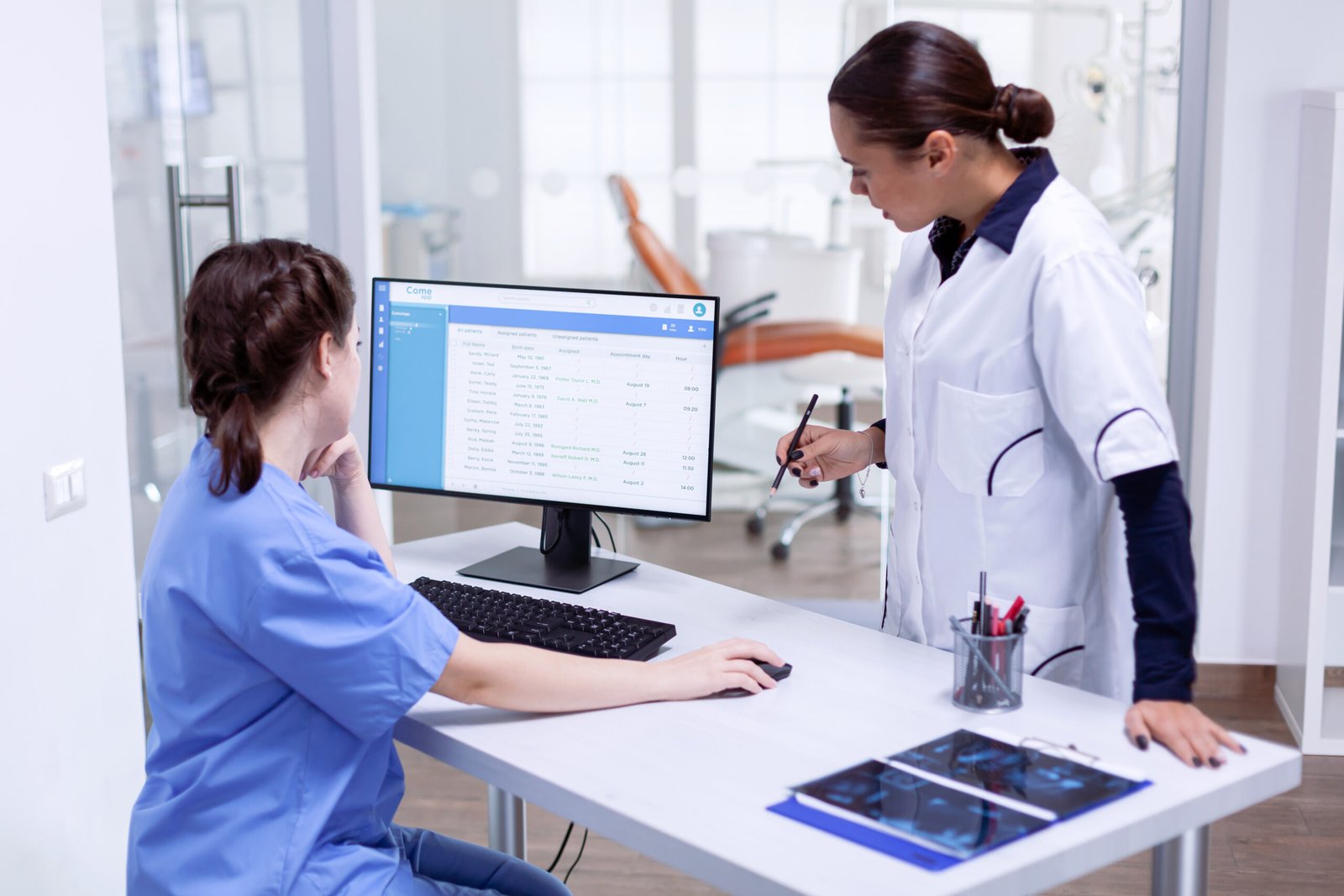
EHR documentation specialists use digital platforms to manage patient records, track updates, and support clinical and administrative workflows. These tools help connect medical data across departments while maintaining documentation standards. Knowing which systems are commonly used helps beginners understand how documentation roles function within real healthcare environments.
Healthcare documentation has rapidly shifted from paper records to digital systems. Today, hospitals and clinics rely on Electronic Health Records (EHRs) and EHR documentation tools to store, update, manage, and share patient information such as medical histories, lab results, prescriptions, and treatment plans. These systems help healthcare teams access accurate data quickly, streamline documentation workflows, and coordinate patient care more efficiently.
Research shows that the adoption of electronic health records (EHRs) can improve the overall quality of care shows that digital health records can improve healthcare quality by making patient information more accessible and organized. As healthcare becomes more data-driven, maintaining accurate documentation inside these systems has become increasingly important.
This is where EHR documentation specialists play a key role. They review, update, and manage patient records within EHR platforms, using EHR documentation software and specialized tools that support structured documentation and workflow coordination.
In this blog, you will learn who EHR documentation specialists are, what they do, how to enter this role, the major EHR platforms used in healthcare, the EHR documentation software and tools used inside these systems, the skills required to work with them, available upskilling options, and how AI is shaping the future of EHR documentation.
Who is an EHR Documentation tool Specialist?
An EHR documentation specialist is a healthcare professional responsible for reviewing, organizing, and maintaining patient records within electronic health records (EHR) systems. Their role focuses on ensuring that clinical documentation created by doctors, nurses, and other care providers is accurate, complete, and properly structured within the patient’s digital chart.
In modern healthcare environments, patient information flows across multiple departments such as diagnostics, treatment, pharmacy, and billing. Documentation specialists help ensure that this information is recorded clearly and placed in the correct sections of the patient’s record so that healthcare teams can access reliable data when making clinical decisions.
The importance of this role lies in maintaining data accuracy and documentation integrity. Incomplete or incorrect records can affect treatment plans, delay insurance claims, or create compliance issues. By carefully reviewing and managing digital documentation, EHR documentation specialists help healthcare organizations maintain organized records that support patient care, operational efficiency, and regulatory standards.
What Does an EHR Documentation tool Specialist do?
An EHR documentation specialist manages and verifies clinical information within electronic health record systems to ensure patient records remain accurate and usable across healthcare workflows. Their work focuses on reviewing documentation created during patient care and ensuring it is correctly recorded in the system.
Key responsibilities include:
- Reviewing clinical notes: Checking physician and provider notes for clarity, completeness, and correct placement within the patient chart.
- Updating patient charts: Entering or organizing encounter details, test results, and treatment information in the appropriate sections of the record.
- Ensuring documentation accuracy: Verifying that records reflect the correct patient’s details, visit information, and clinical documentation standards.
- Coordinating with providers and billing teams: Requesting clarification when documentation is incomplete and ensuring records support coding and billing processes.
- Maintaining audit-ready records: Monitoring documentation updates and ensuring records remain consistent, traceable, and compliant with healthcare documentation guidelines.
How to enter the Role
Most EHR documentation specialists enter the field through healthcare documentation or health information–related training rather than clinical degrees. Employers typically look for candidates who understand how medical records are structured and can work accurately within digital documentation systems.
One common pathway is completing a healthcare documentation or clinical documentation training program, which introduces learners to medical records, patient chart structure, and documentation workflows used in hospitals and clinics.
Working knowledge of medical terminology is also important because specialists regularly review clinical notes, diagnoses, and treatment descriptions recorded by healthcare providers. Understanding these terms helps ensure information is interpreted and placed correctly within the patient’s record.
Some candidates strengthen their profiles through certification programs in clinical documentation, health information management, or medical coding, which demonstrate familiarity with healthcare documentation standards and compliance requirements.
In most cases, however, professionals learn the specific software and internal processes through on-the-job training. Healthcare organizations typically train new hires on the EHR system used in their facility and guide them through the documentation of workflows followed by their clinical and administrative teams.
Understanding EHR Platforms vs Documentation Tools
In healthcare documentation workflows, it is important to distinguish between EHR platforms and EHR documentation software. While these terms are sometimes used interchangeably, they serve different purposes within digital healthcare systems.
An EHR platform is the complete system used by healthcare organizations to store and manage patient information. It integrates clinical records, lab reports, prescriptions, billing data, and other healthcare information into a centralized digital environment.
EHR documentation software, on the other hand, refers to the tools and features within the platform that help users perform specific tasks such as reviewing notes, updating patient charts, documenting encounters, or supporting coding workflows.
EHR platforms and EHR documentation software serve different purposes in healthcare. The table below highlights the key differences between the two.
| Aspect | EHR Platform | Documentation Tool |
|---|---|---|
| Meaning | Complete healthcare record system | Feature used within the system |
| Scope | Manages entire patient data | Performs specific documentation tasks |
| Example | Epic, Oracle Cerner | Chart review tools, coding assistants |
EHR documentation specialists typically work within EHR platforms but rely on different tools inside those systems to review records, update documentation, and manage clinical data efficiently. Understanding this distinction helps explain how documentation workflows are organized within modern healthcare environments.
Major EHR Platforms where documentation Tools are used
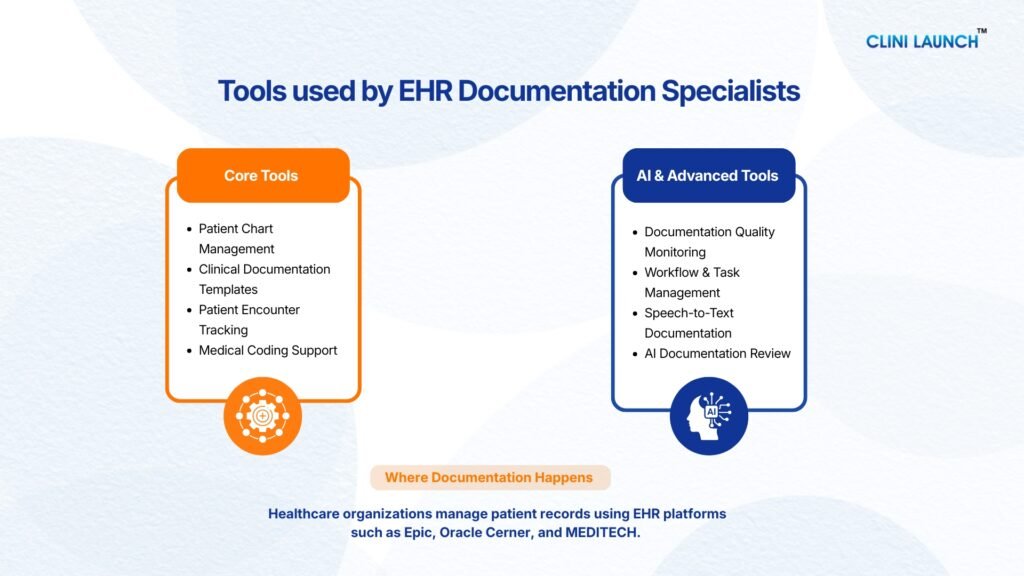
EHR documentation specialists typically perform their work inside large electronic health record platforms used by hospitals and healthcare organizations. These systems act as centralized environments where patient data, clinical documentation, laboratory results, prescriptions, and billing information are stored and managed.
Some of the most widely used EHR platforms include:
- Epic – commonly used in large hospital networks that require integrated patient records across departments.
- Oracle Cerner – widely implemented in hospital systems for managing patient encounters and clinical documentation.
- MEDITECH – frequently used in community hospitals to manage admissions, treatment records, and discharge documentation.
- athenahealth – often used in physician practices and outpatient clinics for cloud-based patient record management.
- eClinicalWorks – commonly used by small to mid-size medical practices to integrate charting, scheduling, and billing workflows.
While these platforms provide the overall digital infrastructure for healthcare records, documentation specialists rely on specific tools within these systems to review patient charts, structure clinical notes, and maintain documentation accuracy.
The following section explores the key tools that support EHR documentation workflows.
Top 10 Tools Used by EHR Documentation tool Specialists
EHR documentation specialists rely on a range of EHR documentation software tools within electronic health record systems to manage clinical documentation efficiently. These tools help organize patient data, standardize clinical notes, maintain documentation quality, and support healthcare operations such as coding, billing, and compliance.
As healthcare systems increasingly integrate artificial intelligence and data analytics, EHR documentation software is also playing a growing role in supporting AI-assisted healthcare workflows, automated documentation checks, and structured clinical data management.
Core Documentation Tools
1. Patient Chart Management Tool
A patient chart management tool provides access to a patient’s complete digital record. Documentation specialists use it to navigate medical histories, previous encounters, medications, diagnostic results, and treatment details recorded across departments.
Accurate chart access ensures that specialists review the correct patient’s information before making updates or verifying documentation. It also forms the foundation for data sharing across healthcare teams.
| Aspect | Details |
|---|---|
| Tool purpose | Central access point for complete patient medical records |
| Why it matters | Prevents documentation errors and supports continuity of care |
| Role in AI healthcare | Enables structured data access used by clinical decision support algorithms |
| Healthcare industry usage | Hospitals, outpatient clinics, diagnostic laboratories |
| Typical users | Documentation specialists, physicians, nurses |
2. Clinical Documentation Template Tool
This tool provides standardized templates that guide how clinical notes and treatment details are recorded within patient records. It ensures that documentation follows consistent formats across providers and departments.
Standardized documentation makes records easier to review, interpret, and analyze across healthcare systems.
| Aspect | Details |
|---|---|
| Tool purpose | Structured entry of clinical documentation |
| Why it matters | Improves documentation consistency and clarity |
| Role in AI healthcare | Structured templates enable AI models to process clinical data more accurately |
| Healthcare industry usage | Hospitals, specialty clinics, physician practices |
| Typical users | Physicians, documentation specialists |
3. Patient Encounter Tracking Tool
Encounter tracking tools organize records according to individual patient visits. Each visit, procedure, or consultation is linked to specific documentation entries, ensuring that care records remain chronologically structured.
This approach helps healthcare providers follow the patient’s care journey across multiple visits.
| Aspect | Details |
|---|---|
| Tool purpose | Connects documentation to specific patient visits |
| Why it matters | Maintains clear timelines of treatment and clinical events |
| Role in AI healthcare | Supports predictive analytics models analyzing patient visit patterns |
| Healthcare industry usage | Hospitals, emergency departments, outpatient centers |
| Typical users | Documentation specialists, care coordinators |
4. Medical Coding Support Tool
Coding tools assist in linking clinical documentation with standardized medical classification systems used for billing, reporting, and regulatory compliance.
Accurate coding ensures that healthcare providers receive proper reimbursement, and that healthcare data is recorded in recognized formats.
| Aspect | Details |
|---|---|
| Tool purpose | Aligns documentation with standardized medical codes |
| Why it matters | Supports insurance claims and regulatory reporting |
| Role in AI healthcare | AI-assisted coding tools analyze documentation to suggest appropriate codes |
| Healthcare industry usage | Hospitals, insurance processing teams, billing departments |
| Typical users | Medical coders, documentation specialists |
Advanced Documentation Support Tools
5. Documentation Quality Monitoring Tool
Quality monitoring tools review documentation entries and identify missing information, incomplete records, or inconsistencies that require correction.
These systems help healthcare organizations maintain documentation standards and reduce errors.
| Aspect | Details |
|---|---|
| Tool purpose | Detects incomplete or inconsistent documentation |
| Why it matters | Ensures records meet compliance and quality standards |
| Role in AI healthcare | AI-driven systems automatically flag documentation gaps |
| Healthcare industry usage | Hospitals, healthcare compliance teams |
| Typical users | Documentation reviewers, quality assurance teams |
6. Clinical Audit Tracking Tool
Audit tracking tools record every change made within patient records. They maintain detailed logs showing who modified documentation and when those changes occurred.
This transparency helps healthcare organizations prepare audits and maintain accountability.
| Aspect | Details |
|---|---|
| Tool purpose | Maintains documentation change history |
| Why it matters | Supports regulatory compliance and audit readiness |
| Role in AI healthcare | AI analytics can analyze audit logs to detect documentation risks |
| Healthcare industry usage | Hospitals, healthcare regulatory departments |
| Typical users | Compliance officers, documentation auditors |
7. Workflow and Task Management Tool
Workflow tools help manage documentation tasks across teams by creating queues, alerts, and reminders for records that require review or updates.
These tools ensure that documentation processes move efficiently across departments.
| Aspect | Details |
|---|---|
| Tool purpose | Organizes documentation tasks and work queues |
| Why it matters | Improves coordination between clinical and administrative teams |
| Role in AI healthcare | AI systems can prioritize tasks based on documentation urgency |
| Healthcare industry usage | Hospitals, clinical operations units |
| Typical users | Documentation teams, administrative staff |
AI-Driven Documentation Tools
8. Speech-to-Text Clinical Documentation Tool
Speech recognition tools convert spoken clinical notes into written documentation that can be stored within patient records. This reduces manual typing and speeds up documentation workflows.
| Aspect | Details |
|---|---|
| Tool purpose | Converts voice dictation into digital clinical notes |
| Why it matters | Reduces documentation time for clinicians |
| Role in AI healthcare | Natural language processing improves transcription accuracy |
| Healthcare industry usage | Hospitals, telemedicine platforms |
| Typical users | Physicians, documentation specialists |
9. AI Documentation Review Tool
AI documentation review tools analyze patient records and detect missing information or inconsistencies that could affect documentation quality.
| Aspect | Details |
|---|---|
| Tool purpose | Automated review of clinical documentation |
| Why it matters | Improves documentation completeness and reduces errors |
| Role in AI healthcare | Machine learning models analyze documentation patterns |
| Healthcare industry usage | Hospitals, clinical documentation improvement programs |
| Typical users | Documentation specialists, compliance teams |
10. Clinical Data Extraction Tool
Data extraction tools use automation to pull key information from reports, lab results, and physician notes and convert it into structured data fields within the EHR system.
| Aspect | Details |
|---|---|
| Tool purpose | Extracts and structures clinical information from documents |
| Why it matters | Enables efficient data analysis and record organization |
| Role in AI healthcare | Supports healthcare analytics and predictive modeling |
| Healthcare industry usage | Hospitals, research institutions, healthcare data teams |
| Typical users | Documentation specialists, health data analysts |
Quick Summary Table of All the Tools
| Category | Tool | Purpose |
|---|---|---|
| Core Documentation Tool | Patient Chart Management Tool | Accesses and organizes complete patient medical records |
| Core Documentation Tool | Clinical Documentation Template Tool | Ensures standardized documentation across patient records |
| Core Documentation Tool | Patient Encounter Tracking Tool | Links documentation to specific visits and procedures |
| Core Documentation Tool | Medical Coding Support Tool | Aligns clinical documentation with standardized billing codes |
| Documentation Quality Tool | Documentation Quality Monitoring Tool | Detects incomplete or inconsistent documentation |
| Compliance Tool | Clinical Audit Tracking Tool | Tracks record updates and maintains audit logs |
| Workflow Tool | Task and Workflow Management Tool | Manages documentation tasks and record review queues |
| AI Documentation Tool | Speech-to-Text Clinical Documentation Tool | Converts physician dictation into written clinical notes |
| AI Documentation Tool | AI Documentation Review Tool | Identifies missing clinical details and documentation gaps |
| AI Documentation Tool | Clinical Data Extraction Tool | Extracts structured data from clinical reports and notes |
Key features of EHR Tools used in daily Documentation
Although EHR platforms differ across healthcare organizations, most documentation tools offer similar features that support daily record management. Specialists typically begin by locating patient charts using search filters based on patient identifiers, visit details, or department records. Quick and accurate chart access helps reduce documentation errors and ensures the correct patient record is updated.
Once a chart is opened, structured templates guide how clinical information is recorded. These predefined sections help maintain consistency across providers and departments, making patient records easier to review and share.
Many systems also include automated checks that flag missing information, unsigned notes, or incomplete documentation before records move to billing or reporting stages. At the same time, version history and audit logs track every update made to the record, supporting compliance and internal reviews.
Additional workflow features such as alerts, work queues, and task reminders help specialists manage multiple records efficiently while keeping documentation processes organized across clinical and administrative teams.
How Digital Tools Support Daily Documentation Tasks
In practice, EHR documentation work takes place directly within digital healthcare systems where patient information is continuously created and updated by clinical teams. Documentation specialists review physician notes, lab reports, and visit summaries to ensure that the information recorded during care is complete, accurate, and placed in the correct section of the patient’s record.
These tools also support structured data entry. After procedures, diagnostic tests, or follow-up visits, specialists update specific parts of the patient chart such as encounter details, medication lists, or problem summaries. Structured templates and predefined fields help maintain consistency so that clinical information remains clear and usable across departments.
Documentation tools also enable coordination between clinical, administrative, and billing teams. When records require clarification, specialists use system-based notes, alerts, or task queues to communicate within the platform. At the same time, automated tracking logs record every documentation change, ensuring transparency and helping healthcare organizations maintain audit-ready records.
Together, these tools create a structured workflow that allows healthcare teams to manage patient records efficiently while maintaining documentation accuracy and compliance.
AI and ML in Healthcare
Develop advanced expertise in Artificial Intelligence and Machine Learning through comprehensive training, hands-on projects, and industry-focused learning. This program covers machine learning, deep learning, predictive analytics, AI model development, and intelligent automation to prepare learners for high-demand AI careers across industries.

Skills Required to work with EHR Documentation Tools
Working with EHR documentation tools requires a combination of healthcare knowledge and precise data handling skills. Since specialists work directly with patient records, the focus is not just on navigating software but on ensuring that clinical information is recorded accurately and structured correctly within the system.
Medical terminology knowledge is essential because specialists regularly review diagnoses, procedures, medications, and treatment notes documented by clinicians. Understanding these terms helps ensure that information is interpreted correctly before it is entered or verified in the record.
Attention to detail is critical when reviewing clinical documentation. Even small inconsistencies such as incomplete visit notes or mismatched patient details—can affect coding, billing, or clinical decision-making.
Basic computer navigation skills allow specialists to work efficiently within EHR interfaces. This includes using search functions, structured forms, dropdown fields, and documentation templates to manage records accurately.
Understanding healthcare workflows helps specialists place documentation in the correct context. Patient records often involve multiple departments, and knowing how information flows between clinical care, diagnostics, and billing ensures that records are organized properly.
A strong data accuracy mindset is also important, as specialists are responsible for maintaining reliable documentation that supports compliance and healthcare reporting requirements.
Finally, clear communication with clinical teams helps resolve documentation gaps. Specialists often coordinate with providers, nurses, or billing staff to clarify missing or unclear information before records move forward in the documentation process.
Upskilling and Reskilling in EHR Documentation
As EHR systems continue to evolve, professionals need to regularly update their skills to stay relevant. Upskilling focuses on strengthening existing knowledge such as advanced documentation workflows, medical coding basics, and compliance standards. Reskilling helps individuals from non-clinical or adjacent roles transition into EHR documentation by learning medical terminology, record structuring, and system navigation.
Short-term certification programs, hands-on training, and exposure to real EHR environments can significantly improve job readiness. Continuous learning is essential as healthcare documentation increasingly integrates automation and data-driven processes.
Future of EHR Documentation Tools
EHR documentation software is rapidly evolving with the integration of artificial intelligence, automation, and predictive analytics. AI-driven systems are expected to assist in real-time documentation, automatically flag errors, and suggest structured inputs based on clinical context.
Voice-enabled documentation, smart templates, and automated data extraction within EHR documentation software will reduce manual effort while improving accuracy. As interoperability between healthcare systems improves, these tools will also support seamless data exchange across providers.
Overall, the future of EHR documentation software will focus on reducing administrative burden, improving data quality, and enabling faster clinical decision-making.
Conclusion
EHR documentation work is not just about using software — it is about ensuring that patient information is accurate, complete, and ready to support both clinical care and healthcare operations. While organizations may use different EHR platforms and EHR documentation software, the core principles of structured documentation, data accuracy, and coordinated workflows remain the same across healthcare settings.
Understanding how EHR documentation software fits into daily workflows helps professionals feel more confident when entering hospital or clinical environments. It also highlights that success in this field depends as much on understanding healthcare processes and compliance requirements as it does on learning system navigation. With the right foundation, professionals can adapt to different EHR platforms, manage evolving workflows, and grow into roles that support quality, compliance, and health information management.
This is where structured learning plays an important role. At Clinilaunch, learners are prepared with strong healthcare documentation concepts, practical understanding of EHR workflows, and industry-aligned online certification that supports real-world readiness. The Certification in Clinical Research program helps build knowledge of clinical documentation standards, regulatory expectations, and healthcare processes that are closely connected to documentation roles in hospitals and research environments.
By combining system familiarity with healthcare process knowledge and continuous learning, professionals can build stable and meaningful careers in a field where accurate documentation remains essential to patient care and regulatory trust.