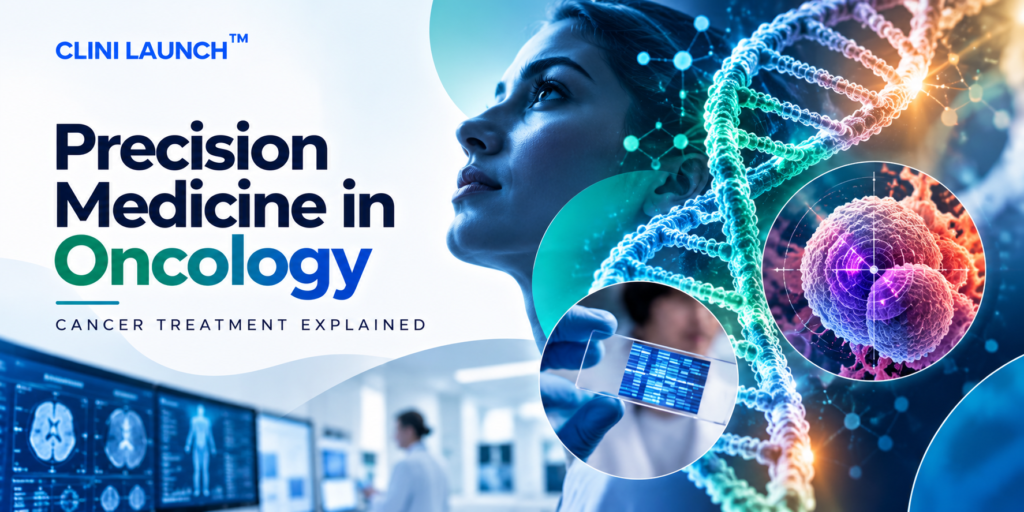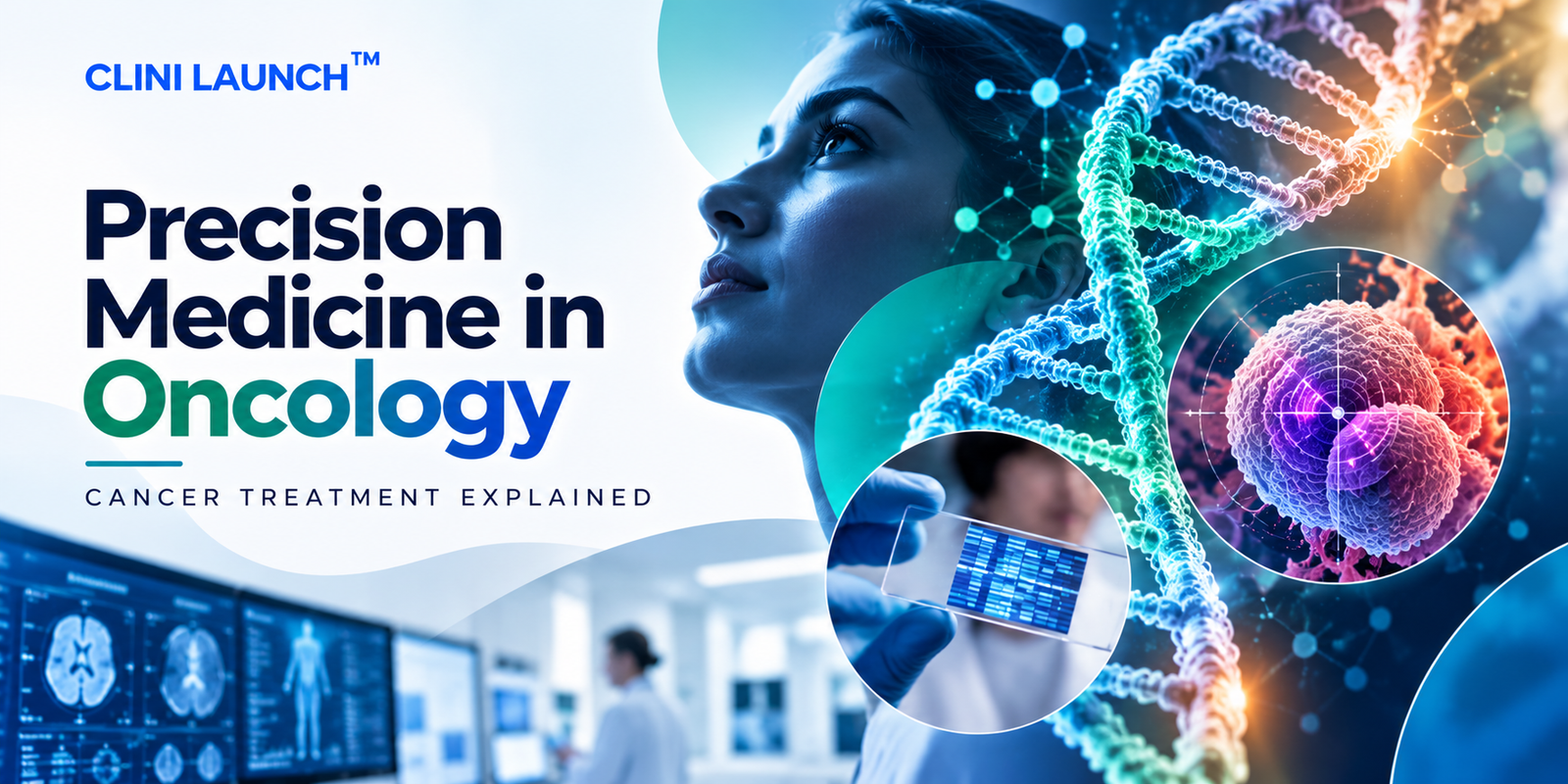
Precision medicine in oncology combines genomic profiling, clinical evidence, and AI-driven insights to guide personalized cancer care. By identifying actionable biomarkers and evaluating treatment responses, it helps clinicians make informed decisions and advance targeted therapies tailored to individual patients.
Cancer care is increasingly moving towards treatment approaches that account for the biological characteristics of individual tumors. Precision medicine in oncology supports this shift by combining molecular insights with clinical evidence to inform treatment decisions tailored to each patient.
The growing relevance of this approach is reflected in a study published in Cancer Discovery. An analysis of 47,271 tumour samples found that the proportion carrying biomarkers associated with standard-of-care targeted or immune-based therapies increased from 8.9% in 2017 to 31.6% in 2022.
Advances in genomic technologies and artificial intelligence are further expanding the scope of cancer research and clinical analysis. However, translating these developments into effective care requires robust evidence and clinical validation. This article explores how precision oncology works, the roles of genomics and AI, its potential benefits, and the challenges shaping its future.
What is Precision Medicine in Oncology and How Does It Work?
Precision medicine in oncology uses a tumour’s molecular characteristics and patient-specific clinical information to guide cancer treatment. Rather than relying only on cancer type, location, and stage, clinicians examine the biological alterations driving tumour growth and influencing treatment response. This approach is part of precision medicine in cancer care.
This shifts the focus from where cancer originates to what drives its growth. Cancers in different organs can share actionable molecular alterations, sometimes allowing the same treatment to be considered across cancer types. This is known as tissue-agnostic cancer treatment.
Precision oncology complements conventional cancer treatments, incorporating molecular insights into established clinical practices to support a more comprehensive approach to cancer care.
How Does the Precision Oncology Process Work?
1. Sample Collection
Clinicians obtain a tissue biopsy or, in suitable situations, use a liquid biopsy to detect tumour-derived material, such as circulating tumour DNA (ctDNA).
2. Molecular Profiling
The sample is analyzed for genetic alterations, mutations, proteins, and other biomarkers that may influence tumour behaviour or treatment response. Biomarker testing for cancer treatment helps identify findings that may guide treatment decisions.
3. Clinical Interpretation
Clinicians evaluate the results alongside scientific evidence, the patient’s diagnosis, disease stage, and treatment history. A multidisciplinary Molecular Tumor Board may help interpret complex findings and discuss treatment options.
4. Treatment Selection
If an actionable biomarker is identified, clinicians assess whether a targeted therapy, immunotherapy, established treatment, or clinical trial is appropriate. Targeted cancer therapies act on specific molecular targets, but a biomarker match does not guarantee success.
5. Monitoring and Treatment Adaptation
Tumors can evolve and develop treatment resistance. Clinicians monitor treatment response and may recommend repeat molecular testing when appropriate to inform subsequent decisions. Cancer genomics research helps explain these molecular changes.
A Practical Example: Using Tumour Biology to Guide Treatment
Consider a patient with non-small cell lung cancer whose molecular testing identifies an EGFR alteration that may be targeted by an available therapy. The oncologist evaluates the findings and the patient’s clinical condition to determine whether targeted treatment is appropriate.
If the cancer later progresses, further evaluation and repeat molecular testing, when indicated, may reveal resistance-associated changes and help inform subsequent treatment options.
This illustrates the central principle of precision oncology: understand the tumour’s biology, select treatment based on evidence, and adapt as the disease evolves.
How Genomics Is Used in Cancer Treatment
Genomics cancer treatment examines DNA changes in cancer cells to understand tumour development, progression, and treatment resistance. It helps identify potential therapeutic targets and informs treatment decisions.
Precision oncology is the broader approach to individualized cancer care; genomics helps identify genetic alterations that may guide treatment.
What Can Genomic Testing Reveal?
Depending on the test, genomic analysis may identify:
- Gene mutations: Changes that may affect cancer-cell behaviour or treatment response.
- Gene amplifications or deletions: Changes in DNA copy number or presence.
- Gene fusions: Alterations that may produce abnormal proteins.
- DNA repair alterations: Changes that may influence treatment options.
- Actionable alterations: Findings that may support treatment or clinical trial eligibility.
- Resistance-associated alterations: Changes linked to reduced treatment sensitivity.
Not every alteration has established clinical significance; its usefulness depends on the evidence and available treatment options.
Key Genomic Approaches in Oncology
Next-Generation Sequencing (NGS)
NGS examines multiple genes or genomic regions simultaneously, helping establish a broader tumour profile and identify potentially actionable alterations. Genomic sequencing in cancer research explains how these technologies support cancer research.
Liquid Biopsy
Liquid biopsy analyses tumour-derived material in blood or other body fluids. Detecting circulating tumour DNA (ctDNA) may inform treatment selection or help investigate molecular changes over time. A negative result does not always rule out an alteration, and tissue testing may still be necessary. Learn more about liquid biopsy in cancer diagnosis and monitoring.
From Mutation to Treatment: Why Interpretation Matters
| Genomic finding | Potential implication |
| Actionable alteration | May support a specific treatment or clinical trial. |
| Potentially relevant alteration | Evidence may be limited or emerging. |
| Variant of uncertain significance | Clinical significance is not established. |
| No actionable alteration identified | No suitable target was identified; other treatments may still be available. |
Genomic testing is not simply a mutation equals drug process. Results must be interpreted alongside the cancer type, disease stage, treatment history, and clinical evidence.
Genomics provides molecular information; clinical expertise determines how it informs treatment. Together, they support evidence-based cancer care while recognizing the limitations of current testing and therapies.
Precision Bioinformatics
Build practical bioinformatics skills through training in genomics, biological data analysis, programming, statistics, AI, and computational workflows. Prepare for opportunities across biotechnology, pharmaceutical R&D, genomics, diagnostics, and research organizations.
How AI Is Transforming Precision Oncology
Artificial intelligence (AI) is helping researchers and clinicians analyze complex cancer data and investigate patterns associated with tumour behaviour and treatment response. Its role extends beyond genomic analysis to integrating clinical evidence, evaluating potential treatment strategies, and advancing personalized AI in cancer research.
Key Applications of AI in Precision Oncology
- Multimodal Cancer Data Analysis: AI can integrate genomic, imaging, pathology, and clinical data to examine relationships between tumour characteristics and patient outcomes.
- AI-Assisted Molecular Tumour Boards: Large language models and retrieval-augmented generation (RAG) can organize sequencing reports, medical records, scientific literature, and clinical trial information for review by oncology teams.
- Treatment Response Prediction: AI models can analyze molecular and biological data to investigate potential treatment responses and mechanisms of resistance.
- Clinical Trial Matching: AI can compare patient characteristics with complex trial eligibility criteria to identify potentially relevant studies for clinical assessment.
- Tumour Heterogeneity Research: By analyzing single-cell sequencing data, AI can help researchers investigate differences between tumour cell populations and their potential role in treatment resistance.
- Organoid-Based Drug Research: Combining AI with patient-derived organoids and genomic profiling can help researchers investigate drug responses and prioritize potential treatment combinations.
These applications remain subject to data quality, clinical validation, and appropriate human oversight. AI-generated findings must be assessed against established evidence before being used to inform patient care.
What Are the Benefits of Precision Medicine in Oncology?
Precision medicine helps clinicians tailor cancer treatment to a tumor’s molecular characteristics and the patient’s clinical condition. By combining biomarker findings with clinical evidence, it supports more informed treatment decisions and helps identify potentially suitable therapies.
- Individualized Treatment: Helps identify therapies targeting specific molecular alterations, moving beyond treatment decisions based solely on cancer type and stage.
- Potential for Improved Treatment Outcomes: Patients with actionable biomarkers may benefit from matched therapies. However, the magnitude of clinical benefit varies across molecular targets and treatments, as highlighted in the ESMO Open analysis.
- Reduced Use of Ineffective Treatments: Biomarker testing can help clinicians identify treatments that are unlikely to benefit certain patients when supported by reliable clinical evidence.
- Identification of Targeted Therapies: Molecular findings can help determine whether targeted therapies or selected immunotherapies may be appropriate for a patient’s cancer.
- Clinical Trial Opportunities: Biomarker findings can help identify clinical trials investigating treatments for specific molecular alterations, subject to eligibility criteria.
- Evidence-Based Treatment Assessment: The ESMO Magnitude of Clinical Benefit Scale provides a framework for evaluating the clinical benefit of cancer treatments and supporting evidence-based assessments.
Important consideration: Precision medicine does not guarantee treatment success. Some tumors lack actionable biomarkers, and others may develop resistance to targeted therapies. Treatment decisions therefore require careful interpretation of molecular findings alongside clinical evidence and the patient’s individual circumstances.
Challenges and Future of Precision Oncology
Despite advances in molecular profiling and targeted therapies, translating molecular discoveries into effective cancer treatments remains challenging. Tumour heterogeneity, treatment resistance, complex data interpretation, high costs, and unequal access continue to limit the clinical application of precision oncology. Addressing these barriers is essential to improving treatment strategies and expanding access to personalized cancer care, as highlighted in research on the challenges of translating precision oncology into clinical practice.
Key Challenges in Precision Oncology
- Tumour Heterogeneity: Cancer cells within the same tumour and across primary and metastatic sites may carry different molecular alterations, contributing to varied treatment responses.
- Limited Actionable Targets: Not all molecular alterations have clinically validated treatments. Identifying a mutation does not guarantee that an effective targeted therapy is available.
- Treatment Resistance: Tumors can evolve under treatment pressure, developing mechanisms that reduce their sensitivity to targeted therapies or immunotherapies.
- Complex Data Interpretation: Integrating molecular and clinical data requires standardized information, reliable analytical methods, and specialized expertise to support accurate interpretation.
- High Costs and Infrastructure Requirements: Molecular testing, specialized laboratories, data management systems, and targeted therapies can create significant financial and operational barriers.
- Unequal Access to Care: Differences in healthcare infrastructure, testing availability, and representation in genomic research can limit access to precision oncology across populations.
What Is the Future of Precision Oncology?
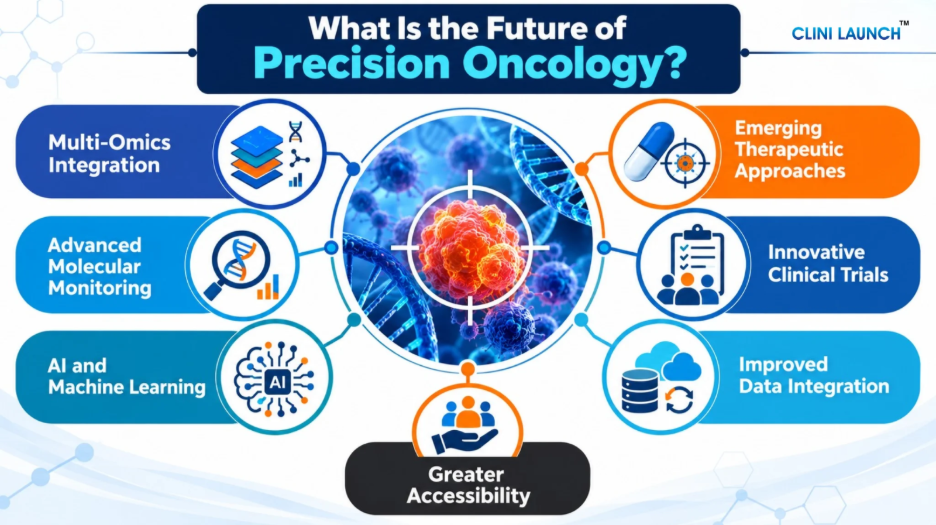
- Multi-Omics Integration: Combining genomics, transcriptomics, proteomics, and metabolomics with spatial analysis of the tumour microenvironment may provide a more comprehensive understanding of cancer biology.
- Advanced Molecular Monitoring: Liquid biopsies, including circulating tumour DNA (ctDNA) analysis, and repeat molecular assessments may help track tumour evolution and investigate emerging resistance.
- AI and Machine Learning: Computational models may help researchers analyze complex biological datasets, identify patterns, and investigate potential treatment responses, subject to clinical validation.
- Emerging Therapeutic Approaches: Antibody-drug conjugates (ADCs), bispecific antibodies, PROTACs, and synthetic lethality strategies are expanding research into new ways of targeting cancer.
- Innovative Clinical Trials: Biomarker-guided basket trials evaluate treatments across cancers sharing a molecular alteration, while umbrella trials investigate multiple treatment options within a particular cancer type.
- Improved Data Integration: Standardized clinical and genomic data-sharing frameworks may strengthen research collaboration and support more consistent interpretation of molecular findings.
- Greater Accessibility: Reducing testing costs, expanding diagnostic infrastructure, and improving representation in genomic research may help make precision oncology accessible to more populations.
The future of precision oncology depends on translating scientific advances into clinically validated treatments while improving affordability and access. Continued research into emerging precision oncology approaches and therapeutic strategies may help advance more effective, evidence-based, and personalized cancer care.
Conclusion
Precision oncology continues to evolve as research advances our understanding of cancer biology and treatment response. Its future depends on translating scientific discoveries into clinically validated approaches that can be implemented safely, consistently, and equitably across healthcare settings.
For professionals interested in the intersection of healthcare, research, and emerging technologies, developing relevant domain knowledge is an important step. CliniLaunch Research Institute (CLRI) offers programmes in Clinical Research, Bioinformatics, Biostatistics, and AI & ML in Healthcare to help build expertise across these evolving fields.
Frequently Asked Questions
What is precision medicine in oncology?
Precision medicine in oncology uses a tumour’s molecular characteristics and clinical evidence to help clinicians identify treatment options suited to an individual patient’s cancer.
How does AI support precision oncology?
AI precision oncology helps analyze genomic, imaging, pathology, and clinical data to identify patterns, investigate potential treatment responses, and match patients with relevant clinical trials.
How does genomics help in cancer treatment?
Genomics cancer treatment involves identifying DNA alterations, gene fusions, and other molecular changes that may reveal potential treatment targets or help explain resistance to existing therapies.
Can precision medicine improve cancer treatment outcomes?
Precision medicine may help identify effective treatment options for patients with actionable biomarkers. However, outcomes vary depending on the cancer, available therapies, and supporting clinical evidence.
What are the major challenges of precision medicine in oncology?
Major challenges include tumour heterogeneity, treatment resistance, limited actionable biomarkers, complex data interpretation, high testing costs, and unequal access to specialized diagnostic services.