Decentralized clinical trials conduct research activities remotely or through local healthcare services using digital technologies. The decentralized clinical trial model enables flexible study operations, remote patient participation, and diverse applications across therapeutic areas.
Clinical trials are essential for medical progress, but traditional site-based models create travel and cost barriers, particularly for rural and underserved communities. Over 60% of rural patients are excluded from clinical trials due to travel distances averaging 100 km. Decentralized clinical trials address these challenges through telemedicine, wearable devices, home healthcare visits, and remote data collection, improving accessibility and inclusivity.
A PubMed analysis of 47 decentralized clinical trial implementations found that 71% (n=33) were hybrid trials, compared with 29% (n=14) fully decentralized trials. Home healthcare visits and remote monitoring were frequently adopted.
Simultaneously, regulatory clarity has solidified globally, with a May 2026 MedPath regulatory analysis noting how aligned FDA and EMA frameworks actively endorse hybrid trial structures while enforcing strict investigator oversight and data privacy standards. In India, parallel regulatory reforms by the CDSCO in 2026, such as streamlined ethics committee reviews and faster digital approvals via the SUGAM portal, are further accelerating the adoption of remote, technology-driven trial infrastructure.
This beginner-friendly guide explores how decentralized clinical trials differ from traditional research, how the decentralized clinical trial model works, the technologies and regulations involved, and the benefits and emerging career opportunities in DCT clinical trials.
What is a Decentralized Clinical Trial (DCT)?
A Decentralized Clinical Trial (DCT) is a clinical study in which some or all trial-related activities take place at locations away from traditional hospital research sites, such as a participant’s home or local healthcare clinic. Instead of requiring patients to travel repeatedly to a central facility, DCTs use digital health technologies and mobile healthcare providers to bring the study directly to the participants.
According to the NIH National Library of Medicine (NCBI), a decentralized clinical trial is a study where some or all trial-related activities occur at locations other than traditional clinical sites. This definition forms the foundation of the decentralized clinical trial model, which combines remote and local trial activities.
Indexed clinical research on PubMed Central (PMC12810901) defines DCTs as trials that integrate research participation into participants’ daily lives by moving procedures to homes, local healthcare facilities, or nearby laboratories. These approaches are central to modern DCT clinical trials, helping bring clinical research closer to participants.
Traditional vs. Decentralized Clinical Trials
Traditional clinical trials rely on centralized research sites, while decentralized clinical trials use remote technologies and local healthcare networks. The table below compares both models across key operational parameters.
| Traditional Clinical Trials | Decentralized Clinical Trials (DCTs) |
|---|---|
| Conducted at centralized hospitals, academic medical centers, or dedicated research sites. | Conducted at the patient’s home, local diagnostic labs, or nearby community clinics. |
| Limited to patients living within commuting distance of physical research sites. | Broad geographic reach, allowing enrollment from rural and underserved communities. |
| Paper-based consent forms signed in person during a clinic visit. | eConsent completed remotely using digital signatures, videos, and video consultations. |
| Frequent in-person site visits for physical exams, vitals, and symptom checks. | Telehealth video visits, mobile home-health nurses, and remote patient check-ins. |
| Manual entry into clinic systems during scheduled appointments. | Continuous real-time capture via wearables, mobile health apps, and ePRO diaries. |
| Dispensed directly by the site pharmacist during in-person visits. | Direct-to-Patient (DtP) courier shipping with temperature and chain-of-custody tracking. |
| High travel time, missed workdays, and logistical costs often cause high dropout rates. | Minimal travel burden leads to higher participant satisfaction and stronger retention. |
| Heavy reliance on on-site Clinical Research Associate (CRA) visits for source verification. | Centralized, risk-based remote monitoring of live electronic data streams (eSource). |
How a Decentralized Clinical Trial Works
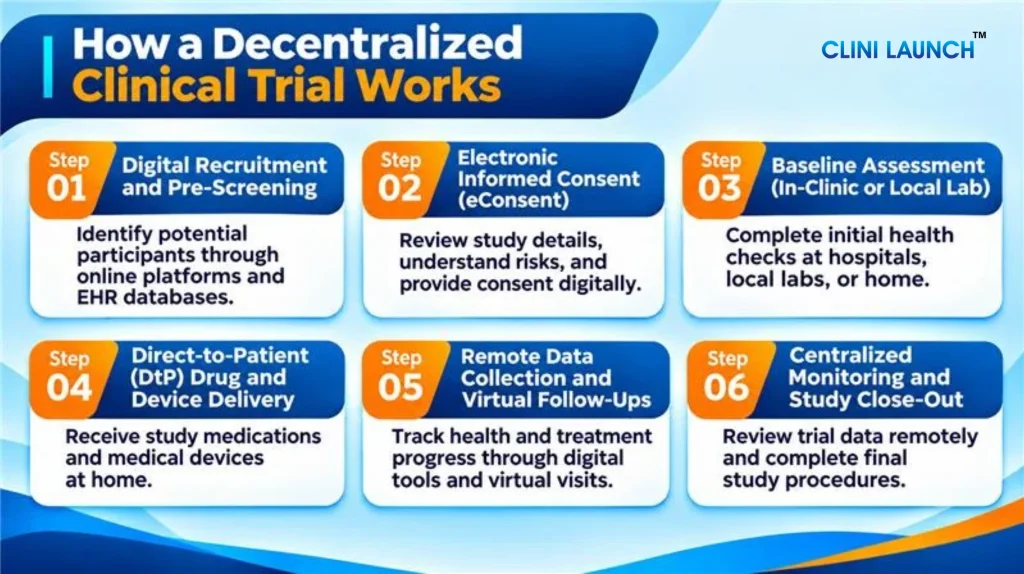
A Decentralized Clinical Trial (DCT) follows the exact same scientific phases and safety standards as a traditional study but replaces physical clinic visits with a coordinated digital and local-care workflow. For students and educators, the easiest way to understand how DCT clinical trials work is to trace the participant’s journey from enrollment to study completion.
Step 1: Digital Recruitment and Pre-Screening
Instead of relying solely on hospital waiting-room flyers or physician referrals, sponsors reach potential participants through targeted online campaigns, patient advocacy portals, and electronic health record (EHR) databases. Interested individuals complete an initial online pre-screening questionnaire from home to check basic eligibility criteria before speaking with a study coordinator. This initial screening helps identify potentially eligible participants early, reducing unnecessary site visits and streamlining the clinical trial recruitment process.
Step 2: Electronic Informed Consent (eConsent)
Eligible candidates review the study protocol digitally through an eConsent platform using interactive text, explanatory videos, and built-in comprehension quizzes. A clinical investigator then conducts a live video consultation to answer questions, verify the participant’s identity, and witness their legally binding electronic signature. As outlined in the U.S. FDA and OHRP Joint Guidance on Electronic Informed Consent, remote eConsent systems must verify participant identity, document comprehension of protocol risks, and maintain audit-trailed electronic signatures compliant with federal safety standards.
Step 3: Baseline Assessment (In-Clinic or Local Lab)
Depending on whether the study uses a hybrid or fully virtual design, baseline medical checks happen in one of two ways:
- In a Hybrid DCT: The participant visits a central hospital site once for specialized diagnostics like MRIs, biopsies, or comprehensive physical exams.
- In a Fully Virtual DCT: A mobile nurse visits the participant’s home, or the participant visits a nearby neighborhood diagnostic lab, for routine blood draws, ECGs, and vital signs.
These baseline assessments establish the participant’s initial health status, providing a reference point for evaluating safety and treatment outcomes throughout the trial.
According to a peer-reviewed Indian clinical operations study on home nursing (NIH PMC11101005), deploying trained mobile phlebotomists and home-health nurses for baseline sample collection and vital checks significantly reduces patient travel dropouts while preserving diagnostic sample integrity.
Step 4: Direct-to-Patient (DtP) Drug and Device Delivery
Once enrolled, the central research pharmacy ships the investigational medicinal product (IMP) and any required medical devices (such as smartwatches, blood pressure cuffs, or tablets) directly to the participant’s home. Specialized medical couriers maintain strict temperature control and digital chain-of-custody logs until the package is handed to the verified participant.
Step 5: Remote Data Collection and Virtual Follow-Ups
Throughout the treatment phase, participants stay connected to the research team from home through integrated digital workflows:
- Telehealth Consultations: Principal Investigators conduct scheduled video check-ins to monitor side effects, review medication adherence, and assess clinical progress.
- Continuous Sensor & App Monitoring: Wearable devices automatically transmit physiological metrics (such as heart rate, oxygen saturation, or glucose levels), while participants log daily symptom diaries via electronic Patient-Reported Outcomes (ePRO) apps.
- Mobile Nursing Visits: Visiting phlebotomists or nurses perform scheduled in-home safety blood draws or administer injectable therapies as required by the protocol.
Step 6: Centralized Monitoring and Study Close-Out
Incoming data from wearables, local labs, and telehealth visits flows into a unified Electronic Data Capture (EDC) system. Rather than relying exclusively on physical site visits, Clinical Research Associates (CRAs) and Data Managers follow the U.S. FDA’s Risk-Based Monitoring Guidance, using centralized statistical analytics and remote source data review to detect protocol deviations or safety signals in real time. At the end of the trial, participants complete a final virtual or in-person close-out visit, return provisioned devices via prepaid courier, and receive a summary of study results.
Decentralized Clinical Trials – Use Case Examples
Decentralized clinical trials are being used across therapeutic areas, from monitoring heart failure patients through wearables to delivering COVID-19 medications at home. These examples show how the decentralized clinical trial model enables remote participation and flexible study operations in real-world DCT clinical trials.
1. CHIEF-HF Trial: Cardiology and Heart Failure
Trial Overview
Published in Nature Medicine, the CHIEF-HF (Canagliflozin: Impact on Health Status, Quality of Life and Functional Status in Heart Failure) study was a randomized, double-blind, placebo-controlled Phase III trial conducted entirely virtually. It evaluated whether canagliflozin, an oral SGLT2 inhibitor, could improve symptoms and physical functioning in adults living with heart failure.
Why Was a Decentralized Approach Chosen?
Traditional heart failure trials often require participants to travel repeatedly to cardiology centres for physical examinations and functional assessments. For patients experiencing breathlessness and fatigue, frequent hospital visits can be physically demanding. A fully virtual trial design helped remove these travel barriers and allowed recruitment and follow-up to continue during pandemic-related restrictions.
How Was the Trial Conducted Remotely?
- Digital Recruitment and eConsent: Researchers identified potentially eligible participants across 18 US healthcare systems using Electronic Health Record (EHR) queries. A total of 476 participants were enrolled through a smartphone application, completing the digital informed consent (eConsent) process.
- Direct-to-Patient Medication Delivery: Blinded study medication and matching placebos were dispatched from a central pharmacy and delivered directly to participants’ homes through tracked courier services.
- Remote Patient-Reported Outcomes: Participants completed the Kansas City Cardiomyopathy Questionnaire (KCCQ) electronically through their smartphones at weeks 2, 4, 6, and 12.
- Wearable-Based Monitoring: Participants used Fitbit Versa 2 smartwatches to record daily step counts and physical activity, providing researchers with additional information about their functional status.
Key Outcomes and Learning for Clinical Research Professionals
According to the clinical analysis published on NIH PubMed Central (PMC8938267), the trial reported:
- 97.7% participant completion rate.
- Over 95% medication adherence.
- 98% capture of primary endpoint data.
- Enrollment completed months ahead of schedule.
What Can Clinical Research Professionals Learn?
The CHIEF-HF trial demonstrates how electronic patient-reported outcomes (ePROs), wearable devices, and direct-to-patient medication delivery can support remote clinical trial operations. It also highlights the importance of digital data collection, participant engagement, and continuous monitoring in decentralized research.
2. NIH ACTIV-6 Trial: Infectious Diseases and Outpatient Care
Trial Overview
Registered on NIH ClinicalTrials.gov (NCT04885530), the ACTIV-6 (Accelerating COVID-19 Therapeutic Interventions and Vaccines) study was a nationwide, double-blind, adaptive platform trial sponsored by the National Institutes of Health (NIH). It used a hybrid and virtual approach to evaluate repurposed oral medications, including ivermectin, fluvoxamine, and fluticasone, for treating non-hospitalized adults with mild-to-moderate COVID-19.
Why Was a Decentralized Approach Chosen?
During the COVID-19 pandemic, bringing infected participants into hospital research facilities created additional infection-control challenges for healthcare professionals and other patients. It was also important to initiate treatment during the early stages of infection. Remote recruitment, medication delivery, and follow-up allowed participants to take part in the study while remaining at home during isolation.
How Was the Trial Conducted Remotely?
- Nationwide Digital Screening and eConsent: Participants across the United States could express interest through a central study website or call centre. Researchers verified their positive COVID-19 test results electronically and completed the informed consent process remotely.
- Direct-to-Patient Medication Delivery: After randomization, participants received blinded oral study medication through overnight courier delivery, along with a home pulse oximeter to monitor blood oxygen saturation.
- Remote Symptom and Safety Monitoring: Participants recorded their symptoms, medication intake, and oxygen saturation readings through an online portal for 14 to 28 days. Automated alerts helped identify concerning oxygen readings, allowing study clinicians to initiate telehealth follow-ups when necessary.
Key Outcomes and Learning for Clinical Research Professionals
As reported in the Journal of the American Medical Association (JAMA), the ACTIV-6 trial enrolled over 10,000 participants across the United States, including urban, suburban, and rural communities. Its broad recruitment approach helped researchers reach participants beyond major academic medical centers and generate evidence about potential COVID-19 treatments.
What Can Clinical Research Professionals Learn?
The ACTIV-6 trial demonstrates how adaptive platform designs, digital screening, home-based medication delivery, and remote safety monitoring can support large-scale clinical research. It also highlights the importance of timely adverse event monitoring, participant communication, and maintaining safety oversight when conducting DCT clinical trials.
Decentralized Clinical Trials in Oncology
Oncology is an important area where decentralized clinical trials can improve access to clinical research. Traditional cancer trials often require patients to travel repeatedly to specialized hospitals for consultations, diagnostic tests, treatment administration, and follow-up visits. These requirements can create physical, financial, and logistical challenges, particularly for patients in rural and underserved communities.
Why Is Decentralization Important in Oncology?
The review From Site-Centered to Patient-Centered: Promises and Challenges of Decentralized Clinical Trials in Oncology highlights significant gaps in cancer clinical trial participation:
- 2–4%: Only approximately 2–4% of adult cancer patients participate in clinical trials.
- 56%: Around 56% of European patients do not have access to a clinical trial at their local institution.
- 70%: Approximately 70% of oncology trials are conducted across North America, Western Pacific, and Europe.
- Less than 7%: Oncology trials conducted in the Eastern Mediterranean, Southeast Asia, and Africa account for less than 7% of the global total.
These figures highlight geographical and accessibility barriers that can limit patient participation in cancer research.
How Do Decentralized Clinical Trials Address These Challenges?
Decentralized clinical trials bring selected research activities closer to participants through digital technologies and local healthcare networks. In oncology, these approaches can include:
- Telemedicine: Remote consultations and follow-up discussions with investigators.
- Remote monitoring: Digital tools to track symptoms, treatment adherence, and patient-reported outcomes.
- Home healthcare services: Trained healthcare professionals conducting suitable assessments at participants’ homes.
- Local diagnostic facilities: Nearby healthcare centres supporting laboratory tests and routine assessments.
These approaches can reduce travel requirements while allowing patients to participate in clinical research closer to their homes.
Regulatory Developments Supporting Decentralized Oncology Trials
Regulatory frameworks are evolving to support the safe implementation of decentralized trial activities. Key developments include:
- US FDA 2024 Guidance: Provides recommendations for remote clinical visits, electronic systems, investigational product delivery, and remote data collection.
- EMA 2025 Recommendations: Establish an updated framework for incorporating decentralized elements into clinical trials across the European Union and European Economic Area.
- ICH E6(R3) Good Clinical Practice: Supports the integration of decentralized and pragmatic trial elements while maintaining participant protection and data integrity.
- ASCO 2024 Research Statement: Highlights the need to address regulatory and administrative barriers to implementing decentralized cancer trials.
However, differences in national regulations continue to create challenges for multinational clinical research.
Key Takeaway
Decentralized clinical trials can make oncology research more accessible, inclusive, and patient-centered. However, their success depends on selecting appropriate trial activities for remote delivery while maintaining specialized medical care, regulatory compliance, and patient safety. Hybrid models offer a practical way to balance these requirements.
How DCTs are Changing Clinical Research Careers
The growing adoption of decentralized clinical trials is reshaping the skills and responsibilities expected from clinical research professionals. Rather than replacing traditional roles, the decentralized clinical trial model integrates digital technologies, remote patient monitoring, and technology-driven workflows into existing clinical research operations.
For graduates and entry-level professionals, this shift creates opportunities to develop skills beyond conventional trial management. Understanding digital monitoring, clinical data management, regulatory compliance, and remote patient coordination can help aspiring professionals prepare for evolving roles and emerging career opportunities in DCT clinical trials.
Here are five important shifts shaping careers in DCT clinical trials:
1. Clinical Research Associates (CRAs): Remote Monitoring
CRAs traditionally visit research sites to verify records and check protocol compliance. In decentralized trials, they increasingly use centralized dashboards and Risk-Based Monitoring (RBM) to identify missing data, protocol deviations, and safety concerns remotely.
Key skills: Centralized monitoring, RBM, data review, and digital monitoring platforms.
2. Clinical Research Coordinators (CRCs): Remote Patient Management
CRCs are expanding their responsibilities beyond hospital-based coordination to include remote participant communication, electronic consent, wearable device support, and home healthcare visit coordination.
Key skills: Patient communication, eConsent, telehealth coordination, and digital troubleshooting.
3. Clinical Data Management: Digital Data Skills
Wearables, mobile applications, ePROs, and electronic health records generate data from multiple sources. CDM professionals must understand how to collect, integrate, validate, and maintain these records.
Key skills: Electronic Data Capture (EDC), eSource, electronic Trial Master Files (eTMF), and data quality checks.
4. Regulatory Affairs and Quality Assurance: Digital Compliance
Remote trial activities introduce additional requirements for electronic records, data privacy, third-party oversight, and participant safety. Professionals need an understanding of updated ICH E6(R3) Good Clinical Practice guidelines.
Key skills: Quality by Design (QbD), risk-based oversight, electronic data governance, and regulatory compliance.
5. Emerging Digital Clinical Research Roles
Sponsors and Contract Research Organizations (CROs) increasingly need professionals who can coordinate clinical operations and digital technologies.
Emerging career pathways include:
- Digital Health and Wearable Device Coordinators.
- Decentralized Trial Operations Specialists.
- eConsent and Site Technology Trainers.
- Clinical Data and Digital Quality Specialists.
These evolving opportunities highlight the growing importance of combining clinical research knowledge with digital health and technology skills.
Explore Clinical Research Program at
Professional Program in Clinical Research
Build expertise in clinical trial operations, regulatory guidelines, data management, and research methodologies through industry-focused training. This program prepares learners for real-world clinical research workflows including trial management, protocol execution, regulatory compliance, and global research practices.
Conclusion
Decentralized clinical trials are reshaping clinical research by making participation more accessible, flexible, and patient-centered. As the decentralized clinical trial model continues to evolve, professionals must develop skills in digital monitoring, clinical data management, remote patient coordination, and regulatory compliance to meet changing industry requirements.
For graduates and working professionals, upskilling is essential to staying prepared for these emerging opportunities. CliniLaunch Research Institute offers industry-oriented clinical research training that helps aspiring professionals build relevant knowledge and practical skills. By strengthening their clinical research fundamentals and understanding evolving industry practices, learners can prepare to contribute to the future of clinical research.
FAQ
1. What are decentralized clinical trials?
Decentralized clinical trials conduct research activities away from traditional sites using digital technologies and local healthcare services.
2. How do decentralized clinical trials work?
Decentralized clinical trials use digital recruitment, eConsent, telemedicine, remote monitoring, and home-based services to manage study activities.
3. What is the difference between traditional and decentralized clinical trials?
Traditional trials rely on hospital visits, while decentralized clinical trials move selected research activities closer to participants.
4. What is a decentralized clinical trial model?
A decentralized clinical trial model combines remote activities, local healthcare services, and digital technologies to conduct clinical studies.
5. What technologies are used in DCT clinical trials?
DCT clinical trials use telemedicine, wearable devices, eConsent platforms, mobile applications, EDC systems, and remote monitoring tools.
6. What are the main benefits of decentralized clinical trials?
Decentralized clinical trials improve accessibility, reduce travel requirements, support participant convenience, and potentially improve recruitment and retention.