
Clinical Research Careers in 2026 are evolving beyond traditional trial roles, with opportunities in clinical operations, data management, pharmacovigilance, regulatory affairs, and AI-driven research. As clinical research expands, more opportunities are opening up in roles across clinical trials, data management, safety, and healthcare research.
Clinical research is creating a wide range of career opportunities across clinical trials, data management, pharmacovigilance, and healthcare research. As research activity grows, the industry is also seeing changes in the roles and skills employers need. According to ClinicalTrials.gov, more than 500,000 clinical studies have been registered globally, showing the scale of research activity and the growing need for skilled professionals.
By 2026, clinical trials are becoming more digital, data-driven, and technology-enabled, powered by AI, real-world evidence, electronic data systems, and decentralized trial models. This evolution is increasing demand for professionals who understand clinical processes, regulatory requirements, and emerging healthcare technologies.
Clinical research is expanding beyond traditional roles like CRA, CRC, Clinical Data Manager, and Pharmacovigilance Associate into emerging roles such as Clinical Data Scientist, Real World Data Scientist, Clinical AI Analyst, and Pharmacovigilance Data Scientist.
For life science graduates and healthcare professionals, these emerging roles offer diverse career pathways as clinical research becomes increasingly data driven and technology focused.
Why Choose a Career in Clinical Research?
India’s growing clinical research ecosystem is creating specialised career opportunities for life science and pharmacy graduates beyond traditional laboratory roles.
1. Indian Government Backing Is Expanding the Industry
The ₹10,000 crore BioPharma SHAKTI initiative aims to strengthen India’s biopharmaceutical ecosystem and develop a network of 1,000+ accredited clinical trial sites. This infrastructure growth can create opportunities across clinical operations, data management, regulatory affairs, and pharmacovigilance.
2. Global Companies Are Investing in India
India is becoming an important hub for global drug development. Bristol Myers Squibb’s $100 million investment in Hyderabad reflects the growing presence of global R&D and clinical development operations.
3. Strong Fit for Life Science Graduates
Graduates in Pharmacy, Biotechnology, Microbiology, Medicine, and allied sciences can leverage their existing knowledge of biology, pharmacology, and healthcare to enter clinical research.
4. Multiple Career Paths
Clinical research offers more than one career route. Professionals can move into Clinical Research Associate, Clinical Data Manager, Pharmacovigilance, Clinical SAS, or Regulatory Affairs roles depending on their interests and strengths.
5. Global Skills and Better Mobility
Exposure to ICH-GCP, international trials, clinical systems, and regulatory standards can make your experience relevant across global markets, including the Middle East, Europe, and North America. Over 41% of FDA regulated trials operate globally, creating strong demand for professionals skilled in international clinical research standards.
6. AI Is Creating New Opportunities
AI, real-world evidence, decentralized trials, wearables, and advanced analytics are reshaping clinical research. Professionals who comb
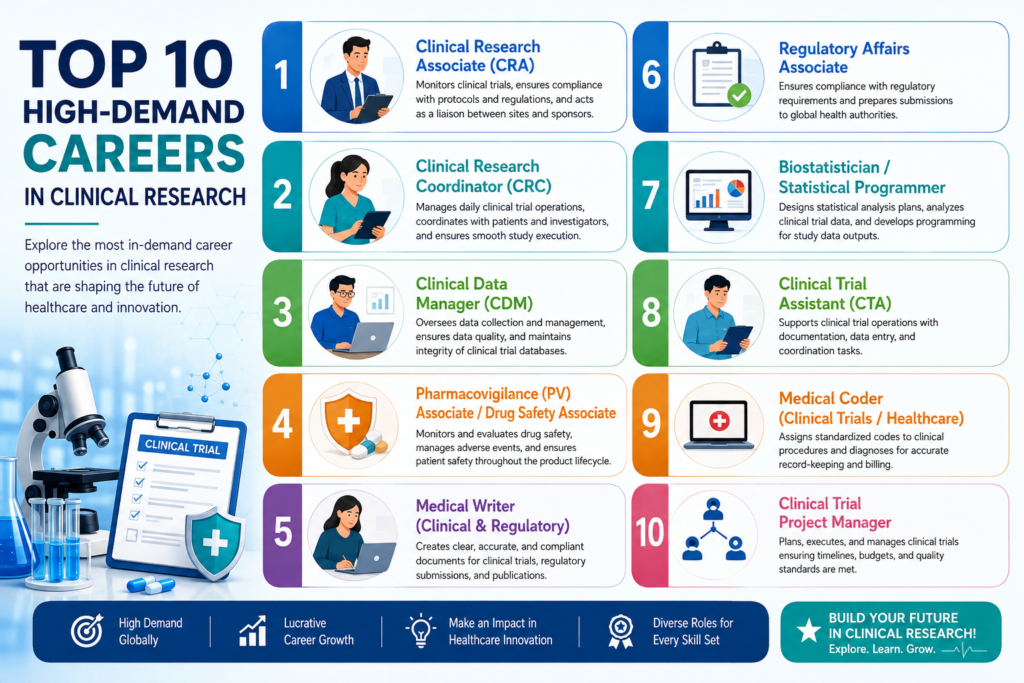
Top 9 High-Demand Careers in Clinical Research
1.Clinical Research Associate (CRA)
Average Salary: ₹3.5 LPA to ₹5.5 LPA
What Does a CRA Do?
A Clinical Research Associate monitors clinical trials, works with investigator sites, checks protocol compliance, protects data quality and patient safety, and keeps study activities aligned with regulatory requirements.
Career Progression
| Career Level | Roles | Description |
| Entry Level | Clinical Research Associate I → Clinical Research Associate II | Build trial monitoring expertise while ensuring protocol compliance and data quality. |
| Mid-Level | Senior Clinical Research Associate → Lead Clinical Research Associate → Clinical Trial Manager | Lead trial activities, manage sites, and take increasing operational responsibility. |
| Senior Level | Clinical Operations Manager | Oversee clinical operations, teams, timelines, budgets, and strategic trial execution. |
2. Clinical Research Coordinator (CRC)
Average Salary: ₹2.5 Lakhs to ₹4.5 LPA
What Does a CRC Do?
The role of Clinical Research Coordinator manages the day to day execution of clinical studies at research sites, coordinating participants, documentation, study visits, investigators and trial requirements.
Career Progression
| Career Level | Roles | Description |
| Entry Level | Clinical Research Coordinator → Junior Clinical Research Coordinator | Coordinate study activities, maintain documentation, and support participant visits. |
| Mid-Level | Senior Clinical Research Coordinator → Clinical Trial Coordinator → Clinical Research Associate | Manage complex studies, coordinate teams, and take greater trial responsibilities. |
| Senior Level | Senior Clinical Research Associate → Clinical Trial Manager → Clinical Operations Manager | Lead clinical trials, oversee teams, timelines, sites, and operational strategy. |
3. Clinical Data Manager (CDM)
Average Salary: ₹4 LPA to ₹7 LPA
What Does a CDM Do?
The role of Clinical Data Manager is to oversees clinical trial data from collection to database lock, ensuring accuracy, consistency, completeness and compliance with study protocols and regulatory standards.
Career Progression
| Career Level | Roles | Description |
| Entry Level | Clinical Data Coordinator → Clinical Data Manager | Manage clinical data and maintain data quality. |
| Mid-Level | Senior Clinical Data Manager → Lead Clinical Data Manager | Lead data management activities and oversee study data. |
| Senior Level | Data Management Project Manager → Clinical Data Management Director | Drive data strategy and oversee large clinical programs. |
4. Pharmacovigilance (PV) Associate / Drug Safety Associate
Average Salary: ₹3.8 Lakhs to ₹4.2 LPA
What Does a Pharmacovigilance Associate Do?
A Pharmacovigilance Associates identifies, assesses and monitors adverse drug events, reviewing safety information to support accurate reporting and protect patients throughout a medicine’s lifecycle.
Career Progression
| Career Level | Roles | Description |
| Entry Level | Drug Safety Associate → PV Associate | Process safety cases and review adverse event data. |
| Mid-Level | Senior PV Associate → PV Specialist → PV Team Lead | Handle complex cases and lead safety operations. |
| Senior Level | Pharmacovigilance Manager → Drug Safety Head | Oversee safety strategy, teams, compliance, and operations. |

5. Medical Writer (Clinical & Regulatory)
Average Salary: ₹6.5 to ₹9.0 LPA
What Does a Medical Writer Do?
A Medical Writting transforms complex medical and scientific information into clear, accurate documents for clinical trials, regulatory submissions, healthcare professionals and scientific communication.
Career Progression
| Career Level | Roles | Description |
| Entry Level | Medical Writing Associate → Medical Writer | Prepare clear clinical and scientific documents. |
| Mid-Level | Senior Medical Writer → Lead Medical Writer | Manage complex documents and writing projects. |
| Senior Level | Principal Medical Writer → Medical Writing Manager | Lead writing teams and strategic documentation. |
6. Regulatory Affairs Associate
Average Salary: ₹5.4 Lakhs to ₹5.9 LPA
What Does a Regulatory Affairs Associate Do?
A Regulatory Affairs Associate prepares and reviews regulatory submissions, maintains product documentation, tracks compliance requirements and supports approvals across the pharmaceutical and healthcare product lifecycle.
Career Progression
| Career Level | Roles | Description |
| Entry Level | Regulatory Affairs Associate → Regulatory Affairs Specialist | Support submissions and maintain regulatory documentation. |
| Mid-Level | Senior Regulatory Affairs Associate → Regulatory Affairs Manager | Manage submissions and coordinate regulatory activities. |
| Senior Level | Senior Regulatory Affairs Manager → Regulatory Affairs Director | Lead regulatory strategy, compliance, and global submissions. |
7. Biostatistician / Statistical Programmer
Average Salary: ₹3.5L to ₹7LPA
What Does a Biostatistician / Statistical Programmer Do?
A Biostatistician or Statistical Programmer analyses clinical trial data, develops statistical outputs, performs data validation and supports evidence based decisions across clinical research and drug development.
Career Progression
| Career Level | Roles | Description |
| Entry Level | Junior Biostatistician → Statistical Programmer | Analyze data and create statistical outputs. |
| Mid-Level | Biostatistician → Senior Statistical Programmer → Lead | Manage analyses and support clinical research studies. |
| Senior Level | Principal Statistician → Associate Director → Director | Lead statistical strategy and oversee major research programs. |
8. Clinical Trial Assistant (CTA)
Average Salary: ₹2.5 to ₹4.5 LPA
What Does a CTA Do?
The role of clinical trial assistant is to supports trial operations by maintaining essential documents, coordinating study communications, tracking timelines and assisting clinical teams with accurate, compliant trial administration.
Career Progression
| Career Level | Roles | Description |
| Entry Level | Clinical Trial Assistant → Senior CTA | Support trial documentation and daily study activities. |
| Mid-Level | Clinical Trial Associate → Clinical Research Associate | Coordinate trial activities and support study teams. |
| Senior Level | Senior CRA → Clinical Trial Manager → Clinical Operations Manager | Lead trials, teams, timelines, and operational activities. |
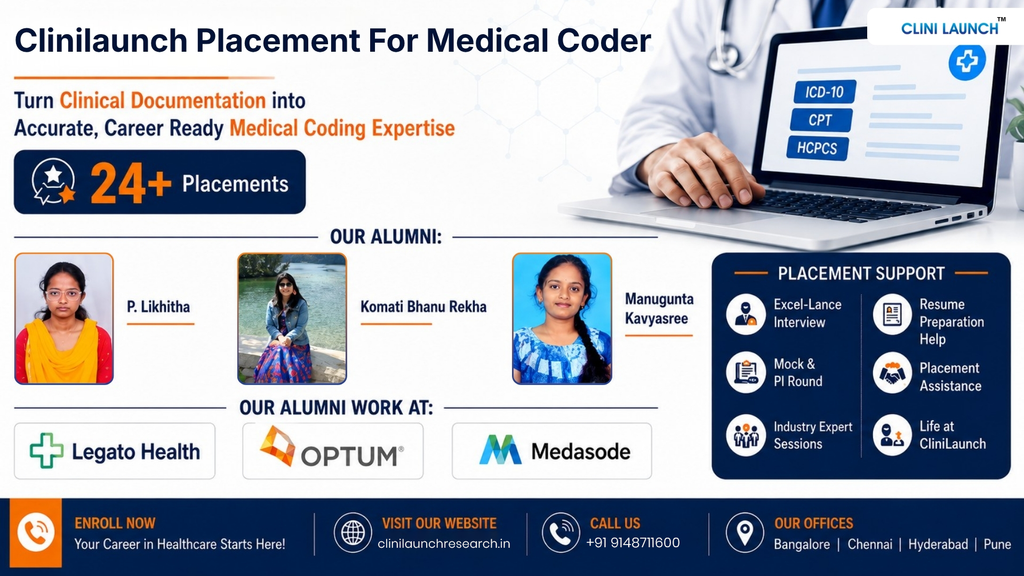
9. Medical Coder (Clinical Trials / Healthcare)
Average Salary: ₹1.8 LPA to ₹3.5 LPA
What Does a Medical Coder Do?
A Medical Coder converts clinical documentation into accurate diagnosis and procedure codes, applying coding guidelines to support healthcare billing, reimbursement, claims processing and medical records.
Career Progression
| Career Level | Roles | Description |
| Entry Level | Medical Coding Trainee → Medical Coder | Apply coding guidelines to clinical documentation. |
| Mid-Level | Senior Medical Coder → Quality Analyst → Coding Team Lead | Review coding accuracy and manage quality processes. |
| Senior Level | Coding Manager → Operations Manager | Lead coding teams and oversee operational performance. |

What Your Clinical Research Career Could Pay at Each Stage
Your earning potential grows as you build specialised expertise across clinical operations, data, drug safety, regulatory affairs, and analytics. Career progression can open doors to higher paying roles and greater responsibilities.
| Role | Starting Level | Mid Level | Senior Level |
| Clinical Research Associate (CRA) | ₹3.5–5.5 LPA | ₹5.5–9 LPA | ₹9–14+ LPA |
| Clinical Research Coordinator (CRC) | ₹2.5–4.5 LPA | ₹4.5–6.5 LPA | ₹6.5–9 LPA |
| Clinical Data Manager (CDM) | ₹4–7 LPA | ₹7–12 LPA | ₹12–22+ LPA |
| Pharmacovigilance Associate | ₹2.5–4.5 LPA | ₹4.5–7 LPA | ₹7–10+ LPA |
| Medical Writer | ₹3.5–5.5 LPA | ₹5.5–9 LPA | ₹9–14+ LPA |
| Regulatory Affairs Associate | ₹3–5 LPA | ₹5–8 LPA | ₹8–14+ LPA |
| Biostatistician / Statistical Programmer | ₹3.5–6 LPA | ₹6–10 LPA | ₹10–16+ LPA |
| Clinical Trial Assistant (CTA) | ₹2.5–4.5 LPA | ₹4.5–6.5 LPA | ₹6.5–9 LPA |
| Medical Coder | ₹2.5–4 LPA | ₹4–6 LPA | ₹6–9 LPA |
Skills That Matter in Clinical Research Careers in 2026
Clinical research careers require practical, role-specific skills beyond a life science degree. From trial management and data analysis to scientific writing, each role demands specialised expertise.
| Role | Skills That Set You Apart |
| Clinical Research Associate (CRA) | Site Monitoring & Trial Oversight: GCP, protocol compliance, source data verification, site communication |
| Clinical Research Coordinator (CRC) | Site Execution & Participant Coordination: informed consent, visit scheduling, documentation, investigator coordination |
| Clinical Data Manager (CDM) | Clinical Data Management: EDC systems, data cleaning, query management, database reconciliation |
| Pharmacovigilance / Drug Safety Associate | Drug Safety & Case Processing: ICSR processing, MedDRA coding, case narratives, safety reporting |
| Medical Writer | Scientific & Regulatory Writing: literature review, clinical documentation, evidence interpretation, editing |
| Regulatory Affairs Associate | Regulatory Submissions & Compliance: ICH guidelines, dossier preparation, submission tracking, regulatory intelligence |
| Biostatistician / Statistical Programmer | Clinical Data Analysis: SAS/R, statistical analysis, SDTM, ADaM, TLF development |
| Clinical Trial Assistant (CTA) | Trial Administration: TMF maintenance, document management, study trackers, timeline coordination |
| Medical Coder | Medical Coding: ICD 10 CM, CPT, HCPCS, medical terminology, coding guidelines |
Clinical Research
Build practical skills for pharmaceutical and healthcare careers through clinical trial processes, regulatory documentation, drug safety, and research data management used in global clinical operations.

Conclusion: Clinical Research Careers in 2026
Clinical research is evolving through science, technology, data, and AI, creating opportunities beyond traditional trial roles.
For aspiring professionals, combining clinical knowledge, practical skills, and technology awareness will be key to building future ready careers.
The Professional Program in Clinical Research by CliniLaunch Research Institute helps learners develop industry-relevant skills, understand real clinical workflows, and prepare for evolving opportunities across pharmaceutical companies, CROs, and healthcare research organizations.
A career in clinical research is not just about supporting trials it is about becoming part of the process that transforms scientific discoveries into better healthcare outcomes.
Frequently Asked Questions
Is clinical research a good career in 2026?
Yes. Growth in AI-driven trials, digital health, and drug development is creating new opportunities across clinical research roles.
Who can enter clinical research?
Graduates from Pharmacy, Biotechnology, Life Sciences, Healthcare, Statistics, and Technology backgrounds can explore clinical research careers.
What are the top clinical research roles?
Popular roles include CRA, CRC, Clinical Data Manager, Pharmacovigilance Associate, Medical Writer, Regulatory Affairs Associate, and Biostatistician.
Can freshers start a career in clinical research?
Yes. Freshers can begin with roles like Clinical Trial Assistant, CRC, Medical Coder, and Pharmacovigilance Associate after gaining relevant training.
What skills are needed for clinical research?
Key skills include clinical trial knowledge, ICH-GCP, regulatory documentation, data handling, and communication skills.
Is a clinical research course useful?
Yes. A career-focused course helps learners gain practical knowledge of clinical workflows, regulations, documentation, and industry practices.
Which companies hire clinical research professionals?
CROs, pharmaceutical companies, and healthcare organizations such as IQVIA, Parexel, ICON, Thermo Fisher Scientific, Fortrea, and Syneos Health hire clinical research professionals.
How does AI impact clinical research careers?
AI is creating opportunities in trial optimization, predictive analytics, patient recruitment, and healthcare data analysis.